A definitive 7.8/10 rating for a film that redefined the boundaries of cult cinema. The Adventures of Prince Achmed remains a cornerstone of transgressive art.
Is The Adventures of Prince Achmed still worth watching today? Short answer: absolutely, but with a significant caveat. This 1926 animated feature is a monumental achievement in cinematic history, a gorgeous, hand-crafted dreamscape that demands appreciation as both art and artifact, yet its pacing and silent-era sensibilities will undoubtedly test the patience of some contemporary viewers.
It is unequivocally for cinephiles, animation historians, and anyone with an appetite for truly groundbreaking visual storytelling. Conversely, those seeking fast-paced narratives, dialogue-driven plots, or modern animation aesthetics might find its deliberate rhythm and stark silhouette style a challenging, perhaps even frustrating, experience.
This film works because of its audacious artistic vision, its breathtaking technical innovation in an nascent medium, and its enduring ability to transport audiences into a world of pure, unadulterated fantasy.
This film fails because its deliberate, almost hypnotic pacing, coupled with the inherent limitations of silent-era storytelling, can feel glacially slow to modern sensibilities, occasionally sacrificing narrative urgency for visual spectacle.
You should watch it if you appreciate cinema as an evolving art form, if you are fascinated by the origins of animation, or if you simply wish to immerse yourself in a unique, handcrafted fairytale unlike anything produced today.
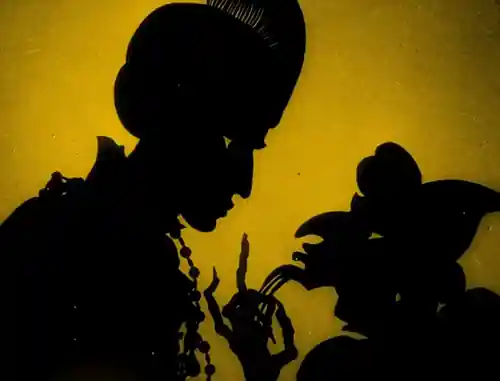
Scene from The Adventures of Prince Achmed
Cinematic perspective: Exploring the visual vocabulary of The Adventures of Prince Achmed (1926) through its definitive frames.
A Glimpse into a Forgotten Art Form
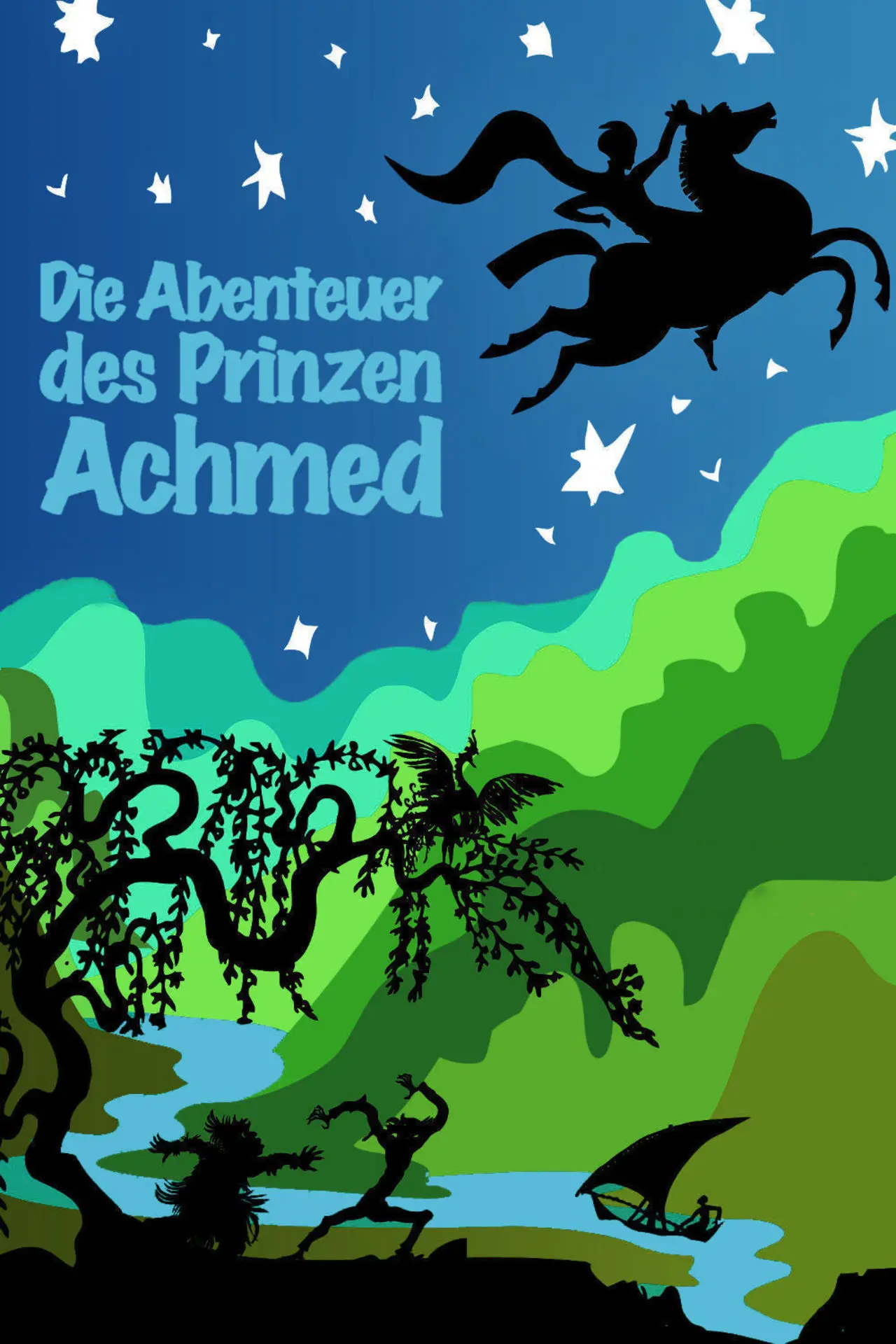
The Adventures of Prince Achmed stands not merely as a film, but as a living piece of history. Released in 1926, it holds the distinction of being the oldest surviving animated feature film, predating Disney’s Snow White and the Seven Dwarfs by over a decade. This fact alone should pique the interest of any serious film enthusiast, but its true allure lies in its unique aesthetic: silhouette animation.
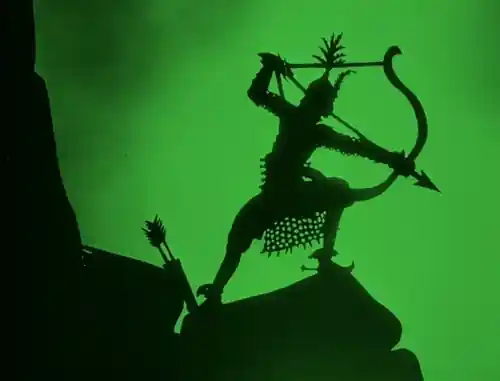
Lotte Reiniger, the German director, writer, and animator, pioneered this intricate art form, cutting thousands of articulated figures from cardboard and thin sheets of lead. These figures were then painstakingly manipulated frame by frame against backlit, translucent paper, often layered to create a sense of depth. It's an art form born of patience and precision, a stark contrast to the cel animation that would soon dominate the industry.
To watch Achmed is to witness the birth of a cinematic language. Reiniger, alongside her husband Carl Koch and collaborators Walter Ruttmann, Berthold Bartosch, and Alexander Alexeieff, pushed the boundaries of what was thought possible in animation. They experimented with early multi-plane camera techniques, creating a sense of dimension that feels surprisingly sophisticated even today.
The film is a testament to human ingenuity in the face of nascent technology. It's less about the 'performances' of a traditional cast and more about the fluid, expressive movements of these shadow puppets, which become characters in their own right. Every gesture, every tilt of a head, every grand sweep of a cape is a deliberate artistic choice, imbued with emotion and narrative purpose.
The Narrative Tapestry: Simplicity and Spectacle
The plot of The Adventures of Prince Achmed is drawn directly from the rich wellspring of One Thousand and One Nights, or the Arabian Nights. It’s a classic epic, following the titular prince as he is tricked by a malevolent sorcerer and whisked away on a magical flying horse. This initial deception sets off a chain of fantastical events, leading him through enchanted islands, perilous battles, and romantic encounters.
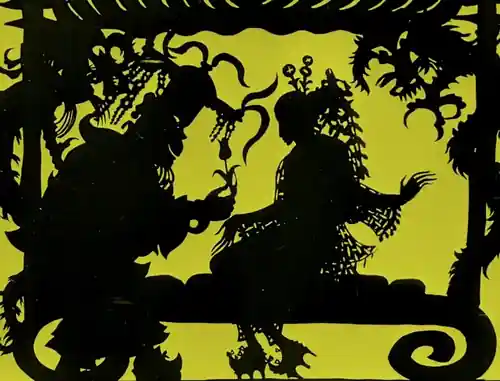
Scene from The Adventures of Prince Achmed
Cinematic perspective: Exploring the visual vocabulary of The Adventures of Prince Achmed (1926) through its definitive frames.
The narrative structure mirrors the episodic nature of its source material. Achmed’s journey is a series of encounters: befriending a benevolent witch, meeting the iconic Aladdin and his lamp, rescuing a beautiful princess, and ultimately confronting the sorcerer who initiated his plight. Each segment feels like a chapter in a grand, oral tradition, a series of vignettes bound by a central quest.
While the story is rich in magical elements – flying horses, genies, shape-shifting sorcerers, and monstrous demons – its character development is, by modern standards, rudimentary. Achmed is noble, the princess is beautiful, Aladdin is mischievous, and the sorcerer is evil. They are archetypes, serving as vessels for the visual spectacle rather than complex psychological studies. This is not a flaw, but rather a characteristic of the storytelling style of its era and source material.
The film’s strength lies in how these simple narrative beats are translated into breathtaking visual sequences. The scene where Achmed first takes flight on the winged horse, for instance, is a marvel of fluid motion and imaginative design, conveying wonder without a single spoken word. Similarly, the climactic battle against the demons is a whirlwind of intricate, silhouetted forms clashing on screen, a ballet of combat that is both terrifying and beautiful.
The Unsung Heroes: Craft and Direction
It’s crucial to understand that in a film like The Adventures of Prince Achmed, the ‘cast’ isn’t a group of actors in the traditional sense. Instead, the true performers are the animators themselves, led by Lotte Reiniger. Her vision, her tireless dedication, and her unparalleled skill in silhouette artistry are the heart and soul of this picture. Carl Koch, her husband and collaborator, played a vital role in the technical execution, particularly with the camera work and multi-plane effects.
The sheer scale of the undertaking is mind-boggling. Reiniger spent three years crafting this film, meticulously cutting and articulating each figure. This wasn't a team of hundreds; it was a small group of dedicated artists. The fluidity of the movement, the expressive gestures of the two-dimensional characters, and the intricate details in their designs speak volumes of their craftsmanship. Consider the delicate fluttering of a bird's wings or the fierce sweep of a sword – each motion is precise, intentional, and remarkably lifelike despite the abstract nature of the medium.
Scene from The Adventures of Prince Achmed
Cinematic perspective: Exploring the visual vocabulary of The Adventures of Prince Achmed (1926) through its definitive frames.
The direction is less about guiding human performances and more about choreographing light, shadow, and movement. Reiniger’s mastery of composition is evident in every frame. She understood how to use negative space, how to create depth with layered silhouettes, and how to convey emotion through posture and motion alone. The sequence where the witch conjures her magic, with swirling, ethereal shapes, showcases a director with a profound understanding of visual storytelling and its power to evoke wonder and dread.
This level of artistic control and personal investment is rarely seen in modern filmmaking. It gives Achmed an artisanal quality, a unique fingerprint that sets it apart from almost every other film, animated or otherwise. It’s a testament to the idea that true artistry often blossoms from constraint, forcing creators to innovate within their chosen medium.
Visual Poetry: Cinematography and Aesthetics
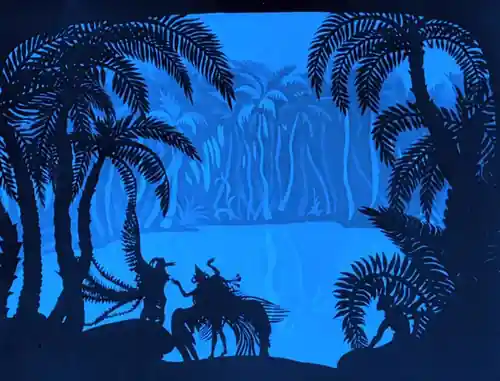
The ‘cinematography’ of The Adventures of Prince Achmed is a fascinating concept. Without a traditional camera crew or live actors, the visual style is entirely dictated by the manipulation of light and shadow, and the artistry of the cut-out figures. The film’s striking black-on-white (or rather, black-on-translucent) aesthetic is its defining characteristic, but Reiniger and her team took it further with the innovative use of color filters.
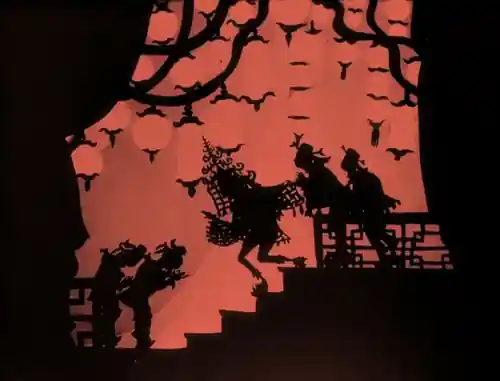
These filters, applied to the background light, bathed entire scenes in evocative hues – fiery reds for intense battles, cool blues for tranquil nights, and warm yellows for sun-drenched palaces. This technique wasn't just decorative; it was integral to establishing mood and atmosphere, compensating for the lack of dialogue and enhancing the emotional impact of each scene. For example, the vibrant red during the dragon battle intensifies the danger and heat of the conflict, while the deep blues during the night flights evoke a sense of serene, magical mystery.
The compositions are often breathtaking, reminiscent of classical Persian miniatures or elaborate shadow puppet theatre. Reiniger’s eye for detail, even in silhouette, allows for intricate patterns on clothing, elaborate architectural designs, and fantastical creatures that feel both otherworldly and meticulously crafted. The negative space is utilized as effectively as the positive, creating a dynamic interplay that guides the viewer's eye.
Scene from The Adventures of Prince Achmed
Cinematic perspective: Exploring the visual vocabulary of The Adventures of Prince Achmed (1926) through its definitive frames.
Furthermore, the film’s innovative use of special effects, achieved through stop-motion and multi-plane techniques, creates a surprising sense of depth and movement. When the flying horse soars over landscapes, or when a genie emerges from a lamp, there’s a genuine sense of magic unfolding. It’s a visual feast that proves the power of suggestion and masterful design over hyper-realistic rendering.
Pacing and Tone: A Product of Its Time
One of the most significant hurdles for modern viewers approaching The Adventures of Prince Achmed is its pacing. This is a silent film, and like many films of its era, it operates on a different rhythm than contemporary cinema. It’s deliberate, often slow, allowing scenes to unfold with an almost dreamlike languor. There are moments where the action pauses, seemingly just to allow the audience to appreciate the intricate animation or the beauty of a particular tableau.
This isn't a flaw in the film itself, but rather a characteristic of its historical context. Audiences in the 1920s were accustomed to a slower narrative tempo, often accompanied by live orchestral scores that filled the auditory gaps. Without that immediate musical accompaniment (though modern restorations often include excellent scores), the silence can feel profound, and the visual storytelling takes on an almost meditative quality.
The tone is consistently fantastical and adventurous, yet it never shies away from moments of genuine peril or emotional resonance. The witch, initially a formidable figure, becomes a sympathetic ally, and the romance between Achmed and the princess, while understated, feels earned. It's a film that trusts its audience to engage their imagination, to fill in the unspoken dialogue and extrapolate emotions from the subtle movements of the silhouettes.
For those accustomed to rapid-fire editing and constant stimulation, this deliberate pace can be a challenge. But for those willing to surrender to its rhythm, Achmed offers a unique, almost hypnotic viewing experience. It demands patience, but rewards it with unparalleled visual artistry and a profound sense of stepping back in time to witness the genesis of animated storytelling.
Scene from The Adventures of Prince Achmed
Cinematic perspective: Exploring the visual vocabulary of The Adventures of Prince Achmed (1926) through its definitive frames.
Is This Film Worth Watching Today?
Yes, The Adventures of Prince Achmed is absolutely worth watching today. It’s a foundational piece of cinema, a stunning artistic achievement that continues to inspire. Its historical significance alone warrants a viewing, but its visual beauty and imaginative storytelling ensure it remains more than just a museum piece.
Who is it for?
Animation students and historians.
Cinephiles interested in early film techniques.
Fans of the Arabian Nights stories.
Anyone seeking a unique, visually distinctive film experience.
Viewers who appreciate slow-burn, meditative storytelling.
Who is it NOT for?
Audiences who require fast-paced action and dialogue.
Viewers accustomed only to modern CGI animation.
Those easily bored by silent films.
Anyone looking for deep character development or complex plot twists.
Key Takeaways
Best for: Film historians, animation enthusiasts, and those seeking a unique, visually driven cinematic experience.
Not for: Audiences craving rapid pacing, extensive dialogue, or contemporary animation styles.
Standout element: Its groundbreaking silhouette animation, a stunning display of Lotte Reiniger's artistic genius and meticulous craftsmanship.
Biggest flaw: The deliberate, silent-era pacing can be challenging for modern viewers accustomed to faster narratives.
Pros and Cons
Pros:
Pioneering Animation: The first feature-length animated film, showcasing incredible innovation.
Stunning Visuals: Exquisite hand-cut silhouettes, dynamic compositions, and effective use of color filters create a breathtaking aesthetic.
Imaginative Storytelling: A faithful and visually rich adaptation of classic Arabian Nights tales.
Historical Significance: An essential piece of film history, demonstrating the early potential of animation as an art form.
Artistic Integrity: A truly handcrafted film, born of immense patience and singular artistic vision.
Cons:
Slow Pacing: The silent-era narrative tempo can feel drawn-out and challenging for contemporary audiences.
Limited Character Depth: Archetypal characters offer little psychological complexity, prioritizing spectacle over development.
Accessibility: Its silent nature and unique visual style might not appeal to mainstream viewers.
Lack of Dialogue: Requires active imagination to fill in emotional and narrative gaps, which some viewers may find taxing.
The Enduring Legacy and Impact
The Adventures of Prince Achmed is more than just a film; it’s a blueprint. Its influence, though perhaps not immediately obvious in the mainstream, has rippled through animation history. Reiniger’s pioneering work with multi-plane techniques directly foreshadowed similar innovations by Walt Disney, who would later perfect the technique for films like Snow White and Bambi. Her dedication to handcrafted artistry in a nascent medium set a high bar for what animation could achieve.
Comparing it to other silent-era films, such as The Golem or Mania. Die Geschichte einer Zigarettenarbeiterin, highlights Achmed’s unique position. While those films explored dramatic narratives with live actors, Reiniger’s work carved out an entirely new visual language, proving that animation was capable of feature-length storytelling with profound artistic depth. It’s a bold statement in a period dominated by live-action spectacle.
Even today, its visual style feels fresh and distinct. In an era of increasingly photorealistic CGI, the stark, elegant simplicity of silhouettes offers a refreshing alternative. It reminds us that imagination, combined with meticulous craftsmanship, can create worlds as compelling and beautiful as any digital rendering. This film is a foundational text for anyone who truly wants to understand the evolution of animation as an art form, not just a commercial enterprise.
It works. But it’s flawed. Its legacy is not just in its existence but in its enduring power to transport and inspire, even with its deliberate pace. Modern audiences, weaned on CGI, might initially dismiss Achmed as a quaint relic, but to do so is to miss a foundational pillar of cinematic artistry. It’s a film that demands a different kind of engagement, a willingness to slow down and appreciate the meticulous dance of shadows.
Verdict
The Adventures of Prince Achmed is an essential viewing experience for anyone who values film as an art form. It's a breathtaking, pioneering work that showcases unparalleled artistic vision and technical innovation from an era when animation was barely a whisper. While its deliberate silent-era pacing may challenge some modern sensibilities, to dismiss it would be to overlook a crucial chapter in cinematic history and a truly singular aesthetic achievement.
Lotte Reiniger's masterpiece is a testament to the power of imagination, patience, and meticulous craft. It's a film that asks you to slow down, to engage your mind, and to allow its beautiful, shadowy world to unfold at its own rhythm. For those willing to embark on that journey, the rewards are immense: a glimpse into the very origins of animated storytelling, rendered with a timeless grace that continues to captivate. Highly recommended for the discerning viewer.