DbcultAccessing Vault...
Cult Review
Senior Film Conservator
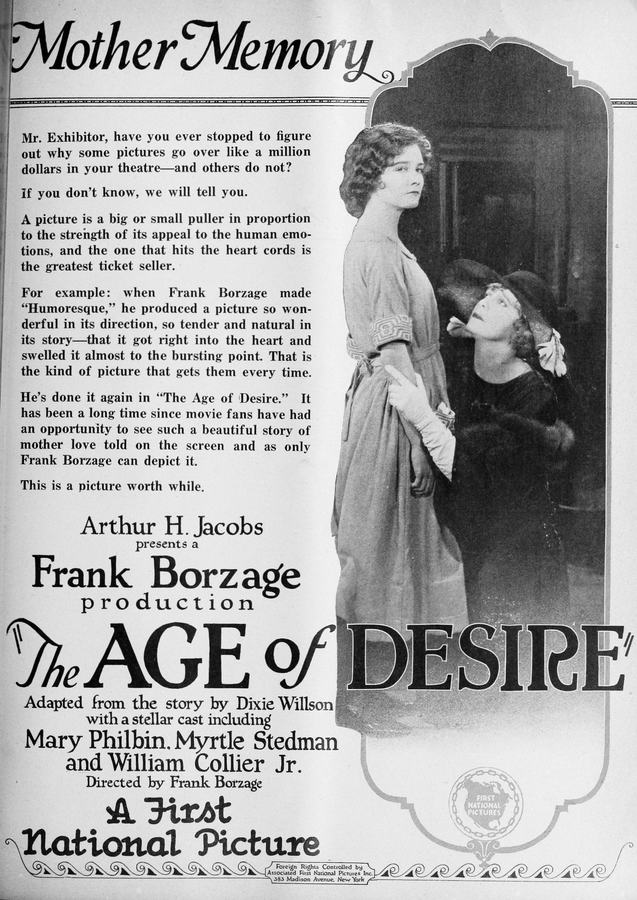
Step back into an era when cinematic storytelling relied not on dialogue, but on the raw power of expression, gesture, and the evocative sweep of a compelling narrative. "The Age of Desire" emerges from the annals of silent film as a poignant, deeply resonant melodrama, a cinematic exploration of human frailty, the relentless grip of societal expectation, and the enduring, often painful, consequences of choices made in moments of desperation. This isn't merely a film; it's a moral parable, meticulously crafted to unravel the complex tapestry of a woman's ambition and the indelible mark it leaves on her life and the lives of those she loves.
At its core, the film presents Janet Loring, portrayed with a compelling mix of vulnerability and steely resolve by Myrtle Stedman, as a figure emblematic of the difficult predicaments faced by women in an unforgiving society. A young widow, burdened by the responsibility of a child and the specter of destitution, Janet makes a decision that will forever define her existence: she marries the wealthy Malcolm Trask. This union, however, comes at an extraordinary, soul-crushing cost. To secure her future, and perhaps a better one for her son in her misguided perception, she commits an act of profound abandonment, erasing her past marriage and, more tragically, her young son, Ranny, from her new life. This initial transgression sets in motion a chain of events that are as inevitable as they are heartbreaking, a testament to the script's (penned by Mary O'Hara, Dixie Willson, and Lenore J. Coffee) keen understanding of dramatic irony and the human condition. The film masterfully captures the suffocating pressures of the era, where a woman's worth was often measured by her marital status and financial security, pushing Janet into a corner where her desperate act felt, to her, like the only viable escape.
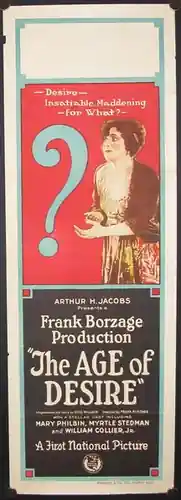
The film then shifts its gaze to Ranny, the innocent victim of his mother's ambition. Cast adrift in the harsh realities of urban life, his survival becomes a testament to the resilience of childhood. His journey from abandonment to finding a semblance of belonging with a kind bookseller (Aggie Herring, radiating warmth) and her granddaughter, Margy (Mary Philbin, in a role that radiates youthful innocence and warmth), forms a crucial counterpoint to Janet's opulent yet emotionally barren existence. This juxtaposition is masterfully handled, allowing the audience to witness the stark divergence in their paths, one marked by material comfort but spiritual anguish, the other by hardship yet nascent affection. The film, in this regard, shares thematic echoes with dramas like The Symbol of Sacrifice, where characters grapple with profound personal losses and the search for new meaning, or even Hard Luck, in its depiction of individuals navigating challenging circumstances with grit and determination, often finding solace in unexpected places.
As the years gracefully unfold on screen, the narrative deepens its emotional complexity. Janet, now entrenched in a life of luxury, finds her initial pragmatism corroded by an agonizing regret. The ghost of the son she abandoned haunts her every waking moment, propelling her on a desperate, public quest to find him. These scenes are imbued with a palpable sense of longing and remorse, Stedman conveying Janet's internal torment through subtle yet powerful expressions – a furrowed brow, a wistful gaze, the tremor of a hand. Her transformation from a woman making a cold, calculated decision to one consumed by maternal longing is one of the film's most compelling arcs, showcasing the profound psychological toll of her past actions. It's a journey from a heart hardened by necessity to one softened by the relentless pangs of conscience.
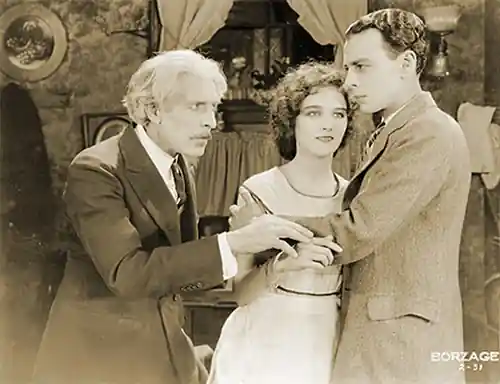
The dramatic tension escalates with the introduction of Marcio (Josef Swickard), a character personifying the darker currents of human nature. A vicious blackmailer, Marcio inadvertently becomes the architect of the film's most profound irony. Unaware of the true familial connection, he manipulates the now-grown Ranny (played by William Collier Jr. with a quiet intensity that speaks volumes of his character's past struggles) into impersonating Janet's lost son. This deceit, intended to extract a hefty sum, becomes a perverse, unwitting act of fate, bringing mother and son back into each other's orbit under the most treacherous of circumstances. The narrative brilliance here lies in the audience's privileged knowledge, creating a constant undercurrent of dramatic tension as we anticipate the inevitable, explosive revelation. This intricate dance of mistaken identity and hidden truths is reminiscent of films such as Under False Colors, which similarly explores the perils and emotional toll of living a lie, or even The Shadow of Suspicion, where concealed identities lead to profound personal and societal upheaval.
The performances across the board are commendable, especially considering the inherent challenges of silent film acting. Myrtle Stedman’s portrayal of Janet is a masterclass in conveying complex emotions without uttering a single word. Her eyes speak volumes, shifting from the calculating ambition of her youth to the profound anguish of her later years. William Collier Jr. as the adult Ranny brings a nuanced vulnerability and strength to a character who has endured much, yet retains a fundamental goodness and an endearing naiveté. Bruce Guerin, as the young Ranny, leaves an indelible impression, his innocent face conveying the profound impact of abandonment with heartbreaking clarity. Aggie Herring, as the kind bookseller, and Mary Philbin as Margy, provide the much-needed warmth and moral anchor, representing the genuine human connection that Janet initially sacrificed. Even supporting players like Josef Swickard as the malevolent Marcio, Frederick Truesdell as the unwitting Malcolm Trask, and J. Farrell MacDonald contribute effectively to the intricate web of relationships and conflicts, each performance adding a vital thread to the film's rich emotional tapestry. The ensemble cast works in concert to elevate the dramatic stakes, making every gesture and expression count.
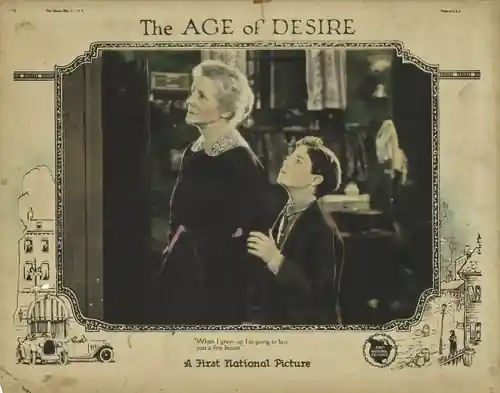
The thematic richness of "The Age of Desire" is undeniable. It delves deep into the concept of motherhood – not just as a biological fact, but as a profound, often demanding, emotional bond that transcends societal constructs. It scrutinizes the corrosive power of social ambition and the illusion that material wealth can compensate for spiritual emptiness, a theme often explored in films like Billions, which critically examines the pursuit of wealth at all costs. The film asks profound questions about identity: can one truly erase their past, or does it inevitably return to haunt them? It explores the nature of deception, both self-imposed and externally orchestrated, and the heavy price exacted by lies. The enduring power of fate, orchestrating a reunion through the most unlikely and morally ambiguous means, also plays a significant role, suggesting that some bonds are simply too strong to be broken by human will. The film's title itself is a clever double entendre, referring not only to the era's pursuit of material desire but also to the innate human yearning for connection, family, and truth.
Visually, the film employed the conventions of its era to maximize emotional impact, leveraging the unique strengths of the silent medium. The direction, while perhaps not overtly flashy, would have been acutely focused on expressive acting and clear narrative progression. One can infer the skillful use of close-ups to highlight the actors' nuanced facial expressions, crucial for conveying unspoken dialogue and internal turmoil. The staging would have been deliberate, guiding the viewer's eye and emphasizing character relationships and emotional states. The stark contrasts between Janet's opulent new life and Ranny's humble existence would have been visually underscored through set design and costume, reinforcing the film's commentary on class disparity and the chasm created by Janet's choice. The pacing, characteristic of silent-era melodramas, would have allowed moments of emotional weight to linger, giving the audience ample time to absorb the unfolding drama and empathize with the characters' plights, a technique that often imbued silent films with a powerful, almost operatic intensity.
Comparing "The Age of Desire" to other films of its time further illuminates its place in cinematic history. Its exploration of complex familial relationships and the weight of personal choices finds echoes in films like Saturday Night, which often explored the class divides and aspirations of the era, or High Heels, which might similarly delve into women navigating social expectations and personal sacrifices. The moral dilemmas faced by its characters, particularly Janet, resonate with the struggles seen in The Passionate Pilgrim, where individuals often embark on journeys of self-discovery or atonement. The film's profound sense of regret and the quest for redemption also align with narratives found in Cut the Cards, where characters often face the harsh consequences of their actions and strive for a second chance. This film stands as a testament to the universal appeal of stories that explore the human heart's capacity for both profound error and ultimate redemption.
The culmination of the narrative, when the truth inevitably unfurls, is handled with a powerful emotional punch. The dramatic irony, meticulously built throughout the film, explodes in a reckoning that forces Janet to confront the full scope of her past choices. The film doesn't shy away from
IMDb 4.6
1931
Community
Log in to comment.