DbcultAccessing Vault...
Cult Review
Senior Film Conservator
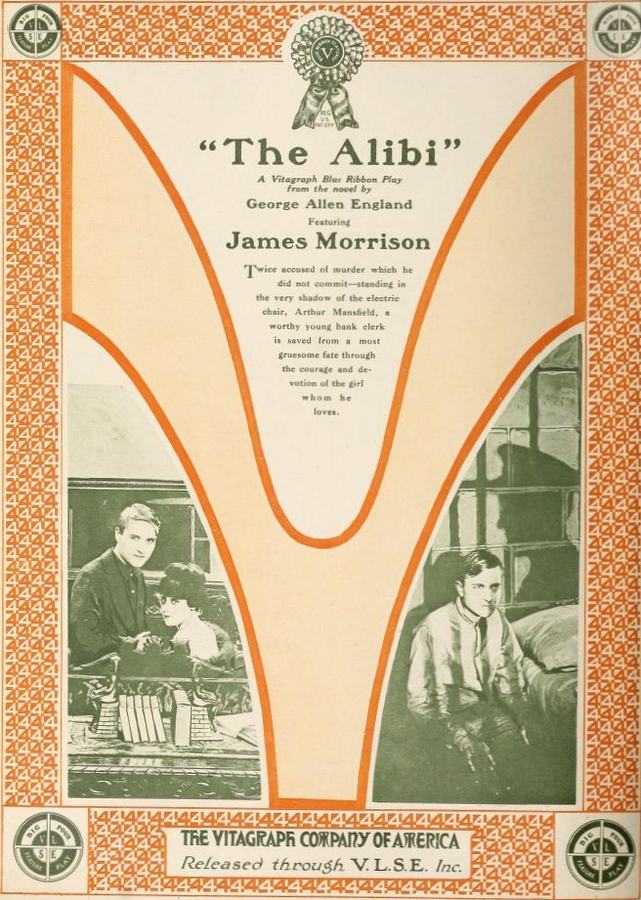
Stepping back into the nascent years of cinematic storytelling, one encounters a fascinating tapestry of human drama, often rendered with a stark directness that belies the apparent simplicity of the era. The Alibi, a gripping silent film from 1916, emerges from this period as a potent testament to the enduring power of narrative tension and psychological exploration. Directed by the visionary, if often unsung, architects of early cinema and penned by George H. Plympton and George Allan England, this feature plunges into the moral quagmire of desperate choices, insidious betrayal, and the relentless pursuit of justice. It’s a compelling journey that, even over a century later, manages to resonate with a surprising contemporary relevance, proving that the fundamental anxieties of the human condition are timeless.
At its heart lies Arthur Mansfield, portrayed with a nuanced blend of vulnerability and conviction by Robert Gaillard. Arthur is not a villain by nature, but a man pushed to the precipice by the crushing weight of filial duty. His father's failing health demands a financial solution beyond his means, leading him to contemplate a morally dubious, yet tragically understandable, act: a calculated embezzlement from the bank where he serves as assistant cashier. This initial transgression, born of love and desperation, sets in motion a chain of events that will spiral far beyond his control, ensnaring him in a web of deceit spun by a far more malevolent force. Gaillard's portrayal captures the internal conflict and subsequent despair of a good man caught in an impossible situation, his expressive eyes conveying volumes without the need for spoken dialogue.
The true antagonist emerges in Slayton, Arthur's superior and a character embodied with chilling duplicity by Paul Scardon. Slayton is not driven by love or desperation, but by the cold, calculating greed fueled by his own disastrous financial speculations. When Arthur, in a moment of misplaced trust and perhaps a desperate need for absolution, confesses his intent to Slayton, the senior cashier sees not a colleague in distress, but an opportunity. It’s a moment of profound moral failing, a turning point where one man's vulnerability becomes another's weapon. Slayton's decision to preempt Arthur's planned pilferage, to commit the crime himself and meticulously frame Arthur, is a masterstroke of villainy, elevating the narrative from a simple tale of embezzlement to a complex psychological thriller.
The subsequent murder of a watchman, an act of brutal efficiency by Slayton, seals Arthur's fate and ignites the central conflict. The planting of evidence, a cruel mockery of justice, ensures Arthur's swift conviction for second-degree murder. Here, the film delves into the harrowing injustice of a man condemned for a crime he did not commit, a theme that resonates deeply and evokes a visceral sense of outrage. The performances, particularly Scardon's subtle shift from conniving opportunist to guilt-ridden paranoiac, are crucial in conveying the escalating tension. The narrative's strength lies in its ability to paint Slayton not merely as a villain, but as a man increasingly consumed by the monstrous shadow of his own actions.
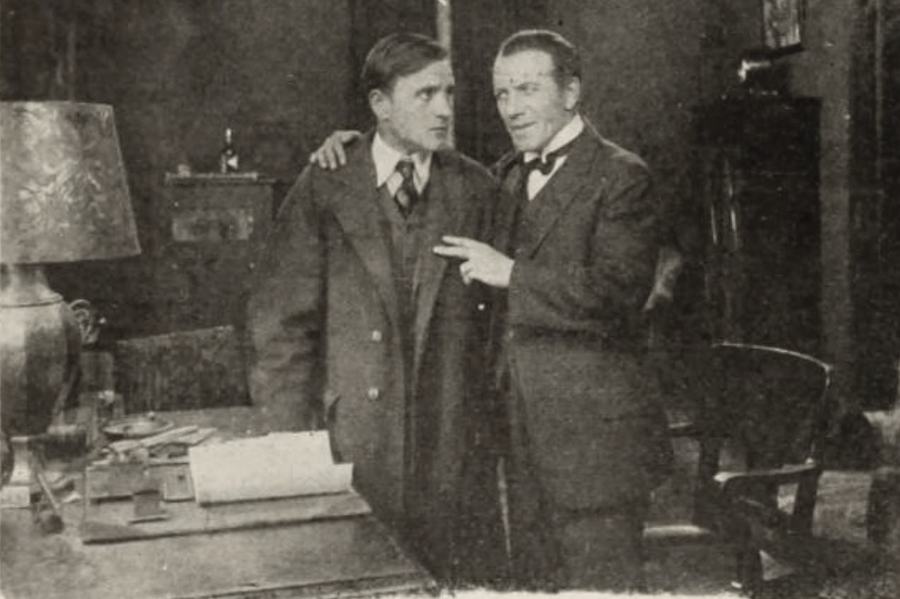
Enter Enid, the unwavering beacon of hope and a character brought to life with quiet strength by Betty Howe. As the daughter of the bank president and Arthur's fiancée, Enid's belief in his innocence is absolute, unshakeable even in the face of overwhelming evidence. She represents the enduring power of faith and loyalty, refusing to succumb to despair. Her decision to hire a detective, a common trope in early cinema but here imbued with genuine urgency, transforms her from a passive love interest into an active agent of justice. Her relentless pursuit of the truth provides the narrative with its much-needed counterpoint to the darkness of Slayton's machinations.
The film masterfully builds its psychological tension through Slayton's deteriorating mental state. His morbid curiosity leads him to visit Mansfield in prison, a decision that proves to be his undoing. Mansfield's vow of revenge, delivered with a quiet intensity that speaks volumes, plants the seed of fear in Slayton's mind. From this point forward, the film transforms into a study of paranoia, a descent into madness fueled by guilt and the terrifying anticipation of retribution. This psychological unraveling is one of the film's most compelling aspects, showcasing the nascent understanding of character psychology in early cinematic storytelling. It reminds one of the slow-burn psychological torment seen in later thrillers, where the mind becomes the ultimate prison.
The dread that consumes Slayton is palpable, a silent scream that reverberates through his every furtive glance and nervous gesture. This internal torment, brilliantly conveyed through Scardon's physical performance, is a stark contrast to the outward composure he attempts to maintain. It's a fascinating character study, predating many of the more celebrated psychological thrillers by decades. The narrative uses this internal struggle to amplify the external drama, making Slayton's eventual fate feel both inevitable and tragically earned. The writers, George H. Plympton and George Allan England, demonstrate a keen understanding of human nature, crafting a villain whose ultimate demise is orchestrated not by an external force alone, but by the very weight of his own conscience and fear.
The audacious escape of Mansfield from prison is a pivotal moment, injecting a surge of adrenaline into the already taut narrative. It's a classic cinematic device, but here it serves a dual purpose: to propel the plot towards its climax and to intensify Slayton's spiraling paranoia. The moment Mansfield arrives at Slayton's home, a silent apparition of his tormentor's worst fears, is exquisitely staged. The confrontation is not one of physical violence, but of psychological warfare. Slayton, utterly consumed by terror and the crushing weight of his guilt, succumbs to the ultimate act of self-punishment. His suicide, driven by a mind shattered by fear, is a powerful and unsettling resolution to his arc, a chilling reminder that some crimes carry their own inescapable sentence.
This scene, in particular, showcases the raw power of silent film to convey profound emotional states. The absence of dialogue forces the viewer to focus on facial expressions, body language, and the overall mise-en-scène. The close-ups on Slayton's tormented face, the frantic gestures, and the oppressive atmosphere of his home all contribute to a sense of suffocating dread. It’s a masterclass in visual storytelling, demonstrating how effectively silence can amplify terror. The performance by Paul Scardon here is particularly commendable, as he navigates the complex emotional landscape of a man completely unhinged by his own villainy. It's a performance that holds its own against more modern interpretations of psychological breakdown, proving that the tools of cinematic expression were already formidable in the early 20th century.
The immediate aftermath finds Mansfield again pursued, this time as Slayton's presumed murderer, adding another layer of injustice to his already arduous journey. However, the diligent efforts of Enid's detective, a character who embodies the meticulous pursuit of truth, finally bring about the resolution. The discovery of Slayton's suicide note, a confessional testament to his crimes, is the narrative's ultimate catharsis. It's a moment of profound relief, not just for Mansfield and Enid, but for the audience who have invested deeply in their struggle. This revelation not only establishes Mansfield's innocence but also lays bare the full extent of Slayton's depravity, providing a satisfying, albeit tragic, conclusion to the villain's arc.
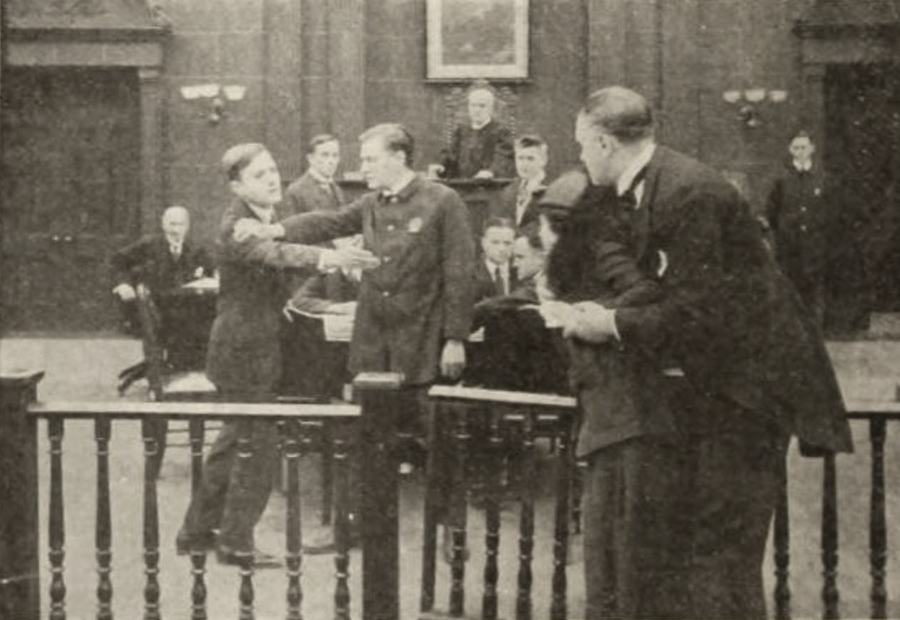
The film culminates in Mansfield's complete vindication. He regains his former position, his reputation restored, and his romance with Enid rekindles, a triumphant affirmation of justice prevailing over darkness. This ending, while perhaps seemingly conventional, feels earned. It's a testament to the power of perseverance, the unwavering strength of love, and the eventual triumph of truth. The journey to this point has been fraught with such peril and injustice that the happy resolution feels like a much-needed balm.
The performances across the board are commendable for their era. Beyond Gaillard, Scardon, and Howe, the supporting cast including Edward Elkas, James Morrison, Robert Whitworth, and Stanley Walpole all contribute to the rich tapestry of the film's world. Their collective efforts, under the guidance of the era's directorial vision, create a believable and immersive experience. The film's ability to maintain suspense and emotional engagement without spoken dialogue is a powerful reminder of the artistry inherent in early cinema.
The Alibi stands as a fascinating precursor to many of the crime and psychological thriller genres that would dominate cinema for decades to come. Its exploration of moral ambiguity, the corrosive effects of guilt, and the redemptive power of truth can be seen as foundational. One might draw parallels to other early films grappling with similar themes of crime and consequence, such as The Criminal, which also delved into the moral labyrinth of its protagonist's actions. However, The Alibi distinguishes itself with its particular emphasis on the psychological unraveling of the villain and the steadfast determination of the innocent party's advocate.
The craftsmanship of the film, from its narrative structure to its visual execution, is noteworthy. The use of intertitles, while a necessity, is handled with a deft touch, providing just enough information to propel the story without disrupting the visual flow. The cinematography, though perhaps rudimentary by today's standards, effectively conveys mood and atmosphere. The stark contrasts of light and shadow, common in this period, are employed to great effect, particularly in scenes depicting Slayton's growing torment or Mansfield's desperate escape. These visual cues, coupled with the expressive performances, create a cinematic language that transcends the lack of audible dialogue.
In a broader context, The Alibi contributes significantly to our understanding of early American cinema's thematic breadth and technical ambition. It demonstrates that even in its infancy, film was a powerful medium for exploring complex human emotions and intricate plotlines. The film's ability to sustain tension over its runtime, to develop characters that evoke empathy and revulsion, and to deliver a satisfying resolution speaks to the foundational strengths of its creators. It's a work that deserves rediscovery by modern audiences, not merely as a historical artifact, but as a compelling piece of storytelling in its own right.
This cinematic journey, orchestrated by the imaginative minds of Plympton and England, is a powerful reminder of how foundational narratives were established. It showcases the early mastery of suspense and character arc, elements that would become cornerstones of future film genres. The psychological depth afforded to Slayton, in particular, sets this film apart. His descent into madness is not merely a plot device but a meticulously crafted character study, revealing the devastating consequences of guilt and fear. It’s a sophisticated portrayal for its time, demonstrating that silent films were far from simplistic in their emotional scope.
Moreover, the unwavering resolve of Enid, beautifully portrayed by Betty Howe, provides an essential moral compass for the audience. Her conviction and active pursuit of justice offer a stark contrast to the moral decay represented by Slayton. This dynamic interplay between good and evil, hope and despair, is what gives The Alibi its enduring appeal. It's a narrative that champions the underdog, celebrates loyalty, and ultimately affirms the triumph of truth, even when buried under layers of deceit and injustice. The film's structure, moving from a personal tragedy to a broader quest for vindication, is expertly handled, ensuring that the audience remains invested in Arthur's fate until the very last frame.
Ultimately, The Alibi is more than just a historical curiosity; it is a vibrant, engaging piece of early cinematic art that stands on its own merits. It offers a glimpse into the narrative sophistication and emotional resonance that silent films were capable of achieving. For aficionados of classic cinema, or anyone interested in the evolution of storytelling on screen, this film is an essential viewing. It's a powerful reminder that the fundamental elements of compelling drama—betrayal, suspense, justice, and redemption—have always been at the heart of the cinematic experience, even in its earliest, most formative years. Its legacy is not just in its plot mechanics, but in its profound exploration of the human psyche under extreme duress, a theme that continues to captivate audiences worldwide. The film resonates with a timeless quality, proving that a well-told story, regardless of its technological limitations, can transcend generations and continue to provoke thought and emotion. It is a testament to the foundational talents of its writers, cast, and creative team, whose collective efforts forged a truly memorable cinematic experience.
IMDb 5.4
1934
Community
Log in to comment.