DbcultAccessing Vault...
Cult Review
Senior Film Conservator
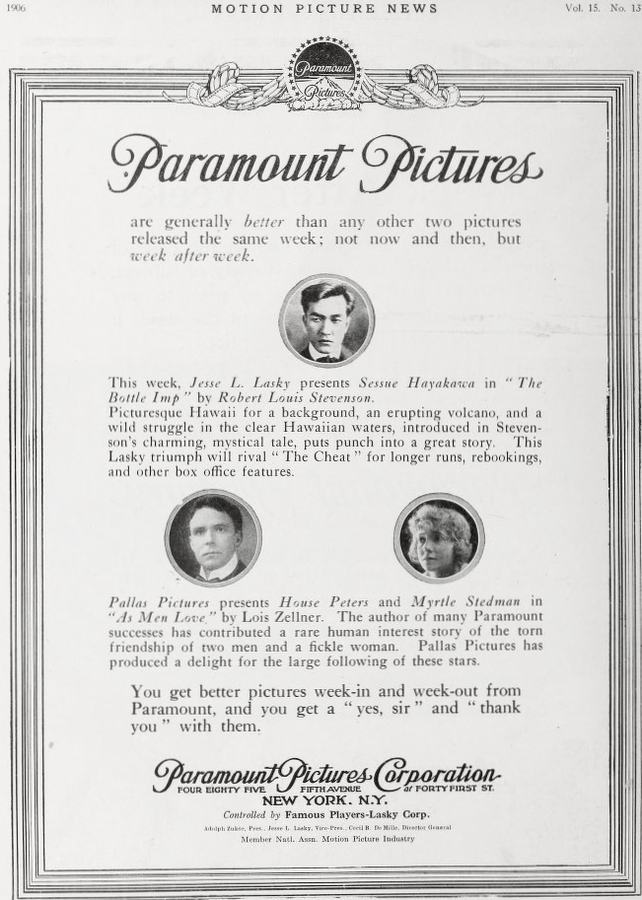
The silent era of cinema often operated on a plane of heightened emotionality that contemporary audiences might misinterpret as artifice. However, within the flickering frames of As Men Love (1917), directed with a keen eye for the nuances of social stratification, we find a narrative that transcends the simplistic boundaries of melodrama. This film, a poignant exploration of the intersection between private desire and public duty, serves as a fascinating specimen of early 20th-century storytelling, where the stakes of a single reputation could weigh as heavily as life itself.
At the epicenter of this domestic upheaval is Diana Gordon, portrayed by the luminous Myrtle Stedman. Stedman’s performance is a masterclass in the economy of gesture. Unlike the more histrionic turns found in comparable works like The Pillory, Stedman imbues Diana with a simmering, quiet desperation. She is a woman trapped not by poverty, but by the stifling expectations of her class and the agonizing proximity of the man she covets. The screenplay, penned by the formidable duo of Lois Zellner and Adele Harris, avoids the trap of making Diana a mere villainess. Instead, she is a tragic figure whose moral compass is demagnetized by the sheer force of her isolation.
Dr. Paul Russell, played with a rugged, stoic dignity by House Peters, represents the ideal of the 'New Man'—professional, empathetic, yet bound by an antiquated code of chivalry that proves to be his undoing. When he chooses to accept the blame for Diana’s impulsive embrace, he isn't just protecting a woman; he is upholding a patriarchal standard of 'gentlemanly' behavior that requires the self-immolation of the male ego. This theme of sacrificial masculinity is a recurring motif in the era, echoed in films such as Honor's Altar, yet here it feels uniquely grounded in the medical profession's inherent altruism.
The cinematography in As Men Love utilizes the domestic space as a psychological cage. The Gordon estate, with its sprawling rooms and ornate furnishings, feels increasingly claustrophobic as the secret between Diana and Russell festers. The directors use deep staging to great effect, often placing Keith Gordon (Jack W. Johnston) in the background, a looming but oblivious presence, while the foreground is occupied by the electric, unspoken tension between the doctor and his best friend’s wife. This visual strategy creates a sense of voyeurism that involves the audience in the deception, a technique also expertly employed in The Wager.
The transition from the opulent interiors of the first half to the stark, sterile environments of the second half marks a significant tonal shift. As the polio epidemic sweeps through the city, the film sheds its drawing-room drama skin and adopts the urgency of a medical thriller. This juxtaposition between the 'frivolous' concerns of the heart and the 'serious' concerns of the body is where the film finds its most profound resonance. The disease acts as a leveling force, indifferent to the social standing or moral failings of its victims. It is a narrative pivot that reminds one of the grit found in Durand of the Bad Lands, albeit in a more urbanized, clinical setting.
The introduction of the polio outbreak is not merely a plot device; it is a thematic reckoning. In the early 20th century, infantile paralysis was a specter that haunted every household, and its depiction here carries a weight of genuine terror. When the Gordons' daughter falls ill, the film forces a collision between Keith's rigid sense of honor and the practical necessity of Russell's expertise. The irony is sharp: the man Keith banished as a 'cad' is the only one capable of saving his lineage. This dynamic of the 'rejected expert' is a powerful trope, often seen in frontier dramas like The Spell of the Yukon, but here it is refined by the nuances of urban medical ethics.
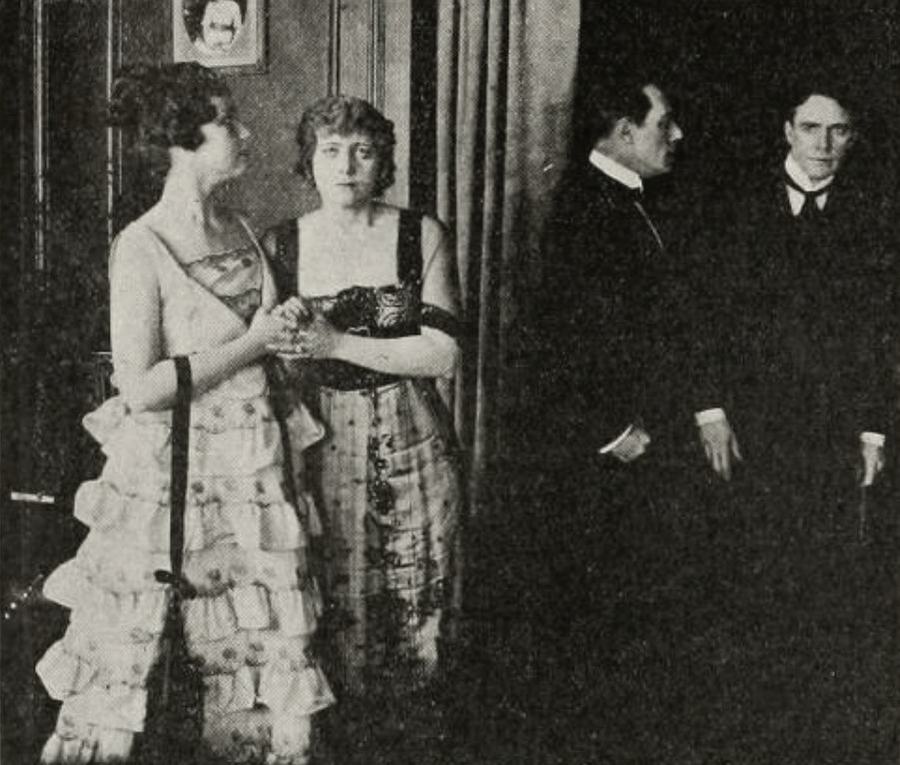
Diana’s eventual confession is the film’s emotional apex. It is a moment of radical vulnerability that strips away her socialite armor. In revealing the truth, she risks losing everything—her marriage, her social standing, and the respect of her sister-in-law, Marjorie (Helen Jerome Eddy). Yet, the film argues that the truth is the only salve for a soul corrupted by lies. The reconciliation that follows is not a simple 'happily ever after' but a complex realignment of relationships. The scars of the deception remain, much like the lingering effects of the disease itself. This nuanced ending elevates the film above the standard moralizing of its peers, such as A Self-Made Widow.
When placed alongside contemporary releases, As Men Love stands out for its psychological depth. While Grafters focused on the external machinations of crime and corruption, Zellner and Harris’s script focuses on the internal corruption of the spirit. There is a kinship with The Thoroughbred in its exploration of class expectations, but As Men Love is far more interested in the breaking points of those expectations. Even the pacing mirrors the frantic energy found in early action cinema like On the Night Stage, particularly during the sequences where Russell is racing against time to treat the stricken children.
Furthermore, the portrayal of Marjorie by Helen Jerome Eddy provides a necessary counterpoint to Diana’s volatility. Marjorie represents the 'innocent' love that Russell actually desires, making Diana’s jealousy all the more poignant. The film deftly balances these two archetypes of womanhood without descending into the 'Madonna-Whore' dichotomy that plagued many silent films, such as The Cotton King. Instead, it presents a spectrum of female experience and agency, however limited that agency might be by the era’s societal constraints.
The lighting in the film deserves special mention. There are moments of chiaroscuro that anticipate the noir movement of decades later. During the scene where Diana overhears Russell’s proposal to Marjorie, she is partially obscured by shadows, reflecting her obscured moral state. This visual metaphor is far more sophisticated than the flat lighting found in many 1917 productions, such as The Story of the Kelly Gang. The directors understand that in a silent medium, the light must speak where the actors cannot.
The editing, too, is remarkably fluid for the time. The intercutting between the domestic drama and the burgeoning epidemic creates a sense of impending doom that drives the narrative forward with relentless momentum. It lacks the experimental abstraction of Les heures - Épisode 4, but it possesses a narrative clarity that is essential for a story of this emotional complexity. The film moves with the grace of a stage play but utilizes the unique capabilities of the camera to provide intimate close-ups that reveal the characters' internal turmoil.
Looking back from a modern perspective, As Men Love serves as a reminder of the power of the silent screen to tackle complex social issues. It isn't just a story about a love triangle; it's a story about the fragility of the social contract and the redemptive power of the truth. It shares a certain thematic DNA with Pierrot in its exploration of the 'masked' self, and with The Betrothed (1913) in its depiction of familial duty, yet it remains a singular work due to its specific focus on medical ethics and the transformative power of a public crisis.
In the end, the film's title, As Men Love, is perhaps a bit of a misnomer—or a subtle irony. The film is just as much about how women love, how they suffer, and how they find the strength to dismantle the lies that men create to protect them. It is a sophisticated, deeply moving piece of cinema that deserves a place in the pantheon of early 20th-century greats. For any cinephile looking to understand the evolution of the domestic thriller, this film is an essential, if often overlooked, milestone. It captures a moment in time when the world was changing, when old honors were being tested by new realities, and when the cinema was just beginning to find its voice as a powerful mirror of the human condition.
IMDb 6.3
1934
Community
Log in to comment.