DbcultAccessing Vault...
Cult Review
Senior Film Conservator
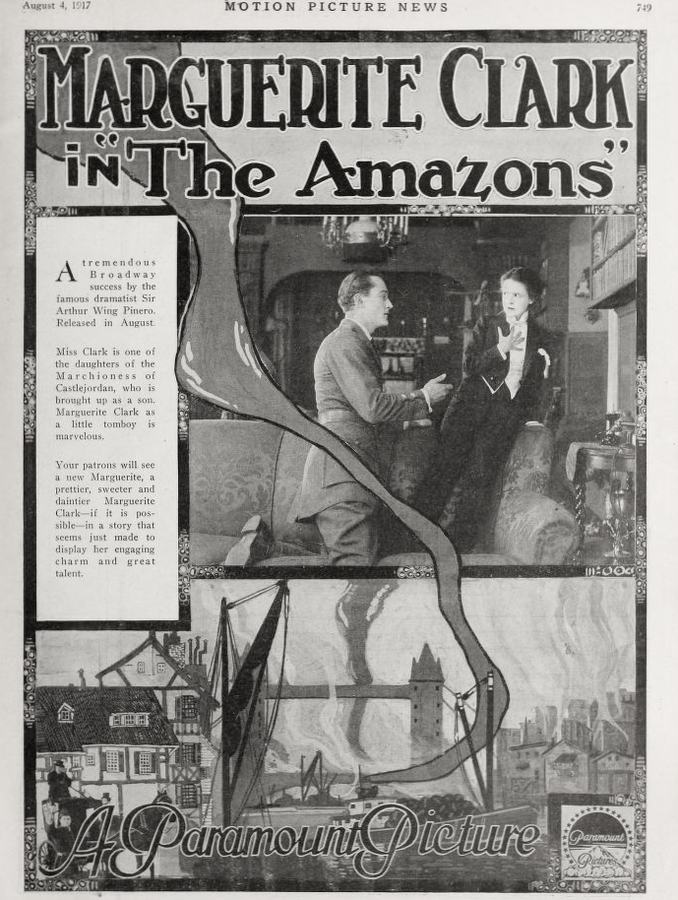
Silence, spectators: the reels are humming, and the 20th century is about to fracture.
We open on a wind-lashed terrace where top-hauled clouds scud across the screen like guilty thoughts. Helen Greene—her gaze a bayonet—looms in medium-close-up, the grain of the 1917 stock freckling her cheekbones with meteor-showers of silver. She is Anthea, the eldest, the one who learned to shave with a cut-throat razor before peach-fuzz ever kissed her chin. Notice how cinematographer William Marshall sidesteps the orthodox soft-focus on female faces; instead he lights Greene like a cadet, letting the magnesium flare etch the cartilage of her nose, the slab of her brow. The effect is uncanny: you cannot decide whether you desire her or salute her.
Cut to the interior: a Gothic hallway choked with stag heads. The camera glides past them, a conspirator, until it finds Marguerite Clark—Lysandra—perched on a library ladder, reciting Horace to a roomful of bewildered suitors. Clark, barely five-foot-one, was Hollywood’s perpetual ingénue; here she weaponizes that fragility, pitching her voice to a boyish alto that makes the maids blush. The irony is surgical: the men applaud her esprit, never guessing the Latin is a love-letter to the housekeeper’s daughter.
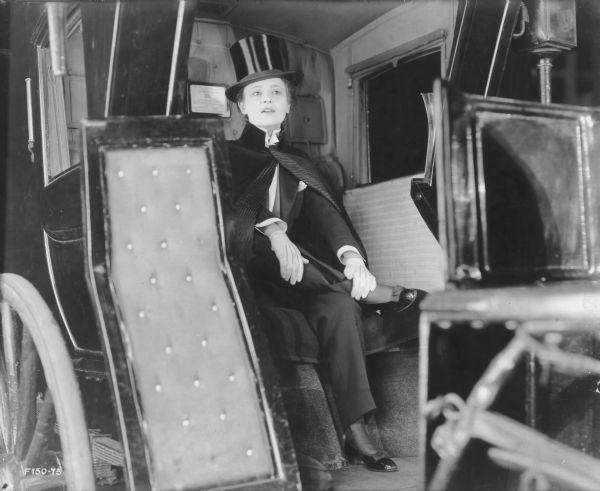
“A woman’s name is a cage; a man’s is a key—yet both are forged of the same brittle iron.”
—inter-title card written by Frances Marion
The narrative spine is a comedy of terrors, not manners. Adolphe Menjou arrives as Reginald, the dandified cousin whose gambling debts have mortgaged the ancestral pile. Menjou, all satin lapels and ennui, plays the predator as lounge-lizard: he suspects the siblings’ ruse and circles them with the languid cruelty of a cat toying with triple-headed mice. Watch how he fingers the lace of his cravat—every twitch is a threat. In the midnight billiards scene, his cue becomes a phallic divining rod, tapping against each sister’s masquerade, seeking the hairline crack.
Pinero’s third-act stage play creaks under Edwardian contrivance; Marion hacks it apart and rebuilds it as an engine of suspense. She interpolates cross-cut vignettes: Thalia (Eleanor Lawson) sneaking into the village fair wearing a stolen midshipman’s uniform; a close-up of her eyes reflected in a gypsy’s knife-blade; the sudden insertion of a locket photograph that reveals her dead mother in bridal gown—an matrilineal prophecy of return. Lawson, only seventeen during production, moves with the ungovernable velocity of someone who has never been allowed to occupy space. When she finally twirls barefoot on a pub table, letting her trousers billow like sails, the crowd’s roar is both ovation and menace.
Archivists at MoMA’s recent 4-K restoration discovered something delirious: the nitrate had been hand-tinted in selective reels. The sisters’ cravats pulse with molten orange; the sea beyond the cliffs washes in cyan fever. Only one reel survives in its original tinting—the reel where Anthea, discovered by the fiancée (Roxanne Lancing), stands before a mirror in half-unbuttoned shirt. The orange seeps into her collarbone like spilled rum; the frame seems to throb with the heat of exposure. We are witnessing not just gender reveal but color reveal: patriarchal monochrome hemorrhaging into forbidden spectrum.
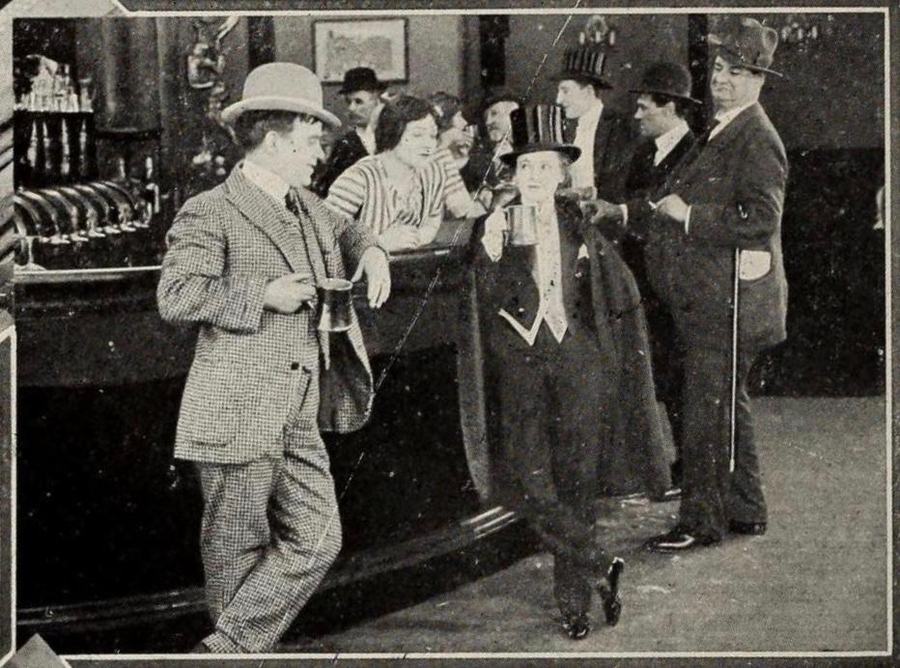
Because this is 1917, silence is a character. Listen—yes, listen—to the gaps between inter-titles. The projector’s clatter becomes the sisters’ accelerated heartbeats; the crackle of the carbon arc becomes the fuse of scandal burning toward them. In the climactic ballroom sequence, the orchestra is diegetically absent, yet Marion’s editing cadence supplies a phantom waltz: cut on the down-beat of a glance, cut on the off-beat of a gloved hand sliding across a cummerbund. You supply the Strauss; the film supplies the vertigo.
If you crave a ghostly double-bill, pair this with Hamlet (1917) where Jacques Grétillat also interrogates performance-as-identity, though his prince feigns madness where Anthea feigns manhood. Or chase it with Within Our Gates—Oscar Micheaux’s savage riposte to Griffith—where the politics of spectacle flip from white aristocratic charade to Black existential survival. Both films share the lacerating insight that social masks are never mere costume; they are scar tissue.
Conversely, avoid scheduling The Second Mrs. Tanqueray as dessert—its moralistic condemnation of female sexual history feels wan beside The Amazons’ anarchic refusal to accept any history written without its consent.
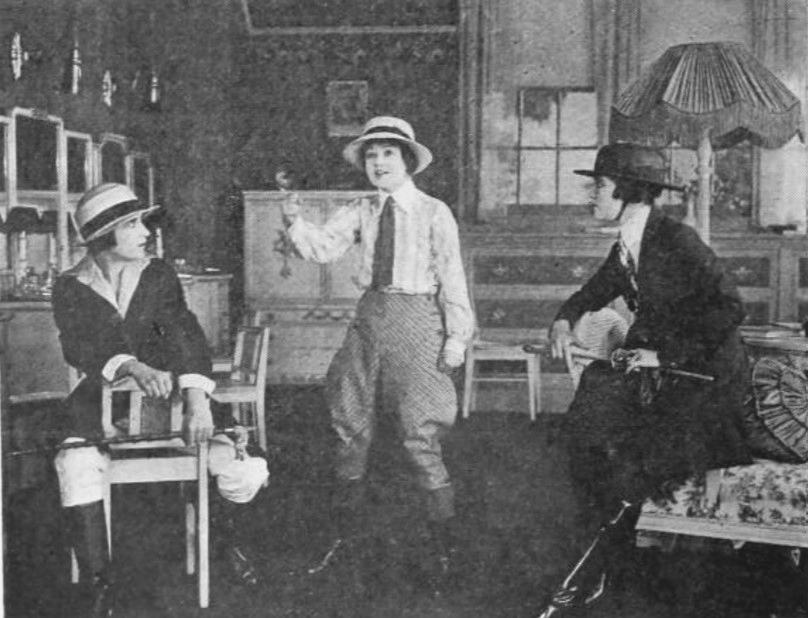
Greene never again received a role this feral; talkies would cast her as wilted dowagers. Here she vibrates at the frequency of someone who has read Medea in the original and decided that still isn’t angry enough. Watch her final close-up: the camera dollies until her iris fills the frame—an eclipse of certainty. You cannot tell if she is weeping or laughing; the ambiguity is the point.
Menjou, pre-His Girl Friday slickness, gifts Reginald a reptilian charisma. He twirls a monocle that reflects his victims like a convex hell. Yet Marion inserts a single inter-title—"He feared the mirror because it showed him the man he might have chosen not to be"—and Menjou’s eyes soften for four frames before the smirk snaps back. Villainy, the film whispers, is also a drag performance.
Contemporary queer theorists cite Judith Butler’s notion of performativity, yet here is a 1917 artifact already deconstructing the masquerade. The sisters do not become men; they unbecome women, revealing both categories as porous. The camera’s masculine gaze is itself destabilized—it ogles, then recoils, then interrogates its own ogling. When Anthea, discovered, tears open her waistcoat to expose the bandaged chest, the gesture is not erotic exposure but epistemological rupture: look, there is nothing to see—no phallus, no breast, only the terrible freedom of unclassifiable flesh.
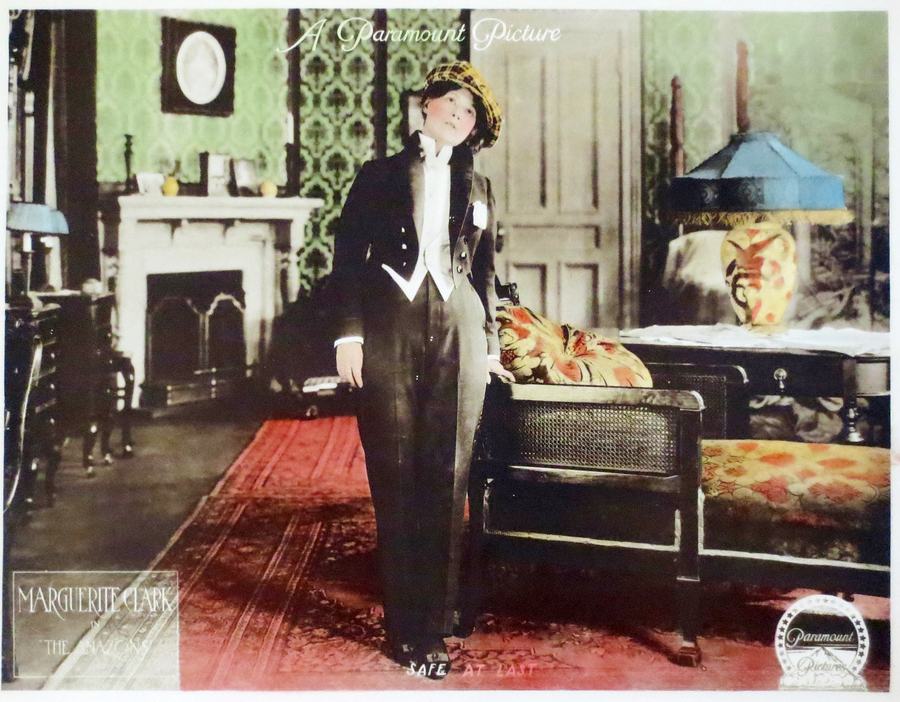
Ohio, Pennsylvania, and British Columbia boards demanded excisions: the lingering shot of Thalia kissing a milkmaid behind the carousel; the inter-title where Lysandra calls marriage "legalized servitude with wedding cake"; most egregiously, the epilogue hinting the sisters sail for Capri to open a “hotel for women who prefer to remain ungovernable.” Only the Library of Congress 35mm holds the uncut version, water-marked by vinegar syndrome like tears crystallized.
In an era of bathroom bills and algorithmic gender detectors, The Amazons feels less like relic than prophecy. Replace cravats with chest-binders, replace estate sale with eviction notice, and the story spills into 2020s Twitter threads. The sisters’ fear of being read is the same panic that haunts every trans teenager scanning a subway car for danger. Yet the film refuses pity; it arms its protagonists with irony, with strategy, with each other.
Streamers hungry for IP should note: the narrative is modular enough for a miniseries—each sister spinning off into different cities, different decades, their letters cross-edited like a 19th-century Cloud Atlas. Cast Jodie Comer as Anthea, let her crackle; let Ariana DeBose dance Thalia’s rebellion in a Charleston-era episode; give Lysandra to a middle-aged actress who has spent years being told she’s past her prime—watch her set the timeline ablaze.
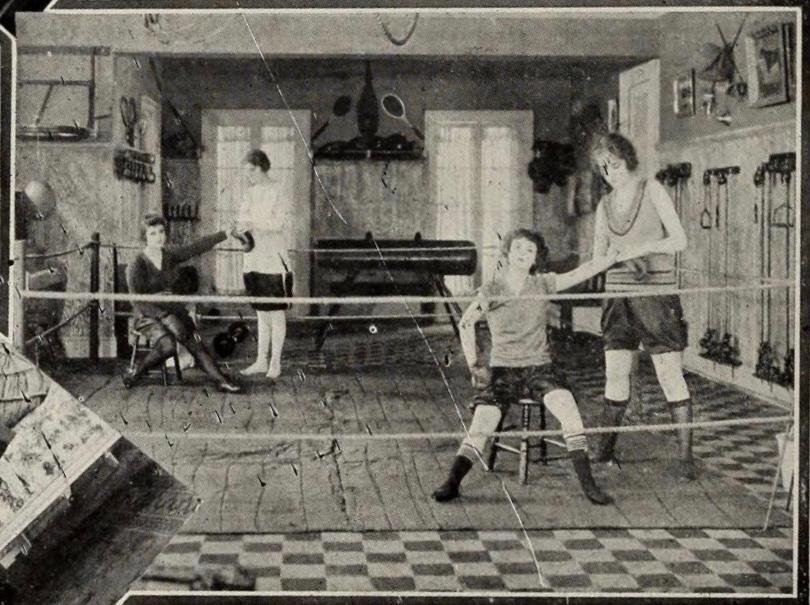
Shot on Mitchell Standard 35mm with 50mm Zeiss Tessars wide-open at f/3.5, giving depth-of-field so shallow that ears dissolve into impressionist haze. The film stock was Eastman 22, notorious for cobalt shift; restoration colorists had to subtract blue channel gain to rescue skin tones from cyan oblivion. Runtime varies: 78 min at 18 fps (MoMA), 68 min at 24 fps (YouTube travesty). Seek the Kino-Nitrate Blu-ray; it preserves the amber glow of candlelight without turning faces into pumpkin flesh.
Great art should feel dangerous even in the archive. The Amazons arrives like a smuggled letter from a prison camp of fixed identities, its envelope singed at the edges. Watch it to remember that every generation thinks it invented gender trouble; watch it to discover that 1917 already had switchblades tucked inside its spats. Then—crucially—pass the letter on before the nitrate robs us of the last trace of orange fire.
★★★★½ (out of 5). Half-star deducted only because the surviving print lacks the rumored two-strip Technicolor sequence of the sisters burning their trousers at dawn—lost, like so many revolutions, to the censors’ bonfire.
IMDb —
1927
Community
Log in to comment.