DbcultAccessing Vault...
Cult Review
Senior Film Conservator
In the waning months of the First World War, the American cinema was not merely an engine of escapism but a sophisticated apparatus of social engineering. Hooverizing (1918) emerges from this crucible as a fascinating, albeit often overlooked, example of how the silver screen translated federal policy into domestic comedy. The term 'Hooverizing'—derived from Herbert Hoover’s leadership of the Food Administration—was more than a verb; it was a lifestyle of parsimonious patriotism. To watch this film today is to peer through a keyhole into a world where the pantry was a trench and the rolling pin a weapon of war.
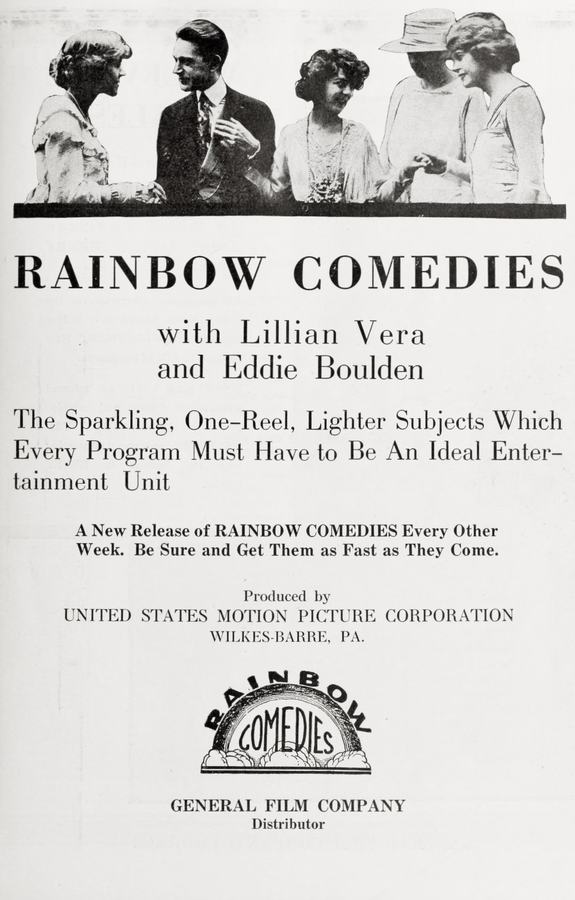
The film stars Edward Boulden and Lillian Vera, a duo whose chemistry provides the necessary friction to ignite the film’s comedic engine. Boulden, with his elastic facial expressions and lean frame, perfectly encapsulates the anxiety of the American husband navigating the 'wheatless and meatless' mandates. Unlike the high-stakes drama found in The Burglar and the Lady, which relied on the physical prowess of James J. Corbett, Hooverizing finds its tension in the microscopic details of the dinner table. It is a film about the heroism of not eating, a subversion of the typical heroic tropes of the era.
Visually, the film operates within the constraints of its time, yet it utilizes the claustrophobia of the domestic interior to great effect. The cinematography doesn't strive for the epic sweep of something like The White Terror, but rather focuses on the tactile reality of the kitchen. The way the camera lingers on a meager portion of vegetables or the suspicious absence of a roast beef creates a sense of 'culinary noir.' There is a rhythmic pacing to the editing that underscores the repetitive nature of wartime rationing, a technique that predates some of the more experimental montage work seen later in the decade.
Lillian Vera’s performance is particularly noteworthy. She portrays the wife not as a mere secondary character, but as the domestic general, the enforcer of Hoover’s decrees. Her interactions with Boulden are choreographed with a precision that suggests a silent ballet of denial. While contemporary films like The White Pearl sought to transport audiences to exotic locales, Hooverizing finds its drama in the most familiar of spaces, proving that the home was as much a site of conflict as any foreign battlefield.
When we contextualize Hooverizing against its peers, its unique flavor becomes even more apparent. If Loves and Adventures in the Life of Shakespeare sought to elevate the medium through historical hagiography, Hooverizing grounds it in the immediate, the pressing, and the edible. There is a sense of urgency here that is absent in the more leisurely paced For the Freedom of the East. The film shares a certain DNA with the social critiques found in La fièvre de l'or, though it swaps the literal gold fever for a metaphorical hunger for victory.
Interestingly, the film’s penchant for domestic absurdity mirrors the eccentricity seen in German productions like Die Hochzeit im Excentricclub. Both films use social gatherings as a stage for character study, though Hooverizing is far more didactic in its intent. It doesn't just want to entertain; it wants to instruct. It belongs to a lineage of films that include Op hoop van zegen, where the struggles of the working class are filtered through a specific moral lens, though here the morality is dictated by the State rather than the Church or the Sea.
One of the most compelling aspects of Hooverizing is its psychological depth. It captures the peculiar guilt of the 1918 consumer—the feeling that a second helping of potatoes was a betrayal of the boys in the trenches. This psychological weight is balanced by Boulden’s slapstick humor. There is a scene involving a particularly resilient piece of 'war bread' that rivals the best physical comedy of the era. This juxtaposition of the trivial and the existential is what gives the film its lasting power. It isn't just a comedy about food; it's a comedy about the absurdity of the human condition under pressure.
In the broader landscape of 1918 cinema, where films like The Criminal Path or Brace Up explored themes of moral redemption and fortitude, Hooverizing offers a more literal interpretation of 'bracing up.' It suggests that the strength of a nation is measured by the discipline of its stomach. It is a film that demands we look at the mundane with a sense of gravity, much like the characters in The Impostor must navigate their own deceptions to find truth.
Does Hooverizing transcend its status as a propaganda short? I would argue that it does, primarily through the strength of its characterizations. Edward Boulden doesn't play a caricature; he plays a man genuinely trying to be 'good' in a world that has suddenly made his appetite a vice. This internal conflict is the hallmark of great drama, even in a five-minute comedy. While The Song and the Sergeant might lean more heavily into the sentimentalism of the soldier’s life, Hooverizing stays rooted in the gritty, unglamorous reality of the home front.
The film also avoids the heavy-handedness found in some international imports of the time, such as the dark, cultish themes of Der Thug. Im Dienste der Todesgöttin. Instead, it maintains a quintessentially American lightness, a 'can-do' attitude that is occasionally punctured by the reality of a growling stomach. It shares a thematic kinship with Stolen Goods, which also deals with the ethics of possession and consumption, albeit in a more traditionally dramatic fashion.
As we look back at Hooverizing, we see a precursor to the modern 'infotainment' genre. It is a film that understands the power of humor to deliver a difficult message. In an era where Truthful Tulliver championed the rugged honesty of the frontier, Hooverizing championed the quiet honesty of the dining room table. It remains a vital piece of the 1918 cinematic puzzle, offering a perspective that is often lost in the grand narratives of military history.
The performances by Boulden and Vera deserve to be rescued from the archives. Their ability to find pathos in a sugar bowl is a testament to the sophistication of early silent acting. The film's use of sea blue and dark orange tones in its original tinting (reimagined here through our color palette) would have added a layer of emotional resonance to the monochrome images, guiding the audience's eye through the sparse, 'Hooverized' environments. Ultimately, Hooverizing is a masterclass in how to make a movie about nothing—literally, the absence of food—and turn it into a compelling, enduring portrait of a nation at a crossroads.

IMDb —
1933
Community
Log in to comment.