DbcultAccessing Vault...
Cult Review
Senior Film Conservator
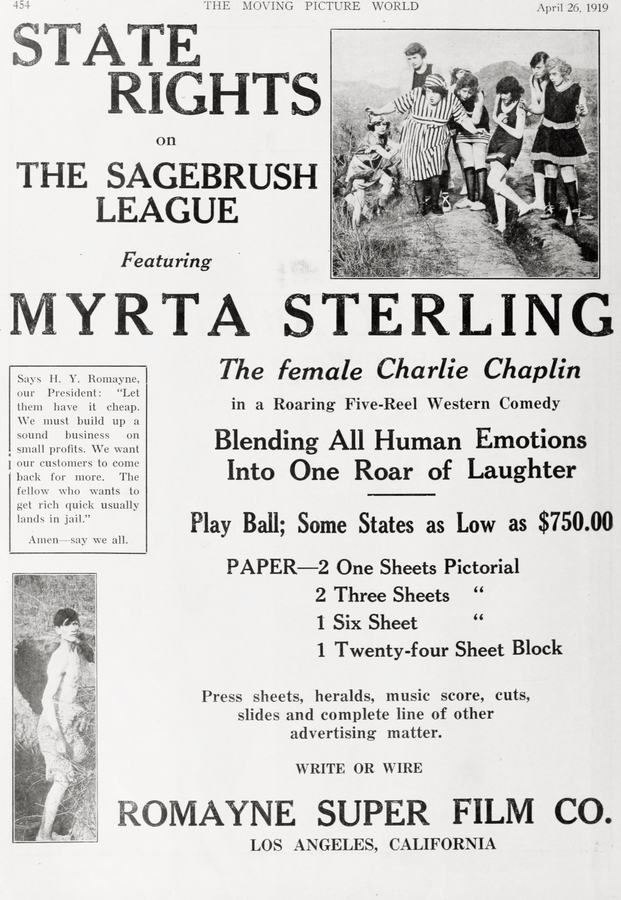
The cinematic landscape of the early 20th century was rife with tales of the American West, a frontier both real and imagined, beckoning audiences with promises of adventure, rugged individualism, and untamed beauty. Among these celluloid chronicles stands The Sage-Brush League, a film that, despite its vintage, offers a fascinating lens through which to examine the enduring allure and complex mythos of the Western genre. It’s a narrative steeped in the classic East-meets-West trope, yet executed with a certain charm and thematic depth that elevates it beyond mere genre fare.
Our story commences with Bob Owen, a character emblematic of the refined, somewhat naive Eastern sensibility. His inheritance of a sprawling ranch out West isn't merely a change of address; it's a seismic shift in his entire world view, an abrupt immersion into a reality far more visceral and demanding than his gilded cage back East could ever prepare him for. The film, even in its silent grandeur, masterfully conveys the initial disorienting jolt of this transplantation. One can almost feel the dust in the air, the vastness of the horizon, and the stark contrast between Owen’s polished boots and the unforgiving terrain of his new domain.
This journey isn't just geographical; it's an internal odyssey, a shedding of old skins. Owen, initially a fish out of water, must navigate the unwritten rules of the prairie, the subtle cues of the ranch hand, and the raw power of nature itself. His transformation, though perhaps predictable in its arc, is the beating heart of the film. It's a testament to the era's storytelling prowess that such a fundamental character development could be communicated with expressive acting and nuanced visual cues, rather than spoken dialogue.
Adding a compelling layer of social commentary to Owen's personal journey is the presence of the Sunny Rest Ranch. This establishment, situated tantalizingly close to Owen's authentic, working ranch, serves as a fascinating counterpoint. It is, by design, a sanitized, commodified version of the West, catering to the romanticized fantasies of Eastern tourists. They yearn for the 'wild, free life of the prairies and plains,' but only under carefully controlled conditions, devoid of genuine hardship or danger. This ingenious plot device allows the film to explore the burgeoning commercialization of the American mythos, the packaging of an experience for consumption rather than genuine immersion.
The Sunny Rest Ranch, in essence, represents the 'staged' West, a theatrical backdrop against which Bob Owen's 'real' West unfolds. The contrast is stark and rich with thematic implications. While the tourists at Sunny Rest might don cowboy hats and pose with horses, Owen is mucking out stalls, breaking wild broncos, and facing down genuine threats to his livelihood. This dichotomy allows The Sage-Brush League to subtly critique the superficiality of escapism, inviting audiences to ponder what constitutes true experience versus manufactured spectacle. It's a theme that resonates even today, in an age saturated with curated realities and simulated adventures.
While the plot synopsis focuses squarely on Bob Owen, the presence of Merta Sterling in the cast list suggests a crucial dynamic at play. In many Westerns of this period, a strong female character often serves as a grounding force, a guide, or even a catalyst for the protagonist’s transformation. One can envision Sterling embodying a character who is intrinsically of the West – perhaps a seasoned rancher, a spirited local, or even an insightful employee of the Sunny Rest Ranch who sees through its veneer. Her character would likely represent the authentic spirit of the frontier, possessing the resilience, practicality, and wisdom that Owen initially lacks.
Imagine Sterling’s character, with an understated strength and a knowing gaze, observing Owen’s initial blunders with a mixture of amusement and genuine concern. She might be the one to teach him how to ride properly, how to mend a fence, or how to read the subtle signs of the land. Her influence would be pivotal, not just in practical terms, but in shaping Owen’s understanding of what it truly means to be a Westerner. This partnership, or even a burgeoning romance, would add emotional depth to the narrative, providing Owen with both a mentor and a reason to fully embrace his new life. Her portrayal would be key to preventing Owen’s journey from becoming a solitary, almost academic, exercise in self-discovery, grounding it instead in human connection and shared experience.
The core thematic strength of The Sage-Brush League lies in its exploration of authenticity. Bob Owen’s journey is one of stripping away pretense, of learning to value grit over glamour, and substance over superficiality. The film, through its central conflict between Owen’s genuine struggles and the tourists’ manufactured enjoyment, asks profound questions about identity: Is one’s identity defined by birthright, or by the challenges one overcomes? Does the frontier truly transform, or merely reveal what lies beneath?
This narrative echoes similar themes found in other films of the era, where characters are often tested by circumstance and forced to forge new identities. Consider The Road Through the Dark, which, while perhaps not a Western, similarly delves into arduous journeys of self-discovery and the trials that forge character in the crucible of adversity. Both films, in their unique settings, champion the resilience of the human spirit when confronted with the unknown and the arduous. The 'sage-brush league' itself, therefore, might symbolize not just a physical location, but a fraternity of individuals who have truly earned their stripes, who belong to the authentic West, in stark contrast to the transient visitors of Sunny Rest.
While specific directorial choices and cinematographic innovations of The Sage-Brush League are lost to the mists of time for many, the very existence of such a nuanced plot in the silent era speaks volumes about the sophistication of early filmmaking. Silent films relied heavily on visual storytelling, expansive landscapes, and exaggerated, yet often deeply felt, performances. One can imagine the panoramic shots of the prairie, the thrilling sequences of Owen learning to master a horse, and the dramatic interplay of light and shadow that would have characterized this picture.
The Western genre, even in its infancy, was already establishing its iconic visual language. The wide-open spaces, the solitary rider, the dusty towns – these elements were becoming shorthand for a particular kind of American dream and struggle. Comparing it to something like Wolves of the Rail, another contemporary piece, one can see the common threads of action, adventure, and the struggle against external forces. However, The Sage-Brush League seems to weave in a more introspective layer, focusing as much on the internal landscape of its protagonist as on the external perils of the frontier.
The film likely employed classic silent film techniques to convey emotion: close-ups on Owen’s bewildered or determined face, dramatic gestures, and intertitles that would have provided crucial insights into his thoughts and feelings. The visual contrast between the manicured elegance of Eastern attire and the rugged practicality of Western wear would have been a potent visual metaphor for Owen’s transformation, a silent language understood implicitly by audiences of the time. This era’s films often managed to communicate complex emotional arcs with remarkable clarity, an art form in itself.
The popularity of Westerns during this period was not accidental. They served as a powerful mythology for a young nation grappling with its own identity, particularly in the wake of industrialization and urbanization. The West represented a space of reinvention, freedom, and a return to fundamental values. Films like The Sage-Brush League contributed to this ongoing dialogue, offering narratives where individuals could escape the perceived corruptions of civilization and find redemption or purpose in the vast wilderness.
The tension between the 'virtuous' East and the 'wild' West was a common trope, often seen in films that tackled moral questions, not unlike The Virtuous Model, though that film likely explored urban moralities rather than frontier ethics. The Western, however, often presented a simpler, starker moral code, where actions had immediate consequences and a person's worth was often judged by their deeds rather than their lineage. Owen's journey is a microcosm of this larger national narrative – the East bringing its baggage, but the West demanding a new, more authentic self.
Furthermore, the idea of cultural clash was not exclusive to the American West. Consider Bound in Morocco, which would have explored different exotic settings and the challenges faced by characters navigating unfamiliar cultures. While the settings differ vastly, the underlying human experience of adaptation, misunderstanding, and eventual integration (or rejection) remains universal. The Sage-Brush League grounds this universal theme in a distinctly American context, making it resonate with audiences who were themselves part of a rapidly changing society.
While The Sage-Brush League might not be as widely remembered as some of its more famous contemporaries, its detailed plot summary suggests a film of considerable ambition and thematic richness. It’s a testament to the fact that even seemingly simple stories from the early days of cinema often carried layers of social commentary and psychological insight. Its exploration of the East-West divide, the commercialization of experience, and the transformative power of the frontier are themes that continue to resonate in modern storytelling.
To view The Sage-Brush League today, were it readily available, would not just be an exercise in historical appreciation; it would be an opportunity to witness the foundational elements of a genre that profoundly shaped American cinema and culture. It would offer a glimpse into how early filmmakers grappled with complex ideas using a nascent art form, relying on visual eloquence and the raw power of performance to convey narratives of personal growth and societal critique.
The film, in its quiet way, stands as an archetype. It embodies the spirit of an era where cinema was finding its voice, telling stories of a nation still defining itself. Its narrative structure, even with the limited information, suggests a profound understanding of human nature and the allure of self-reinvention. It’s a compelling reminder that even films from a century ago can offer fresh perspectives on timeless themes, proving that the sage-brush league, in all its rugged authenticity, continues to hold a powerful sway over our collective imagination.
IMDb 5
1916
Community
Log in to comment.