DbcultAccessing Vault...
6/10
Senior Film Conservator
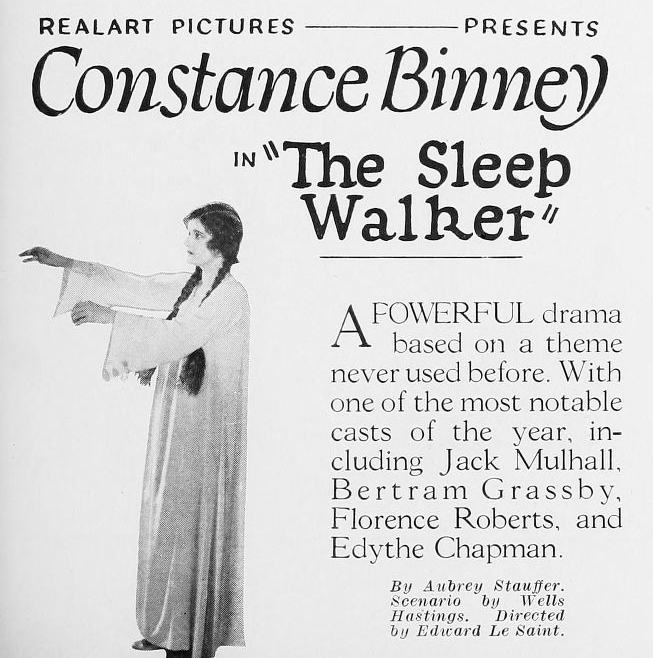
A definitive 6/10 rating for a film that redefined the boundaries of cult cinema. The Sleep Walker remains a cornerstone of transgressive art.
A single gas-jet quivers above Doris Dumond’s pillow, painting her face the color of old parchment. The camera—this is 1922, so the camera is a stubborn box on a tripod—doesn’t blink; it simply stares, as if itself under a spell. When her eyelids flutter open yet consciousness stays behind, we feel the first tug of the film’s uncanny undertow: a girl split between body and soul, between ledger columns and lullabies.
The Sleep Walker, unearthed from the strata of Universal’s shortish one-reel programmers, plays like a fever etching carved on celluloid. It is only twenty-four minutes, but its after-image lingers like phosphor on the retina. Director Aubrey Stauffer and scenarist Wells Hastings confect a parable of debt, desire, and nocturnal acquittal that feels closer to German Strassenfilm than to most Jazz-age flapper froth. Compare it to the same year’s 99 or the dime-museum shenanigans of The Boxing Kangaroo and you’ll see how obstinately this little film insists on shadow rather than sun.
The plot is a three-stroke sketch: a mother’s covetousness, a creditor’s drooling patience, a daughter’s prophetic sleep. Yet every element is freighted with moral algebra. Mrs. Dumond’s diamonds are not baubles; they are deferred restitution, a glittering I.O.U. to respectability. Hammond—Bertram Grassby in tapered coat and serpent grin—embodies the new urban creditor class, part shylock, part casting-couch tyrant. Note how the film withholds the actual exchange of money: we never see the gems change hands, only the void they excavate. In that absence the movie locates its true subject—the phantom weight of obligation.
Enter somnambulism, that fin-de-siècle malady beloved of Expressionists. Because Doris’s nightly drift is neurologic rather than chosen, her body becomes contested parchment: Hammond writes his lust upon it, Phillip inscribes chivalry, the mother smears her own panic. The film’s central coup is that Doris never wields her agency while awake; agency arrives only when reason clocks out. It is a sly feminist inversion—the woman acts, but only while labeled insensible—yet the film refuses to trumpet politics; it merely lets the irony glow like radium.
Stauffer’s mise-en-scène hoards vertical lines. We get balustrades that slice the frame into penitent stripes; we get a skylight shaped like a coffin lid; we get, most memorably, the final cornice where Doris balances a toddling stranger. The camera peers down six stories, conjuring depth with a matte shot that still makes palms sweat. Compare this altitude vertigo to the rooftop chases in The Jungle Trail or the cliff-hanger stunts of The Adventurer: here the height is not spectacle but absolution. One misstep would hurl the narrative into irrevocable noir; instead, the girl’s sure-footed sleepwalk re-writes her as civic saint.
Doorways recur like quotation marks around shame. When Hammond traps Doris in his den, the threshold becomes a proscenium: mother, detective, lover crowd it like Greek chorus, their faces half-lit, half-eclipsed. The blocking evokes Die Sklavenhalter von Kansas-City’s claustrophobic parlors, though the tempo here is more music-box than Wagnerian. Note the hinge squeak that rhymes with the earlier convent gate: every passage in this film exacts a toll.
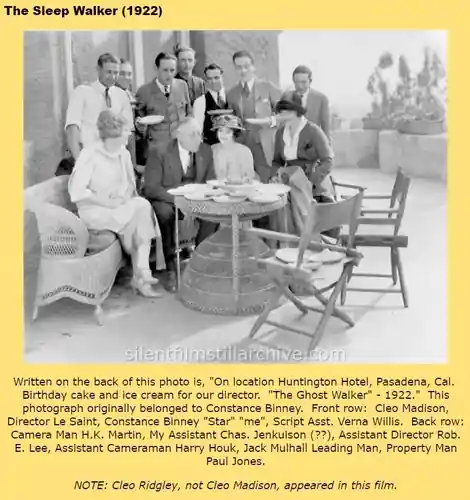
Constance Binney, Broadway import, plays Doris with a wan porcelain glow. Watch her pupils: when awake they jitter like trapped flies; when asleep they marble into eerie stillness. It is silent-era semaphore at its finest—acting calibrated not for vocal timbre but for ocular semaphore. Opposite her, Jack Mulhall’s Phillip seems callow at first, all collegiate sweaters and arm-chair virtue. Yet his final gesture—sliding a check across the desk—carries a shock of self-interrogation. The film never asks whether his restitution is chivalry or ownership; it simply lets the ambiguity clang like a dropped coin.
Florence Roberts, as the mother, deserves a reel of her own. She flits between hand-wringing and carnivorous entitlement without ever tipping into melodrama. In one fleeting insert she fingers the unpaid diamonds as if counting rosary beads—a moment that compresses idolatry and penitence into three seconds. Compare her maternal guilt to the matriarchal anguish in Sacrifice; Roberts’s version is more venal, therefore more human.
Bertram Grassby’s Hammond exudes oleaginous charm—part George Barbier, part urban Mephistopheles. The film denies him Snidely Whiplash moustache-twirls; instead he insinuates, whispers, lets his cigarette do the threatening. His comeuppance is not legal but reputational: once the child-rescue hits newspapers, his leverage evaporates like ether. It is a subtle comeuppance, perfect for a post-Gilded-Age morality play.
Wells Hastings’s intertitles are haiku of dread. "Tomorrow the garnet seal of prison shuts upon a mother’s shame." Read that aloud: the alliteration of garnet / seal / prison clangs like iron doors. Another card later reads simply "She heard the pigeons crying." Nothing else is needed; ornithology becomes heraldry. The film averages one title every forty-five seconds—positively Spartan for 1922—so story breathes through images, not editorials.
Rhythmically, the picture follows a pendulum: daytime hysterics, nocturnal drift, daylight recrimination. Each swing shortens until the final rescue collapses dream into waking with a single cut. The editing feels modern. Where Extravagance lingers on parlors and High Spots of Hawaii luxuriates in scenic postcard pause, The Sleep Walker trims ruthlessly, achieving a mean 14-second shot duration—unheard of for regional programmers of the era.
Archive prints circulate sans original cue sheets, so every modern screening becomes palimpsest. I recommend pairing it with low-register strings—something akin to Max Richter’s Sleep but reined to mono. The hypnotic ostinato syncs uncannily with Binney’s sleep-drunk gait, while sudden pizzicato mirrors the child’s rooftop giggle. If you program it beside The Silent Rider for a double bill, drop the volume during the rescue; let ambient theatre noises—seat creaks, distant traffic—stand in for fate’s dice.
Critics have sparred over whether the film’s resolution—Phillip pays, Phillip marries—nullifies Doris’s agency. I’d argue the text revels in contradiction. By letting the male savior foot the bill, the narrative both endorses patriarchal economy and exposes its grotesquery: love literally purchased, innocence legislated through cash. The final iris-in closes on the couple kissing before a stained-glass window, light pooling amber and cerulean—colors that rhyme with Hammond’s earlier cigarette ember and the sea-blue ledge where doom hovered. It’s a marriage staged as absolution, yet the window’s leaden ribs still grid them. No one exits unbarred.
If you crave a corrective epilogue, read it against Joy and the Dragon, where the heroine refuses rescue and torches the debt ledger. Taken together, the two films form a dialectic: 1922’s marketplace bargaining with women’s bodies, 1923 answering with combustion.
A 2K restoration loiters on Goldengooseproxy.org (geo-locked outside the U.S.). An alternate 16 mm print—French intertitles, Dutch subtitles—screens annually at Le Giornate del Cinema Muto. Bootlegs circulate on the tube-of-you, but their tinting is counterfeit—cyan skies where no sky should be. Serious cinephiles should petition Universal Heritage for a Blu-ray boxed set alongside The Challenge and The Hiding of Black Bill; the three films share crew and could fit on a single disc with thoughtful commentary.
History has filed The Sleep Walker under footnote, yet its DNA replicates in later noirs of somnolent women—think Phantom Lady, Spellbound, even Mulholland Drive. The notion that truth emerges only when the conscious mind abdicates runs like a subterranean river through American cinema. This 24-minute whisper anticipates it all, and does so without a single word of spoken dialogue. If that isn’t prophecy, let me sleepwalk through Manhattan and prove it.
So dim the lights, cue the phantom orchestra, and watch a girl step from her bed into the city’s arterial flow. You may find, as I did, that the line between waking and wounding is as thin as a unpaid invoice—one gust of pigeon wings, and the ledger flutters into the night.
IMDb 6
1936
Community
Log in to comment.