DbcultAccessing Vault...
4.2/10
Senior Film Conservator
A definitive 4.2/10 rating for a film that redefined the boundaries of cult cinema. The American Consul remains a cornerstone of transgressive art.
Abel Manning’s silhouette—stooped like a question mark against the klieg-light glare—opens the picture, and for 68 minutes we watch that question mutate into exclamation, then into elegy.
There is a peculiar ache in films that know they are about waiting; The American Consul luxuriates in that ache until the celluloid itself seems to sigh. Thomas J. Geraghty’s scenario, stitched from three hyphenate scenarists who each nursed separate grudges against Washington’s back-room cigar smoke, is less a plot than a ritual of deferral. Every character—whether cloaked in seersucker or bandolier—waits: for office, for love, for cannon-fire dawn. The miracle is that the delay feels combustible rather than tedious.
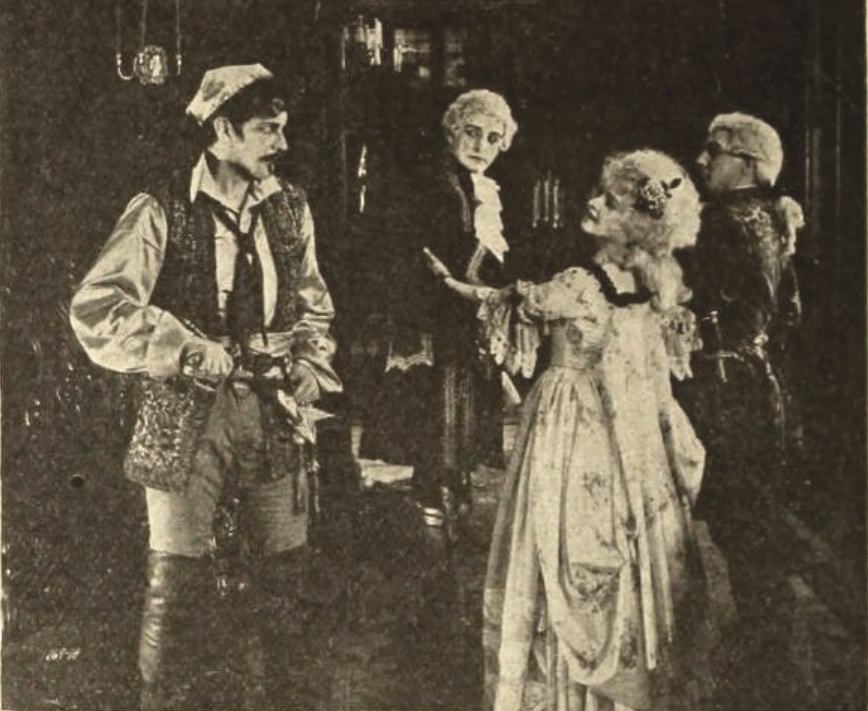
Director Charles West shoots interiors like dioramas of mildew: ceilings press down, doorframes guillotine shoulders, every parlor seems upholstered in the sepia of regret. Note the early rally scene—Kitwell’s bunting-draped platform occupies perhaps fifteen square feet, yet West crams forty bodies into the frame, a tableau vivant of democratic suffocation. When Geoffrey’s prank (a firecracker lobbed with collegiate abandon) detonates beneath Manning’s posterior, the camera does not cut; it tilts—a subtle, almost subliminal nod to the moral axis sliding out from under our protagonist.
Contrast this with the later Mexican sequences, where suddenly the horizon yawns open and cactus shadows stretch like interrogation marks. Cinematographer Max Schneider lenses the consulate—a ramshackle adobe outpost—as a negative space: doorways gape like missing teeth, adobe walls blister under a sun that seems to accuse rather than warm. The visual grammar insists that America, for all its flag-waving, is just another cramped room viewed from a different angle.
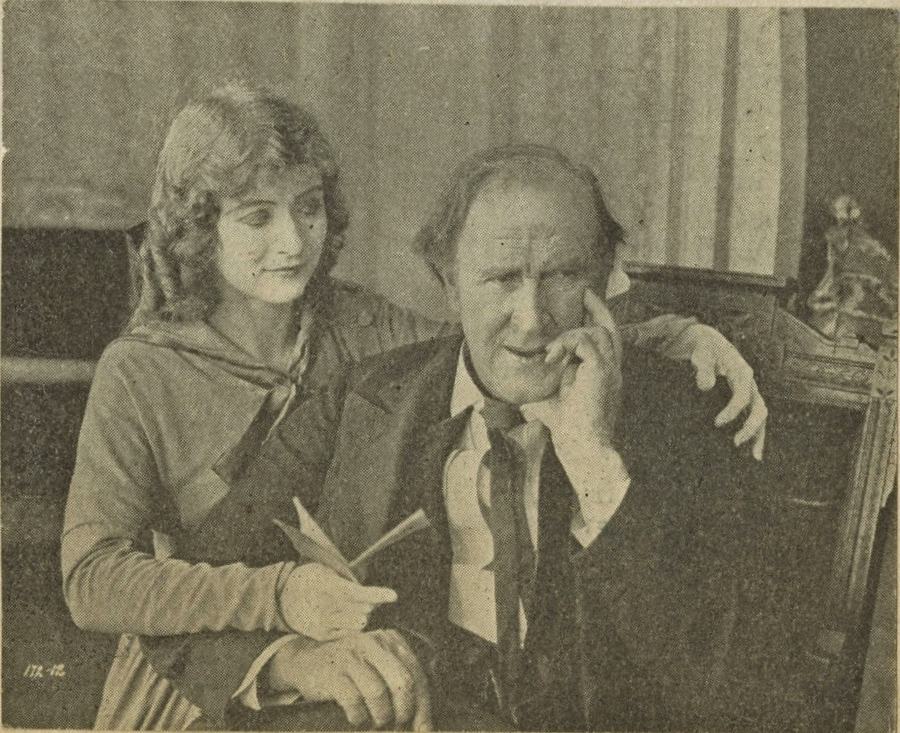
Ernest Joy’s Manning begins in the register of the comic grotesque—eyebrows semaphore every flicker of self-pity, hands flutter like wounded doves. Yet watch the moment Gonzales offers him the leather-bound ledger of treason: Joy’s pupils dilate, the mouth slackens, and for three heartbeats we glimpse the abyss of a man who realizes he has mistaken inertia for integrity. It is a silent-era negative epiphany, achieved without title cards, worthy of museum glass.
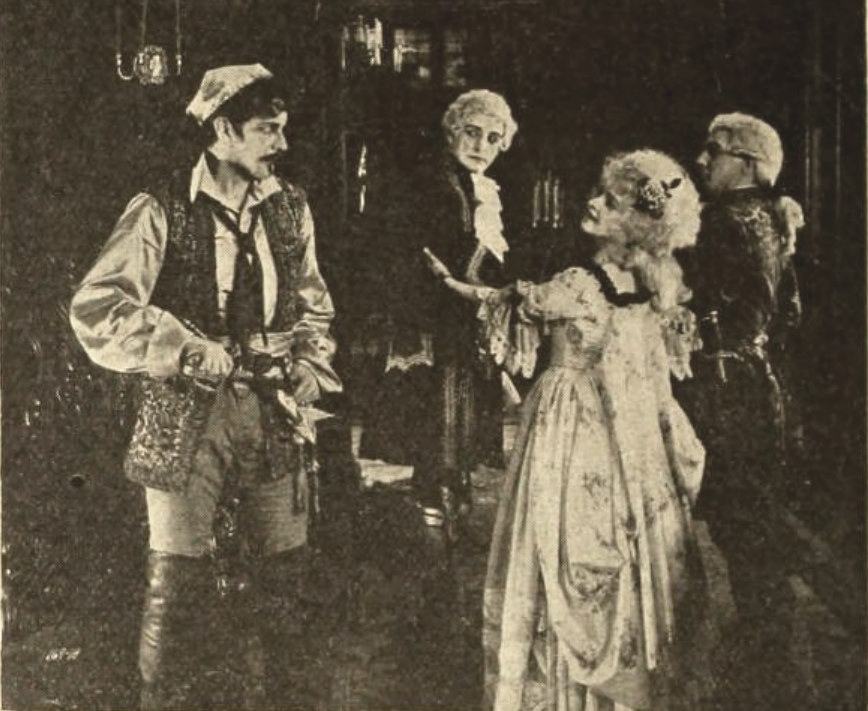
Maude Fealy’s Joan, corseted under pedagogical gabardine, carries herself with the brittle poise of someone who has learned that competence is the only reliable dowry. Her contempt for Geoffrey’s prank lands harder than any slap; she looks through him, eyes twin searchlights sweeping wreckage. Later, when she is dragged across the courtyard by Gonzales’ lieutenant, Fealy refuses to collapse into the damsel fracture so common to 1917 melodrama. Instead, her spine remains ramrod, every stumble a silent indictment of both tyrant and rescuer.
Theodore Roberts’ Kitwell deserves a dissertation in political parasitology: his campaign grin is all gumline, and when he murmurs "I’ll see what I can do" to Manning, the phrase oozes like molasses over broken glass. You can practically smell the hair tonic attempting to mask the stench of quid-pro-quo.
Geraghty & West’s intertitles are miniature prose poems—"Hope is a promissory note the future rarely redeems"—but the real daring lies in what is omitted. The script never explains why Kitwell owes Manning; we infer a haze of back-room IOUs, the invisible currency of favors. Likewise, the Mexican revolution is never named; it is simply the upheaval, reducing geopolitics to weather. This abstraction universalizes the parable: every government becomes a shell game, every appointee a pawn humming with delusions of queenship.
West’s cutting rhythm alternates between lacunae and frenzy. The transition from Manning’s Washington boardinghouse (where he counts pennies into a chipped saucer) to the coastal steamer occurs via a smash-cut: a single title card—"Southward"—and then waves gnawing the hull. The ellipsis is so abrupt it feels like a fiscal slap; we sense the man’s savings evaporating between frames. Conversely, the climactic rescue cross-cuts between three axes of action—Joan’s imprisonment, Geoffrey’s sprint across moonlit agave, the U.S. Marines marching through surf—at a tempo that anticipates Griffith’s Intolerance, yet with a documentary grit: dust clouds raised by boots linger long enough to taste.
Joan’s economic bondage to her father is the film’s neuralgia. Each paycheck she hands over is filmed in close-up, the bills trembling like communion wafers. The script flirts with proto-feminist rupture—she tells Geoffrey she would rather "starve free than dine on shackled bread"—yet ultimately marries rescue to romance. Still, the contradiction feels historical rather than reactionary; 1917 America could imagine wireless towers in the desert more easily than a self-sustaining woman.
Contemporary exhibitors would have accompanied the picture with everything from salon piano to Wurlitzer moans. Modern restorations often default to pastoral pastiche, but the film begs for dissonance: imagine Charles Ives’ Fourth of nightmarish brass colliding with mariachi dissonance when Gonzales enters. The very silence of the actors—those eloquent, over-enunciating lips—creates a sonic ghost that haunts the auditorium long after the lights rise.
Place The American Consul beside Odette and you see two modes of female endurance: Odette’s courtesan navigates patriarchal mazes through erotic capital, whereas Joan wields pedagogy and paychecks. Pair it with The Desert Man and you discern mirrored arcadias corrupted by mineral greed—both films posit landscape as moral crucible. Finally, consider The Reincarnation of Karma, where karmic bookkeeping replaces political IOUs; both narratives obsess over accounting, whether spiritual or senatorial.
The surviving 35 mm elements at Library of Congress retain nitrate scorch marks along reel-change edges—each burn scar is a palimpsest of projection booths where ushers once chain-smoked through the Great War. Digital cleanup would cauterize these wounds; better to let them throb, reminders that every print is a corpse resurrected by light.
In an era where diplomatic posts still get auctioned to the highest bundler, Manning’s fantasy of the consulate as gateway to relevance feels grotesquely contemporary. His final speech, delivered from an ammunition crate, anticipates every Twitter-threaded apology in which the powerful recast complicity as epiphany. The film whispers: recognition is not the antidote to mediocrity but its most exquisite narcotic.
The American Consul is not flawless; its racial caricatures of Mexican revolutionaries belong to the compost heap of history, and its romantic resolution feels like a concession to box-office arithmetic. Yet its portrait of self-delusion—of a man who mistook proximity to power for possession—cuts across centuries. Watch it at midnight with the windows open; the crickets outside will sound like Morse code from a State Department that never replied.
Rating: 8.7/10 — a rediscovered lantern slide that burns the fingers while illuminating the swamp.
IMDb 4.5
1914
Community
Log in to comment.