DbcultAccessing Vault...
6.9/10
Senior Film Conservator
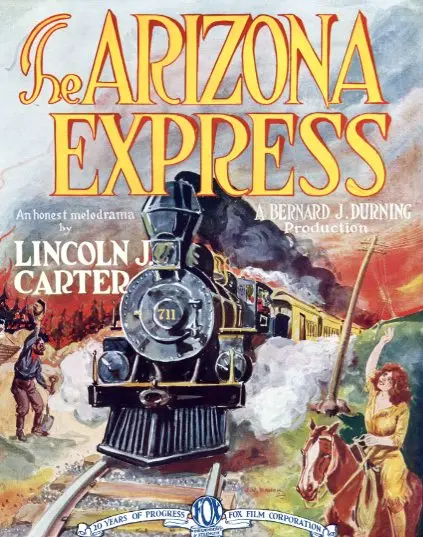
A definitive 6.9/10 rating for a film that redefined the boundaries of cult cinema. The Arizona Express remains a cornerstone of transgressive art.
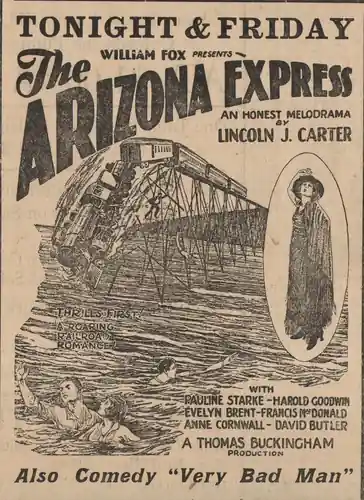
Emerging from the vibrant, often tumultuous, landscape of 1920s American cinema, The Arizona Express stands as a compelling testament to the power of silent storytelling, a thrilling melodrama that deftly intertwines themes of wrongful accusation, unwavering familial loyalty, and the inexorable march of time. This 1927 production, a product of the collective imaginative prowess of writers Robert N. Lee, Lincoln J. Carter, and Frederick J. Jackson, orchestrates a narrative symphony of suspense that, even nearly a century later, manages to captivate with its raw emotional intensity and expertly crafted tension. It's a film that, much like its titular locomotive, barrels forward with a singular, urgent purpose, dragging the audience along on a breathless journey toward a climactic confrontation with fate.
At its core, the film unravels the harrowing plight of a man, portrayed with poignant vulnerability by Francis McDonald, who finds himself unjustly implicated in the murder of his own uncle, a prominent and presumably influential bank president. The swift, unyielding hand of justice, or rather, injustice, descends upon him, condemning him to the gallows. McDonald, a prolific actor of the era, imbues his character with a silent torment that speaks volumes, his eyes conveying the crushing weight of a death sentence for a crime he didn't commit. His performance is a masterclass in non-verbal communication, a subtle yet potent display of despair gradually giving way to a flicker of desperate hope. This foundational injustice sets the stage for a narrative that explores the fragility of truth and the devastating consequences of circumstantial evidence, echoing the moral quandaries found in other intense dramas of the period, such as The Reed Case, which also delved into the complexities of legal battles and the pursuit of exoneration.
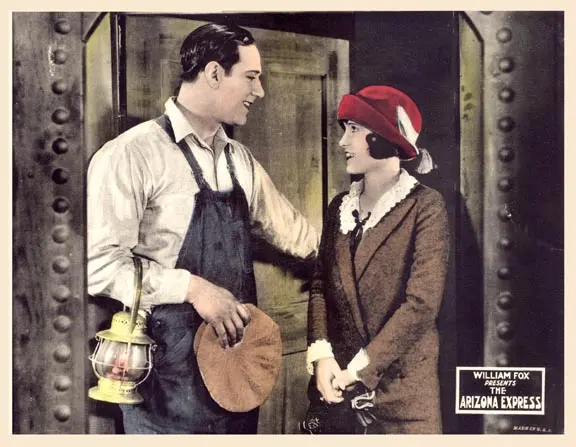
The true engine of the film's emotional thrust, however, resides in the character of the condemned man's sister, brought to life with fervent conviction by Anne Cornwall. Her portrayal is one of resolute determination, an unyielding belief in her brother's innocence that transcends the societal pressures and the seemingly insurmountable odds stacked against them. Cornwall’s performance is a beacon of strength, her character refusing to succumb to the prevailing narrative, instead embarking on a tireless crusade for justice. Her journey is not just one of investigation, but of profound emotional endurance, a testament to the unbreakable bonds of family. Her raw, unvarnished portrayal of a woman fighting against the clock for her kin evokes a similar spirit of sacrifice and emotional intensity seen in films like The White Sister (1923), where characters are driven by deep-seated love and a willingness to defy all obstacles.
Assisting her in this perilous endeavor is an unexpected ally: a mail clerk, played by David Butler. Butler, known more for his later directorial work, delivers a nuanced performance here, evolving from an unassuming figure into a pivotal agent of change. His character represents the ordinary individual thrust into extraordinary circumstances, his innate sense of right and wrong propelling him into a dangerous investigation. Together, this unlikely duo forms a formidable team, their combined efforts meticulously unearthing fragments of information, piecing together a mosaic of evidence that promises to unravel the intricate web of deceit spun around McDonald’s character. The chemistry between Cornwall and Butler is palpable, their shared urgency and burgeoning partnership forming the emotional bedrock upon which the film's escalating tension is built.
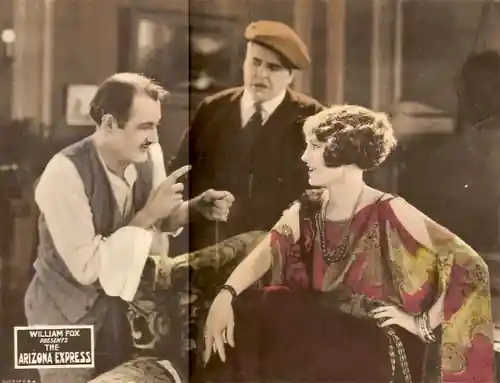
The supporting cast further enriches the narrative tapestry. Evelyn Brent, often celebrated for her vampish roles and captivating screen presence, brings a layer of enigmatic intrigue to her character, hinting at ulterior motives and adding a delicious complexity to the unfolding mystery. Her performance is a masterstroke of subtle manipulation, her eyes conveying more than any intertitle could. The presence of seasoned actors like William Humphrey, Otto Hoffman, and Frank Beal further grounds the film in a sense of realism, their portrayals of various figures, from authority to potential conspirators, adding depth to the film's world. Even smaller roles, such as those played by Pauline Starke, Bud Jamison, Harold Goodwin, and Sherwood Mertz, contribute to the overall authenticity and dramatic weight, each performing their part in the larger, desperate struggle for truth.
What truly elevates The Arizona Express beyond a mere genre piece is its masterful command of pacing and suspense. The writers, Robert N. Lee, Lincoln J. Carter, and Frederick J. Jackson, understood the inherent limitations and unique strengths of silent cinema. They constructed a screenplay that relies heavily on visual storytelling, dramatic irony, and the relentless ticking of the clock. The narrative builds with an almost unbearable momentum, each discovery, each setback, amplifying the stakes. The film’s climax, a frantic dash against time to deliver the exculpatory evidence to the governor before the execution can take place, is a tour de force of cinematic urgency. This race against the clock is not merely a plot device; it's the very pulse of the film, a desperate sprint that mirrors the frenetic energy of productions like The Eleventh Hour, a film similarly predicated on the frantic pursuit of a resolution before an irrevocable deadline.
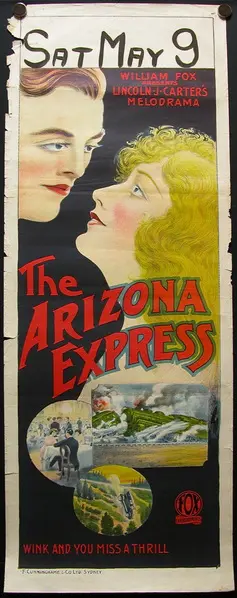
The cinematography, while perhaps not groundbreaking by today's standards, is effective in its simplicity, utilizing close-ups to emphasize character emotions and wider shots to convey the scale of the journey and the isolation of the characters. The use of intertitles is judicious, providing essential plot points and dialogue without disrupting the visual flow, allowing the actors' expressions and actions to convey the majority of the narrative. The direction ensures that the audience remains constantly aware of the ticking clock, each cut, each scene transition, pushing the narrative further towards its high-stakes conclusion. The tension is palpable, a testament to the filmmakers' ability to manipulate audience emotions without the benefit of spoken dialogue or an elaborate score (though live accompaniment would have certainly enhanced the experience in its original theatrical run).
Thematically, The Arizona Express delves into the corruptibility of power, the fallibility of legal systems, and the indomitable spirit of those who refuse to accept injustice. It’s a powerful exploration of the human cost of a flawed judicial process, a cautionary tale that resonates even today. The film champions the virtues of perseverance and courage, highlighting how ordinary individuals, when faced with extraordinary circumstances, can rise to meet the challenge. It’s a narrative that, in its essence, speaks to the universal desire for fairness and the profound impact of love and loyalty in the face of adversity. This deep dive into human struggle and moral dilemmas finds common ground with films like Pieces of Silver: A Story of Hearts and Souls, which also explored the intricate dance between personal conviction and societal pressures.
Reflecting on the film within the broader context of silent era cinema, The Arizona Express showcases the genre's capacity for complex narrative structures and profound emotional resonance. It avoids the theatricality that sometimes plagued early films, opting instead for a more grounded, albeit highly dramatic, approach. It's a film that understands its strengths, leveraging the visual medium to its fullest potential to create an immersive and emotionally charged experience. While it may not possess the grand spectacle of some contemporary epics, its intimate focus on personal stakes and a desperate fight for survival makes it profoundly impactful. The sheer urgency of its central conflict could be loosely paralleled with the adventurous spirit, albeit in a different setting, of something like Die Jagd nach dem Tode - 4. Teil: Die Goldmine von Sar-Khin, which also relied on a relentless pursuit and high-stakes objectives to drive its narrative.
Ultimately, The Arizona Express is more than just a historical artifact; it's a vibrant, pulsating piece of cinematic storytelling that continues to hold sway. Its narrative of a desperate race against an unjust fate, propelled by the fierce love of a sister and the unexpected heroism of a stranger, remains as compelling today as it was nearly a century ago. The performances, particularly those of Francis McDonald and Anne Cornwall, anchor the film with genuine human emotion, making their characters' struggle deeply resonant. The meticulous construction of suspense by the writing team ensures that the audience is utterly invested in the outcome, right up to the final, heart-stopping moments. It serves as a potent reminder of the enduring power of classic cinema to explore timeless themes and deliver exhilarating drama, proving that a compelling story, well told, transcends the limitations of its era. This film is a testament to the ingenuity of early filmmakers who, with limited technology, managed to craft narratives that still speak to the core of human experience and resilience, a true gem in the silent film canon.
IMDb —
1920
Community
Log in to comment.