DbcultAccessing Vault...
Cult Review
Senior Film Conservator
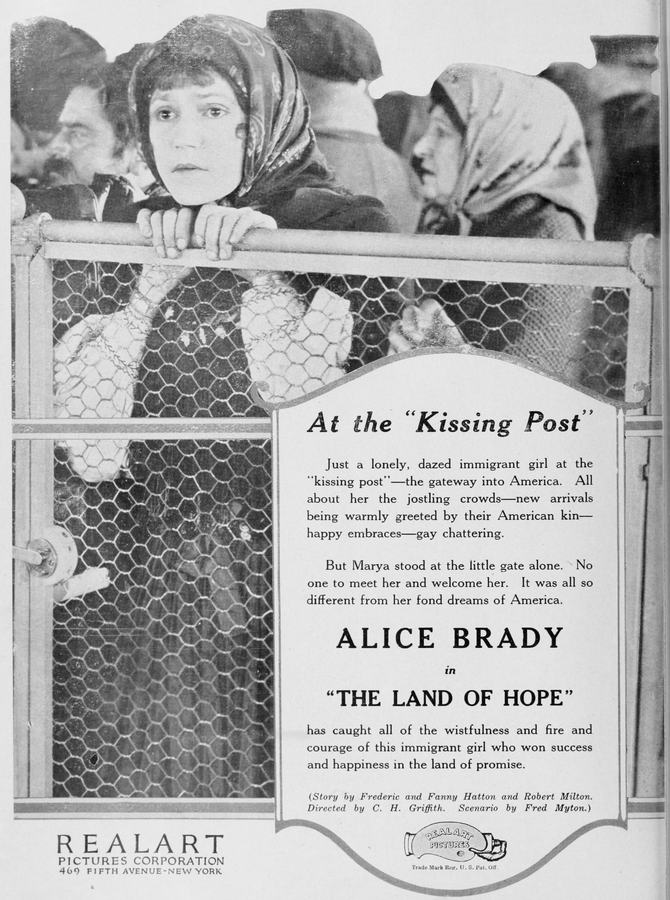
In the annals of immigrant cinema, few narratives resonate with the raw immediacy of *The Land of Hope* (1920s), a film that distills the paradox of American promise into the trembling hands of its protagonist, Marya Nisko, portrayed with quiet intensity by Betty Carsdale. Directed by a nameless hand in the annals of silent cinema (Fred Myton’s screenplay, however, remains a ghostly imprint of precision), the film unfolds not as a melodrama of triumph but as a mosaic of fleeting victories and crushing compromises.
Marya’s arrival in New York is not marked by the triumphant swell of a leitmotif but by the dissonant cacophony of a ship’s whistle and the muffled whispers of fellow passengers. Her sister’s destitution—a stark visual motif of frayed hems and hollow eyes—sets the tone for Marya’s pragmatic descent into the underbelly of labor. Yet, her brief foray into domestic service as a lady’s maid is less a subplot than a metaphor for the invisibility of immigrant labor. The film’s genius lies in its refusal to romanticize this phase; Marya’s failure is not a narrative dead end but a pivot point, compelling her to seek an introduction to Stephen Ross, a theatrical manager whose role as both enabler and exploiter is rendered with chilling ambiguity.
Enter Sascha Rabinoff (Ben Hendricks Jr.), a character whose intellectual aspirations clash with the material realities of immigrant life. His rejection of Marya’s artistic ambitions—a rare moment of moral clarity in the film—serves as a narrative fulcrum. Where Marya’s path is paved with calculated risks (dancing as a means to financial survival), Sascha’s is one of quiet martyrdom, his intellectual pursuits stifled by poverty. The film’s most haunting sequence follows Sascha’s encounter with the philanthropist Josef Marinoff (a role played with paternal coldness by Bernard Siegel), whose interest in Sascha’s vision for an immigrant home is less altruistic than transactional. This dynamic—of benefactors who see immigrants not as individuals but as projects—echoes the exploitative undercurrents of the American Dream.
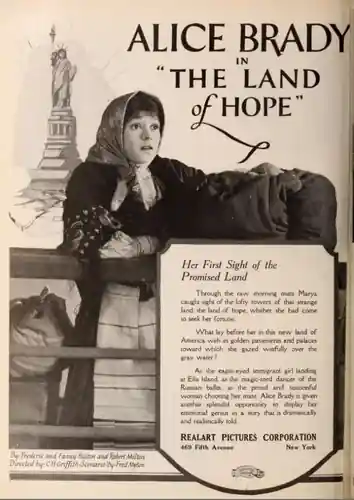
The film’s aesthetic language is as deliberate as its narrative. The contrast between the garish glow of the theater stage and the ashen pallor of Sascha’s breadline existence mirrors the duality of hope: a force that can uplift or consume. Alice Brady’s supporting role as a sympathetic yet world-weary figure injects a human warmth into the film’s often clinical portrayal of struggle. Her scenes with Marya are imbued with a quiet camaraderie that underscores the film’s central thesis: survival in America is not a solitary endeavor but a collective act of defiance.
Comparisons to *The Immigrant* (1917) are inevitable, yet *The Land of Hope* diverges in its focus on gendered labor and artistic aspiration. While both films depict the immigrant’s fraught journey, this one privileges the female perspective, framing Marya’s dance career not as a triumph but as a survival tactic. The theatrical sequences, choreographed with a stark realism, are less about artistry than about the commodification of the female body—a theme that resonates eerily with modern discussions on labor and exploitation.
The reunion of Marya and Sascha, orchestrated through Marinoff’s patronage, is staged with aching simplicity. No grand gestures, no orchestral swells—just two figures silhouetted against a dawn-lit skyline, their reconciliation a quiet acknowledgment of shared loss and tentative hope. This denouement, far from sentimental, feels earned, a testament to the film’s refusal to conflate hope with resolution.
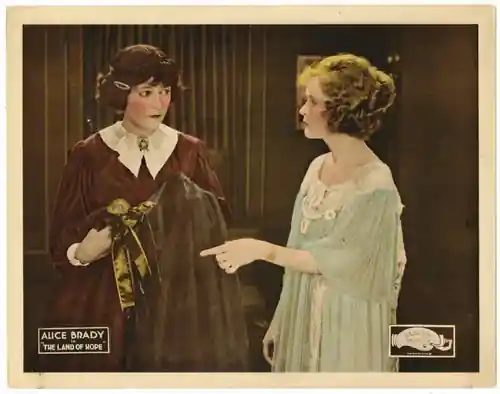
Technically, the film is a study in contrasts. The intertitles, sparse yet evocative, are often juxtaposed with prolonged shots of New York’s industrial sprawl—a visual reminder of the city as both a character and an antagonist. The cinematography, though rudimentary by modern standards, employs chiaroscuro to striking effect, particularly in scenes where Marya’s face is half-lit by the stage lights, symbolizing her precarious straddling of two worlds.
For modern audiences, *The Land of Hope* offers a discomfiting reflection on the immigrant experience: the erosion of idealism, the transactional nature of American opportunity, and the quiet resilience required to navigate both. It is a film that resists the savior narratives so prevalent in its contemporaries, instead offering a nuanced, if sometimes unsparing, portrait of aspiration in a landscape of systemic indifference.
If *The Land of Hope* has a flaw, it is its occasional detachment from the emotional urgency of its characters. The film’s clinical precision, while thematically appropriate, can at times feel emotionally distancing, a risk inherent in works that prioritize thematic coherence over visceral engagement. Yet, this very restraint is what elevates the film from mere period drama to a meditation on the cyclical nature of hope and disillusionment.
In the broader context of silent cinema, *The Land of Hope* occupies a unique space—a film that neither shies away from its protagonist’s compromises nor celebrates them. It is a work of quiet complexity, deserving of rediscovery in an era where the immigrant narrative is again under scrutiny. For those seeking a film that dares to complicate the myth of the American Dream, this is an essential watch. See also The Immigrant and The Mark of Cain for contrasting takes on resilience and moral ambiguity.
In conclusion, *The Land of Hope* is a film that lingers, not for its cinematic flair, but for its unflinching gaze into the heart of immigrant struggle. It is a reminder that hope, in its purest form, is not a destination but a daily act of defiance in the face of a world that often demands conformity. For modern audiences, it is a call to recognize the echoes of Marya and Sascha in the countless stories of those who arrive with little more than a suitcase and a name.

IMDb 6.2
1933
Community
Log in to comment.