DbcultAccessing Vault...
Cult Review
Senior Film Conservator
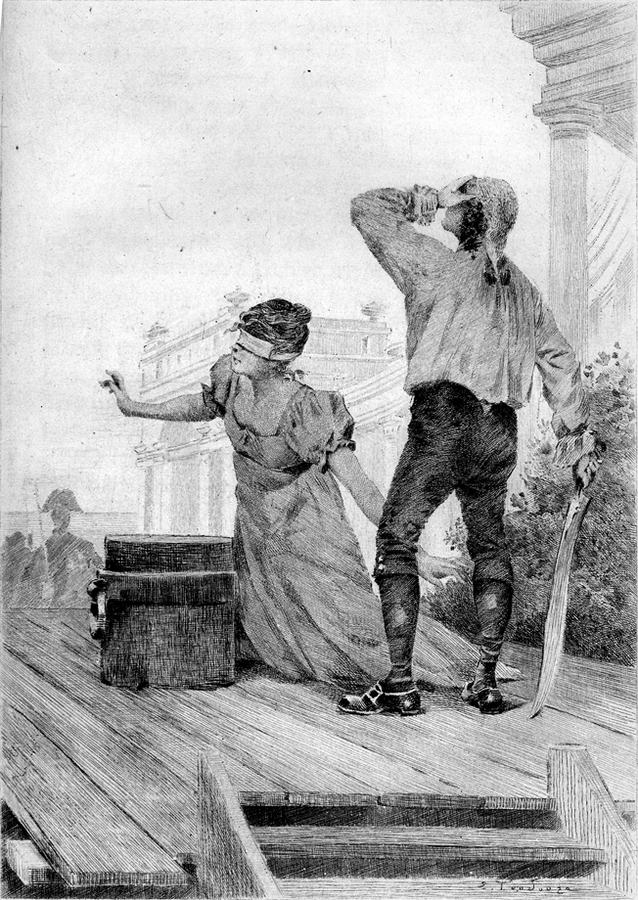
The Peninsular War of 1807-1814 remains one of the most fertile grounds for European tragedy, a period where the Enlightenment's imperial ambitions collided violently with the visceral nationalism of the Spanish populace. In the 1920 adaptation of Honoré de Balzac’s El Verdugo, this historical friction is distilled into a domestic apocalypse. The film, directed with a penchant for the macabre and the monumental, eschews the grand tactical maneuvers of Wellington and Napoleon to focus instead on the microscopic destruction of the de Leganés family. Unlike the lighthearted escapades found in A Night Out, this celluloid relic plunges its audience into a world of shadow and moral rot.
The narrative trajectory is as sharp as a guillotine’s blade. When a small Spanish town rebels against French occupation, the resulting suppression is not merely military but psychological. The French General Hugo, portrayed with a chilling bureaucratic detachment, offers the Marquis de Leganés a choice that defies the very fabric of human ethics. To save the family name from vanishing into the ether of history, one of the Marquis's sons must act as the executioner for the rest of his family. It is a Faustian bargain where the currency is blood and the prize is a hollow immortality. This thematic depth elevates the film beyond mere historical reenactment, positioning it as a precursor to the existentialist cinema that would follow decades later.
The cinematography of El Verdugo utilizes the limitations of the silent era to create an atmosphere of suffocating claustrophobia. The use of chiaroscuro—the stark contrast between light and dark—serves as a visual metaphor for the moral binary facing the protagonist, Juanito. Fritz Achterberg delivers a performance of harrowing intensity; his face becomes a canvas of atavistic dread as he contemplates the weight of the axe. While contemporary films like The Girl Dodger relied on fleet-footed physical comedy, El Verdugo demands a stillness that is far more demanding of its lead. Achterberg’s movements are deliberate, heavy with the gravity of his impending fratricide.
The set design reflects the crumbling grandeur of the Spanish aristocracy. The de Leganés estate, once a bastion of pride, is transformed into a liminal space between life and the scaffold. Every archway and stone corridor seems to lean in, eavesdropping on the family's final, desperate deliberations. This visual storytelling is far more sophisticated than the rudimentary staging seen in A Desert Hero. Here, the environment is a character in itself, a silent witness to the erosion of chivalric values under the boot of modern warfare. The directors and writers J.M. Burkhardt-Benndorf understand that the true horror lies not in the act of death, but in the anticipation of it.
Honoré de Balzac’s prose is notoriously cynical, and the screenplay by Burkhardt-Benndorf retains that serrated edge. The dialogue—conveyed through ornate intertitles—is stripped of sentimentality. It questions the very utility of honor in a world governed by iron and gunpowder. If King Solomon's Mines represents the outward expansion of the European ego through adventure, El Verdugo represents its inward collapse. The family unit, traditionally the bedrock of Spanish society, is weaponized against itself. The Marquis’s insistence that his son perform the execution is a perversion of patriarchal duty, a theme that resonates with the domestic strife explored in A House Divided, albeit on a much more lethal scale.
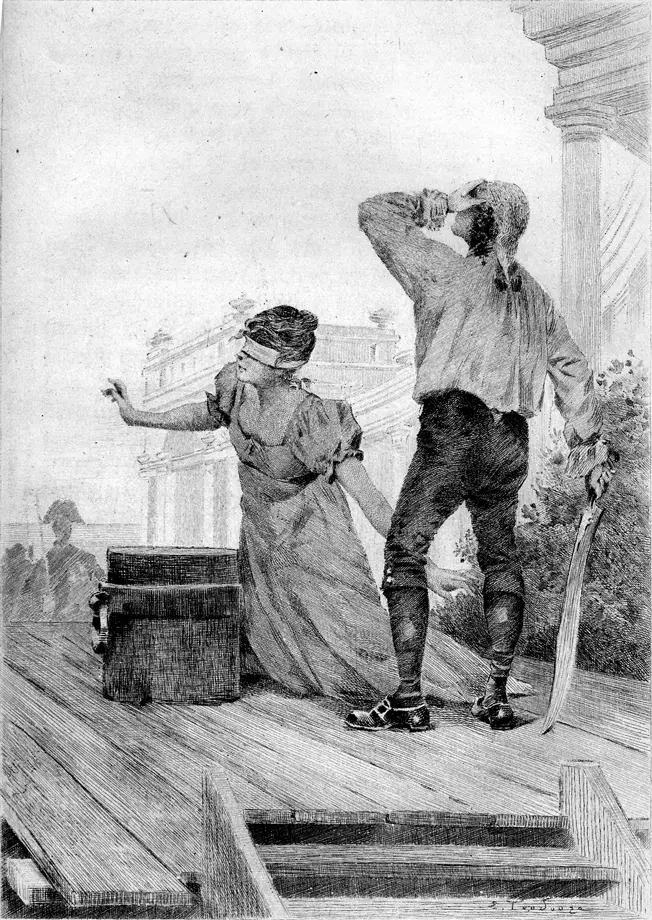
The film’s pacing is a slow-burn descent into madness. It avoids the frantic editing of early action shorts, opting instead for long, lingering takes that force the viewer to inhabit the characters' despair. This is not the sanitized version of war; it is a study of the collateral damage inflicted upon the human spirit. The inclusion of Lilli Lohrer adds a layer of tragic grace to the proceedings. Her presence serves as a reminder of the domestic world being obliterated by the geopolitical machinations of emperors. In contrast to the moral ambiguity of Hypocrisy, the moral dilemma in El Verdugo is agonizingly clear, leaving no room for the comforts of self-deception.
To appreciate the sheer weight of El Verdugo, one must contrast it with the broader cinematic landscape of its time. While audiences were often treated to the whimsical antics of A Lucky Dog's Day or the frontier resilience of The Snowbird, Balzac’s story offered no such catharsis. Even the sartorial humor of His Blooming Bloomers feels like a transmission from a different universe. El Verdugo is a film that refuses to blink. It shares more DNA with the psychological tension of The Case of Becky or the social indictment found in Corruption, yet it surpasses them in its sheer, unadulterated grimness.
The film’s treatment of the female characters, particularly those portrayed by Lilli Lohrer, provides a counterpoint to the more idealized versions of femininity seen in Princess Virtue or the sentimentalized innocence of The Mite of Love. In El Verdugo, virtue is not a shield; it is a target. The women of the de Leganés household are forced to participate in their own erasure, offering their necks to the blade with a stoicism that is more terrifying than any scream. This subversion of the 'damsel in distress' trope reflects a world where the traditional protectors have become the destroyers.
As the film reaches its crescendo, the act of execution becomes a ritualistic cleansing that leaves the survivor more dead than the departed. The 'Verdugo' is left standing in a landscape of literal and figurative ghosts. This exploration of trauma is remarkably advanced for 1920. It mirrors the industrial-scale devastation seen in Gas, where the individual is crushed by the gears of a larger, unfeeling machine. The betrayal of the self for the sake of the name is the ultimate irony, a theme that echoes the narrative beats of Betrayed, yet El Verdugo carries a historical weight that makes its betrayal feel cosmic.
Ultimately, El Verdugo is a harrowing masterpiece of silent cinema that demands a modern reappraisal. It is a film that captures the exact moment when the old world of feudal honor died and the new world of total war was born. August Weigert’s supporting performance as the French officer provides the necessary foil to the Spanish suffering, embodying the cold logic of an empire that views people as mere variables in a conquest. For the modern viewer, the film is a reminder that the most profound tragedies are not found on the battlefield, but in the quiet rooms where families are forced to choose between the impossible and the unthinkable. It is a haunting, lugubrious journey through the darkest corridors of the human heart, leaving an indelible stain on the memory of anyone who dares to watch it.
IMDb —
1920
Community
Log in to comment.