DbcultAccessing Vault...
Cult Review
Senior Film Conservator
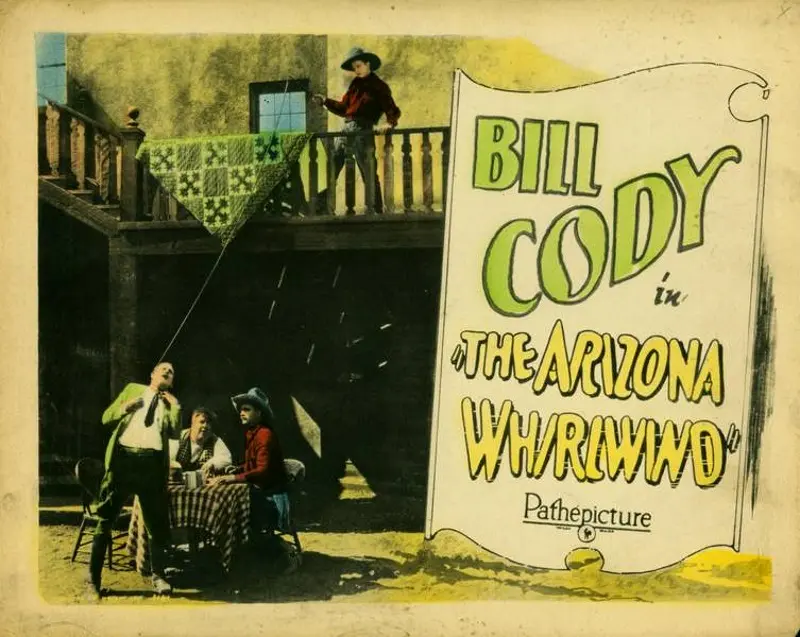
Is The Arizona Whirlwind worth your time in an era of high-definition blockbusters? Short answer: No, unless you are a dedicated archivist or a fan of Bill Cody's specific brand of silent-era machismo. This film is a relic of a time when the Western was the primary engine of the American film industry, providing cheap thrills for a public obsessed with the disappearing frontier. It is for the silent film completionist who appreciates the raw physicality of early stunts. It is definitely not for anyone who requires complex dialogue or a plot that moves beyond the basic 'hero saves the ranch' trope.
1) This film works because Bill Cody possesses an undeniable physical magnetism that transcends the lack of sound.
2) This film fails because the narrative structure is almost entirely derivative of better films from the same period, like Border Law.
3) You should watch it if you want to understand the origins of the 'B-Western' and see how early filmmakers utilized the natural Arizona landscape to create a sense of scale on a shoestring budget.
Bill Cody was never the most nuanced actor in Hollywood, but in The Arizona Whirlwind, he didn't need to be. The film relies heavily on his ability to look convincing on a horse and even more convincing in a fistfight. There is a specific scene in the second act where Cody’s character must navigate a narrow ridge to outflank the rustlers. The camera stays wide, capturing the genuine danger of the stunt. It works. But it’s flawed. The lack of close-ups during these high-stakes moments often robs the film of the emotional tension found in more prestigious productions like The Scarlet Oath.
Cody’s performance is a masterclass in 'broad' acting. Every gesture is magnified. Every glare is a declaration of war. While modern audiences might find this comical, it was a necessity of the medium. The 'Whirlwind' in the title isn't just a metaphor for the plot; it describes Cody’s movement across the screen. He is a force of nature that levels the playing field for the oppressed ranchers. This is a film that values motion over emotion, and for seventy minutes, it barely stops to breathe.
Carl Krusada was a workhorse of the silent era, and his script for The Arizona Whirlwind reflects a deep understanding of what the 1926 audience wanted: clear stakes and a punchy resolution. The plot doesn't meander. It sets up the villainy of David Dunbar early—a man whose sneer is visible from the back row of a theater—and moves toward the inevitable confrontation with mathematical precision. However, this precision comes at the cost of surprise. You know exactly where this film is going within the first ten minutes.
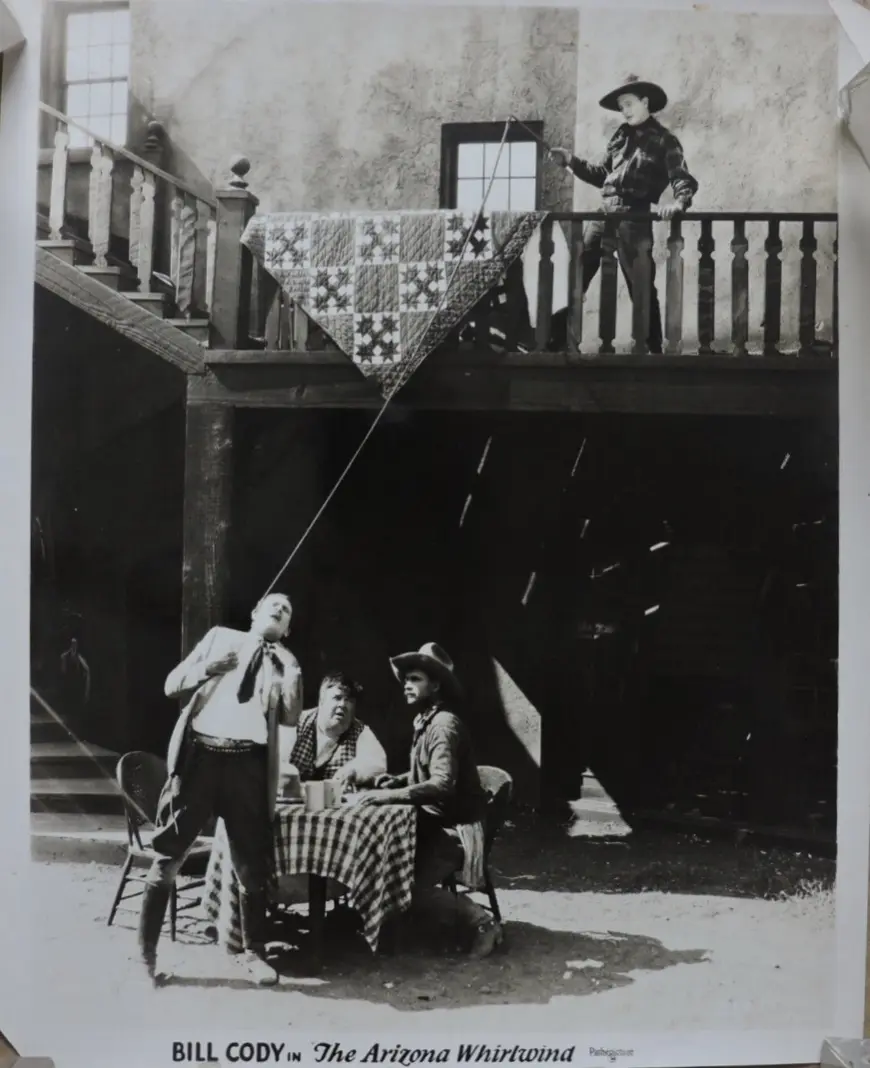
The direction is functional, bordering on utilitarian. There are no avant-garde flourishes here. The camera is placed where it needs to be to capture the action, and rarely anywhere else. This lack of visual ambition makes the film feel older than some of its more creative peers, such as Pilgrims of the Night. Yet, there is a brutal honesty in this simplicity. It doesn't pretend to be high art. It is a product designed for consumption, and in that regard, it succeeds. The pacing is relentless, which is the film's saving grace.
The cinematography in The Arizona Whirlwind is surprisingly crisp for a 'Poverty Row' production. The use of natural light in the desert sequences creates a harsh, unforgiving atmosphere that mirrors the moral landscape of the story. There is a starkness to the black-and-white photography that modern Westerns often struggle to replicate with color grading. The shadows in the final showdown are deep and oppressive, adding a layer of gravity to a climax that might otherwise feel routine.
One surprising observation is that the silence of the film actually enhances the sense of isolation. When Cody is alone on the trail, the lack of a score (in the original exhibition) or the reliance on stock piano accompaniment forces the viewer to focus on the environment. You can almost feel the heat radiating off the screen. The tone is consistently grim, only occasionally broken by the physical comedy of Hughie Mack. Mack’s presence is a debatable inclusion; his brand of humor feels like it belongs in a different movie entirely, perhaps something like The Rat's Knuckles.
The Arizona Whirlwind is a prime example of the 1920s B-Western. These films were produced quickly and cheaply. They served as the backbone of rural cinema. They helped establish the archetypes of the American hero. Bill Cody became a household name through these roles. The film demonstrates the transition from complex storytelling to action-oriented entertainment. It paved the way for the Saturday morning serials of the 1930s.
If you are looking for a deep, soul-searching cinematic experience, look elsewhere. If you want to see a man jump off a moving horse to tackle a villain in high-contrast monochrome, then yes, it is worth your time. The film is a fascinating look at what was considered 'popcorn entertainment' a century ago. It lacks the polish of Sahara, but it makes up for it with sheer earnestness. It is a piece of history that still has a pulse, even if that pulse is a bit rhythmic and predictable.
Pros:
Cons:
The Arizona Whirlwind is a functional, energetic piece of silent cinema that serves as a perfect time capsule. It doesn't aim for the stars; it aims for the dirt and the dust of the trail. While it lacks the emotional complexity of Someone Must Pay, it offers a visceral thrill that is often missing from the more 'artistic' films of 1926. It is a B-movie in the truest sense—unapologetic, fast, and ultimately disposable, but undeniably entertaining for those with an eye for the past. The dust settles, but the story doesn't quite linger. It is a whirlwind that blows through and disappears, leaving only a faint memory of Bill Cody’s grit behind.
IMDb 5.6
1933
Community
Log in to comment.