DbcultAccessing Vault...
7.8/10
Senior Film Conservator
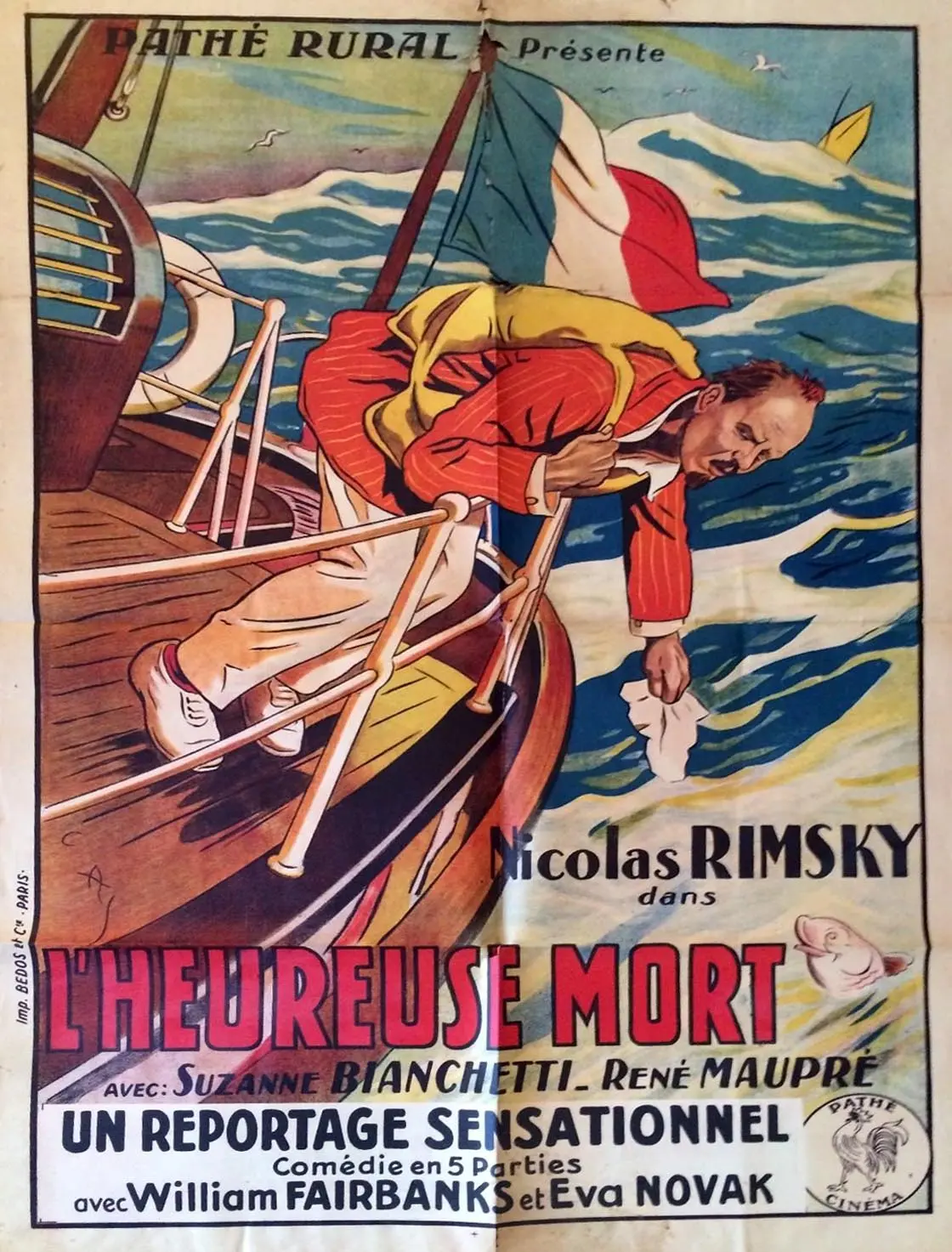
A definitive 7.8/10 rating for a film that redefined the boundaries of cult cinema. L'heureuse mort remains a cornerstone of transgressive art.
Is 'L'heureuse mort' a film that holds up in the modern cinematic landscape? Short answer: yes, but with significant caveats that demand a certain appreciation for its era and thematic depth. This silent French drama, or rather, dark comedy, is an essential watch for cinephiles interested in the early explorations of media manipulation and identity, particularly those who appreciate subtle character studies over overt action. However, it will likely disappoint viewers seeking fast-paced narratives, clear-cut heroes, or purely lighthearted entertainment, as its humor is steeped in moral ambiguity and its pace is deliberately measured.
This film works because of its audacious premise and the compelling central performances that anchor its moral tightrope walk. It daringly asks what one would sacrifice for recognition, and answers with a cynical, yet captivating, exposé of human vanity.
This film fails because its deliberate pacing, while thematically justified, can feel glacial to contemporary audiences, and some narrative resolutions, while fitting for the period, might seem overly convenient. The technical limitations of its time also mean certain visual subtleties are lost without careful attention.
You should watch it if you are fascinated by early cinema's capacity for complex character studies and social commentary, and if you appreciate narratives that challenge traditional notions of heroism and success. It's a must for those who enjoy psychological dramas wrapped in a dark comedic shell.
Nicolas Rimsky’s 'L'heureuse mort' (The Happy Death) presents a narrative so inherently cynical, it feels startlingly modern, despite its vintage. At its core, it’s a story about the grotesque allure of posthumous fame and the lengths to which individuals, or their spouses, might go to achieve it. Théodore Larue, a writer perpetually overlooked, finds his true value only in death, or rather, the perception of it. This isn't just a plot device; it's a scathing commentary on societal values, where a person’s worth is often inflated by their absence.
The film doesn't shy away from the moral ugliness of Lucie’s scheme. Her persuasion of Théodore to 'play dead' isn't born of grief, but of shrewd opportunism. Suzanne Bianchetti, as Lucie, imbues the character with a cold, calculating resolve that is both mesmerizing and unsettling. She is the architect of this deception, the puppet master pulling the strings of her husband's new, 'celebrated' identity. Her performance is a masterclass in silent manipulation, her eyes conveying more cunning than any dialogue could.
Théodore's transformation into 'Anselme' isn't just a change of name; it’s a complete erasure of his former self. Léon Salem, in a dual role of sorts, navigates this psychological tightrope with remarkable subtlety. We see the initial relief, perhaps even a twisted satisfaction, in Théodore's newfound anonymity, juxtaposed with the creeping dread of living a lie. The film asks us to consider the burden of identity, and whether true happiness can ever be found when one’s very existence is a fabrication.
The true triumph of 'L'heureuse mort' lies in the nuanced performances, particularly from Léon Salem and Suzanne Bianchetti. Salem’s portrayal of Théodore Larue is a study in quiet desperation. Before his 'death,' he carries the weary slump of a man perpetually disappointed, his gaze often downcast, reflecting the weight of his unappreciated talent. His transformation into Anselme is initially liberating, marked by a subtle straightening of his posture and a more assured, albeit artificial, demeanor. Yet, beneath this façade, Salem masterfully conveys the simmering anxiety, the constant fear of exposure. A particularly poignant moment comes when he observes a crowd celebrating the 'genius' of the deceased Théodore – a complex mix of pride, regret, and profound alienation plays across his face without a single spoken word. It’s a silent film acting clinic.
Suzanne Bianchetti's Lucie is the driving force of the narrative, a character of formidable will and questionable ethics. She is not merely Théodore's wife but his manager, his enabler, and ultimately, his jailer. Bianchetti avoids villainizing Lucie outright; instead, she paints a portrait of a woman driven by ambition and a desire for security, albeit achieved through morally dubious means. Her confident stride and unwavering gaze, even when concocting the most outrageous lies, suggest a woman utterly convinced of the righteousness of her actions, or at least, their necessity. Her interactions with the 'new' Anselme are laced with a proprietary air, a constant reminder of who holds the true power in their twisted arrangement. One could argue, quite convincingly, that Lucie is the true protagonist here, her ambition shaping every twist and turn.
The return of Pierre Labry as the actual Anselme introduces a palpable shift in the film’s dynamic. Labry's Anselme is rougher, more worldly, a stark contrast to Théodore’s cultivated, intellectual persona. His presence immediately injects a frantic energy into the narrative, a ticking clock that threatens to expose the delicate house of cards built by Lucie and Théodore. The physical resemblance between the two 'brothers' is, of course, a convenient plot device, but it serves to heighten the tension, making every close call feel genuinely perilous. This trio of performances elevates what could have been a simple farce into a compelling character study.
Nicolas Rimsky, who also co-wrote the screenplay with Countess Baillehache, orchestrates 'L'heureuse mort' with a keen eye for ironic detachment. His direction is less about grand gestures and more about the slow, deliberate build-up of psychological tension. The pacing, while undeniably slow by modern standards, is intentional, allowing the audience to fully absorb the absurdity and moral weight of each decision. Rimsky understands that the true drama lies not in the physical action, but in the internal struggle of Théodore and the constant threat of discovery.
The film's tone oscillates expertly between dark comedy and genuine pathos. There are moments of genuine humor derived from the sheer audacity of the deception, such as the elaborate lengths Théodore must go to maintain his disguise. Yet, Rimsky never lets us forget the underlying tragedy of a man forced to erase himself for the sake of his art's recognition. This balance is difficult to strike, and Rimsky achieves it through careful framing and the subtle reactions of his actors, particularly in scenes where Théodore is forced to interact with former acquaintances who believe him dead.
One particularly effective directorial choice is the way Rimsky handles the 'drowning' sequence. It’s not a dramatic spectacle, but a quiet, almost mundane event, made significant only by the subsequent public reaction. This understated approach underscores the film's central thesis: that perception often trumps reality, and that fame can be an arbitrary, even cruel, mistress. The camera often lingers on Lucie’s face during these crucial moments, highlighting her calculating nature and her unwavering commitment to the plan, a coldness that is truly striking for a film of this period.
The cinematography of 'L'heureuse mort,' while adhering to the technical standards of its time, effectively serves the narrative's thematic concerns. The use of natural light in the initial seaside scenes creates a sense of idyllic calm, a stark contrast to the turbulent emotional landscape that soon unfolds. Once Théodore assumes his new identity, the interiors often feel more confined, almost claustrophobic, mirroring his psychological imprisonment. Shadows are employed to great effect, hinting at the secrecy and deception that pervade his new life. There are no flashy camera tricks, but rather a functional elegance that grounds the story.
The set design, though perhaps not overtly opulent, is meticulously crafted to reflect the social standing and aspirations of the characters. Théodore's initial dwelling feels modest, reflecting his lack of success. Post-mortem, the spaces Lucie inhabits suggest a newfound prosperity, a visual indicator of the success of their macabre scheme. This visual shorthand is crucial in silent cinema, and 'L'heureuse mort' utilizes it with quiet confidence. Consider the subtle shift in furniture or decor that subtly communicates the change in their fortunes, without needing a single intertitle to explain it.
The film's visual storytelling reinforces its themes of identity and perception. Close-ups on the characters' faces, particularly during moments of high tension or internal conflict, are used sparingly but powerfully. These moments allow the audience to delve into the unspoken thoughts and emotions, making the audience complicit in the deception, or at least, keenly aware of its psychological toll. The film understands that the most compelling drama often unfolds within the human face, and it capitalizes on this insight repeatedly.
'L'heureuse mort' is a surprisingly prescient film, tackling themes that resonate with uncanny relevance in our age of viral fame and curated online identities. It’s a biting critique of a society that often values the dead more than the living, elevating artists to mythical status only after they are gone. This observation is as true today, perhaps even more so, as it was in the era of silent film. The film forces us to confront the uncomfortable truth that public perception can be easily manipulated, and that authenticity is often sacrificed at the altar of recognition.
The film’s exploration of identity is profound. Théodore is not just pretending to be someone else; he is forced to witness his own legacy unfold from the sidelines, unable to claim the credit for his own genius. This existential dilemma is brilliantly portrayed, making the audience ponder the true meaning of authorship and self. Is a work truly yours if you cannot claim it? Is life worth living if it's a constant performance? These are not light questions, and the film offers no easy answers, which is precisely why it holds up so well. It’s a more sophisticated take on identity than many of its contemporaries, even challenging the simpler narratives found in films like The Soul of Kura San, which often relied on more straightforward moral arcs.
Moreover, the film delves into the moral complexities of deceit. Lucie’s actions, though driven by a desire for a better life, are undeniably unethical. Yet, the film never fully condemns her, instead inviting the audience to grapple with the motivations behind her choices. This moral ambiguity is a strength, preventing the film from devolving into a simplistic morality play. It works. But it’s flawed. This nuanced approach to character motivation is a testament to the sophistication of its screenwriting.
An unconventional observation about 'L'heureuse mort' is its subtle commentary on the very nature of storytelling and authorship. Théodore, the writer, becomes a character in his own manufactured narrative, losing control of his story as it gains popularity. This meta-narrative layer, though perhaps unintentional, adds another dimension to the film, making it feel like a proto-postmodern text. It’s less about the 'happy death' and more about the unhappy life that follows.
Yes, 'L'heureuse mort' is absolutely worth watching today for specific audiences. Its thematic depth on fame, identity, and moral compromise remains strikingly relevant. The central performances are compelling and demonstrate the power of silent acting. It offers a unique glimpse into early French cinema's capacity for complex storytelling. However, its deliberate pacing requires patience from modern viewers. It's not a film for those seeking immediate gratification or fast-paced action. It rewards thoughtful engagement.
'L'heureuse mort' may not be as widely known as some of its contemporaries, but its quiet power and thematic foresight make it a film deserving of rediscovery. It stands as a testament to the sophisticated storytelling present in early cinema, proving that complex ideas and nuanced characters were not solely the domain of the sound era. While it doesn't boast the epic scope of a D.W. Griffith production or the avant-garde flair of some European experiments, it offers a deeply human, albeit morally twisted, narrative that resonates with the timeless anxieties of fame and identity. Its influence can be felt, perhaps indirectly, in later films that explore similar themes of false identities and media manipulation, even if it's not directly cited as an inspiration. Unlike the more straightforward dramatic tension of a film like The Conspiracy, 'L'heureuse mort' leans into the psychological and the satirical, creating a distinct niche for itself.
'L'heureuse mort' is a compelling, if challenging, piece of early French cinema. Its audacious premise, coupled with strong central performances and a surprisingly modern thematic core, makes it a valuable watch for those willing to engage with its deliberate pace. It’s a biting satire on the price of fame and the fragility of identity, proving that some moral quandaries are truly timeless. While not a film for everyone, its artistic and historical significance is undeniable. It’s a quiet triumph, a film that lingers long after the credits roll, prompting uncomfortable questions about our own desires for recognition.
IMDb 5.7
1918
Community
Log in to comment.