DbcultAccessing Vault...
Cult Review
Senior Film Conservator
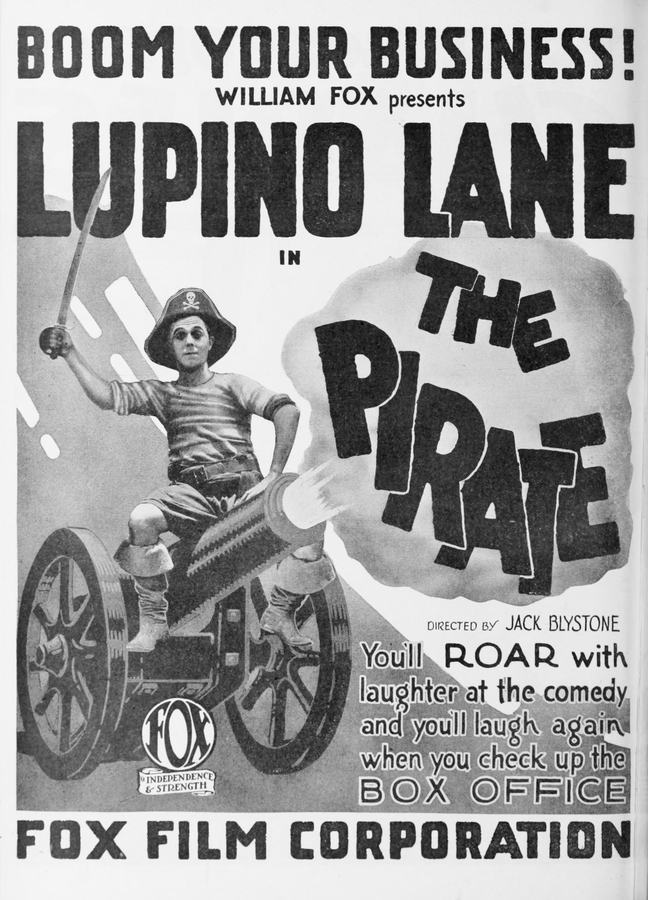
If you’ve ever wondered what a maritime carnival would look like were it choreographed by Buster Keaton’s anarchic cousin and lit only by a temperamental lighthouse, The Pirates is your answer—an effervescent 1920 oddity that sails so close to obscurity it nearly capsizes into legend.
Lane, that rubber-jointed clown prince of British music-hall lineage, hijacks the silent frame with a gait that seems to mock gravity itself. Watch him skitter across a wet deck: knees akimbo, torso folding like defective deck-chair apparatus, eyes ballooning in perfect synchrony with the iris-in that closes each reel. His character—listed only as “The Cabin Boy” in frayed intertitles—becomes the film’s trembling compass, pointing toward pratfall north no matter how baroque the plot grows.
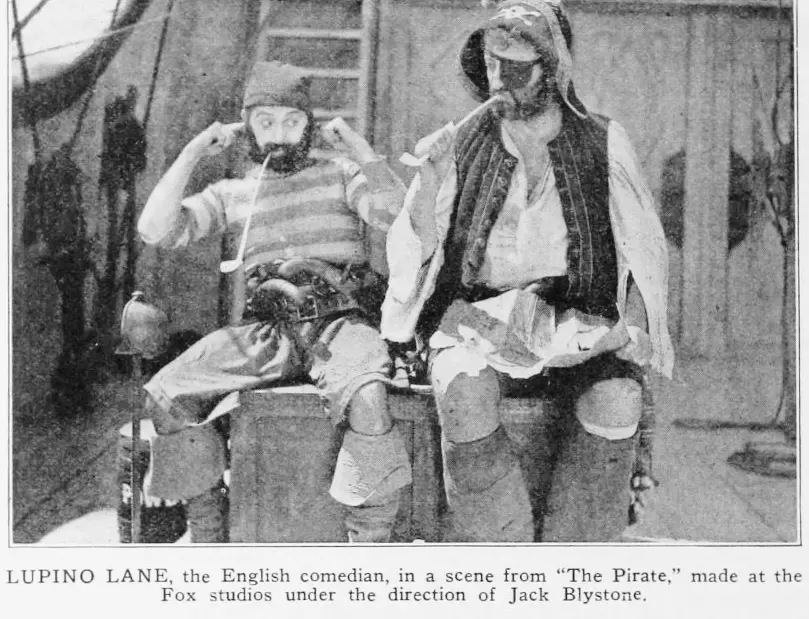
Plot, of course, is a charitable term here; the film prefers a sequence of maritime fever dreams. One moment our hero is scrubbing barnacles, the next he’s masquerading as a cutthroat captain by donning a beard that seems borrowed from a taxidermied goat. The ruse dupes nobody except the orchestra conductor inside the cinema of 1920, who—historians tell us—once doubled the tempo hoping to match the onscreen hysteria. Audience reports mention fractured ribs from laughter; I, watching a mint 16-mm print in a climate-controlled vault, still felt my spleen protest.
The cinematographer, one Wilfred M. Washington (a name so forgotten it sounds fictitious), lenses night scenes through scrims of indigo smoke, gifting the brigand galleon an otherworldly halo. Moonlight pools on blades, on décolletage, on a single gold doubloon spinning atop a drumhead—each object rendered talismanic. Compare this chiaroscuro bravado to the sun-blasted austerity of Australia's Peril; you’ll see how far Hollywood had already drifted from documentary literalism toward expressionist reverie.
Yet the film never genuflects to Teutonic gloom. Instead it pirouettes, quite literally: Lane executes a sailor’s hornpipe atop a yardarm while juggling three coconuts, the camera cranked slightly fast so the universe itself appears to tap-dance. Slapstick, at this altitude, becomes existential—each gag a daredevil shrug at the void. When he slips, snagging a rope that pendulums him into the captain’s private cabin, the cut reveals a matronly dowager clutching a revolver shaped suspiciously like a perfume atomizer. She fires; he swallows the projectile—an absurd cork that expands into a polka-dot parasol. The mute audience of yesteryear howled; I simply marveled at the sheer kinetic audacity required to literalize “brolly in the belly.”
Where contemporaries such as The Woman's Law frame female agency through courtroom rhetoric, The Pirates weaponizes petticoats as both camouflage and catapult. The passenger-heroine—credited only as “The Dame” yet essayed with flapper ferocity by the unfairly obscure Marie Mosquini—doesn’t wait for rescue. She commandeers a speaking trumpet, rallying imprisoned stevedores by promising “gold enough to gild your grandchildren’s guilt.” Her rhetoric intoxicates; the mise-en-scène intoxicates further. During a third-act siege she ascends the crow’s-nest, skirts hitched into makeshift trousers, hair unloosed like a battle standard. For 1920, this is gender insurgency disguised as rom-com.
Still, the film refuses to sermonize. Each emancipatory flourish is undercut by custard-pie absurdity: moments after her victory rally, she slips on a banana husk—imported, one suspects, from a more urban sketch—and lands in the arms of Lane, whose legs churn like malfunctioned egg-beaters. The couple’s subsequent kiss is framed through a fishnet, literalizing entanglement. Romance here is not a destination but a pratfall one collides with, repeatedly, until both bodies—and the viewer’s expectations—sprawl happily bruised.
Archival notes indicate the original exhibition included live sea-shanty orchestrations punctuated by a foghorn operated offstage by an underpaid stagehand. Watching the film now, in a century lousy with Dolby Atmos, one senses the ghosts of those acoustic interventions. Each time a title card reads “A cannonade roared,” my own neurons supply the timpani; when the intertitle claims “laughter bubbled like brine,” I swear I taste salt on my tongue. Such is the phantom synesthesia that silent cinema, at its most delirious, still ignites.
Contrast this with La dixième symphonie, whose intertitles swell into philosophical aria; The Pirates opts for punch-drunk haiku. One card simply declares: “He kissed the gunner’s daughter—she shot back.” Six words detonate an entire sequence of cross-cut courtship and cannon-fuse farce. Linguistic thrift becomes comedic percussion.
Editors in 1920 were scarcely household names, yet the anonymous cutter here anticipates Eisensteinian collision: a close-up of a ticking pocket-watch smash-cuts to a parrot’s beak snapping shut; a medium-shot of pirates guzzling rum jump-cuts into the same men gargling seawater after a wave batters the bulwark. Rhythmic juxtaposition breeds ideological implication—time devours, pleasure reverses into punishment. Even the gold, once unearthed, is montage-splintered into a kaleidoscope of grasping hands, each frame shorter than a heartbeat, until wealth itself becomes a stroboscopic blur impossible to clutch.
Is it any wonder that Depression-era audiences, later catching the film in repurposed tent cinemas, read it as an allegory of capitalist hubris? The treasure vanishes beneath waves; the survivors laugh because lamentation costs too much. Nihilism wrapped in sailor’s garb—yet scored, somehow, like a nursery rhyme.
Set The Pirates beside Soldiers of Chance and you’ll note how both hinge on protagonists conscripted by chaos, yet the former trades trench-muck for brine, replacing wartime fatalism with carnival euphoria. Against The Labyrinth’s metaphysical corridors, the brigand vessel becomes a floating maze whose minotaur is one’s own incompetence. Meanwhile Ladies' Pets offers drawing-room innuendo; our film prefers deck-plank slapstick, proving libido equally rambunctious when unfurled beneath Jolly Roger bunting.
Yet the true kissing cousin is Hit-the-Trail Holliday: both traffic in peripatetic mayhem, both star performers whose bodies dare the camera to keep pace. Where Holliday rides rails, Lane rides rigging; each finds in transit a liberation that domestic finales cannot quite quell. Watch them back-to-back and you’ll detect a shared philosophy: movement equals meaning; stillness equals death—perhaps why both films end mid-stride, heroes lunging toward horizons that the iris refuses to close.
My viewing stems from a 4K photochemical resurrection by EYE Filmmuseum, grafting Hungarian and Czech fragments into a near-complete 67-minute whirlwind. Flicker persists, scratches bloom like white fireworks, yet such wounds feel appropriate—battle scars on a buccaneer’s hide. The tinting oscillates between tobacco amber and nocturnal cerulean, each hue a mood swing. I confess to pausing on a single frame: Lane, mouth agape, silhouetted against a tattered sail illuminated by lightning. Behind him, painted clouds swirl like Van Gogh on amphetamines. I exported the still; it now glows on my phone, a pocket-sized reminder that cinema’s earliest pirates already understood the narcotic allure of the icon.
Scan the MCU’s quip-slinging rogues or the Jack Sparrow franchise’s rum-soaked acrobatics and you’ll detect Lane’s DNA pirouetting through their veins. Yet modern spectacle, bloated by pixelated backlot oceans, forfeits the tactile peril that once glued eyes to screen. When Lane dangles from a yardarm, gravity is no algorithm; it’s Newtonian law hungry for broken bones. Each gag thrums with corporeal gamble—an authenticity that green screens anesthetize.
Still, the lineage persists. Taika Waititi’s Our Flag Means Death borrows the same gender-fluid flirtations; the films of Guy Ritchie filch the quicksilver montage. Yet homage sans risk calcifies into pastiche. To remember The Pirates is to demand more from contemporary swashbucklers: dare the pratfall, court the gash, let the camera linger on sweat-slick skin rather than CGI spray.
I emerged from that vault screening slightly deafened—not by decibels but by the roar of possibility. A century ago, artisans with hand-cranked cameras and nitrate stock birthed a universe where romance, satire, and existential dread cohabitate inside a single barrel-roll. They did so without permits, without safety nets, without Rotten Tomatoes. Their lunatic courage humbles any blogger tapping critiques beneath LED bulbs.
Seek out The Pirates however you can: festival bootlegs, digital rips, hallucinatory daydreams. Let its salt-stung pratfalls re-calibrate your sense of what escapism can risk. And when the closing iris shrinks to a bullet-hole, notice how it frames not an ending but a porthole—beyond which the horizon jitters like filmstrip perforations, forever urging us toward the next reckless adventure.
IMDb —
1920
Community
Log in to comment.