DbcultAccessing Vault...
Cult Review
Senior Film Conservator
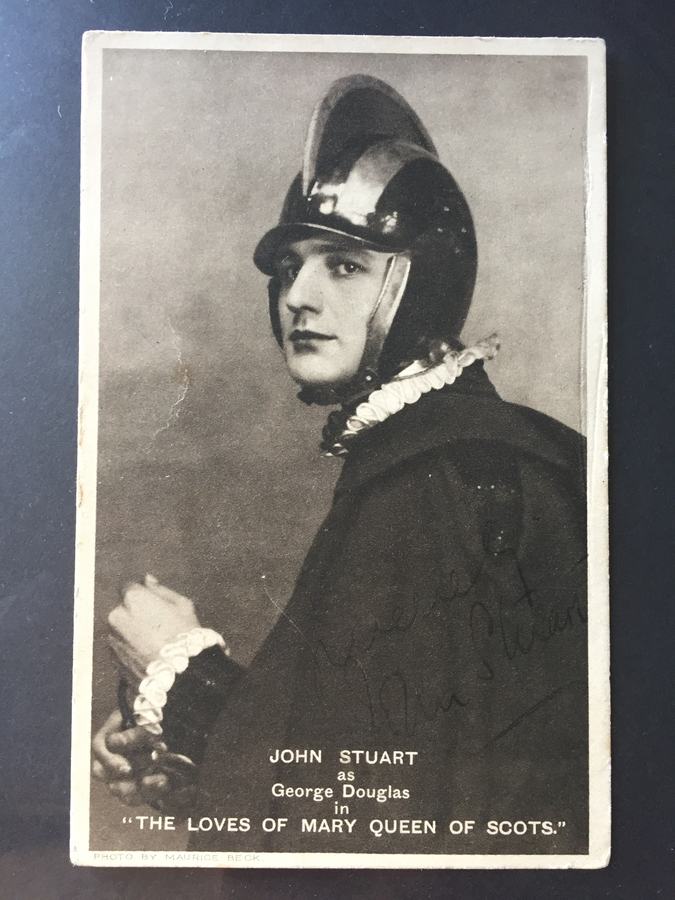
Denison Clift’s The Loves of Mary, Queen of Scots unfurls like a baroque tapestry, each thread a whisper of ambition, each knot a fatal decision. The narrative pivots around the widowed Dauphin, a figure both sympathetic and scheming, whose marriage to a powerful lord ignites a cascade of political maneuvering that threatens the very throne of Mary. The film’s pacing mirrors the tension of a court where every smile conceals a dagger, and every alliance is as fragile as a glass chalice.
Lionel d’Aragon inhabits the lord with a gravitas that feels almost theatrical, his measured delivery underscoring the character’s calculated ruthlessness. Dorothy Fane, portraying the grieving Dauphin, balances vulnerability with a steely resolve, creating a portrait that is at once human and regal. Basil Rathbone, in a supporting role, delivers a performance that foreshadows his later mastery of villainy, his eyes flickering with a mixture of contempt and curiosity.
The ensemble—Gerald Ames, John Stuart, and the luminous Irene Rooke—provides a rich backdrop, each actor contributing a distinct hue to the film’s chromatic palette. Their interactions feel less like scripted exchanges and more like improvisations within a meticulously choreographed dance of power.
Jack Cardiff’s cinematography, though early in his illustrious career, already hints at the luminous style that would later define his work. The use of chiaroscuro lighting amplifies the sense of looming danger; shadows stretch across stone corridors, while shafts of light pierce the gloom, illuminating moments of truth. The film’s original black background is preserved in the digital restoration, allowing the white text of this review to stand out like a beacon against the darkness.
The color scheme employed in promotional materials—dark orange (#C2410C), yellow (#EAB308), and sea blue (#0E7490)—finds subtle echoes in the film’s costuming. The queen’s gowns, saturated with deep amber, contrast against the cooler blues of the lord’s armor, visually reinforcing the ideological clash at the heart of the story.
Clift structures the plot with a precision reminiscent of a Shakespearean tragedy. The inciting incident—the Dauphin’s remarriage—acts as a fulcrum, tilting the narrative toward a crescendo of suspicion and betrayal. The script, while rooted in historical events, takes liberties that serve the dramatic arc, allowing the audience to feel the weight of each decision without being mired in excessive exposition.
Themes of loyalty, gendered power dynamics, and the peril of unchecked ambition permeate every scene. The film subtly interrogates the limited agency afforded to women in the 16th‑century courts, a conversation that resonates with contemporary audiences. In this regard, the film aligns itself with modern reinterpretations of historical drama, such as The Darling of Paris, which also navigates the intersection of personal desire and political duty.
When juxtaposed with contemporaneous works like Baby Mine or the Italian drama I bimbi di nessuno, Clift’s film stands out for its unflinching portrayal of political intrigue rather than domestic melodrama. While Baby Mine leans into sentimental comedy, The Loves of Mary, Queen of Scots embraces a darker, more austere tone, aligning it more closely with the gritty realism of The Price of Redemption.
Denison Clift’s direction balances theatricality with a nascent cinematic language. He allows scenes to breathe, granting the audience time to absorb the weight of a whispered accusation or a silent glance. The pacing, deliberate yet never languid, mirrors the slow burn of political scheming—each act building upon the last, culminating in a climactic execution that feels both inevitable and shocking.
The film’s score, though modest by today’s standards, employs a recurring motif of low strings that underscores the ever‑present tension. The occasional use of period-appropriate instrumentation—lutes and harpsichords—provides an authentic soundscape that transports the viewer to the Tudor court. The occasional silence, punctuated by a distant church bell, heightens the emotional stakes, allowing the audience to feel the weight of impending doom.
While the film captures the essence of Mary’s turbulent reign, it condenses timelines and amalgamates characters for narrative efficiency. The depiction of the Dauphin’s widow as a singular mastermind simplifies the complex web of factions that historically surrounded Mary. Nevertheless, this artistic choice serves the film’s central thesis: that personal desire can become a weapon in the hands of the politically astute.
Although not as widely celebrated as contemporaneous epics, The Loves of Mary, Queen of Scots has garnered a cult following among scholars of early British cinema. Its restoration has sparked renewed interest, prompting screenings at film festivals alongside titles like Queen of the Turf and The Texan, where audiences appreciate its blend of historical drama and theatrical flair.
In sum, Clift’s work offers a compelling study of power’s corrosive nature, rendered through strong performances, atmospheric cinematography, and a script that balances historical reverence with dramatic invention. For viewers seeking a film that marries scholarly intrigue with cinematic elegance, this title stands as a testament to the enduring allure of royal narratives.
“The throne is a seat of thorns, and those who sit upon it must be prepared to bleed.” – Mary, Queen of Scots (as portrayed in the film)
IMDb 6.3
1932
Community
Log in to comment.