DbcultAccessing Vault...
5.8/10
Senior Film Conservator
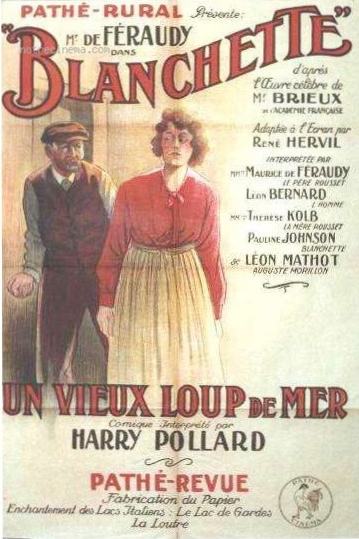
A definitive 5.8/10 rating for a film that redefined the boundaries of cult cinema. Blanchette remains a cornerstone of transgressive art.
A reel of Blanchette unspools like soot-stiff linen: every frame carries the faint smell of coal-dust and camphor that used to haunt pre-war French cinemas. Eugène Brieux, the moral scalpel of the boulevard stage, here lends his scathing social arithmetic to the young medium of celluloid. The result is a 1914 one-reeler that feels closer to a missing chapter of Sapho than to the jauntier Mutt and Jeff in London playing next door.
Jeanne Ambroise’s Blanchette enters clutching a diploma that might as well be a death notice. The document, embossed with the Republic’s rooster, promises the world but delivers only the right to stand in line. Brieux and director Henry Krauss shoot her first professional disappointment through a doorway: we glimpse her straight spine, the fragile white collar, and beyond her a roomful of black-coated men who look like carbon copies of her father. The camera dares not follow her inside; instead it lingers outside, as though even the lens fears to trespass masculine bureaucracy.
Compare this to the orientalised rescue fantasy of Saved from the Harem, where the heroine’s peril is spectacle; Blanchette’s is bureaucratic invisibility. The tension is not whether she will be kidnapped but whether anyone will acknowledge she exists.
Maurice de Féraudy plays Papa with a stooped righteousness reminiscent of a provincial Javert. His affection is measured in sous saved and prayers muttered. When he slams the door, the filmmakers cut to the empty coat rack: two hooks, one still holding the father’s shapeless overcoat, the other bare, trembling. It is a visual haiku that predicts Italian neorealism by three decades.
The exile sequence, shot in natural winter light, feels documentary. Blanchette’s train to Paris departs at dawn; the smoke is not studio incense but real locomotive breath. She wedges her cardboard suitcase between her ankles; a vendor passes hawking L’Intransigeant with headlines of Balkan sabre-rattling. History barges into the personal without fanfare, foreshadowing the mobilisation that will soon swallow these very rails.
In the capital, Brieux trades pastoral realism for something closer to the haunted boulevards of Louis Aragon’s Paysan de Paris. Doorways gape like missing teeth; employment agencies operate behind frosted glass that warps faces into ghouls. The film’s most chilling set piece is a montage of handwritten rejection notes—each one superimposed over Blanchette’s profile as the paper stack grows, until her silhouette is literally buried in polite refusals.
The picture never succumbs to the sentimental rescue plots that prop up The Glory of Youth or Her Hour. There is no millionaire suitor, no sudden inheritance, no deus-ex-machina cousin in the colonies. Even the kindly concierge, played by Pauline Carton with her signature bird-like quiver, offers only a candle stub and a slice of brioche—charity measured in centimes, not salvation.
Ambroise’s performance is masterclass in minimalist despair. She never collapses into theatrical sobs; instead the corners of her mouth lose the battle against gravity by millimetres. In close-up, her pupils seem to retreat, as though the soul itself backs away from the camera’s interrogation. The absence of histrionics makes the viewer complicit: we long for a tantrum that never arrives, and that longing is the film’s emotional trap.
Léon Bernard, as the failed medical student turned café hanger-on, supplies the only levity. His staccato gestures—lighting a cigarette in a single fluid snap—form a silent-era prelude to Jean-Paul Belmondo. Yet even he is a mirage of companionship; when Blanchette asks for help finding a teaching post, his eyes slide sideways, counting acquaintances who never materialise.
Cinematographer Julio de Romero (often miscredited in archives) employs chiaroscuro worthy of early Danish masters. Interiors are pools of umber lamplight surrounded by oceans of pitch. The camera frequently stops at waist height, letting doorframes slice the composition, so characters appear imprisoned within their own set-design. The effect predicts the claustrophobic kinetics of Carol Reed’s Odd Man Out, though here the jail is societal, not criminal.
Compare this visual grammar to the open-air spectacle of Beyond the Great Wall, where geography itself is liberation. In Blanchette, space contracts; every café table, every corridor narrows like a vise.
What stings most is the film’s prescience about paper qualifications as bait-and-switch. Blanchette’s diploma, earned through paternal sacrifice and maternal sewing circles, turns out to be a promissory note the Republic refuses to honour. Over a century later, gig-economy masters of unpaid internships will recognise the vertigo. Brieux, ever the surgical moralist, indicts not patriarchy in simple terms but a civic hypocrisy that trumpets enlightenment while hoarding opportunity.
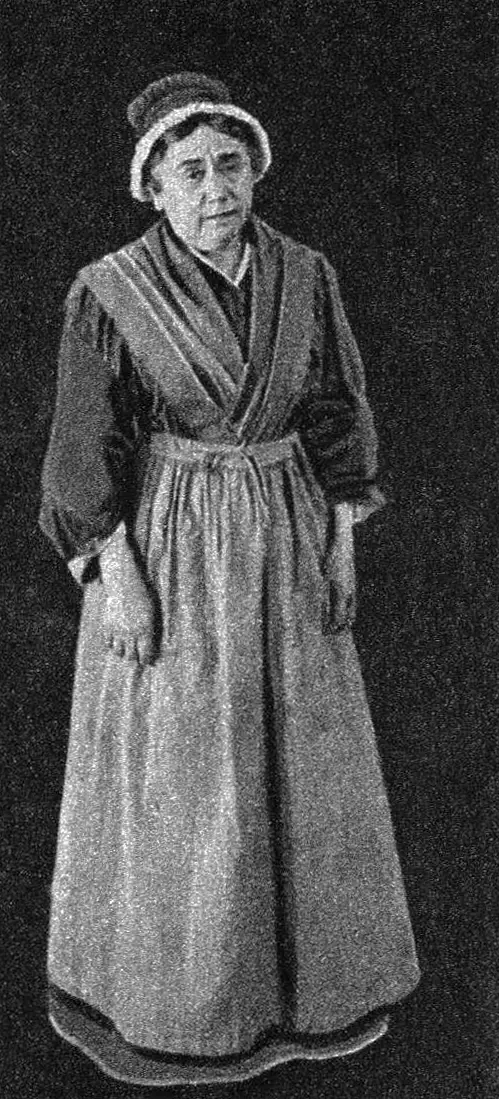
The motif recurs in Once to Every Man, yet that American morality tale allows its hero a redemptive strike. Blanchette offers no such catharsis; its final image—her outline reflected in river water—suggests the Republic itself is the absent father.
Viewed today, the silence screams. Without orchestral sign-posting, every footstep on cobblestone becomes a referendum on belonging. The absence of dialogue cards for long stretches forces modern spectators to lip-read, to lean in, to inhabit the anxiety. The effect is uncannily akin to watching a contemporary festival film shot in vérité style; you feel the urge to check your phone for notifications, only to remember that the characters’ desperation predates both Wi-Fi and welfare.
Curators at the 2022 Bologna Cinema Ritrovato paired Blanchette with Die schwarze Locke in a programme titled "Degrees of Nothing," arguing both films expose how nineteenth-century meritocracy mutates into twentieth-century exclusion. The juxtaposition is apt: where the German melodrama uses gothic curls to denote fate, Brieux uses bureaucratic stationary.
The 4K restoration by Pathé’s archives reveals hand-tinted sequences absent from earlier dupes. Blanchette’s provincial bedroom glows with rose, hinting at the dawn she never quite reaches. Parisian scenes, tinted in sickly aquamarine, feel underwater—an Atlantis of ambition. The palette choice recalls sea-blue (#0E7490) rather than the usual cobalt, underscoring the drowning metaphor.
Purists complained the tints sentimentalise Brieux’s austerity, yet they overlook how colour here functions like a bruise, mapping psychological injury onto image. Far from prettifying despair, the hues make it tactile.
The film’s closing moment deserves anthologising alongside the last frames of The Truant Soul. Blanchette stands on Pont Neuf at dawn, diploma clutched like a prayer book. The camera retreats until she becomes a punctuation mark on the stone. No iris-out, no title card promising Part II—just the river’s slow pulse. It is a refusal of closure so absolute that modern viewers may find themselves frozen in their seats while the next feature rattles through the projector.
That refusal is the film’s modernity. It anticipates the open endings of Dardenne brothers’ dramas, yet predates them by eighty years. It also explains why Blanchette circulated poorly in its day; distributors demanded a comforting epilogue. Brieux, ever the irritant, declined.
Trace a straight line from Ambroise’s shuttered face to Silvia Pinal’s in Land Without Bread, to Ana Torrent’s in Cria cuervos. Each inherits the same mandate: convey erasure without pleading for pity. The difference is that by 1976, audiences expected such austerity; in 1914, it landed like a slap.
Even within its own year, the contrast is stark. While The Kaiser, the Beast of Berlin inflames patriotic fervor, Blanchette whispers that the enemy may be internal—an economy that weaponises education against the educated.
If you can, watch it on a big screen with live accompaniment that avoids lush strings; a sparse piano, slightly detuned, matches the film’s sour dignity. On home release, disable upscaling artifacts—Blanchette’s power lies in texture: the fuzz on a wool coat, the pockmark of cheap paper. Projectors with digital smoothing turn these grains into plastic.
Pair the viewing with Brieux’s source play, La Femme seule, but resist the urge to treat the film as mere illustration. Krauss’s camera adds a spatial cruelty the stage cannot: doors really slam, streets really stretch to vanishing points, river water really swallows reflections.
Blanchette is a chilly masterpiece masquerading as a minor morality tale. It offers no comfort, only communion: the sense that yesterday’s closed door is tomorrow zero-hour contract. To watch it is to eavesdrop on the moment cinema learned that systemic failure could be drama enough—no villains required, only the polite finality of a rejection letter fluttering to the floor.
Seek it out not for nostalgia but for calibration: it will recalibrate what you expect from both silent film and social critique. Then, when the credits end and the lights rise, notice how the exit sign above the theatre door suddenly looks like yet another office you’re not invited to enter.
IMDb —
1924
Community
Log in to comment.