DbcultAccessing Vault...
Cult Review
Senior Film Conservator
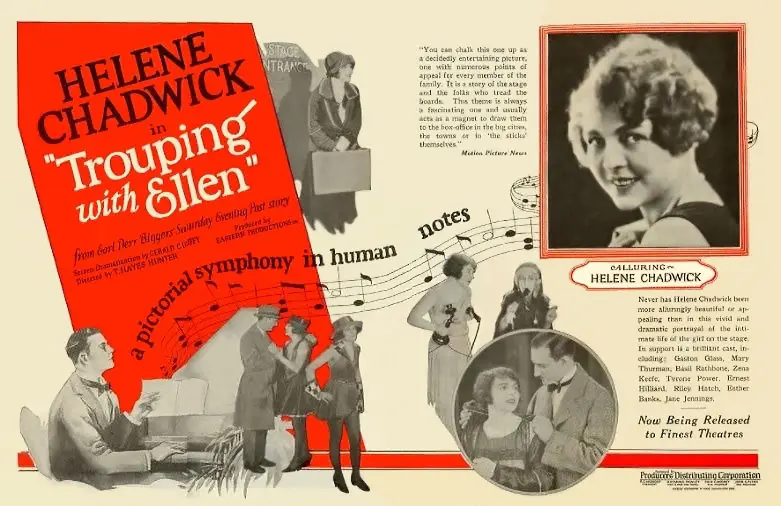
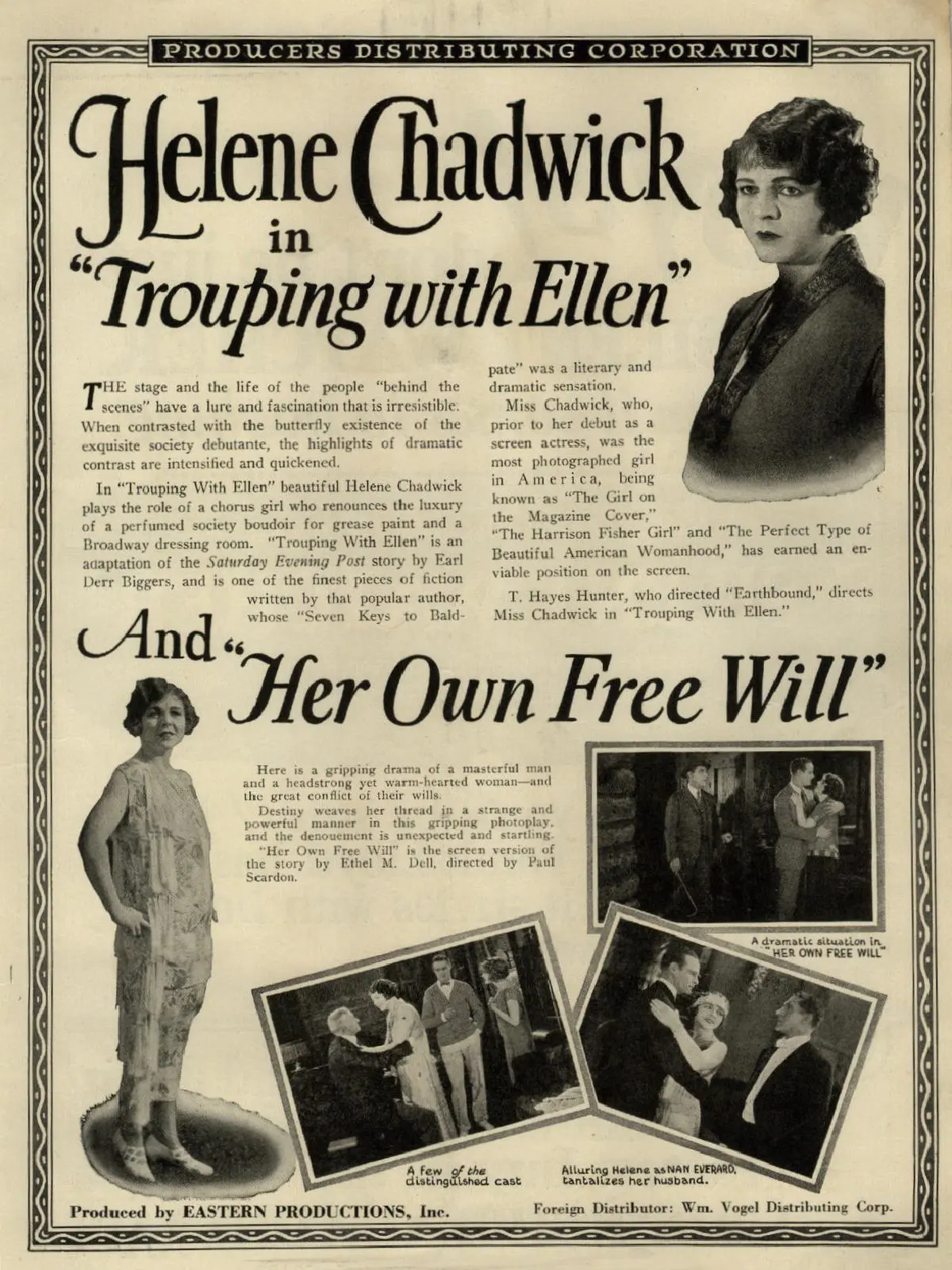
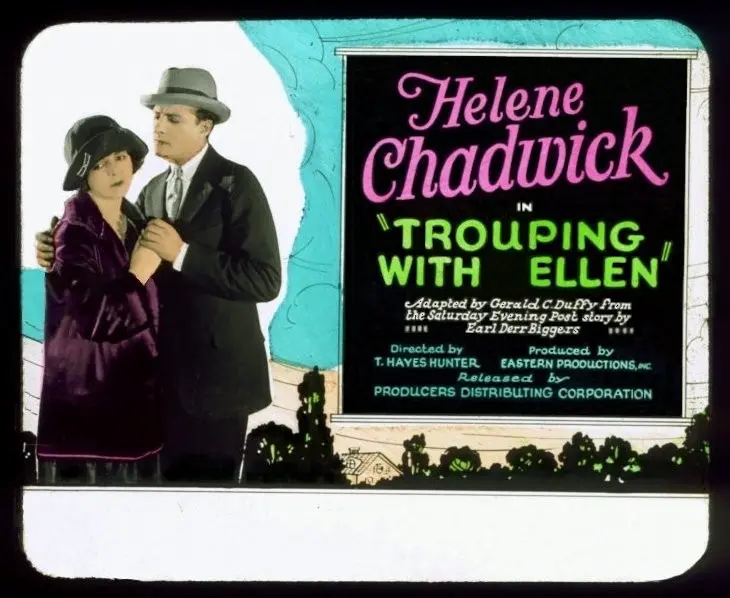
In the ephemeral landscape of 1924 cinema, Trouping with Ellen emerges not merely as a relic of the silent era, but as a vibrant, breathing discourse on the collision of social strata and the intrinsic value of artistic labor. Directed with a keen eye for the spatial dynamics of the theater, the film navigates the treacherous waters of the American Dream through the eyes of Ellen Llewellyn, a protagonist whose pragmatism is as sharp as her dance steps. While many films of this period, such as The Loves of Letty, often leaned into the melodrama of the social climber, Ellen represents a more modern, self-actualized archetype: a woman who recognizes that a gilded cage is still a cage, regardless of the quality of the birdseed.
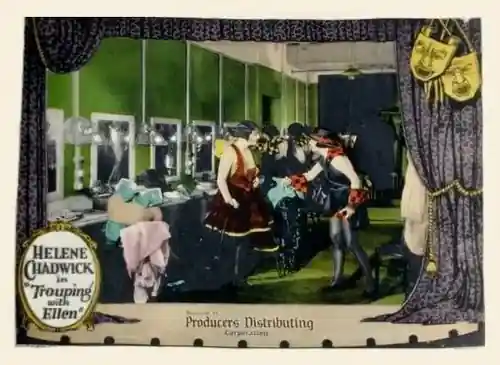
The opening sequences of the film are a masterclass in establishing tension through mundane ritual. Ellen’s Sunday dinner with her mother serves as an emotional anchor, a reminder of the domesticity she both loves and fears. The subsequent race to the Boston musical rehearsal introduces us to the frantic, staccato world of the theater. Here, the film diverges from the more somber tones of The Black Stork, opting instead for a kinetic energy that mirrors the pulse of the Jazz Age. The stage manager, a figure of bureaucratic tyranny, is thwarted not by Ellen’s charm alone, but by the strategic intervention of Andy Owens.
Andy, played with a soulful vulnerability by Gaston Glass, represents the artistic proletariat. He is the man behind the music, yet he is tethered to the same economic precarity as Ellen. His recurring proposals are not rejected out of a lack of love, but out of a profound fear of the "uncertain and marginal existence" that marriage to a fellow artist entails in a pre-unionized industry. This specific anxiety elevates the film above standard romantic fare, grounding it in the economic realities of the 1920s. It echoes the themes found in The Auction Block, where the value of a woman’s presence is constantly weighed against her survival.
Enter Tony Winterslip. In many silent dramas, the arrival of a wealthy suitor is the resolution; in Trouping with Ellen, it is the complication. Tony, portrayed with a languid, almost tragic detachment, is the antithesis of Andy’s creative fire. He is a man built of name and fortune, lacking the internal combustion required to forge his own path. When Ellen contracts pneumonia—a plot device that often signaled the end for heroines in films like The Girl and the Judge—the narrative shifts from the vibrant theater to the sterile, echoing halls of the Winterslip mansion.
The cinematography during Ellen’s convalescence is notably different. The frames become more static, the lighting colder. The Winterslip home is a museum of the living dead, a place where "dull routine" is the primary deity. Ellen’s boredom is palpable; Zena Keefe conveys a restless energy that cannot be suppressed by silk sheets or attentive nurses. This segment of the film serves as a scathing critique of the leisure class, suggesting that the absence of struggle leads to an absence of life. It’s a thematic inversion of the frontier vitality seen in On the Night Stage.
The cast of Trouping with Ellen is a fascinating tapestry of silent era stalwarts. Zena Keefe provides a performance of remarkable nuance, avoiding the exaggerated pantomime that often plagues less sophisticated films of the era. Her Ellen is a woman of intellect and agency, making choices based on a calculated assessment of her future. Beside her, the presence of a young Basil Rathbone adds a layer of sophisticated menace and charm that he would later perfect in his career. Even in this early role, Rathbone’s precision is evident, providing a sharp contrast to the more emotive styles of his co-stars.
Tyrone Power Sr. brings a Shakespearean weight to the production, his every movement carrying the gravity of a theatrical dynasty. The interaction between these varied acting styles creates a rich, textured viewing experience. It reminds one of the ensemble strength in The Courtship of Myles Standish, though the setting here is decidedly more urban and cynical. The supporting turns by Mary Thurman and Helene Chadwick further flesh out this world, making the theater troupe feel like a genuine, albeit dysfunctional, family.
Perhaps the most subversive element of the screenplay by Earl Derr Biggers and Gerald C. Duffy is the character of Tony’s grandmother. In a typical melodrama, the matriarch would be the primary antagonist, guarding the family bloodline against the "taint" of a chorus girl. Instead, she is the film’s most perceptive philosopher. She recognizes that Ellen’s vitality would be extinguished by the Winterslip legacy. Her intervention is not one of cruelty, but of profound empathy. She facilitates Ellen’s return to Andy not because Ellen is "unworthy," but because the Winterslip world is unworthy of Ellen’s fire.
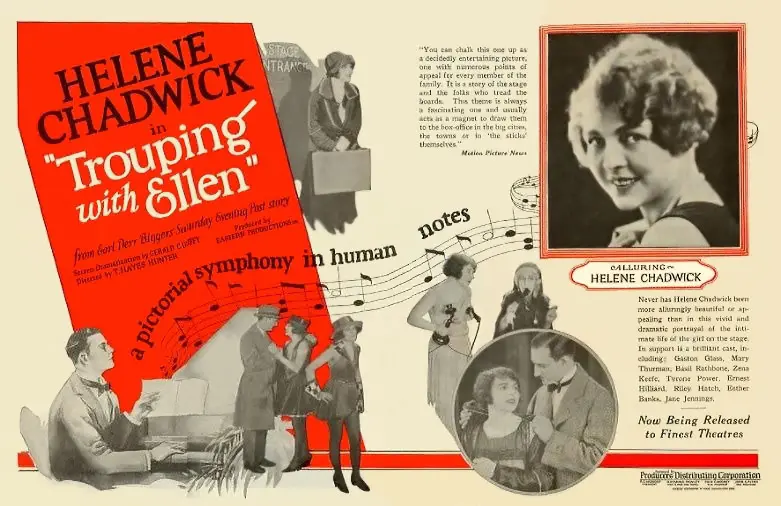
This resolution is earned through character development rather than mere coincidence. When Andy reveals he has sold a musical to Broadway, it isn't just a convenient happy ending; it is the validation of Ellen’s initial fear. She didn't want to marry a poor man, not because she was greedy, but because she valued the work and the stability required to sustain it. This intersection of love and economics is far more sophisticated than the binary choices offered in films like The Price They Pay.
Technically, Trouping with Ellen showcases the peak of silent film craftsmanship. The lighting in the theater scenes captures the hazy, smoke-filled atmosphere of backstage life, while the mansion scenes utilize deep focus to emphasize the vast, empty spaces between the characters. The editing is brisk, particularly during the transitions between Ellen’s two worlds, creating a rhythmic contrast that keeps the viewer engaged. It lacks the experimental jarring of Fasching, but it possesses a classical elegance that is equally effective.
The use of intertitles is sparse and effective, allowing the actors' expressions to carry the emotional weight. This is a film that trusts its audience to understand the subtext of a glance or a hesitant step. In an era where some films, like The Speed Maniac, relied on sheer velocity, Trouping with Ellen finds its strength in the quiet moments of realization. It shares a certain psychological depth with The Law Decides, though it maintains a much lighter, more hopeful tone.
Ultimately, Trouping with Ellen is a celebration of the "trouping" spirit—the resilience of those who live for the performance. It acknowledges that while the life of an artist is fraught with uncertainty, it is infinitely preferable to a life of comfortable stagnation. The final union of Ellen and Andy is not just a romantic victory, but a professional one. They are partners in art and life, a concept that felt revolutionary in 1924 and remains resonant today.
For those accustomed to the high-octane spectacles of modern cinema, this film offers a necessary recalibration. It demands attention to detail and an appreciation for the subtle shifts in social status that defined the early 20th century. It stands alongside works like Turning the Tables as a testament to the enduring power of character-driven storytelling. Trouping with Ellen is a gem that deserves to be polished and viewed by a new generation of cinephiles, if only to see the legendary Basil Rathbone and Zena Keefe at the height of their silent-era prowess.
IMDb 6.5
1930
Community
Log in to comment.