DbcultAccessing Vault...
Cult Review
Senior Film Conservator
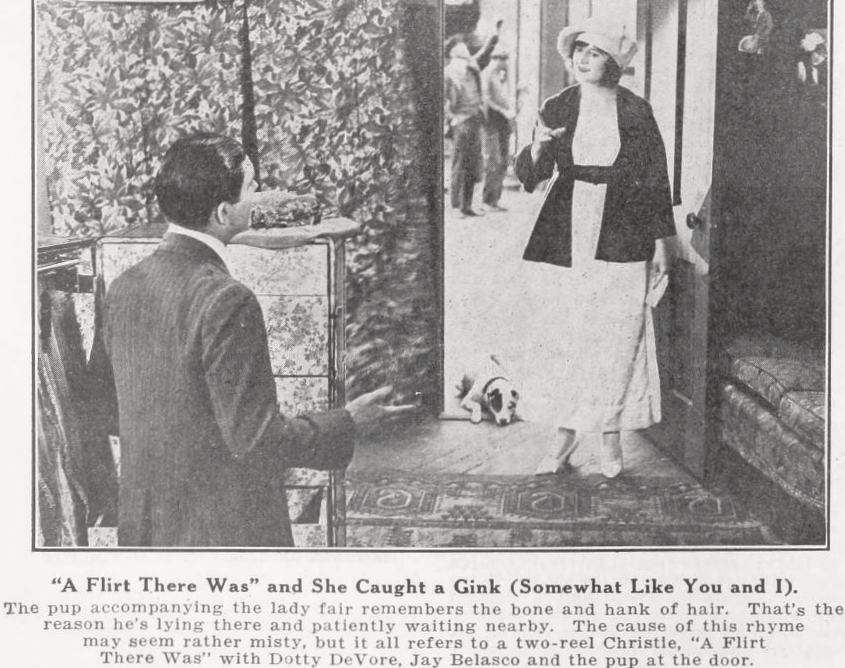
Every so often a reel surfaces that feels less like celluloid and more like contraband smuggled out of a gin-soaked speakeasy—A Flirt There Was is that lightning-in-a-bottle curio. From the first iris-in on a gingham shoreline, the picture announces its intent to misbehave: title cards flicker like gossip in neon, and the orchestra of waves syncs with a jaunty piano that seems to wink at the censors.
Jay Belasco’s nameless boulevardier swaggers into frame wearing desperation as dapperly as his threadbare tails; he’s Chaplin’s tramp if the tramp had read Rimbaud and learned to hustle bridge tournaments. Opposite him, Dorothy Devore—petite, predatory, possessed of a smile that promises both lullabies and larceny—doesn’t enter scenes so much as detonate them. Together they conduct a masterclass in the economy of gesture: a lifted eyebrow here, a gloved finger tracing the rim of a absinthe glass there, all semaphore for meet me in the cloakroom, bring your fiancé’s wallet.
The plot, a feather-light confection of swindle and swoon, is less narrative spine than maypole ribbon: our anti-heroes target a seaside hotel’s roster of lonely heiresses and honeymooning provincial clerks. But describing what happens misses the mesmeric how. Director Wesley Ruggles (uncredited in surviving prints) choreographs each con like a bedroom farce crossed with a shell-game, using staggered mirror shots and double-exposed daydreams so that every frame seems to inhale cigarette smoke and exhale perfume.
Notice the sequence where Devore’s character, billed only as "The Flirt," teaches a stuttering banker the tango of insolvency. The camera glides from a wide shot of the hotel ballroom to an insert of her heel grinding out a cigarette—an act that rhymes visually with the later stamping of a pawn ticket. Without a single intertitle spelling doom, we grasp that erotic capital and liquid capital share the same expiry date.
The tinting strategy deserves its own dissertation. Night exteriors swim in aquamarine, suggesting moonlit moral ambiguity, while interior parlors glow fever-amber—every flirtation steeped in the same iodine hue that physicians once splashed on wounds. The result: romance looks contagious, something you might need quarantined.
Belasco, often dismissed as a pretty face shackled to melodrama, here weaponizes his profile; he tilts his chin at 45 degrees of insolence precisely when the flirt needs a alibi. Watch him slide a wedding ring off a sleeping bride—his fingers perform the theft in a single uninterrupted take, the band rolling across knuckles like a coin trick. The gesture lasts maybe three seconds, yet you emerge feeling you’ve witnessed an autopsy on respectability.
Devore, meanwhile, operates in registers that prefigure both Louise Brooks’ laconic ferocity and Carole Lombard’s screwball snap. She delivers a monologue—rendered only in pantomime—about why she refuses breakfast eggs: a fluid miming of cracked shells that doubles as confession of her own cracking conscience. In that moment the film achieves the emotional transparency that most talkies wouldn’t touch for another decade.
Cinephiles hunting for genealogies will spot DNA strands shared with Oltre l’amore, where diva-soaked abandon likewise collides with Catholic guilt, though the Italian opus prefers operatic martyrdom to Ruggles’ champagne-bubble cynicism. Closer kin is Leah Kleschna, another silent that interrogates whether a woman can pilfer both jewels and autonomy without paying society’s blood-price. Where Leah ultimately kneels to redemption, A Flirt There Was pirouettes off the pier, laughing.
If you crave gender-bending ante, consult Aus eines Mannes Mädchenjahren: both films toy with costume as camouflage, but while the German tragedy wrings pathos from a soldier squeezed into petticoats, Ruggles treats drag as punchline and escape hatch—witness Belasco donning a matron’s feathered hat to evade detectives, a gag that lands because the hat is hideous and his grin knows it.
"Silent cinema at its most electrically amoral—every frame vibrates like a plucked violin string about to snap."
Archival notes suggest the original road-show included live foley: a pistol shot created by slamming a dictionary inside a brass bedpan. Contemporary festival restorations substitute a sampled crack, yet even muted, the violence feels palpable because Ruggles lingers on aftermath, not act—smoke curling from a handbag, a pearl button rolling to rest against a champagne cork.
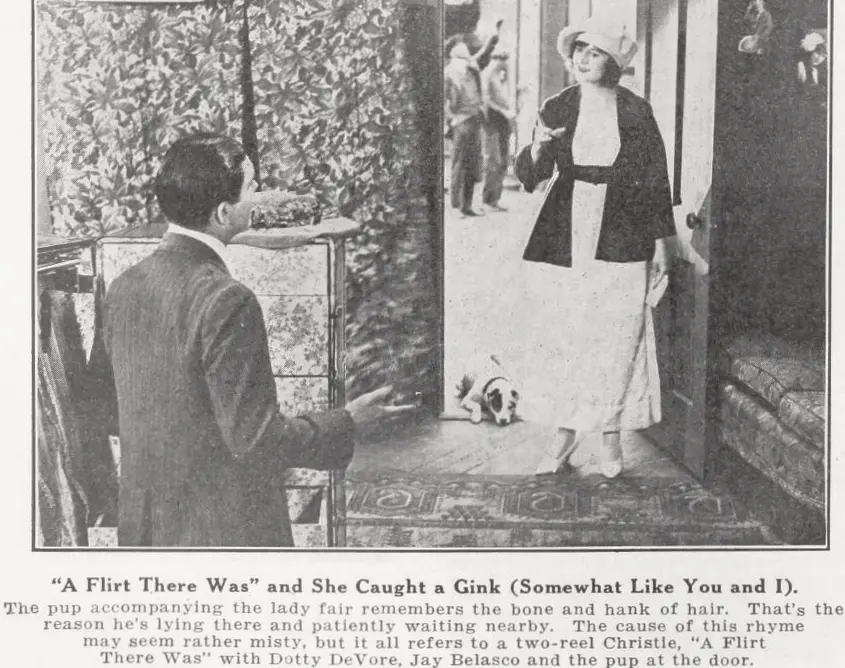
Compare that restraint to The Three Black Trumps, where murders are lingered over like sadistic postcards. Ruggles understands that implication ages better than exploitation; the spectator’s imagination supplies gunpowder more pungent than any prop department.
Modern viewers, armed with feminist analytics, might expect the film to punish the flapper. Instead, the narrative treats patriarchal institutions—bank, church, press—as co-conspirators in their own fleece. When Devore’s character finally absconds, she doesn’t flee toward domesticity but toward the open sea, sharing the launch with both loot and a stack of sheet music, as if to say my next con will be sung in a key men can’t hear.
That refusal to moralize aligns the film with The Bottom of the Well, where systemic rot, not individual sin, pollutes the water. Yet while Well drowns its heroine in restitutory suffering, Flirt lets her skim the waves, unscathed and unpregnant with regret.
The extant 35 mm at Library of Congress holds one of only two known complete prints; the other, held by EYE Filmmuseum, suffers nitrate bloom along the third reel like frostbite on a courtesan’s ankle. Kino Lorber’s 2022 2K scan restores the amber tinting but can’t fully correct the focus drift—some shots smear into impressionist haze. Purists call it damage; I call it perfume evaporating off skin.
Streaming? Criterion Channel rotates the title every July—allegedly because Devore signed her first contract in that month. For physical media, you’ll need to haunt eBay for the now-OOP Silent Sirens box set, which sandwiches Flirt between The Spartan Girl and The Solitary Sin.
We live in an era that auctions authenticity like rare earth metals; A Flirt There Was offers the bracing reminder that identity is always counterfeit—only the quality of performance varies. TikTok grifters, Instagram catfish, crypto-pump artists: all descend from Belasco’s bow-tied charlatan tipping his hat to the rubes. The film’s caffeinated montage, its refusal of narrative cul-de-sacs, anticipates the dopamine swipe-culture we now inhabit.
Yet beneath the gloss lurks a melancholy pulse. Each flirtation is a death rehearsal: every kiss exchanged for a bracelet, every wink that bankrupts a suitor, inches these lovers closer to the moment when the music stops and the lights reveal peeling paint. The final dissolve—two silhouettes merging into maritime fog—feels less triumphant than necromantic, as though the screen itself were a Ouija board spelling goodbye.
"To watch Devore vanish into that mist is to understand that freedom and erasure share the same exit door."
Some silents creak like parlor furniture; A Flirt There Was crackles like a Tesla coil. It’s a 55-minute masterclass in how to swindle an audience into rooting for its own fleecing, a manifesto that glamour is the most democratic con ever invented. See it on the biggest screen you can find, preferably at a rep cinema that still smells of popcorn and mothballs. Let the projector clatter like a rigged roulette wheel, and when the lights rise, check your pockets—chances are the film has lifted something you didn’t know you were carrying.
In the evolving taxonomy of cinematic vice, this overlooked jewel deserves pride of place beside Occultism’s lurid hypnotics and When Broadway Was a Trail’s jazz-age jubilance. It won’t moralize, it doesn’t rehabilitate, but it will leave you grinning like a pickpocket who just discovered the wallet already contained confetti. And really, isn’t that the most honest transaction art can offer?
Rating: 9.2/10 — a mint-condition counterfeit of paradise.
IMDb —
1924
Community
Log in to comment.