DbcultAccessing Vault...
Cult Review
Senior Film Conservator
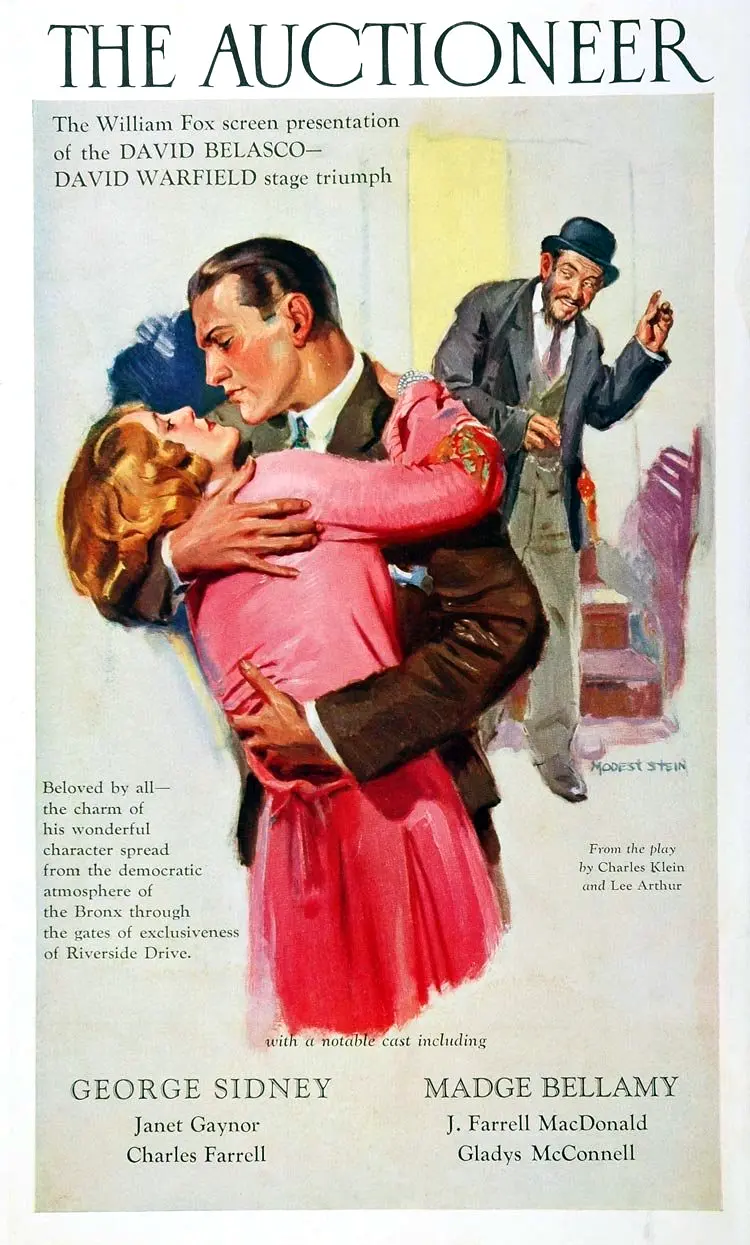
Does The Auctioneer hold up for a modern audience? Short answer: yes, but only if you appreciate the gritty, character-driven realism that the late silent era perfected before the advent of talkies.
This film is for history buffs and those who enjoy seeing the 'American Dream' deconstructed through a lens of immigrant struggle. It is not for viewers who require high-speed action or those who find the deliberate pacing of 1920s melodrama too archaic for their tastes.
1) This film works because: George Sidney provides a grounded, deeply human performance that avoids the broad, offensive caricatures often found in early 20th-century portrayals of Jewish characters.
2) This film fails because: The secondary characters, particularly the villainous broker, lack the psychological depth given to Simon, making the final confrontation feel a bit like a stage play.
3) You should watch it if: You want to see a masterclass in visual storytelling where the emotional stakes are told through eyes and gestures rather than title cards.
If you are looking for a film that captures the anxiety of the pre-Depression era, then The Auctioneer is essential viewing. It acts as a bridge between the simplistic morality plays of the early 1910s and the complex social dramas of the 1930s.
While it lacks the whimsical charm of something like Trolley Troubles, it offers a weightiness that is rare for its time. The film asks difficult questions about trust, family, and the predatory nature of high finance. It isn't just a movie; it's a time capsule of New York's soul.
George Sidney’s portrayal of Simon is nothing short of a revelation. In an era where many actors were still leaning into the exaggerated movements of the Vaudeville stage, Sidney chooses a path of quiet dignity.
Take the scene on the immigrant ship. As the mother passes away, Simon doesn't wail or beat his chest. He simply looks at the child, and in that moment, his entire future shifts. It is a subtle piece of acting that makes the later scenes in the pawnshop feel earned.
Contrast this with the more physical performances in Two Tough Tenderfeet, and you see the evolution of the medium. Sidney understands that the camera can see his thoughts. He plays to the lens, not the back row of the theater.
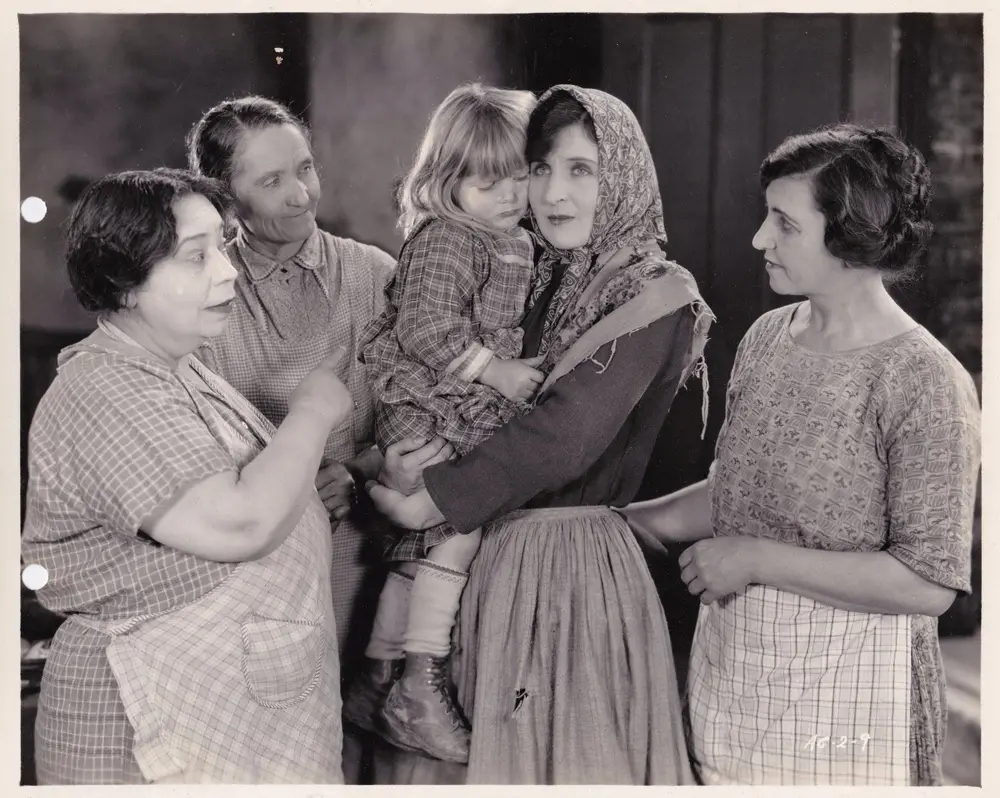
Director Charles Klein uses the setting of the pawnshop to great effect. It is a cluttered, claustrophobic space that represents Simon’s life: a collection of other people's discarded dreams that he has curated into a living.
The cinematography by the uncredited crew (typical of the time) uses shadows to emphasize Simon’s isolation once the money is lost. When he is successful, the shop is bright, filled with the bustling energy of the neighborhood.
When the betrayal occurs, the lighting shifts. The shop feels like a tomb. This visual storytelling is far more effective than the dialogue-heavy approach seen in The Common Law. It shows a director in full control of his environment.
The film’s critique of the financial sector is surprisingly modern. The young broker, Gareth Hughes, represents the 'new' America—fast, flashy, and ultimately hollow.
Simon’s decision to invest his fortune isn't just a financial move; it’s a desperate attempt to secure his daughter’s happiness in a world he doesn't fully understand. This conflict between the old world of tangible goods (the pawnshop) and the new world of paper wealth (Wall Street) is the film’s strongest theme.
When the 'crooked broker' is revealed, it isn't just a plot twist. It is a systemic failure. This thematic depth elevates The Auctioneer above standard fare like Race Wild, which focuses more on surface-level thrills than social commentary.
Marian Nixon as Ruth provides the necessary heart to the film. Her chemistry with Sidney feels authentic, portraying a father-daughter bond that isn't based on blood but on shared survival.
Ann Brody also deserves mention for adding a layer of community realism. The film populates its world with characters who feel like they actually live in the tenements of New York, rather than just being extras on a backlot.
This attention to detail is what separates a great silent film from a mediocre one. Even minor roles feel lived-in. It’s a far cry from the more stylized, almost cartoonish characters in The Prince and the Pauper.
If there is a flaw, it is the pacing of the final act. The film spends a significant amount of time building up Simon’s life and his relationship with Ruth. This is time well spent.
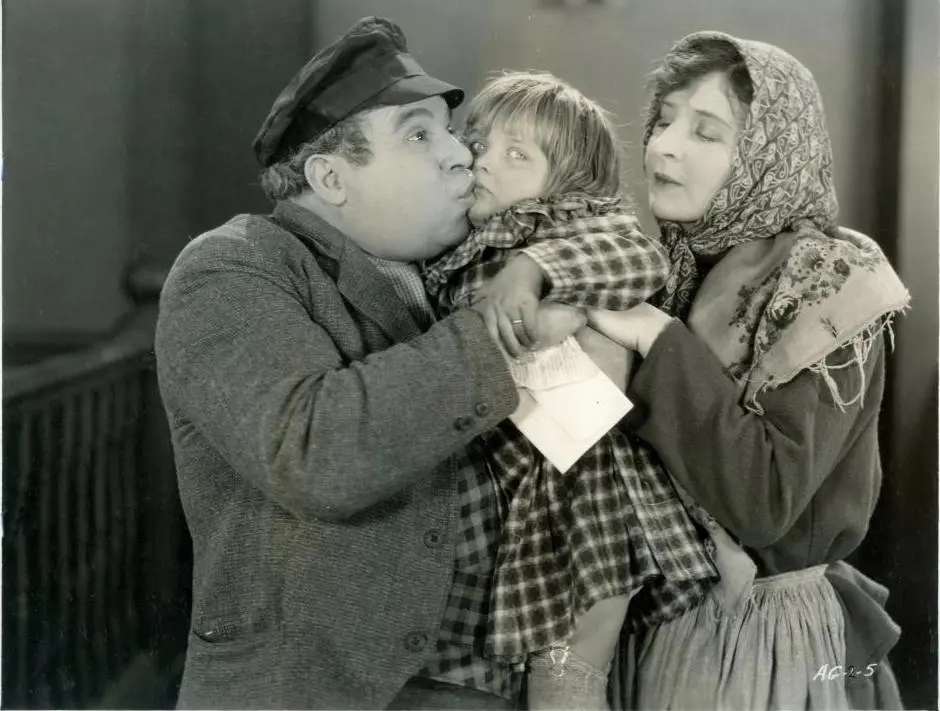
However, once the financial ruin hits, the film shifts into high gear. The hunt for the crooked broker feels slightly disconnected from the contemplative drama of the first hour. It’s as if the writers felt they needed to inject 'action' to keep the audience engaged.
It works. But it’s flawed. The resolution comes a bit too quickly, missing the opportunity to really explore Simon’s psychological state during his second rise from poverty. It lacks the steady tension found in The Mystery Box.
Charles Klein’s direction is confident. He knows when to linger on a close-up and when to use a wide shot to show the scale of the city.
The editing is particularly sharp during the Wall Street sequences. The intercutting between the ticker tape and Simon’s mounting anxiety creates a sense of dread that is palpable.
This isn't just a filmed play; it's a movie that understands the power of the frame. It’s as technically proficient as the educational shorts of the time, such as How Animated Cartoons Are Made, but with a much higher emotional IQ.
One of the most interesting things about The Auctioneer is its portrayal of the pawnshop. Usually, in films of this era, the pawnbroker is a figure of greed or comedy.
Here, the shop is a sanctuary. It’s a place of community. This subversion of the trope is a bold choice for 1927 and shows a level of cultural awareness that many of its contemporaries, like The Ace of Cads, completely lacked.
It challenges the audience to look past the profession and see the man. That is a message that remains incredibly potent today.
The Auctioneer is a hidden gem of the silent era. While it may not have the name recognition of the era's biggest blockbusters, it possesses a heart and a social conscience that make it a rewarding watch.
George Sidney creates a character that you genuinely root for, making his downfall feel like a personal tragedy. It isn't perfect, and the ending is a bit too tidy, but the journey there is well worth the time.
If you can find a clean print, do not pass it up. It is a poignant reminder that the struggle for security and family is a universal story, regardless of the decade. It’s a solid 8/10 for any serious cinephile.
IMDb —
1920
Community
Log in to comment.