DbcultAccessing Vault...
Cult Review
Senior Film Conservator
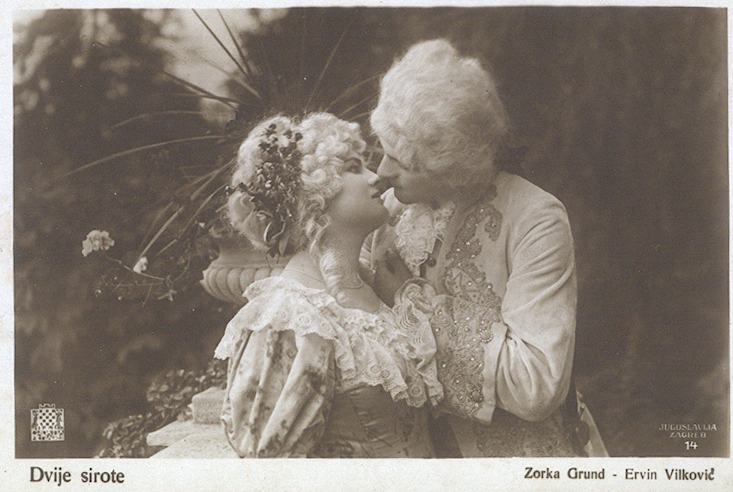
Stepping back into the nascent days of cinematic artistry, particularly when discussing a film as historically significant yet elusive as Dvije sirotice, feels akin to archaeological excavation. This early Croatian adaptation of the enduring five-act melodrama, 'The Two Orphans,' transports us not just to late 18th-century France, but also to a pivotal moment in the development of Balkan cinema. It's a testament to the universal appeal of its narrative—a tale of innocence imperiled, loyalty tested, and justice sought against the backdrop of societal upheaval—that it found its way to the silver screen in a relatively young national film industry. The very act of recreating a stage play, particularly one as grand and emotionally charged as 'The Two Orphans,' for the silent film medium, speaks volumes about the ambition and vision of its creators, including the ensemble cast featuring Josip Pavic, Josip Horvat, Ivan Mirjev, August Cilic, Zorka Grund, Franja Sotosek, and Alfred Grinhut.
The original play, by Adolphe d'Ennery and Eugène Cormon, has captivated audiences for generations, its potent blend of pathos, intrigue, and moral clarity proving remarkably adaptable across cultures and eras. For Dvije sirotice, the challenge would have been immense: translating the verbose declarations and intricate stage blocking of a five-act melodrama into a visual language comprehensible and compelling without the aid of spoken dialogue. This required a profound understanding of exaggerated gesture, facial expression, and the nascent art of cinematic storytelling. The film, set during the tumultuous period of the French Revolution, capitalizes on an era ripe with dramatic potential. The stark contrasts between the opulence of the aristocracy and the squalor of the common people, the simmering resentment that would soon boil over into outright rebellion, provide a vivid, if often historically romanticized, canvas for the personal tragedies of the two titular orphans.
Melodrama, as a genre, thrives on heightened emotion, clear-cut morality, and spectacular dramatic reversals. In the silent era, these characteristics were not merely accepted but actively embraced, forming the bedrock of popular cinematic entertainment. Directors and actors alike understood that without spoken words, the emotional arc had to be conveyed through overt physical performance. The villain had to be palpably evil, the hero unequivocally virtuous, and the damsel in distress exquisitely vulnerable. This is where the talents of actors like Josip Pavic, Josip Horvat, and Zorka Grund would have been paramount. One can imagine Zorka Grund, likely portraying one of the orphans, embodying a delicate fragility, her wide eyes conveying terror or hope with a single glance. Conversely, a performer like August Cilic might have been tasked with portraying the nefarious antagonist, his every sneer and menacing gesture designed to elicit boos from the audience.
The very structure of a five-act play, with its carefully calibrated rising action, climax, and denouement, lends itself well to the episodic nature of early film reels. Each act could conceivably correspond to a distinct segment of the film, building suspense and maintaining narrative momentum. However, the translation is never simply a direct transfer. What works on stage—long soliloquies, intricate verbal sparring—must be distilled into visual shorthand. A director's ingenuity would be tested in finding cinematic equivalents for theatrical devices. A close-up on a tearful face, a rapid montage of events, or a dramatic cross-cut between two parallel narratives would have replaced spoken exposition, becoming the new tools of storytelling. The success of A Daughter of France, another historical drama from roughly the same period, similarly relied on these visual cues to convey its narrative complexities.
The cast of Dvije sirotice, though their specific roles are not detailed, would have been tasked with breathing life into the archetypal figures that populate 'The Two Orphans.' There is the blind orphan, Louise, whose innocence and vulnerability are her defining traits, making her an easy target for exploitation. Then there is Henriette, her fiercely protective sister, whose unwavering loyalty drives the narrative's quest for reunion and justice. The villain, typically a debauched aristocrat or a cunning woman of ill repute, embodies the moral decay of the old regime. Figures like Alfred Grinhut and Franja Sotosek would have been crucial in etching these roles into the audience's consciousness, their performances needing to be both broad enough for the back rows of the theater and nuanced enough for the camera's unforgiving gaze.
The supporting characters—the benevolent doctor, the revolutionary hero, the loyal street urchin—each contribute to the moral fabric of the story, serving as foils, allies, or obstacles. In a silent film, these characters' motivations and allegiances had to be immediately discernible. A simple costume choice, a particular gait, or a recurring gesture could communicate volumes. This reliance on visual shorthand meant that the performances, while perhaps seeming over-the-top by modern standards, were exquisitely calibrated for their intended effect. The emotional intensity often mirrored that found in films like The Gods of Fate, where destiny and human struggle intertwine with dramatic flair.
Setting the melodrama against the backdrop of the French Revolution was a stroke of genius, whether by the original playwrights or the Croatian filmmakers. The revolution itself was a grand, sweeping melodrama on a national scale, replete with heroes and villains, sacrifice and betrayal, triumph and tragedy. This historical context imbues the personal struggles of the orphans with a broader resonance. Their plight becomes a microcosm of the suffering endured by the common people under an oppressive regime. The villain's actions are not merely personal wickedness but symptomatic of a corrupt social order that the revolution seeks to dismantle. This choice of setting elevates the narrative beyond simple domestic drama, giving it a political and historical weight that would have resonated deeply with audiences of the time, and indeed, continues to do so.
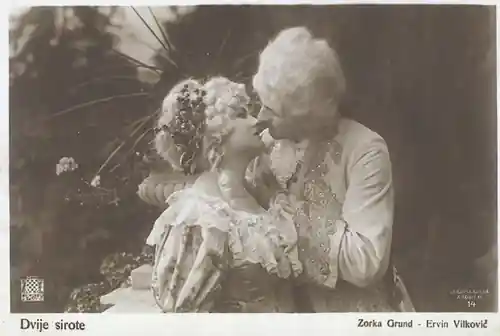
The revolution provides not just a backdrop but also a dynamic force within the narrative. The chaos and upheaval offer opportunities for dramatic escapes, unexpected encounters, and the eventual overthrow of injustice. It's a setting that naturally provides both immense peril and the promise of a new, more equitable world. This thematic richness is something that early films often struggled to achieve, frequently opting for simpler, more contained narratives. The ambition to tackle such a grand historical canvas speaks to the confidence of the filmmakers. We see similar attempts to integrate societal issues into personal dramas in films like Hypocrites, which explored moral hypocrisy in its contemporary setting.
Without spoken dialogue, the visual aesthetic of Dvije sirotice would have been paramount. Costumes, sets, and lighting (even if rudimentary) had to convey information, mood, and character. The poverty of the orphans would be expressed through ragged clothing and desolate surroundings, while the villain's opulence would be showcased through elaborate gowns and richly decorated (if stage-bound) interiors. The contrast between these visual elements would have underscored the class divide central to the plot. The use of intertitles, while essential for conveying dialogue and plot points, would have been carefully managed to avoid breaking the visual flow. These textual inserts were often works of art in themselves, employing evocative language and sometimes decorative fonts to maintain the film's aesthetic.
The cinematography, even in its early stages, would have played a crucial role. While dynamic camera movements were less common, thoughtful framing, the use of depth of field (however limited), and the strategic placement of actors within the frame could create powerful visual compositions. A shot of the two orphans, small and vulnerable against the vast, indifferent cityscape, would instantly communicate their precarious situation. Conversely, a shot of the villain towering over them would emphasize his power and menace. The ability to manipulate light and shadow, even with basic equipment, could evoke mood – the gloom of a prison cell, the warmth of a benevolent home. Films like The Lonely Woman also relied heavily on such visual cues to tell its story of isolation and longing.
The significance of Dvije sirotice extends far beyond its individual narrative merits. As an early Croatian film, it represents a foundational moment in the nation's cinematic history. It speaks to the burgeoning cultural ambition and the desire to participate in the global phenomenon of moving pictures. For a nascent film industry, adapting a widely popular play was a shrewd move, guaranteeing a degree of audience recognition and interest. It allowed local talent—actors, directors, crew—to hone their craft and experiment with the new medium, laying the groundwork for future productions. Even if the film itself is largely lost to time, its existence is a powerful reminder of the early, vibrant days of Croatian cinema.
The challenges faced by these early filmmakers were immense: limited technology, scarce resources, and the lack of established cinematic conventions. Yet, they pressed on, driven by an artistic impulse and the desire to entertain. The choice of 'The Two Orphans' was not arbitrary; its enduring popularity on stage meant that audiences were already familiar with its emotional beats and dramatic turns, making the transition to silent film potentially smoother. It's a piece of cultural heritage that, even in its absence, informs our understanding of how cinema took root and developed in this part of the world. Comparing it to another early European film like Luksuschaufføren, one can appreciate the shared challenges and creative solutions across different national cinemas during this foundational period.
Even in a cynical age, the power of melodrama to evoke strong emotions and explore fundamental human experiences remains potent. Dvije sirotice, through its adaptation of 'The Two Orphans,' tapped into universal themes: the struggle of good against evil, the resilience of the human spirit in the face of adversity, the enduring power of familial bonds, and the quest for justice. These are narratives that transcend specific historical periods or cultural contexts. The French Revolution setting simply amplified these themes, providing a high-stakes environment where personal dramas could unfold with epic consequences. The film, in its essence, was a moral fable, offering audiences a clear distinction between virtue and vice, and ultimately, a hopeful vision of retribution and redemption.
The very act of watching a silent film today requires a different kind of engagement, an imaginative leap to fill in the gaps of sound and spoken dialogue. But this engagement can be incredibly rewarding, allowing one to appreciate the raw power of visual storytelling and the expressive capabilities of early actors. Films like Vater und Sohn, also from this silent era, demonstrate the profound emotional depth achievable even without sound. Dvije sirotice, therefore, stands not just as a historical artifact but as a window into a particular mode of storytelling that, while evolved, continues to influence narrative forms to this day. Its existence reminds us that the fundamental human desire for stories of struggle, perseverance, and eventual triumph is timeless, finding expression even in the earliest, most rudimentary forms of cinematic art.
The sheer scale of a five-act play, even condensed for the screen, implies a narrative rich with twists and turns. The separation of the orphans, their individual journeys through a treacherous Paris, the machinations of the villain, and the eventual, hoped-for reunion would have provided ample opportunity for dramatic tension and emotional catharsis. The challenges of a silent film, particularly one based on such an elaborate stage production, would have necessitated innovative solutions in editing and staging. The pacing, crucial in maintaining audience engagement, would have been carefully controlled, oscillating between moments of quiet despair and frenetic action, much like the ebb and flow of the revolution itself. The film’s contribution to early Croatian cinema is undeniable, paving the way for future storytellers and cementing the potential of the moving image in a new cultural landscape. Its spectral presence in film history serves as a poignant reminder of the ephemeral nature of early cinema, yet its thematic echoes persist, resonating with the enduring human spirit to overcome adversity.

IMDb 7.3
1935
Community
Log in to comment.