DbcultAccessing Vault...
Cult Review
Senior Film Conservator
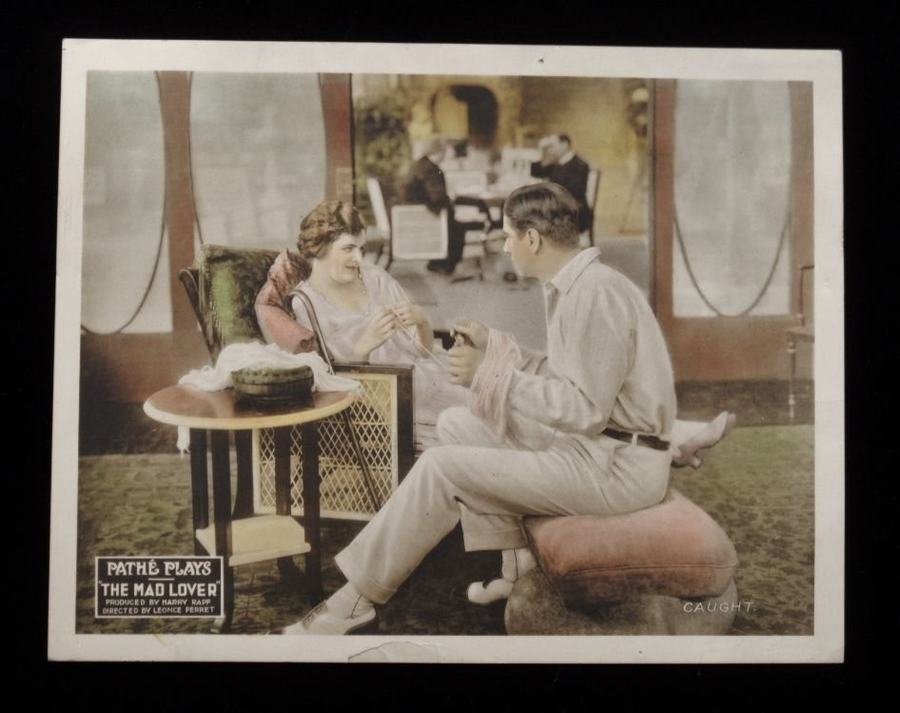
Léonce Perret’s The Mad Lover arrives like a hand-tinted postcard mailed from the subconscious: edges frayed, ink bleeding at the margins, yet the image—jealousy as marital fuel—retains its scalding immediacy. Shot in the lacustrine hush of 1922, the film weaponizes silence; every intertitle feels like a slap delivered in gloves.
Robert Warwick’s Hyde stalks the frame as if allergic to his own silhouette—shoulders hinged forward, eyes two nail heads hammered into dusk. His anti-courtship creed is less philosophy than pathology: women are fauna to be avoided, not pursued. Enter Elaine Hammerstein’s Clarice, a swirl of voile and voltage, whose dismantled automobile becomes the Trojan horse that breaches his citadel. The crash is staged with shards of headlights flickering like fallen constellations—an omen that love, here, will always be accompanied by broken glass.
Once bandaged and installed in Hyde’s mausoleum of taxidermy, Clarice proceeds to redecorate reality. She wanders corridors lined with glass-eyed stags, her reflection superimposed on their frozen gaze—a visual reminder that she, too, is being mounted for display. Perret lingers on these doublings, letting the mise-en-abyme of mirrors suggest that marriage might be just another trophy case.
The courtship montage is a kinetic fever: a close-up of wet clay beneath Hyde’s fingernails dissolves into Clarice kneading bread; cut to river reeds swaying like congregants; cut to a fisherman’s lure glinting—phallus and hook at once. In under forty seconds Perret sketches the entire erotic contract: conquest, sustenance, and the ever-present threat of being gutted.
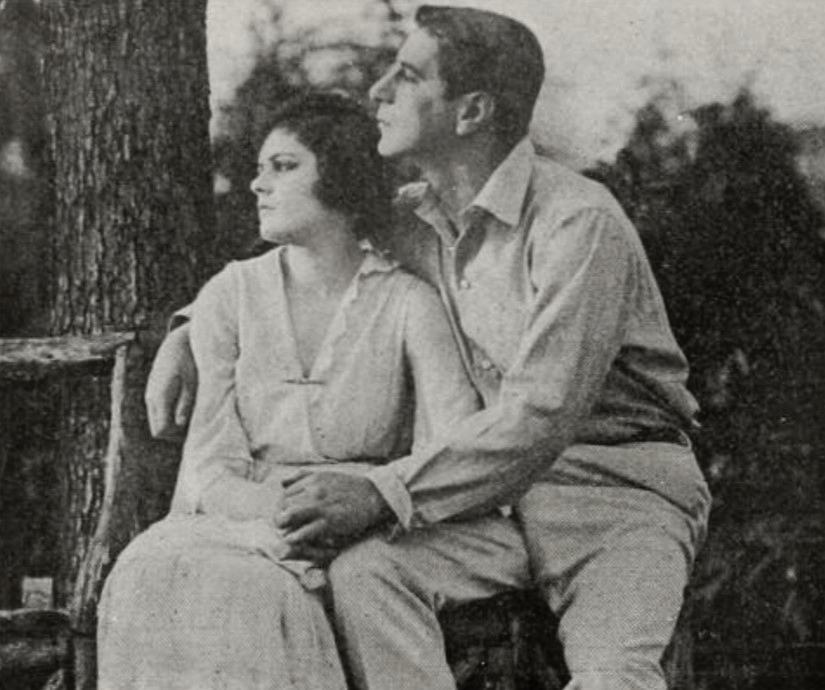
Post-nuptials, the palette desaturates. Clarice drifts across parlors the color of spoiled cream while Hyde escapes into vermilion dawns with rifle in hand. The camera adopts her point of view: doorways yawn like wounds, and the ticking of an ormolu clock swells until it drowns out birdsong. Perret understood that in silence, sound can be hallucinated; we swear we hear the rustle of her silk as it slides off an unvisited shoulder.
The pastor—Frank McGlynn Sr. in ecclesiastical granite—offers the film’s most lethal line: "A womb unfilled is a cathedral without worshippers." Clarice absorbs the blow with pupils dilated like bullet holes. From this moment, the narrative pivots from romantic dalliance to body-horror of expectation. The aunt’s house party descends like a plague of locusts in chiffon, each guest a fluttering mouth demanding entertainment. The choice of Othello is no accident; Shakespeare’s malignant moor is the original patriarchal fever dream, and Perret stages it as Hyde’s cracked mirror.
Georges Flateau’s count possesses the lubricious grace of a cabaret ember. During rehearsals, his hand lingers on Clarice’s waist just long enough for the shadow cast by klieg lights to resemble a thumbprint on alabaster. The dream sequence—Hyde as Othello smothering Desdemona-Clarice—unfurls in negative exposure: whites flare, blacks recede, and the bed linen becomes a shroud of fused galaxies. It is one of silent cinema’s most unnerving coups, predating Hitchcock’s Vertigo hallucination by thirty-six years yet every bit as vertiginous.
Upon waking, Hyde confronts the count not with words but with the primal economy of a fist. The ejection is framed in a single dolly shot: the count’s body recedes down a corridor that elongates like a throat swallowing. Door slams; echo swells; silence re-erects itself as sovereign. In that hush, Hyde’s transformation is less redemption than capitulation—he finally sees the outline of the cage he has always inhabited.
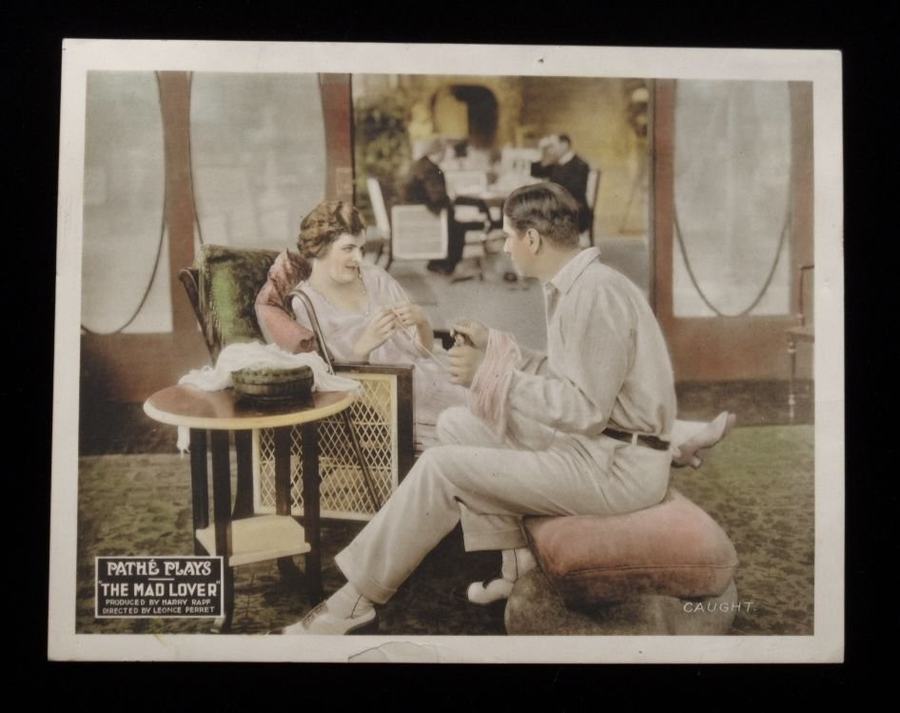
The closing tableau—Clarice framed in a window, belly gently domed, while Hyde reads aloud from a book of children’s fairy tales—should feel bathetic. Yet Perret undercuts sentiment with a slow iris-out that leaves only her eyes illuminated: twin lanterns surveying a future still mined with distrust. Happiness here is not an endpoint but an armistice.
Comparative glances are instructive. Where Right Off the Bat treats courtship as slapstick semaphore, and The Blindness of Love opts for moral melodrama, The Mad Lover excavates the sediment of masculine panic. Its nearest spiritual sibling might be Bondwomen, yet that film externalizes dread through moorland fog, whereas Perret turns the lens inward, making the psyche itself the fog.
Technically, the picture is a masterclass in chiaroscuro. Cinematographer Harold Rosson (future lensman of The Wizard of Oz
Performances oscillate between operatic and whispered. Hammerstein’s Clarice carries the film’s moral heft with nothing more than a tremor of lower lip; watch the moment she registers the pregnancy—her hand floats to abdomen like a moth landing on hot glass, then retracts, unsure whether permission has been granted to feel joy. Warwick negotiates Hyde’s arc from brittle misogyny to terrified tenderness by modulating the stiffness of spine; by the finale his shoulders sag as if the vertebrae have been replaced with wet string. Intertitles—often the Achilles heel of silent drama—here attain aphoristic snap. "To love is to admit an intruder and hand him the knife" appears superimposed over an image of Hyde cleaning his rifle, the lettering jittering like a pulse. Another card, flashed for only eight frames, reads: "Jealousy is love’s funeral arranged at birth." Such brevity anticipates the fragmentary poetics of later avant-garde titling. Yet the film is not flawless. The comic relief sextet of house guests—caricatures with monocles and flapping spats—feels airlifted from a Lubitsch operetta, rupturing tonal cohesion. And the pastor’s repeated intrusions serve as narrative cudgel, underlining subtext that was already legible in the twitch of an eye. One suspects Perret, ever the commercial pragmatist, bowed to distributors who demanded moral ballast. Still, these are quibbles. At a brisk 67 minutes, The Mad Lover distills the entire patriarchal tragicomedy into a shot glass—then sets it alight. Its influence ricochets through Suspicion, through Rear Window, through any film where marriage is interrogated under ultraviolet light. Modern viewers may scoff at the pregnancy-as-cure-all denouement, yet Perret’s final iris suggests the cycle of proprietorial dread is merely dorman, not defeated. Restoration-wise, the 2021 4K restoration from Lobster Films scrubs away decades of nitrate acne while preserving the tremulous grain that makes shadows breathe. The appended Mont Alto Motion Picture score riffs on Debussy and early jazz, weaving harp glissandi through muted trumpet to evoke the film’s salt-sweet tension. Streaming on Criterion Channel, the edition includes a video essay by Tag Gallagher who, in his inimitable gush, calls the picture “a daguerreotype of the male id mid-explosion.” Bottom line: Seek it out. Let its silence scream. And if, afterward, you find yourself side-eyeing your partner across the breakfast table, remember—Perret warned you that love’s most loyal companion is the specter of what happens should it choose to leave.
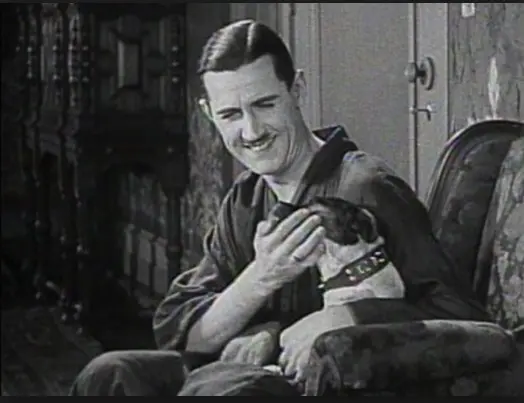
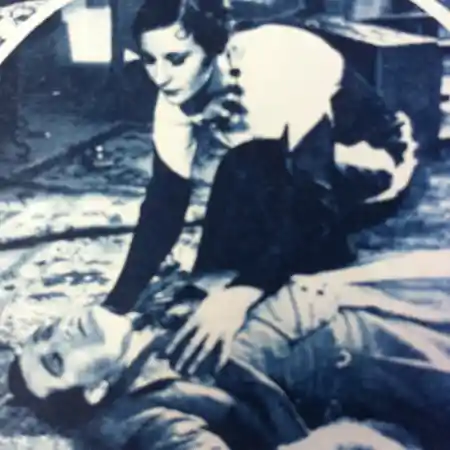
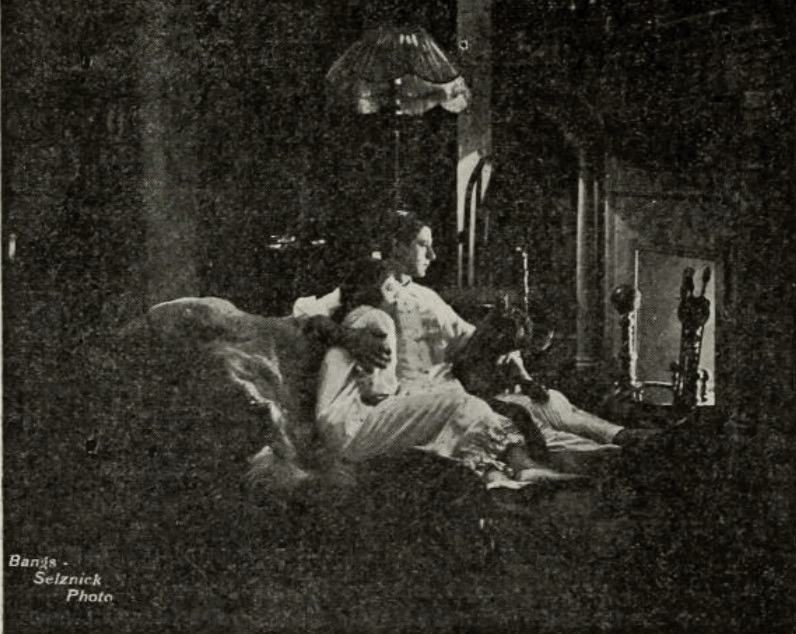 Cinematic perspective: Exploring the visual vocabulary of The Mad Lover (1917) through its definitive frames.
IMDb —
1931
Community
Log in to comment.