DbcultAccessing Vault...
Cult Review
Senior Film Conservator
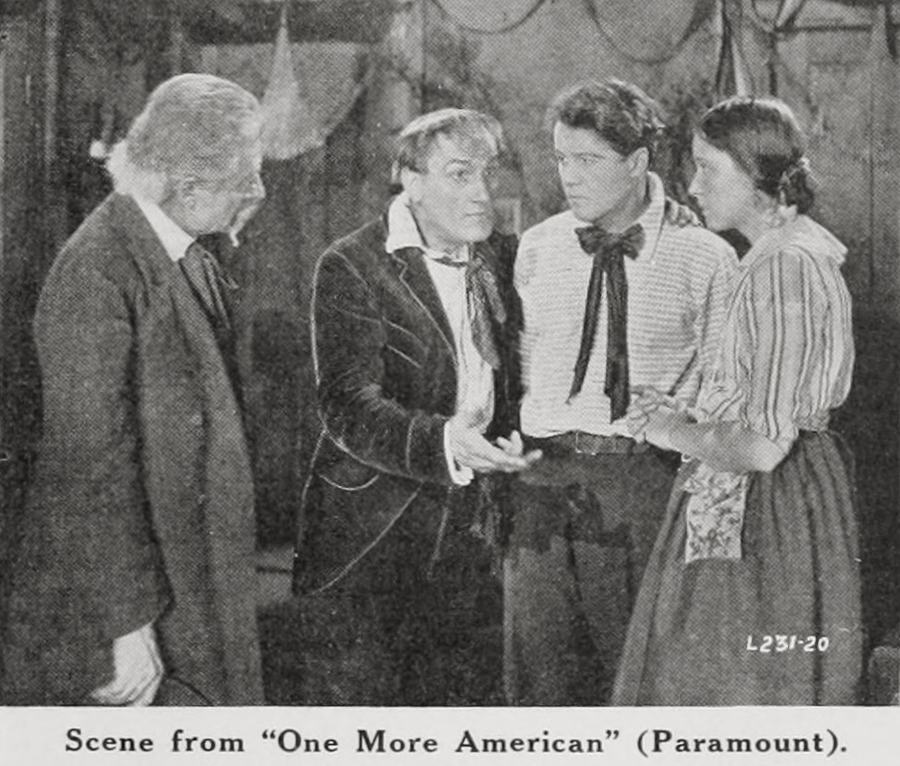
The silent era often grappled with the 'Melting Pot' ideal, but few films did so with the raw, rhythmic pulse of One More American. Directed by William C. de Mille, this 1918 relic transcends the simple melodrama of its contemporaries to offer a scathing indictment of the graft that once defined the American urban experience. At its heart is George Beban, an actor whose specialization in Italian-American roles brought a specific, albeit stylized, humanity to the screen long before the Neo-realists of the 1940s claimed the territory.
Luigi Riccardo is not merely a protagonist; he is a symbol of the artisanal spirit being crushed by the industrial and political gears of New York. His marionette theater represents a curated world where he holds control, a stark contrast to the reality of 1918 Manhattan where men like Regan, the ward boss, pull the strings of human destiny. The choice of profession for Luigi is a stroke of narrative genius by Olga Printzlau. It establishes a visual language of autonomy versus subjugation. When we see Luigi lovingly carving a wooden limb, we are seeing the creation of an identity—the very identity he seeks to formalize through his naturalization papers.
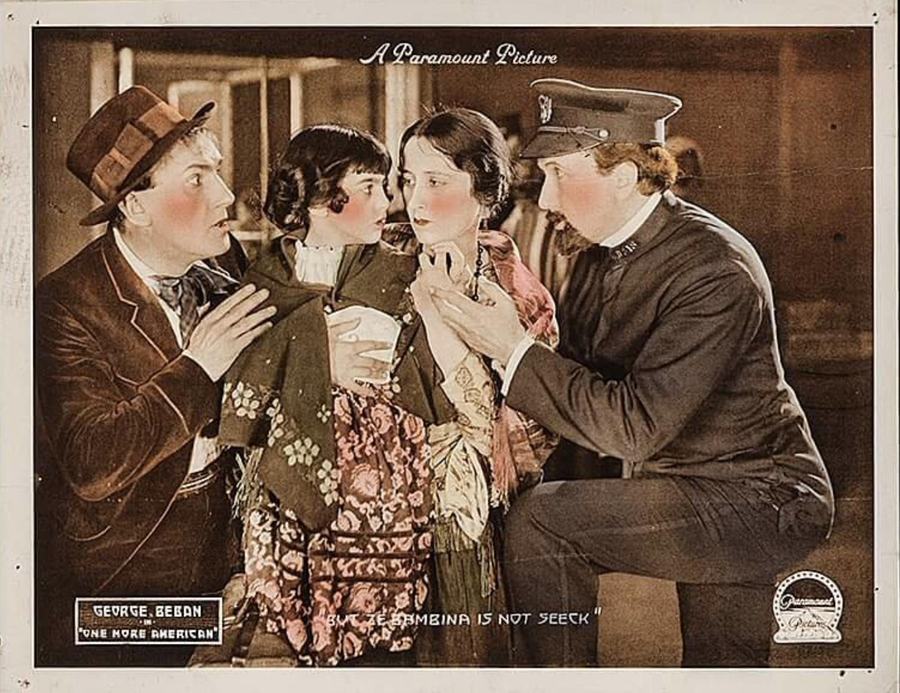
Unlike the rugged individualism found in The Bargain, where the landscape offers a form of chaotic freedom, One More American is claustrophobic. The sets, though silent, scream with the cacophony of the tenements. The cinematography captures the soot and the hope in equal measure, framing Luigi’s small shop as a sanctuary that is increasingly under siege by the looming shadow of the precinct office.
The antagonist, Regan, portrayed with a chilling, bureaucratic indifference, represents the 'Gilded Age' rot that persisted into the early 20th century. His demand for graft is not presented as an extraordinary villainy, but as a mundane tax on existence. This realism elevates the film above the standard 'black hat' tropes. When Regan enlists Dr. Ross to falsify medical records at Ellis Island, the film veers into the territory of a psychological thriller. The stakes are no longer just financial; they are existential. The threat of deporting Maria and Tessa is a threat to Luigi’s lineage and his sanity.
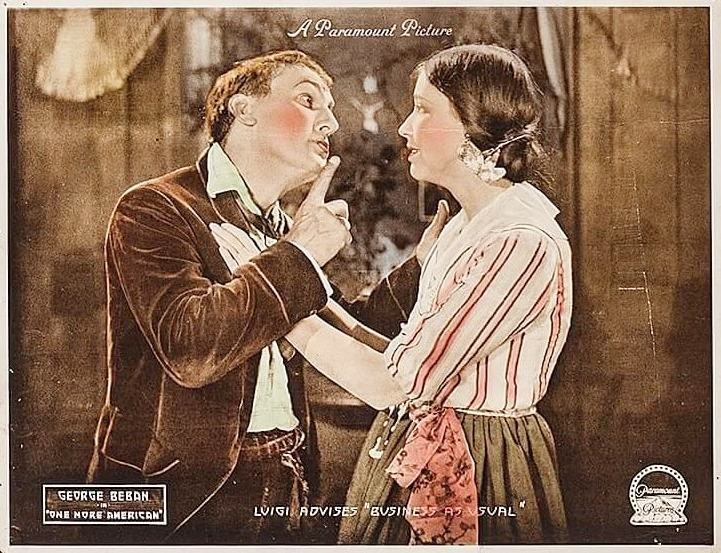
We see similar themes of societal gatekeeping in The Corner Grocer, yet de Mille’s direction here is more focused on the intersection of the personal and the political. The film doesn't just ask us to pity Luigi; it asks us to be outraged by the systemic failure that allows a ward boss to supersede the law of the land. The tension during the Ellis Island sequences is palpable, utilizing cross-cutting techniques that were sophisticated for the time, building a sense of impending doom that mirrors the social anxieties of the immigrant proletariat.
The introduction of Sam Potts, the reporter, provides the necessary 'American' catalyst for justice. In the cinematic lexicon of the time, the journalist often served as the secular priest, the only one capable of exposing the truth. Raymond Hatton’s performance as Potts is mercurial and sharp, providing a cynical counterpoint to Luigi’s earnestness. The alliance between the pen (Potts) and the sword (the prizefighter Bump Rundle) is a fascinating commentary on how power was actually brokered in the city. To defeat a corrupt system, one had to use the tools of that system: deception, muscle, and public shame.
The 'phony bribe' sequence is a masterclass in suspense. It subverts the audience's expectations, momentarily making us believe that even the 'heroes' have succumbed to the rot. This narrative feint adds a layer of complexity often missing from films like The Masked Motive. It suggests that in the urban jungle, purity is a luxury that the disenfranchised cannot afford; one must be as cunning as the wolves to survive.
When compared to the overt social preaching of The Devil's Needle, which dealt with the scourge of narcotics, One More American feels more grounded in the everyday logistics of survival. It shares a certain DNA with Exile in its depiction of the 'other,' but it avoids the exoticism that often plagued silent films set in foreign or ethnic enclaves. Instead, it treats Little Italy as a vibrant, breathing organ of the city.
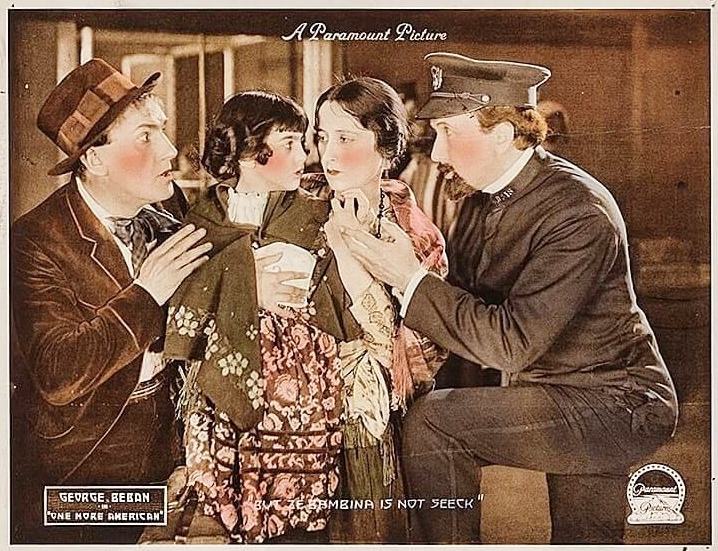
The film’s resolution, while satisfying, leaves a lingering bitterness. While Luigi is ultimately successful, the viewer is left wondering how many other 'Luigis' were crushed by the Regans of the world without the benefit of a crusading journalist. It lacks the pastoral optimism of Cactus Crandall, opting instead for a gritty urban victory that feels hard-won and fragile. Even the romanticized elements of the reunion are tempered by the knowledge of the trauma inflicted by the state.
One cannot discuss this film without a deep dive into George Beban’s acting method. Often criticized in later decades for his 'ethnic' caricatures, a close viewing of One More American reveals a performance of immense subtlety. His facial expressions during the scene where he receives the news of his family's 'unfitness' are a kaleidoscope of grief, transitioning from disbelief to a primal, guttering despair. This is not the broad pantomime of Zigomar contre Nick Carter; this is an internalised, modern performance.
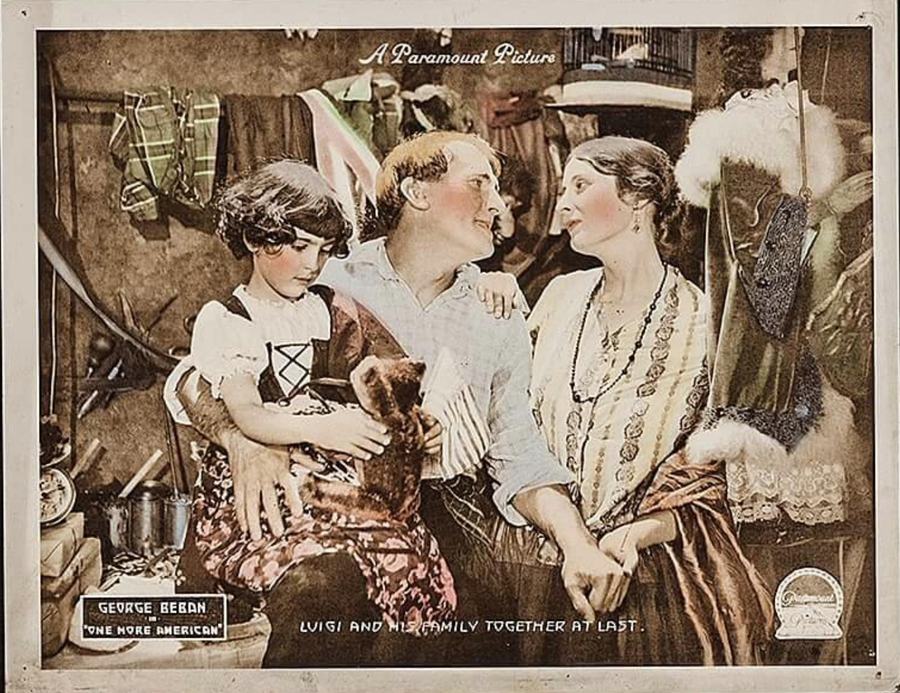
The lighting in the marionette theater scenes deserves special mention. The use of shadow creates a chiaroscuro effect that mirrors the moral ambiguity of the city. The puppets themselves are used as silent witnesses, their painted faces reflecting the flickering hope of the Italian community. The direction by William C. de Mille—often overshadowed by his brother Cecil—shows a much more intimate, character-driven focus. He is less concerned with the 'spectacle' and more with the 'soul,' a trait also evident in his work like The Mating.
In the grand tapestry of 1918 cinema, a year dominated by war propaganda and burgeoning star power, One More American remains a vital document of the immigrant experience. It captures a specific moment in American history where the definition of 'citizen' was being contested in the streets and the courts. It eschews the easy morality of Shall We Forgive Her? for something far more complex and rewarding.
The film stands as a precursor to the great social realist dramas of the sound era. Its portrayal of the 'Little Man' fighting the 'Machine' is a timeless narrative, but here it is rendered with a specific, poignant texture. Whether it is the detailed depiction of the marionette craft or the harrowing bureaucracy of Ellis Island, the film demands the viewer’s attention and empathy. It reminds us that the American Dream was never a gift; it was a prize won through grit, sacrifice, and the occasional help of a cynical reporter. For those seeking a silent film that speaks with a loud, resonant voice about justice and identity, One More American is essential viewing, a masterwork that deserves its place alongside the more frequently cited classics of the era.
IMDb —
1927
Community
Log in to comment.