DbcultAccessing Vault...
Cult Review
Senior Film Conservator
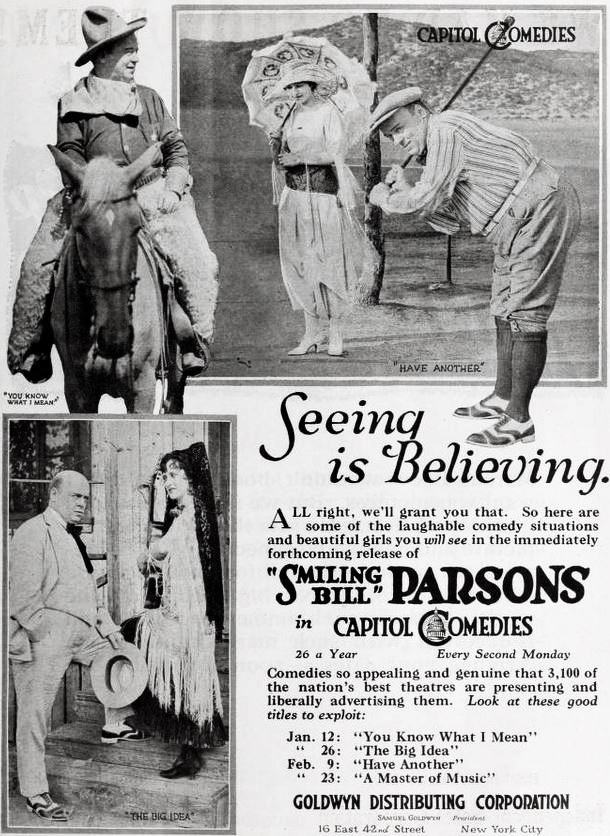
Ah, the silent era Western. A genre often dismissed by modern audiences as simplistic, yet brimming with a raw, visceral power that speaks volumes without a single spoken word. In the annals of early cinema, a particular gem, You Know What I Mean, emerges from the dusty archives of 1918, a testament to the enduring allure of the frontier narrative. Penned by the formidable duo of Bess Meredyth and Tom Bret, and starring the enigmatic William Parsons, this film isn't just a fleeting glimpse into the past; it's a potent exploration of fate, identity, and the relentless pursuit of survival against insurmountable odds. It’s a narrative that, despite its brevity by today's standards, manages to weave a tapestry of tension and moral ambiguity that resonates far beyond its original exhibition.
The premise, deceptively simple, unfurls with an almost poetic inevitability. We are introduced to a character, a desperado, whose reputation precedes him – “Desperate Bill.” The very name conjures images of a man pushed to the brink, his existence a perpetual dance with the gallows. He's not a caricature of villainy, but a product of his environment, a man for whom the rules of society have long ceased to apply. His desperation isn't merely a plot device; it's the engine that drives the entire narrative, a primal force that compels him to acts of audacious cunning. The news reaches him, perhaps whispered on the wind or delivered by a sympathetic informant, that the sheriff and his posse are closing in. The net tightens, the scent of his capture hanging heavy in the air. This isn't just a chase; it's a countdown to an almost certain demise, a race against time that demands an immediate, drastic solution.
Enter the unsuspecting Bill, a traveler whose path unfortunately intersects with that of our hunted outlaw. This meeting, devoid of grand pronouncements or lengthy dialogues, is a masterclass in visual storytelling. The silent screen, with its reliance on gesture, expression, and the sheer power of the image, conveys the stark reality of the encounter. Desperate Bill, with a cold, unwavering resolve, compels this innocent man to exchange clothes and, crucially, his horse. It's a swift, brutal transaction that strips one man of his identity and bestows it, momentarily, upon another. The symbolism here is profound: clothes do not merely cover the body; they often define the man, or at least, how he is perceived. By swapping attire, Desperate Bill attempts to shed his notorious identity, to become, for a precious window of time, an anonymous figure blending into the vast, indifferent landscape.
This act of forced metamorphosis raises profound questions about the nature of justice and perception. Is the law truly blind, or is it swayed by outward appearances? The innocent Bill, now clad in the outlaw's infamous garments and astride his horse, becomes an unwitting decoy, a sacrificial lamb offered to the hounds of justice. The film, in its quiet brilliance, forces us to confront the uncomfortable truth that circumstances, rather than inherent character, can often dictate one’s fate. It’s a narrative thread that can be seen, albeit in different contexts, in films that explore the arbitrary nature of power and the individual's struggle against overwhelming forces, such as Woe to the Conqueror; or, The Law of War, where the individual is often a pawn in a larger, relentless game.
William Parsons, in his portrayal of either the desperado or the unfortunate traveler (the ambiguity is part of the film's charm, suggesting that either man could be in the other's shoes given a different twist of fate), delivers a performance steeped in the grand tradition of silent cinema. His expressions, his body language, the subtle shifts in his gaze – all contribute to a characterization that transcends the lack of spoken dialogue. It's a testament to the skill of early actors who had to communicate complex emotions and motivations through purely visual means. The tension in his posture, the furtive glances, the sheer physical exertion of the chase and the exchange – these elements combine to create a compelling figure, regardless of which Bill he is embodying at any given moment.
Bess Meredyth and Tom Bret's screenplay, concise yet impactful, demonstrates a sophisticated understanding of narrative economy. They don't waste a single frame, each scene propelling the story forward with a sense of urgency. The plot isn't convoluted; it's lean, focused, and utterly relentless. This directness, characteristic of many early Westerns, allows the core dramatic conflict to shine without unnecessary embellishment. The writers understood the power of a strong central conceit and executed it with precision. Their work here is a blueprint for effective storytelling, proving that depth isn't always a function of complexity, but rather of clarity and emotional resonance.
The cinematography, even in its rudimentary form compared to today's standards, plays a crucial role in establishing the mood and setting. The vastness of the Western landscape, often presented in stark, wide shots, emphasizes the isolation of the characters and the unforgiving nature of their environment. The dusty roads, the rugged terrain, the endless horizon – these are not just backdrops; they are active participants in the drama, reflecting the characters' struggles and amplifying the sense of peril. The visual composition often places the characters as small figures against immense natural forces, underscoring their vulnerability and the monumental challenges they face. This visual language is a cornerstone of the Western genre, a tradition seen in countless films that followed, depicting humanity's struggle against the raw power of nature and the lawless frontier.
Themes of identity, or rather, the fluidity of identity, are central to You Know What I Mean. In a world where one's reputation can precede them, and where being known can be a death sentence, the ability to shed one's skin, to assume a new persona, becomes the ultimate act of self-preservation. Desperate Bill’s cunning manipulation of appearance is a desperate bid for anonymity, a fleeting escape from the branding iron of his past. Conversely, the innocent Bill is tragically forced to embody an identity that is not his own, a cruel twist of fate that could lead to his unjust demise. This thematic exploration of mistaken identity and the perils of appearances resonates with a timeless quality, inviting audiences to ponder the true nature of self versus perception. It's a concept that finds echoes in later narratives, where characters are forced to navigate the treacherous waters of assumed identities, often with dire consequences.
Moreover, the film delves into the moral quandaries inherent in survival. Is Desperate Bill's act justifiable? From his perspective, it is a necessary evil, a last resort in a life-or-death situation. From the innocent Bill's viewpoint, it is an egregious injustice, a violation of his autonomy and a sentence of potential doom. The film doesn't offer easy answers, instead allowing the audience to grapple with the ethical implications of such a desperate maneuver. This ambiguity is one of its strengths, elevating it beyond a simple chase film into a more contemplative piece on human nature under duress. The stark choices presented to characters in extreme circumstances, where morality becomes a luxury, is a recurring motif in cinema, often defining the very essence of a character's struggle, much like the relentless pursuit of self-interest, sometimes at the expense of others, found in narratives like The Lone Star Rush, where the harsh realities of the frontier dictate brutal decisions.
The historical context of 1918 also lends a particular weight to You Know What I Mean. The world was in turmoil, grappling with the tail end of World War I and the burgeoning anxieties of a rapidly changing society. Films often served as a reflection of these societal anxieties, and the Western genre, with its themes of lawlessness, order, and the individual's struggle against overwhelming forces, provided a potent canvas for exploring these concerns. The fear of being caught, of facing an arbitrary justice, or of having one's identity stolen, could easily be seen as metaphors for the larger uncertainties of the era. The film, in its quiet way, taps into a universal human fear: the loss of control over one's own destiny, the sudden, violent intrusion of chaos into an ordered existence.
Comparing You Know What I Mean to other films of its time or even later works, one can appreciate its minimalistic yet effective approach. It lacks the sweeping epic scale of a Potop or the intricate character studies of The Duchess of Doubt, but it carves out its own niche through its focused intensity. It's a film that understands the power of a single, pivotal moment, and the ripple effects it can create. The tension isn't built through elaborate set pieces but through the psychological stakes involved in the identity swap. The audience is left to ponder not just what will happen to the two Bills, but what it means to be truly free, truly oneself, when fate can be so capricious.
The writing of Meredyth and Bret here is particularly noteworthy for its ability to convey so much with so little. In an era where intertitles were sparingly used, the narrative had to be visually compelling and emotionally clear. They crafted a scenario that is instantly understandable, yet rich in interpretive possibilities. The dialogue, or rather, the implied dialogue, is direct and purposeful, driving the plot relentlessly forward. Their understanding of cinematic rhythm, of how to build suspense through visual cues and character reactions, is exemplary. This is not a film that relies on grand pronouncements; it thrives on the unspoken, the implied threat, and the silent desperation etched onto the faces of its characters.
Moreover, the film's title itself, "You Know What I Mean," is an intriguing choice. It suggests a shared understanding, an implicit recognition of the harsh realities of life on the frontier, where survival often dictated actions that might otherwise be deemed immoral. It's a nod to the audience, inviting them into a world where such desperate measures, while shocking, might be understood, if not condoned. This direct address, even in title, fosters a sense of intimacy and complicity, making the audience active participants in the moral dilemma presented on screen. It’s a subtle yet brilliant touch that elevates the film beyond a mere genre piece.
In conclusion, You Know What I Mean, though a relic of a bygone cinematic age, stands as a powerful and thought-provoking piece of filmmaking. It distills the essence of the Western genre – the struggle against the law, the harshness of the land, the desperate fight for survival – into a concise yet deeply resonant narrative. William Parsons, under the astute guidance of writers Bess Meredyth and Tom Bret, delivers a performance that speaks volumes without uttering a single word. It reminds us that even in the earliest days of cinema, filmmakers were grappling with complex themes of identity, morality, and the arbitrary nature of fate. It's a film that deserves to be rediscovered, not just as a historical curiosity, but as a vibrant, compelling story that continues to ask profound questions about what it means to be human when pushed to the absolute edge. Its enduring power lies in its ability to strip away the artifice and present a stark, uncompromising vision of survival, leaving an indelible mark on the viewer long after the final frame fades to black.
IMDb 6.5
1934
Community
Log in to comment.