DbcultAccessing Vault...
Cult Review
Senior Film Conservator
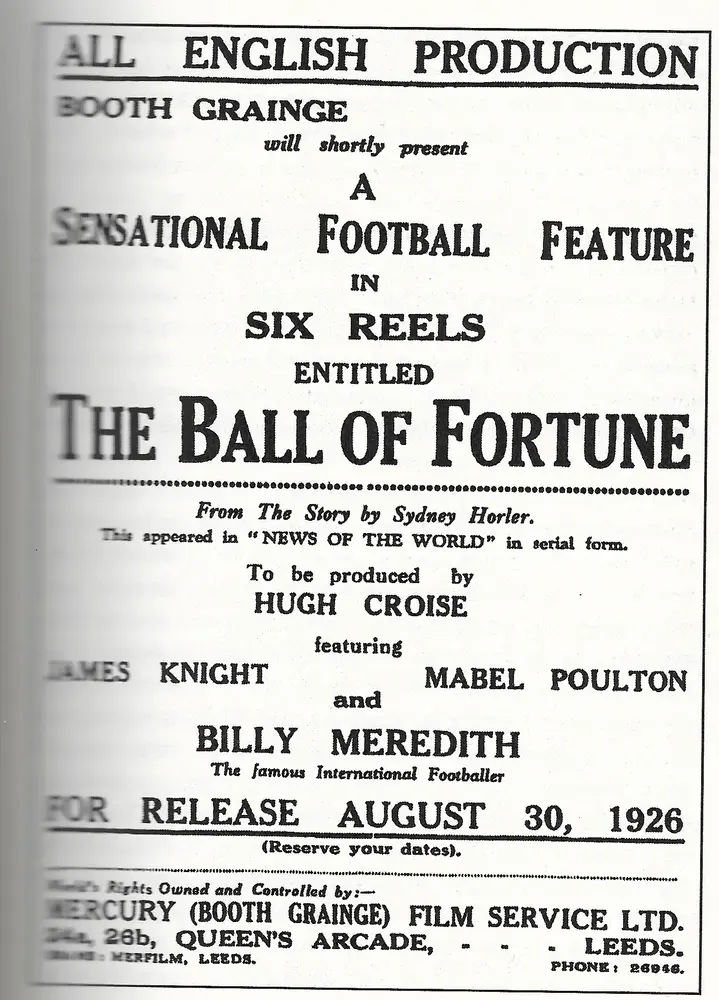
Does The Ball of Fortune still have the legs to carry a modern audience through its silent runtime? Short answer: yes, but only if you view it as a social document rather than a simple sports flick.
This film is for the patient cinephile who enjoys the intersection of British class anxiety and early athletic spectacle. It is certainly not for those who require the fast-twitch editing of a modern FIFA broadcast or the polished sentimentality of contemporary underdog stories.
1) This film works because it treats the game of football as a desperate act of survival rather than a trivial hobby or a source of glory.
2) This film fails because the romantic resolution with the magistrate's daughter feels like a calculated concession to 1920s audience expectations rather than an organic character growth.
3) You should watch it if you want to see how early cinema attempted to capture the kinetic energy of sport without the benefit of lightweight cameras or zoom lenses.
John Longden brings a specific, heavy-lidded exhaustion to the lead role. In the opening sequences, his 'ruined' state isn't just a plot point; it's a physical weight. Unlike the more whimsical characters found in Sherlock Jr., Longden’s protagonist is anchored in a reality that feels uncomfortably close to the bone.
There is a moment early on where Longden stares at his worn-out shoes. It is a simple shot, but it communicates more about the British class system than ten pages of dialogue could. He isn't just poor; he is a man who remembers what it was like to be significant. This makes his transition to the football pitch feel like a descent into the 'common' world, a theme explored with less grit in School for Wives.
The ball is his only leverage. He kicks it with a fury that suggests he's trying to break the world that broke him. It works. But it is a violent kind of success.
Hugh Croise and Sydney Horler understood that football in the 1920s was a burgeoning religion. The way the camera lingers on the spectators—real faces from a bygone era—adds a documentary-like quality to the proceedings. It lacks the stylized flair of Blind Chance, opting instead for a flat, honest perspective on the pitch.
The match scenes are technically primitive but emotionally effective. You can almost smell the mud and the liniment. In one specific sequence, the protagonist is tackled with a brutality that feels unscripted. The camera doesn't flinch. It captures the physical toll of the game, mirroring the emotional toll of his social fall.
This isn't the romanticized athleticism of Davy Crockett. This is labor. The protagonist isn't playing for the love of the game; he's playing because the alternative is starvation. This grim motivation keeps the film from becoming a standard 'hero's journey.'
Mabel Poulton plays the daughter with a shimmering innocence that contrasts sharply with the grime of the locker rooms. While their romance provides the necessary 'fortune' of the title, it is the least interesting part of the film. It feels like a trophy awarded at the end of a race, a trope also seen in The Vow.
However, the magistrate himself, played with a stiff-necked authority by Geoffrey B. Partridge, represents the barrier the protagonist must overcome. The scenes in the magistrate's parlor are shot with a suffocating stillness. The contrast between the open, chaotic space of the football field and the enclosed, judgmental space of the upper class is the film's strongest visual metaphor.
Is their marriage a victory? I would argue it's a surrender. He wins by joining the very class that likely contributed to his ruin. It’s a cynical ending disguised as a happy one. Most critics miss this. They see the wedding; I see the cage.
Hugh Croise wasn't a formalist. He didn't have the visual wit of the directors behind How I Became Krazy. His direction is workmanlike, which actually suits the subject matter. The pacing in the second act slows to a crawl, focusing perhaps too much on the domestic drama and not enough on the internal psychology of the protagonist.
The lighting is often harsh, typical of the era's limitations, but it works in the film's favor during the outdoor scenes. The grey British sky becomes a character in itself, casting a pall over the 'fortune' being sought. It reminds me of the atmospheric bleakness in The Light That Failed.
One surprising observation: the film uses close-ups of the football itself to bridge scenes. It’s a rhythmic device that feels modern. The ball is the only thing that moves freely between the classes. It is the only truly democratic object in the film.
Yes, The Ball of Fortune is worth watching for its raw depiction of 1920s British life and its unique take on the sports genre. While the romantic plot is dated, the central performance by John Longden and the gritty match sequences provide a compelling look at redemption through physical labor. It is a rare example of a silent film that prioritizes the 'sweat' of the working class over the 'sparkle' of high society.
Pros:
- John Longden’s grounded, non-theatrical performance.
- Fascinating look at 1920s football culture and fanbases.
- Strong thematic exploration of class and 'ruination.'
- Effective use of location shooting that avoids the 'stagey' feel of A Prince of India.
Cons:
- The romance feels like a secondary script stitched onto a better movie.
- Pacing issues in the middle section that may lose modern viewers.
- Some supporting characters, like the magistrate, are one-dimensional archetypes.
The Ball of Fortune is a sturdy, if somewhat predictable, piece of early cinema. It doesn't have the experimental joy of Dinty or the epic scale of The Kelly Gang, but it possesses a quiet dignity. It understands that for a ruined man, a ball is more than just a toy—it's a weapon. Despite its flaws, it remains a vital piece of sports cinema history. It earns its keep. But it doesn't apologize for its grit.
IMDb 6.7
1927
Community
Log in to comment.