DbcultAccessing Vault...
Cult Review
Senior Film Conservator
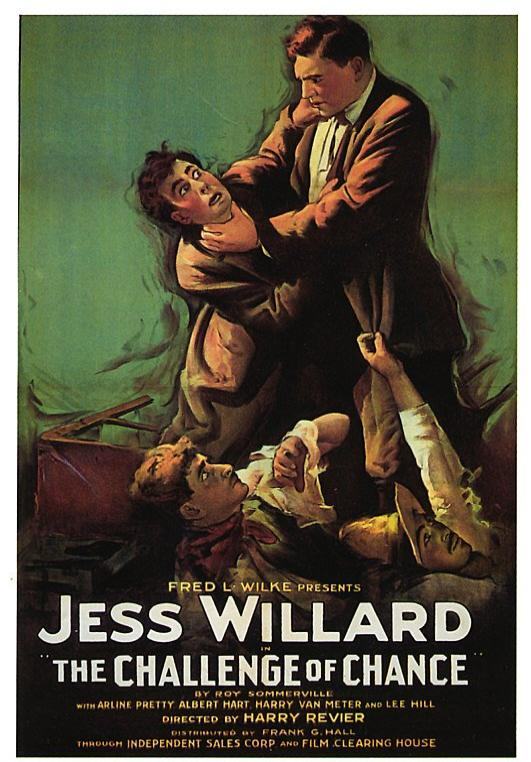
Delving into the cinematic archives, one occasionally unearths a gem that, despite its vintage, still resonates with a primal narrative force. Such is the case with 'The Challenge of Chance,' a 1915 silent Western that, while perhaps not a household name today, offers a fascinating glimpse into the nascent storytelling conventions of its era and the enduring appeal of its core themes. Penned by Roy Somerville, this film, featuring the stoic presence of Jess Willard, the imposing Al Hart, and the spirited Arline Pretty, crafts a tale of moral awakening and spirited defense against avarice, set against the quintessential backdrop of the American West.
At its heart, 'The Challenge of Chance' is a story of transformation, a journey from unwitting complicity to righteous defiance. Jess Willard, embodying the ranch foreman, projects an initial aura of rugged competence, a man of the land whose days are defined by the honest sweat of labor. He is, to all appearances, a man without guile, diligently serving his employer, a horse dealer portrayed with menacing conviction by Al Hart. The film expertly establishes this dynamic, painting a picture of an seemingly unremarkable working relationship that masks a deep-seated corruption. Willard's character, initially oblivious to the true nature of his boss's enterprise, serves as an everyman figure, a vessel through which the audience experiences the slow, insidious creep of disillusionment.
The narrative's turning point, the catalyst for all subsequent action, is the foreman's discovery of his boss's duplicity. This isn't merely a revelation of petty swindling; it's the unmasking of a calculated, predatory scheme aimed at robbing a young woman, played by Arline Pretty, of her valuable Kentucky thoroughbreds. This particular detail elevates the stakes beyond mere financial gain, imbuing the horses with a symbolic weight—they represent heritage, a livelihood, and perhaps even a connection to a more honorable past. For the foreman, this truth shatters his perception of his world, forcing him to confront the ethical chasm separating his own values from those of his employer. It's a moment of profound moral reckoning, a silent scream against the injustice he now perceives.
Jess Willard, often remembered more for his boxing prowess than his acting, brings a physical gravitas to the role of the foreman. In a silent film, much of the character's internal struggle must be conveyed through posture, expression, and action. Willard manages to articulate a convincing arc, transitioning from a man of simple duty to one driven by a nascent sense of justice. His eyes, even without the aid of dialogue, convey the shock, the anger, and finally, the resolute determination that propels him forward. This understated performance is quite effective, allowing the audience to project their own understanding onto his unspoken emotions.
Al Hart, as the crooked horse dealer, delivers a performance that perfectly embodies the villainy of the era. His portrayal is broad, yet effective, with a sneering demeanor and a palpable air of menace that leaves no doubt as to his nefarious intentions. He is the archetypal antagonist, driven by greed and utterly devoid of scruples. This stark contrast between Hart's overt villainy and Willard's initial innocence amplifies the moral clarity of the film. Arline Pretty, as the young woman whose fortune is imperiled, provides the emotional anchor for the foreman's heroic turn. She represents innocence under threat, a classic damsel-in-distress trope, yet her resilience in seeking aid and entrusting her fate to the foreman also grants her a degree of agency. Her vulnerability makes the foreman’s decision to intervene all the more compelling, transforming his act from a mere job change into a personal crusade.
'The Challenge of Chance' is more than just a horse-theft drama; it's a commentary on the inherent struggle between good and evil, loyalty and betrayal, within the evolving landscape of the American West. The foreman's decision to quit his lucrative (though morally compromised) position and offer his services to the wronged woman signifies a powerful rejection of illicit gain in favor of ethical rectitude. This act of self-sacrifice, placing principle above personal comfort, is a recurring theme in early Westerns, often depicting a rugged individualism tempered by a strong moral code. It echoes the spirit of characters in films like The Reclamation, where individuals find their true calling in righting wrongs, or even in the more adventurous vein of The Footsteps of Capt. Kidd, where a quest for justice or treasure drives the narrative.
The thoroughbreds themselves are not just plot devices; they are symbols of value, purity, and perhaps a more refined, ordered world threatened by the lawlessness of the frontier. Their rescue becomes a metaphor for the preservation of integrity in a world teetering on the edge of moral ambiguity. The task presented to the foreman—to rescue these horses from the crooked dealer's bandits—is not merely an act of retrieval but an assertion of justice, a re-establishment of moral order through direct action. This struggle against overwhelming odds, a lone individual or a small group against a formidable, unscrupulous force, evokes the epic confrontations seen in works like Les travailleurs de la mer, where human will battles against immense, often hostile, forces.
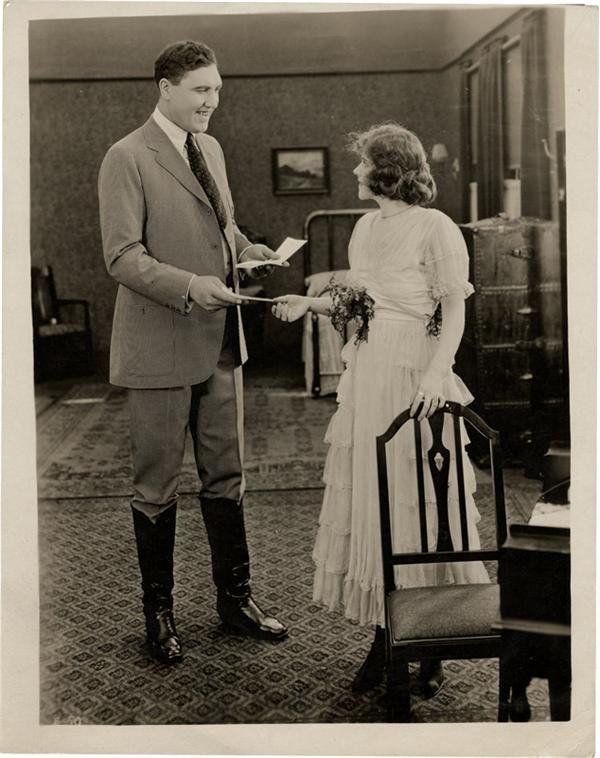
As a silent film, 'The Challenge of Chance' relies heavily on visual storytelling, a craft that was rapidly evolving in 1915. The cinematography, though perhaps rudimentary by modern standards, effectively captures the expansive beauty and harsh realities of the Western setting. The use of natural light and wide shots of the ranch and open country immerse the viewer in the environment, grounding the moral drama in a tangible world. Action sequences, particularly the eventual horse rescue, would have been orchestrated with an emphasis on clarity and kinetic energy, using rapid cuts and dynamic compositions to convey excitement and peril. The performances, as is typical for the era, are often characterized by exaggerated gestures and facial expressions, necessary tools for communicating emotion and intent without spoken dialogue. Yet, within this stylistic framework, actors like Willard manage to inject genuine pathos and resolve into their roles.
The pacing of the film, guided by intertitles that provide crucial plot points and dialogue snippets, would have been carefully managed to build suspense. The discovery of the plot, the foreman's internal conflict, his dramatic departure, and the ensuing rescue mission would have unfolded with a deliberate rhythm, allowing the audience to fully absorb each development. The very act of reading intertitles, interspersed with visual action, creates a unique viewing experience, demanding active participation from the spectator in piecing together the narrative. This engagement is a hallmark of early cinema, inviting a different kind of immersion than contemporary film provides.
'The Challenge of Chance' stands as a testament to the enduring appeal and foundational tropes of the Western genre. Even in its nascent form, the film showcases elements that would become staples: the rugged individualist, the clear-cut villain, the imperiled innocent, and the pursuit of justice in a landscape where law is often self-enforced. It’s a period piece that not only entertains but also offers insight into the cultural values and anxieties of its time. The emphasis on property rights (the thoroughbreds), personal honor, and the struggle against corruption speaks to a society grappling with rapid industrialization and shifting moral codes. The West, in these narratives, often served as a canvas for exploring fundamental questions of right and wrong, unencumbered by the complexities of urban life.
Comparing it to other films of the period, one can see common threads. While not directly comparable in plot, the underlying theme of personal commitment to a cause, often for the protection of another, resonates with films like Fighting for Love, where romantic or protective motivations drive heroic actions. The straightforward nature of its good-versus-evil conflict is a hallmark of many adventure films of the era, providing clear moral guidance for audiences. The simplicity, however, does not equate to a lack of depth, but rather a focused exploration of universal human dilemmas.
Ultimately, 'The Challenge of Chance' serves as a valuable artifact, a window into a bygone era of filmmaking. It reminds us that compelling narratives don't always require elaborate special effects or complex dialogue. The power of a clear moral premise, well-defined characters, and a dramatic conflict can transcend the limitations of technology. The film's enduring message—that integrity eventually triumphs over deceit, and that a single individual's courageous choice can alter the course of events—remains as potent today as it was over a century ago. It’s a film that, despite its age, challenges modern viewers to appreciate the artistry of silent cinema, the nuanced performances within its specific constraints, and the timeless appeal of a good story told with conviction. It underscores the foundational principles upon which much of cinematic storytelling has been built, demonstrating how early filmmakers, with limited tools, managed to evoke deep emotional responses and explore complex human experiences.
The narrative momentum, once the foreman makes his decisive break, is relentless. The rescue mission itself would have been a masterclass in silent film action, with pursuits, confrontations, and strategic maneuvers all conveyed through dynamic visuals. The stakes are clear, the villain is unambiguous, and the hero's motivations are pure. This clarity, rather than simplifying the story, allows its moral weight to shine through unimpeded. The raw energy of the horse chases and the physical confrontations would have been designed to keep audiences on the edge of their seats, a testament to the ingenuity of early action choreography. The film, in its quiet determination, proves that even without the booming soundscapes of modern cinema, the thrill of the chase and the satisfaction of justice served can be profoundly impactful.
As a piece of cinematic history, 'The Challenge of Chance' warrants attention not just for its plot, but for its embodiment of an era. It is a film that captures the spirit of the early 20th century, reflecting its values, its entertainment sensibilities, and its burgeoning understanding of the moving image as a powerful narrative medium. For anyone interested in the evolution of the Western, the development of character arcs in silent film, or simply the enduring power of a story about doing the right thing, this film offers a rich and rewarding experience. It's a reminder that even in the absence of spoken words, the visual language of cinema can speak volumes, telling tales that resonate across generations and continue to challenge our own understanding of chance, choice, and courage.
IMDb —
1930
Community
Log in to comment.