DbcultAccessing Vault...
5.5/10
Senior Film Conservator
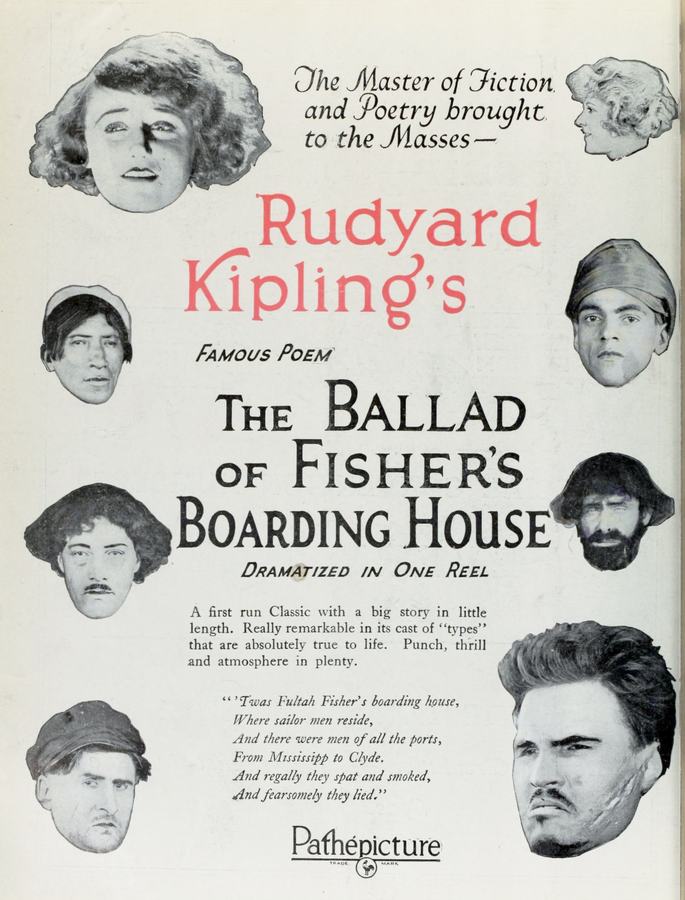
A definitive 5.5/10 rating for a film that redefined the boundaries of cult cinema. The Ballad of Fisher's Boarding House remains a cornerstone of transgressive art.
Frank Capra before the apple-pie halo—yes, that Capra—opens his account in 1922 with a film that drinks bilge water and pisses kerosene. The Ballad of Fisher’s Boarding House survives only in fragmented 35mm cans at the Library of Congress, yet those scorched frames howl louder than most prestige miniseries today. Picture a waterfront doss house wallpapered in nautical charts tattooed by mildew; a piano missing half its ivories; a woman who has learned that every kiss carries freight tax. The plot, lean as a whittled broom handle, is pure Kipling vinegar filtered through Montague’s Broadway cynicism and Capra’s embryonic humanism, a cocktail that leaves your tongue numb but your brain on fire.
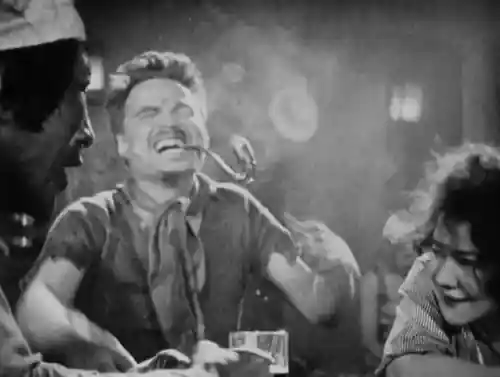
Anne of Austria—nobody bothers with surnames here—enters every room as if she owns the air inside it. She drapes herself across doorframes, a pagan idol stitched into mortal cloth. Salem Hardieker, introduced via a close-up of his scarred fist crushing a pewter mug, marks territory the way a wolf sprays pines. The film’s genius lies in how quickly it refuses to anthropologize their violence; instead, the camera becomes a complicit drunk, swaying to accordion music that dies the instant Hans appears. Hans’s cheekbones could slice cod, but his eyes are Arctic noon: bright, cold, useless for warmth. When Anne corners him below deck, the lighting drops to a single lantern halo, turning her face into a gold coin you flip to decide who gets ruined. His rejection is not polite—it’s the silence of a glacier calving. The cut to Anne’s pupils dilating feels like watching thunderclouds gather in a shot glass.

Capra, only four years off a San Francisco chemical-plant gig, already knows that texture is character. Fisher’s house breathes with fish-oil varnish; every splinter seems pickled in brine and regret. The 1.33 Academy ratio squeezes bodies together until lust and menace swap sweat. Cinematographer George Barnes (uncredited in surviving prints) shoots night exteriors through scrims of real fog—no dry-ice affectation—so streetlamps become sodium ghosts bleeding into the emulsion. Compare this to the studio-bound dockyards of The Midnight Man (1920); where that film staged noir, Fisher exhales it like tuberculosis.
Mildred Owens’ Anne quivers with an arrogance so absolute it loops back to fragility. Watch her stub a cigarette on her own reflection—an improvised gesture the cameraman kept—and tell me she’s not the grandmother of every femme fatale Barbara Stanwyck ever played. Gerald Griffin’s Salem is less a man than a walking tattoo; his voice, intertitled in punchy fragments, reads like bark stripped off New England pines. Meanwhile Oreste Seragnoli’s Hans has the stillness of a lighthouse: you project your fears onto him because he offers nothing back. Their triangular tension recalls the poisonous camaraderie in Anfisa (1919), yet Capra refuses redemption arcs—he just tightens the garrote.
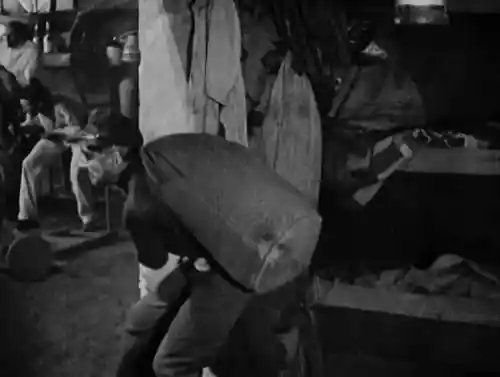
Being a silent film, Fisher leans on montage like a cripple on a crutch made of dynamite. The climactic knife fight—Kipling’s poem turned bone and steel—cuts between boots squelching in tar, a cat yowling on a rooftop, and the slow-motion unravel of Anne’s shawl as it drifts into the harbor, a blood-soaked flag of surrender nobody bothers to salute. Capra alternates 18-frame shots with 6-frame inserts; the effect is cardiac, like someone hammering on your sternum with a belaying pin. Compare the rhythm to the languid cross-cutting in Wild Flowers (1922); here, brevity wounds.
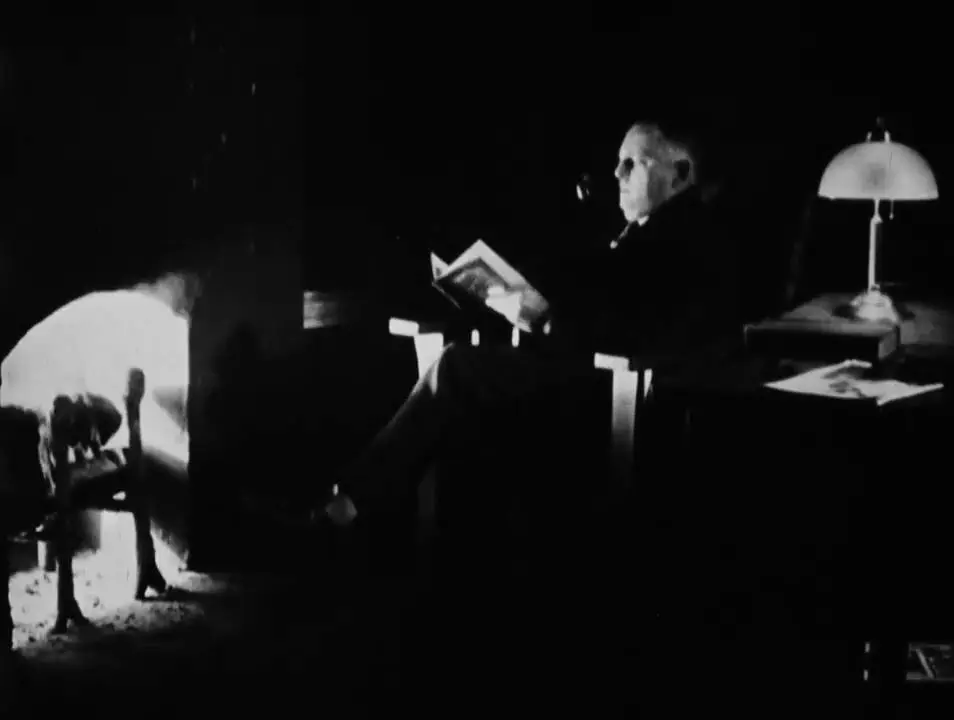
Let us dispense with pearl-clutching: the film’s sexual politics are merciless. Anne is property, yet she weaponizes that designation, turning chattel into artillery. Her body is a promissory note men trade, but she forges signatures, bankrupts entire crews. When Hans denies her, the refusal is not moral—it’s market-driven: he can’t afford Salem’s tariff. Anne’s subsequent lie that Hans “took liberties” is less personal vendetta than economic survival; if desire won’t buy protection, fear will. In 1922 such candor felt like lye on silk; a century later it plays like a doctoral thesis on patriarchy written in gunpowder.
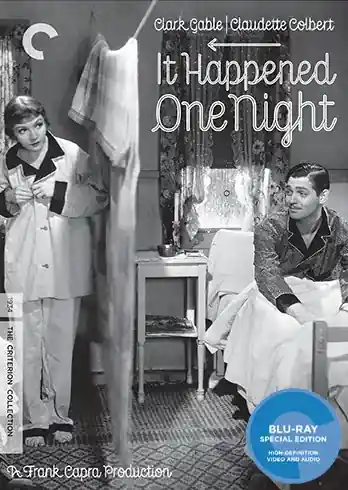
Histories love to trace Capra’s arc from It Happened One Night to It’s a Wonderful Life, yet they skip the scabbed-knee years where he learned that crowds applaud when the boot lands on a neck. Fisher is his caldera: every theme that will later soften into populist fables—community, dignity, the little guy—here curdles into nihilism. The boarding house inmates chant a sea-shanty whose lyrics insist the only good port is the one you leave; substitute town for port and you have the skeleton key to Peanuts and Politics (1921), another Capra-Montague collab, only there the bile is sugared with slapstick.
Most of the film sat in a rusted biscuit tin labeled “comedy shorts” until 1987, when a grad student noticed Mildred Owens’ distinctive heart-shaped beauty mark. The restoration is fragmentary—some reels drowned in chemical seepage—but the gaps feel intentional, as though the movie were swallowing parts of itself to stay alive. The current 46-minute cut streams on select archival platforms; nitrate bloom streaks the frame like auroras glimpsed through a porthole. Rather than mourn lost footage, we should celebrate what remains: a film that smells of kelp and gun oil, that makes you check your own pulse when the lights come up.
Trace Anne’s DNA and you find Brigid O’Shaughnessy in The Maltese Falcon, Cathy in Wuthering Heights (1939), even Alien’s Ripley—women who weaponize desire because history left them no armory. The fatalistic harbor setting prefigures On the Waterfront; the chiaroscuro tavern brawls echo in Touch of Evil. Yet no later film dares the same moral void: in Fisher the sea does not cleanse; it merely dilutes guilt until the color matches the rest of the water.
If your idea of entertainment is comfort food, steer toward The Village Sleuth (1920) with its bumbling constables. But if you crave a film that kneecaps your certainties, that leaves you staring at the ceiling wondering whether humanity deserves the continued use of fire, queue up Fisher’s Boarding House. Watch it alone, volume off, with only the whir of your projector or the hum of your laptop fan for company. Let the sulfur-yellow tinting infect your pupils. When Anne’s final close-up flickers—half her face lit by sunrise, half drowned in shadow—you may realize the most terrifying thing about the past: they saw us coming, and they still couldn’t get out of the way.
—review by CineGothica, updated 2024
IMDb —
1919
Community
Log in to comment.