DbcultAccessing Vault...
Cult Review
Senior Film Conservator
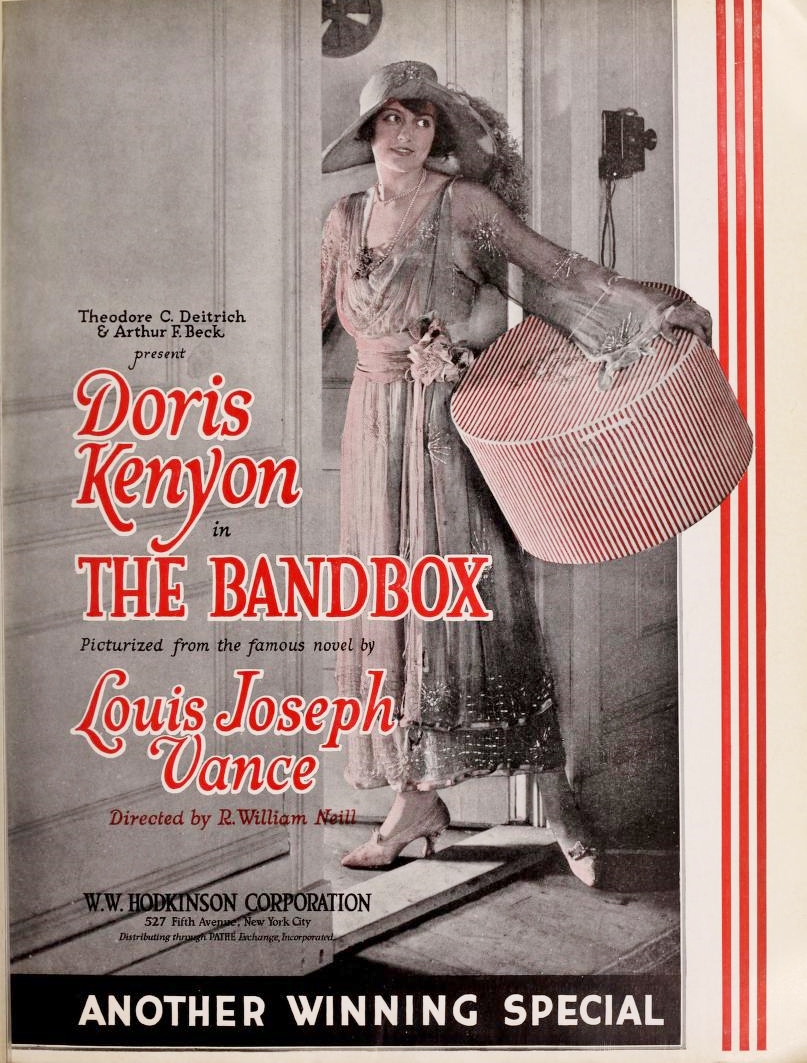
Stepping back into the nascent days of cinematic storytelling, one occasionally unearths a relic that, despite its age, still pulsates with a captivating energy. The Bandbox, a 1917 silent feature, is precisely such a discovery—a delightful confection of mistaken identity, high-stakes thievery, and budding romance, all wrapped in a narrative that, while occasionally convoluted, never ceases to entertain. Directed with a keen eye for dramatic tension and a surprising flair for comedic timing, this film, adapted from Louis Joseph Vance's popular novel, stands as a testament to the ingenuity of early filmmakers working within the expressive limitations of the silent medium. It’s a journey into a bygone era of storytelling, where exaggerated gestures, expressive intertitles, and the sheer charisma of its stars carried the weight of the narrative.
At its core, The Bandbox is a masterclass in the cinematic deployment of the MacGuffin, that elusive object around which an entire plot revolves. Here, it is a magnificent pearl necklace, destined for illicit passage across international borders. The narrative commences with Alison Landis, portrayed with a certain world-weary elegance, an actress seeking to circumvent customs duties upon her return to America. Her chosen method is as audacious as it is perilous: secreting the priceless jewels within the lining of a hat, which she then entrusts to the unwitting Benjamin Staff, a playwright whose primary concern appears to be crafting compelling narratives, not unwittingly becoming entangled in one. This initial premise immediately establishes a delicious tension, promising a cascade of complications. The film, in its silent eloquence, manages to convey the illicit thrill of this act without a single spoken word, relying instead on the furtive glances, the careful handling of the hat, and the palpable sense of risk that permeates the scene.
The plot thickens with the introduction of a relentless antagonist, a crook whose pursuit of the necklace is as unwavering as it is chilling. What adds a layer of unnerving psychological complexity—a touch often overlooked in simpler silent thrillers—is the crook's striking resemblance to Eleanor Searle's father. This visual echo is more than a mere plot device; it subtly introduces a sense of premonition and a blurring of moral lines, making the villain a more personal, almost familial, threat to Eleanor. Eleanor herself, another passenger on the fateful ocean liner, unwittingly holds a key to the impending chaos: a striped hatbox, almost indistinguishable from the one now in Benjamin’s possession. This visual symmetry, a deceptively simple detail, becomes the fulcrum upon which the entire narrative pivots.
The inevitable switch at the dockside is orchestrated with a blend of meticulous timing and circumstantial irony. The bustling chaos of disembarkation, the hurried movements of porters, and the sheer volume of similar luggage converge to create the perfect storm for this pivotal error. The film expertly builds anticipation here, showcasing the parallel journeys of the two bandboxes, each carrying vastly different fates. The crook’s subsequent realization of the mistaken identity ignites the true engine of the plot: a desperate, relentless chase. His pursuit of Eleanor, who now unknowingly possesses the coveted jewels, transitions the narrative from a polite comedy of errors into a gripping thriller. This shift in genre, executed seamlessly, demonstrates the film's ambition and its ability to transcend simple categorization. The escalating stakes culminate in a remote island cabin, a classic trope of isolation and vulnerability, where Eleanor is forced to confront her pursuer in a fight for her very life. The dramatic rescue by her father and Benjamin arrives with satisfying, albeit conventional, timing, bringing the protracted struggle to a violent and definitive conclusion. The destruction of the pearls, rather than their recovery, is an interesting narrative choice, suggesting that their value lay not in their material worth, but in their capacity to drive the story forward. The subsequent romantic denouement between Eleanor and Benjamin, while a familiar resolution, feels earned after their shared ordeal.
In the silent era, the burden of conveying emotion, intent, and character rested squarely on the shoulders of the actors. Their faces, their postures, their every gesture had to articulate what words could not. Doris Kenyon, as Eleanor Searle, delivers a performance that is both nuanced and compelling. Kenyon, a prominent star of the era, brings a delicate strength to her role, transitioning from an innocent bystander to a woman fighting for survival with commendable conviction. Her wide, expressive eyes and graceful movements articulate fear, determination, and eventual relief with an authenticity that transcends the medium’s limitations. Her portrayal is a masterclass in silent screen acting, avoiding the trap of mere histrionics in favor of genuine emotional resonance.
Walter McEwen, embodying the unsuspecting playwright Benjamin Staff, provides a grounding presence. His character's journey from genial unawareness to heroic intervention is handled with an understated charm. McEwen effectively conveys Benjamin’s initial intellectual detachment, gradually shifting to a more engaged and protective demeanor as he becomes embroiled in the unfolding drama. It's a performance that highlights the 'everyman' thrust into extraordinary circumstances, making him a relatable figure for the audience.
The antagonist, played by Alexander Gaden, is particularly noteworthy. His dual role, portraying both the menacing crook and Eleanor's benevolent father, is a stroke of casting genius that adds a layer of psychological unease. Gaden’s ability to differentiate these two characters through subtle shifts in posture, gaze, and menacing presence versus paternal warmth is remarkable. The physical resemblance between the villain and Eleanor’s father is not just a plot point but a source of genuine tension, making the threat feel deeply personal and almost Oedipal in its undertones. This kind of nuanced villainy was a rarity in early cinema, often preferring clear-cut heroes and villains. Gaden's performance elevates the film beyond simple genre fare.
The supporting cast, including Lorraine Harding as Alison Landis, Logan Paul, Edward Keppler, William Brotherhood, Gretchen Hartman, and Maggie Weston, each contribute to the film’s rich tapestry. Their collective efforts create a believable world, whether they are portraying bustling ship passengers, concerned family members, or various agents of the plot. Even in the background, their performances add depth and authenticity, crucial for immersing an audience in a silent narrative.
The director of The Bandbox (uncredited in the provided information, but often attributed to Joe De Grasse for early Universal films of this period) demonstrates a sophisticated understanding of visual storytelling. The camera work, while certainly constrained by the technological limitations of the era, is surprisingly dynamic. There are instances of well-composed shots that emphasize the sprawling nature of the ocean liner, the crowded chaos of the dock, and the isolated vulnerability of the island cabin. The use of depth of field, though rudimentary, helps to delineate space and character relationships.
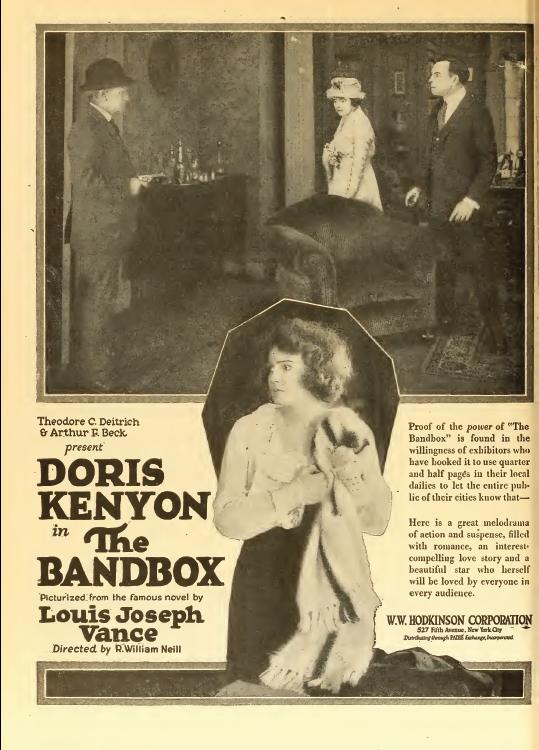
The editing, too, plays a crucial role in maintaining narrative momentum. The cross-cutting between the crook's pursuit and Eleanor's unwitting movements builds suspense effectively. The sequences involving the mistaken bandboxes are particularly well-handled, with clear visual cues guiding the audience through the confusion. Unlike some silent films that can feel static or overly theatrical, The Bandbox strives for a more fluid and cinematic experience. The action sequences, particularly Eleanor’s struggle in the cabin, are staged with a palpable sense of danger, relying on tight framing and rapid movements to convey the intensity of the moment.
The art direction, though perhaps not as lavish as later epics, is functional and effective. The sets for the ocean liner, the dock, and the remote cabin successfully establish the various environments crucial to the plot. The costumes are period-appropriate, further immersing the viewer in the early 20th-century setting. The film’s visual grammar, while nascent, is remarkably coherent, a testament to the evolving craft of filmmaking. The use of light and shadow, though perhaps not as expressionistic as German cinema of the 1920s, is nonetheless employed to create mood and emphasize dramatic moments, particularly during the climactic island confrontation.
Beyond its thrilling plot, The Bandbox subtly explores several compelling themes. Mistaken identity, a cornerstone of classic comedy and drama, is central here, driving both the film's comedic potential and its dramatic tension. The sheer randomness of the bandbox switch underscores the arbitrary nature of fate, thrusting ordinary individuals into extraordinary circumstances. This theme resonates with other tales of accidental entanglement, where seemingly innocuous objects or coincidences unleash a torrent of unforeseen consequences.
The film also touches upon themes of morality and transgression. Alison Landis's initial act of smuggling sets in motion the entire chain of events, highlighting the ripple effect of even a seemingly minor illicit act. The pursuit of the jewels, driven by greed, contrasts sharply with the innocent intentions of Eleanor and Benjamin. There’s a quiet commentary on the corrupting influence of material wealth, culminating in the jewels' destruction—a symbolic purging of the avarice that fueled the conflict.
The uncanny resemblance between the crook and Eleanor's father introduces a fascinating psychological dimension. It plays on primal fears of betrayal and the subversion of familiar figures, adding a layer of personal horror to the external threat. This choice elevates the villain beyond a mere caricature, making him a more complex and disturbing presence. The film, in its own way, delves into the duality of human nature, showing how appearances can be deceiving and how evil can wear a familiar face.
Released in 1917, The Bandbox exists at a pivotal moment in cinematic history. The industry was rapidly evolving from short, novelty films to feature-length narratives, and the techniques for effective storytelling were still being codified. This film showcases many of the conventions that would become staples of silent cinema: the reliance on clear visual narratives, the expressive power of actors, and the gradual development of editing and camera movement to enhance dramatic impact. It’s a valuable artifact for understanding how early filmmakers tackled complex plots and engaged audiences without the benefit of synchronized sound.
Comparing The Bandbox to other films of its era can illuminate its strengths and unique qualities. While it doesn't possess the grand scale or historical significance of something like D.W. Griffith's epics, it shares a certain narrative drive with contemporary thrillers. For instance, the intricate plotting and sense of impending doom might evoke comparisons to early serials or mystery films. The focus on mistaken identity and the chase could be seen as a precursor to films like The White Scar, which also explored elements of crime and pursuit, albeit with different cultural contexts. The emotional intensity, particularly during Eleanor's fight for survival, aligns it with the melodramatic tendencies seen in films such as Molchi, grust... molchi, where heightened emotions and dramatic confrontations are central to the narrative. However, The Bandbox distinguishes itself by blending these dramatic elements with a lighter, almost farcical touch in its initial setup, before descending into genuine peril. It doesn't aim for the profound social commentary of Germinal; or, The Toll of Labor, nor the purely documentary style of The Pendleton, Oregon, Round-Up, but rather carves its niche as an engaging, well-crafted popular entertainment. Its focus on a relatively contained, character-driven mystery contrasts with broader historical narratives like Abraham Lincoln's Clemency, or grander allegories. The film's compact narrative demonstrates an efficiency in storytelling that many silent films of the period were still striving to achieve, placing it firmly in the tradition of compelling, commercially successful features.
It's also worth noting the source material. Louis Joseph Vance was a prolific writer of mystery and adventure novels, and his influence is palpable in the film's intricate plotting and brisk pace. The adaptation from novel to screen, especially in an era without established screenwriting conventions, speaks to the early industry's eagerness to tap into popular literary successes. This era saw many literary adaptations, and The Bandbox is a good example of how these stories were translated into the visual language of silent film, often emphasizing action and clear character motivations over complex internal monologues.
The Bandbox may not be a household name today, even among ardent cinephiles, but it is undeniably a compelling piece of early cinema. It offers a fascinating window into the storytelling sensibilities of its time, demonstrating how a well-constructed plot, expressive acting, and thoughtful direction could captivate audiences without the aid of spoken dialogue. Its intricate narrative, propelled by a seemingly innocuous object and a series of unfortunate coincidences, holds up surprisingly well, maintaining a steady pace and a good degree of suspense.
For those interested in the evolution of film as an art form and a popular medium, The Bandbox serves as an excellent case study. It showcases the foundational elements of thriller and romance genres, executed with a nascent but effective cinematic grammar. The performances, particularly by Doris Kenyon and Alexander Gaden, are strong reminders of the power of non-verbal communication in acting. While it might require a degree of patience to adjust to the silent film format, the rewards are considerable: a glimpse into a vibrant past, where stories were told with bold strokes and heartfelt gestures. It reminds us that even in its earliest forms, cinema had the power to thrill, to entertain, and to explore the complexities of human nature. This film is more than just a historical curiosity; it is a lively, engaging piece of storytelling that deserves to be rediscovered and appreciated by modern audiences. It stands as a testament to the enduring appeal of a good mystery, well told, regardless of the technological era in which it was conceived.
IMDb —
1923
Community
Log in to comment.