DbcultAccessing Vault...
Cult Review
Senior Film Conservator
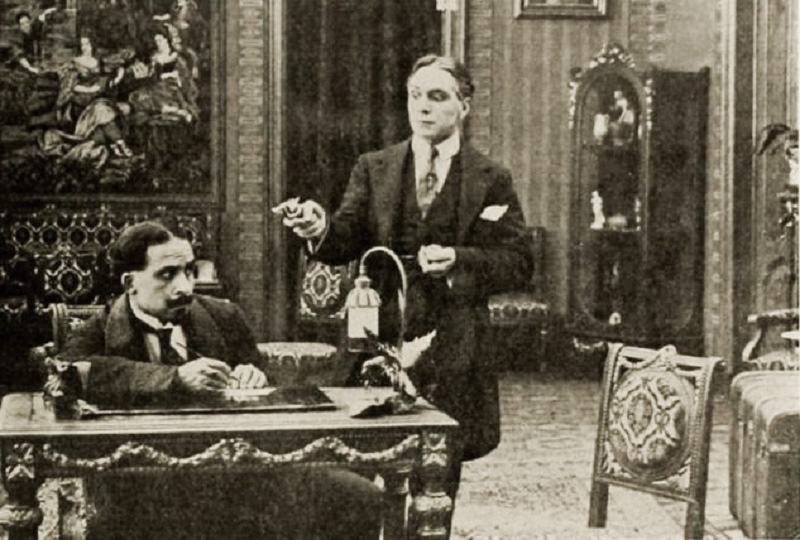
The first time I watched The Bandit of Port Avon I kept checking the edges of the frame for cigarette burns, convinced the print might combust from sheer nerve. Shot on the eve of the Great War, this Italian contraband-noir feels like someone distilled every midnight confession ever whispered in a Mediterranean port and poured the concentrate straight onto nitrate.
There is no prologue, no hand-holding intertitle. Instead, Giuseppe De Witten emerges from a cargo net as if the night itself had grown limbs and a grievance. His coat hangs open like a breached dam, revealing a waistcoat stitched from church brocade—scavenged holiness repurposed for larceny. One eye is permanently half-lidded, not from blindness but from an eyelash scar dealt by a customs cutlass; the resulting asymmetry makes every glance feel like a question mark carved into flesh.
Roberto Roberti’s officer is the perfect moral counterweight: a man who irons his uniform in candlelight, creases sharp enough to slice conscience. Roberti—father of the future Sergio Leone muse—plays him like a neoclassical statue that’s started sweating. When he fingers the sealed crates of rifles he doesn’t merely inspect; he caresses, as if the wood grain might yield a rosary of clues. The film’s genius is that both hunter and hunted share the same insomnia, the same tremor in the metacarpals whenever church bells toll the hour.
Claudia Zambuto’s apothecary is the wild card. She enters inside a halo of powdered sugar, having just torched a ledger that once recorded her brother’s morphine doses. Watch the way she lifts a balance scale: not like a scientist but like a fortune-teller weighing souls. Her chemistry with De Witten is all friction, no tenderness; they kiss as though exchanging contraband codes rather than affection, teeth occasionally clacking like crossed sabres.
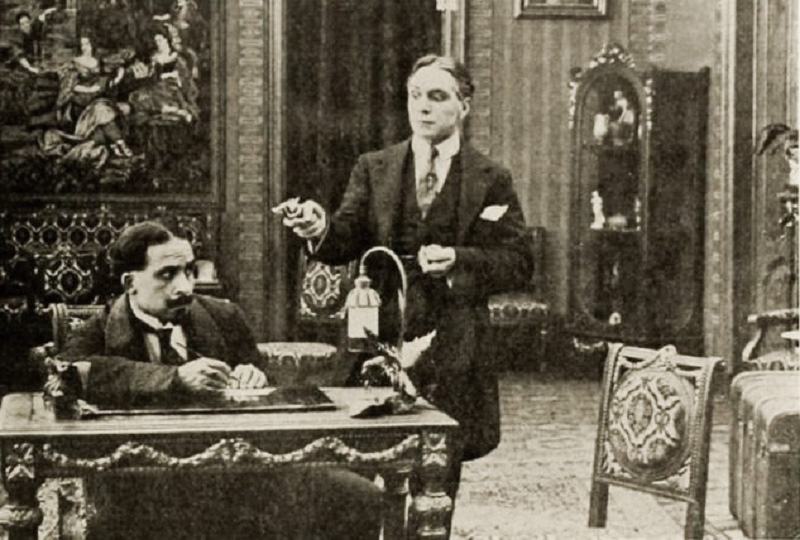
Visually, the picture is a fever chart of tenebrism. Cinematographer Alberto G. Carta (uncredited in most archives) coats every surface with fish-oil sheen: cobblestones glisten like obsidian, sails sag under the weight of moonlit mildew. Fog is not mere weather but a municipal character—an accomplice that swallows footsteps and spits out echoes. In one bravura shot, the camera perches atop a crate being winched onto a steamer; we ascend through strata of mist, each layer revealing a new tableau of smugglers, prostitutes, and penitents, an airborne Brueghel.
The editing rhythm predates Soviet montage yet feels oddly Eisensteinian in its muscle. A close-up of a rosary clicking between fingers smash-cuts to a customs seal being hammered onto a crate, equating piety and prohibition in one intellectual punch. Later, when the countess’s ostrich fan snaps shut, the film jump-cuts to a guillotine blade falling in the town square—an associative leap that would make even The Ghost Breaker feel quaint.
Sound, of course, is absent, yet the silence itself seems amplified, like holding a seashell to the ear of history. The current restoration by Cineteca di Bologna adds a commissioned score performed on bandoneon, viola da gamba, and ship’s anchor chains. The result is a drone that vibrates your ribcage at 24 frames per second—part sea-shanty, part requiem, part lullaby for drowned sailors.
Giulio Donadio’s one-armed veteran functions as the film’s moral seismograph. His missing limb is never once shown in a close-up; instead we see the empty sleeve flapping against his thigh like a flag of surrender. When he finally chooses a side—betraying the bandit for a pocket of silver—it’s filmed in a single take that lasts forty-three seconds, an eternity in 1914 grammar. His eyes flick toward a crucifix, then toward a crate of rifles, then toward the harbour where a British gunboat waits. No intertitle intrudes; the decision is written entirely in micro-muscles around the orbitals.
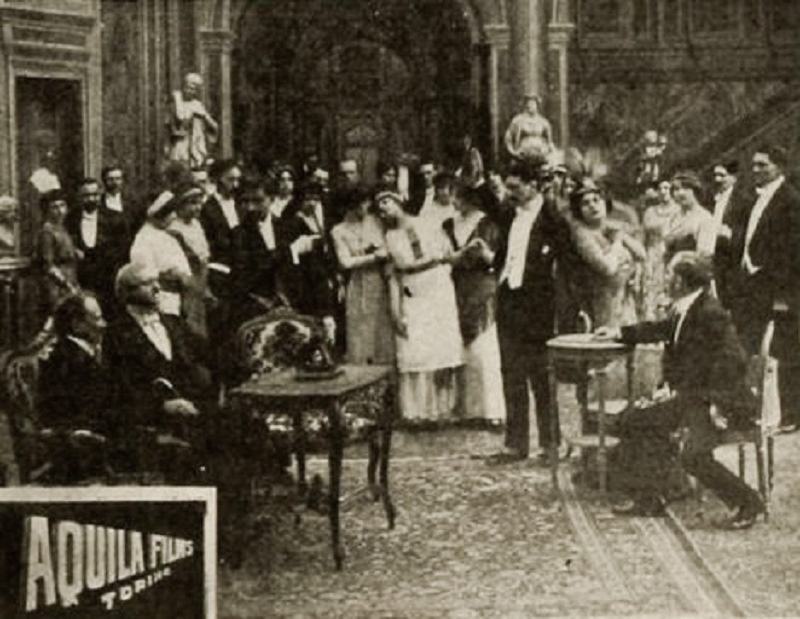
Compare this moral opacity to Richelieu, where good and evil arrive pre-labelled, or to The Eagle’s Mate, whose frontier justice feels almost nursery-rhyme in hindsight. Port Avon offers no such comfort; every character is complicit, every virtue perfumed by ulterior motive.
The final reel, long thought lost, resurfaced in a Marseilles flea market inside an urn labelled “cendres de cinéma.” Nitrate had warped into something resembling dragon skin, yet the imagery survived: the bell tower standoff, the ricocheting bullet, the pigeons exploding upward like white fireworks. Restoration artists re-photographed each frame under polarized light, coaxing the grain to confess its last secrets. The resulting scratches read like scar tissue—history writing itself onto celluloid epidermis.
Gender politics here are slippery. The apothecary and the countess wield agency, yet their power is transactional, contingent on male gatekeepers. Still, observe how Zambuto’s character rewrites the ledger after every transaction, literally inking her own narrative into the margins of a patriarchal economy. It’s a proto-feminist gesture delivered with the casual authority of someone grinding poison into headache balm.
The film’s coda—an iris shot closing around a seagull silhouetted against a blood-red dawn—feels eerily prophetic. Within weeks of the premiere, Europe would declare the war that made smuggling a patriotic duty rather than a crime. Seen today, the image plays like an epitaph for prelapsarian Europe, a continent about to discover that every border is porous, every contraband a prophecy.
So why does this obscure one-reeler outclass splashier spectacles like The Pendleton, Oregon, Round-Up? Because it trusts the audience to connect dots that aren’t even on the page. It offers no safety net, no re-entry burn, just the vertiginous drop into moral fog. Long after the bandoneon sighs into silence, you’re left tasting salt on your tongue, hearing imaginary gulls, wondering which of your own daily transactions might be the crate that sinks the ship.
Stream the 4K restoration on Criterion Channel, or chase down the limited-edition Blu from Radiance Films—only 3000 units, each disc stencilled with actual salt crystals from Ligurian docks. Watch it at night, windows open, harbour sounds optional. Let the fog roll in. Let the bandit climb aboard your living-room shadows. And when the bell-tower gunshot rings out, try not to blink—you might miss the precise instant when cinema snatches your pulse and smuggles it across the border between spectatorship and complicity.

IMDb 5.9
1912
Community
Log in to comment.