DbcultAccessing Vault...
Cult Review
Senior Film Conservator
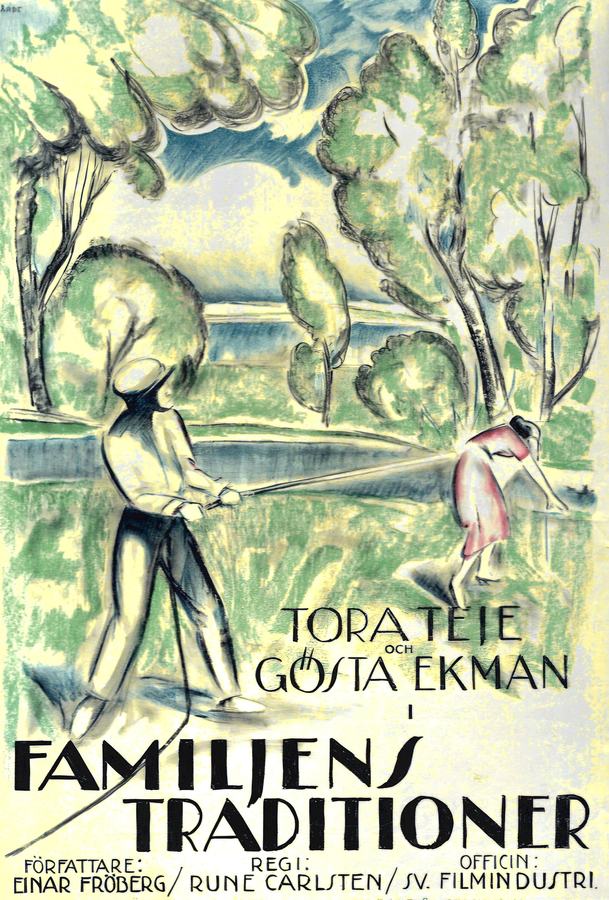
To watch Familjens traditioner is to step into a meticulously curated gallery of early 20th-century Swedish existentialism. Rune Carlsten, alongside writers Einar Fröberg and Sam Ask, crafts a narrative that feels less like a simple silent film and more like a haunting exploration of the soul's confinement. The young Baron Robert, portrayed with a simmering intensity by the legendary Gösta Ekman, is the central figure in this tableau of duty and desire. Unlike the more whimsical explorations of marital strife seen in How to Be Happy Though Married, this film treats the institution of family as a fortress—one that protects but also imprisons.
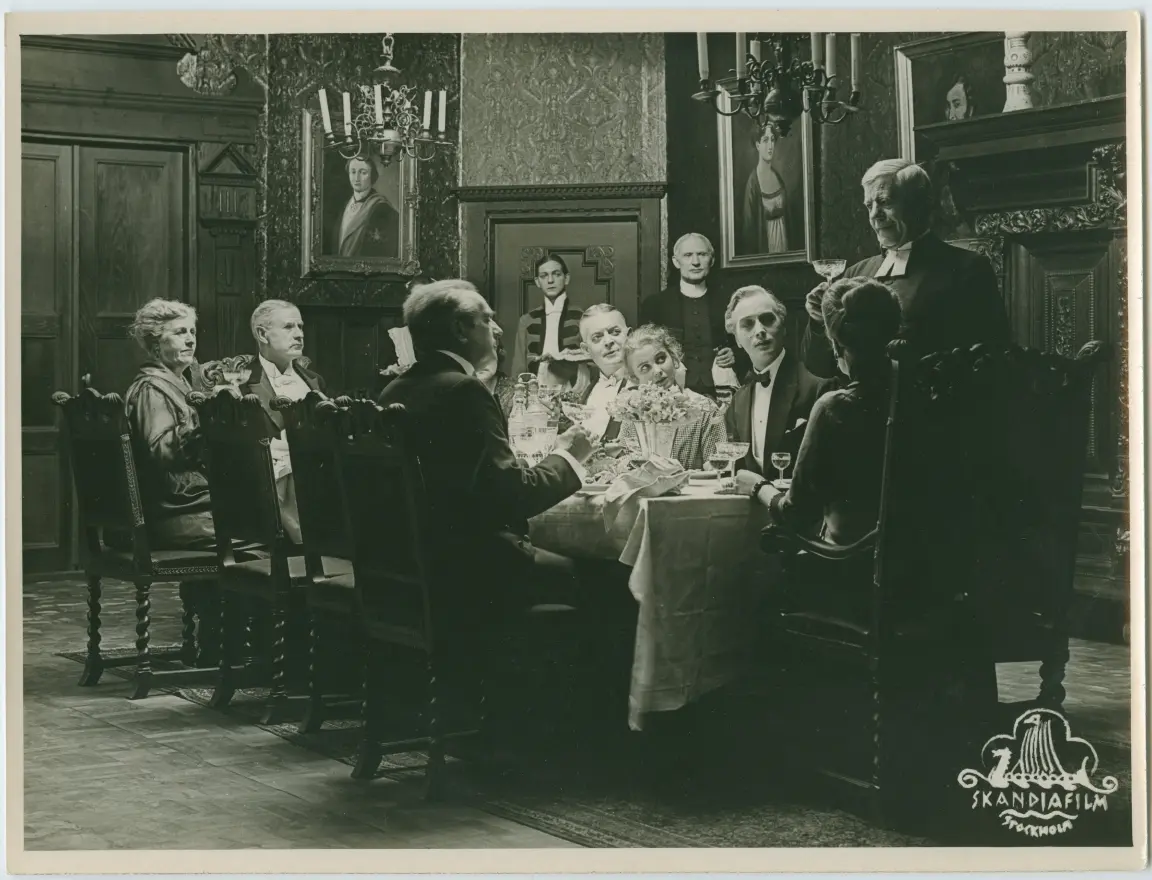
The cinematography utilizes the grand, sweeping vistas of the Swedish countryside and the claustrophobic interiors of the manor to mirror Robert's internal state. There is a palpable sense of history in every frame; the dust on the ancestral portraits feels as heavy as the expectations placed upon the Baron's shoulders. When Helga, played by the ethereal Mary Johnson, enters the frame, she isn't just a love interest; she is a disruption of the visual order. Her presence introduces a softness that the rigid, angular world of the Baronial estate cannot easily accommodate. It is a thematic resonance we often see in films like Giving Becky a Chance, where an outsider challenges the established social hierarchy, yet here, the stakes feel significantly more existential.
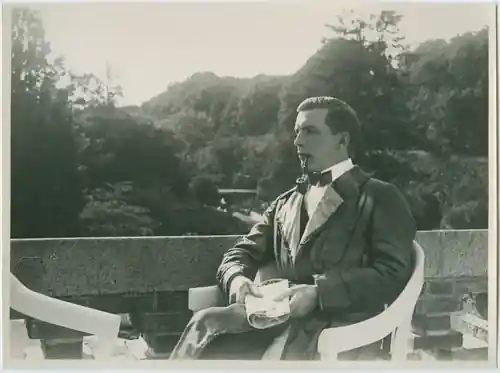
Gösta Ekman’s performance remains a cornerstone of this production. Long before he became the definitive face of Swedish theater, his work in silent cinema showcased an ability to convey complex psychological shifts through the mere flicker of an eyelid. In Familjens traditioner, his Robert is a man caught between two eras. We see the struggle of a man who wants to be the protagonist of his own life but finds himself relegated to being a mere footnote in a long line of Barons. This struggle for identity is far more nuanced than the broad strokes found in Charity Castle, where the conflict is often externalized. Here, the battle is fought in the quiet moments of reflection, in the spaces between the dialogue cards.
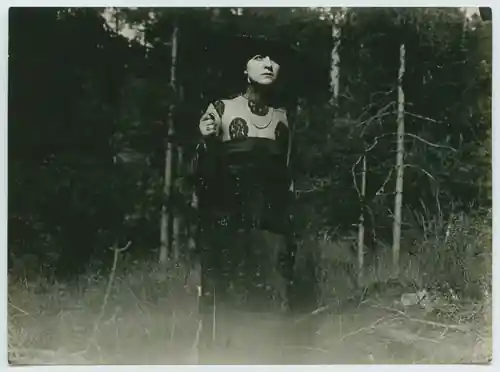
Mary Johnson provides the perfect foil. Her performance as Helga is imbued with a quiet resilience. She represents the 'distant relative'—close enough to be part of the world, yet far enough to see its flaws. Their chemistry is built on a foundation of shared glances and subtle gestures, a necessity of the medium that Carlsten exploits to full effect. The supporting cast, featuring stalwarts like Hjalmar Selander and Carl Browallius, provides a stultifying wall of tradition that the young lovers must navigate. They are the human embodiments of the 'traditions' mentioned in the title, ossified and unyielding, reminiscent of the societal pressures explored in The World and His Wife.
While 1920 was a year of recovery and transition globally, Swedish cinema was entering its 'Golden Age.' Familjens traditioner reflects a society at a crossroads. The film’s preoccupation with lineage and the preservation of the aristocratic name speaks to a fear of the rising tide of modernity. It lacks the supernatural dread of The Isle of the Dead, yet it creates a similar atmosphere of inescapable fate. The 'ghosts' here are not apparitions but the living elders who demand the sacrifice of the young on the altar of family honor.
The screenplay by Fröberg, Ask, and Carlsten is a masterclass in economy. Every scene serves to tighten the noose around Robert’s neck. Whether it’s a formal dinner or a walk through the gardens, the presence of the family’s expectations is omnipresent. The film avoids the melodramatic excesses of The Unborn, opting instead for a grounded, almost naturalist approach to its drama. This restraint makes the eventual climax all the more impactful, as the pressure cooker of social obligation finally reaches its breaking point. It reminds one of the structural integrity found in Builders of Castles, where the literal and metaphorical construction of a legacy becomes a burden too heavy to bear.
In comparing Familjens traditioner to its contemporaries, we see a distinct departure from the American style of storytelling. While a film like The Girl Who Stayed at Home focuses on the sentimental domesticity of the era, the Swedish approach is far more cynical regarding the domestic sphere. The home in Carlsten’s vision is not a sanctuary; it is a museum where the characters are merely exhibits. This aligns more closely with the European sensibilities found in La fiera dei desideri, where the pursuit of desire is often met with the harsh reality of social standing.
Even when the film flirts with the idea of financial freedom—a common trope in silents like Brewster's Millions or One Thousand Dollars—it quickly subverts it. For Baron Robert, money is not the solution because his wealth is tied to the very traditions that stifle him. He cannot buy his way out of his name. This creates a tragic irony that is far more compelling than the simple 'rags to riches' stories of the time, such as Pinto. Instead, we are presented with a 'riches to ruin' of the spirit, a theme that resonates through the ages and finds a home in the heart of any viewer who has ever felt the weight of their own history.
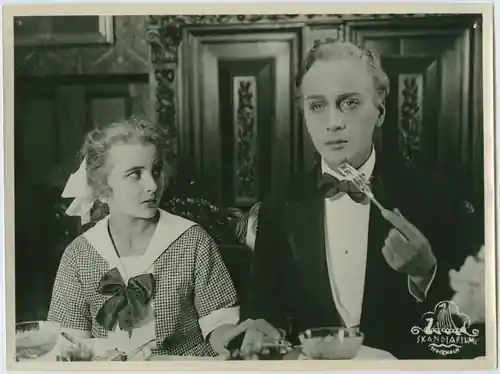
The use of light and shadow in the film is nothing short of revolutionary for 1920. Carlsten utilizes a Proto-Noir aesthetic, where the shadows in the manor seem to creep toward the characters as they discuss their futures. This visual storytelling replaces the need for excessive intertitles, allowing the audience to feel the emotional weight of the scene. When Robert and Helga are alone, the lighting softens, creating a halo effect that separates them from the harsh, high-contrast world of their elders. This technique is far more sophisticated than the contemporary work in The Sowers, which relied more on stagey blocking than cinematic lighting.
Furthermore, the pacing of the film allows for a slow-burn tension that is rare in the silent era. We are given time to inhabit the spaces, to feel the boredom of the aristocracy, and to understand why the arrival of a distant relative would be such a seismic event. It captures the 'stasis before the storm' with a precision that mirrors the emotional landscape of Heartsease. However, where Heartsease leans into the floral and the romantic, Familjens traditioner remains rooted in the granite and the cold earth of Swedish reality. The final act does not offer a cheap resolution; it offers a reckoning.
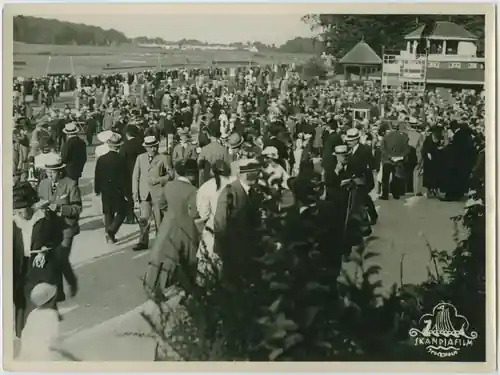
Ultimately, Familjens traditioner stands as a testament to the power of silent cinema to communicate the incommunicable. Through the lens of Robert and Helga's forbidden love, we are invited to question the value of the traditions we uphold and the cost of the legacies we inherit. It is a film that demands attention, not just as a historical artifact of the Swedish Golden Age, but as a living, breathing piece of art that continues to speak to the human condition. It is as much about the 'time' we spend within our own social prisons as Doing Time is about the physical ones.
In a world that is increasingly focused on the immediate and the ephemeral, Carlsten’s work reminds us of the long shadows cast by the past. The performances of Ekman and Johnson are timeless, transcending the technical limitations of their era to deliver a story that is as heartbreaking today as it was over a century ago. For those willing to look past the absence of sound, there is a symphony of emotion to be found in the tradition-bound halls of this Swedish masterpiece.
IMDb —
1916
Community
Log in to comment.