DbcultAccessing Vault...
Cult Review
Senior Film Conservator
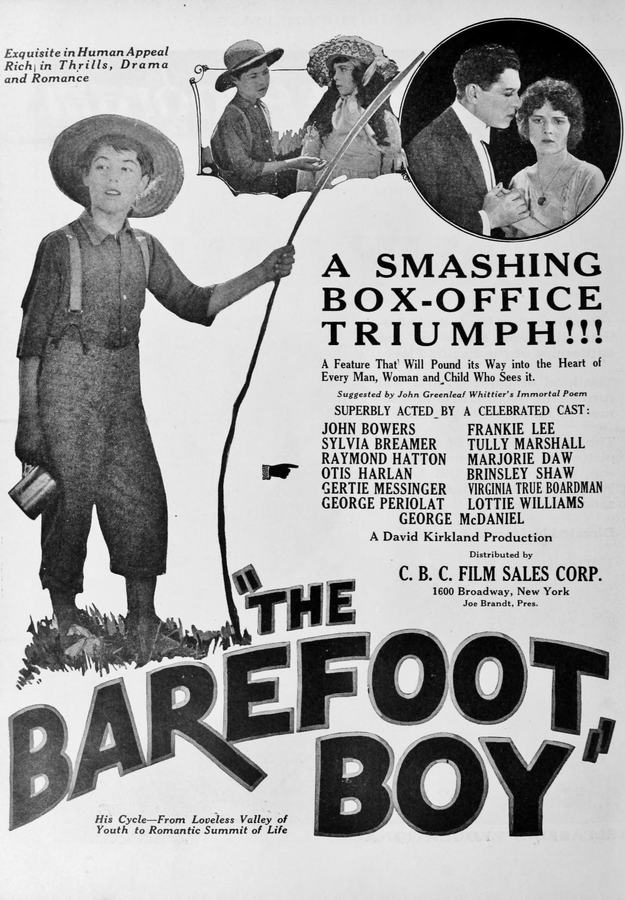
In the annals of early cinema, few narratives capture the raw, visceral human experience quite like The Barefoot Boy. This cinematic adaptation, drawing inspiration from the evocative spirit of John Greenleaf Whittier's poem, transcends a mere plot recounting to become a profound meditation on injustice, the corrosive nature of vengeance, and the thorny path toward potential redemption. It's a film that, despite its vintage, speaks to timeless truths about community, ostracism, and the enduring power of a singular memory to shape a life's trajectory. As a critic, I find myself drawn into its intricate tapestry of emotion, a journey that begins with a child's profound suffering and culminates in an adult's calculated bid for retribution.
The film introduces us to young Dick Alden, a figure of poignant vulnerability, a twelve-year-old boy whose existence is a relentless gauntlet of hardship. Not only does he endure the tyrannical hand of a cruel stepfather, but he also faces the relentless, often petty, antagonism of his fellow villagers. This isn't just a tale of youthful mischief; it's a stark portrayal of a community's collective failure to nurture, to protect, to see beyond superficial judgments. Dick is the quintessential outcast, a pariah in his own home and his own town, a condition that lays fertile ground for the bitter seeds of resentment. The screenplay, penned by Wallace Clifton, deftly establishes this foundation of misery, making Dick's subsequent transformation not just plausible, but tragically inevitable.
The ultimate catalyst for his flight, and the forging of his vengeful spirit, arrives in the form of a wrongful accusation: the burning of the local schoolhouse. This act of societal condemnation, an unjust branding that strips him of any remaining dignity, serves as the crucible in which his youthful innocence is incinerated, replaced by a steely resolve. It's a moment that resonates with the raw emotional punch found in other tales of social injustice, perhaps echoing the desperate flight of characters in films like The City of Comrades, where individuals grapple with societal rejection and the arduous journey toward acceptance or retribution. Dick's subsequent vow, whispered into the wind as he flees his tormentors, isn't a childish tantrum; it's a solemn oath, a promise etched deep into his nascent psyche, destined to ripen with time and opportunity.
Years pass, and the boy, Dick Alden, is no more. In his place stands a man, forged in the fires of his past, sophisticated and calculating, his childhood trauma having metastasized into a formidable, singular purpose. The inheritance of the village mill, a cornerstone of its economy, presents him with the perfect instrument for his long-simmering revenge. His plan is meticulously conceived: to dismantle the mill, to sever the economic lifeline of the very community that once cast him out, thereby plunging them into the destitution he himself knew. This isn't merely about financial ruin; it's about psychological devastation, a mirror held up to their past cruelty, reflecting their own heartlessness back at them. The sheer audacity and cold calculation of his scheme elevate the narrative beyond simple revenge, transforming it into a study of how deep-seated grievances can manifest in destructive, almost theatrical, ways.

The portrayal of this adult Dick Alden, brought to life with compelling intensity by George A. McDaniel, is central to the film's power. McDaniel imbues Dick with a potent blend of outward composure and simmering internal conflict, allowing the audience to glimpse the wounded boy beneath the hardened exterior. His performance is a masterclass in conveying complex emotions through subtle gestures and expressions, a necessity in the silent era. The tension he creates is palpable, as his character navigates the delicate balance between his vengeful desires and the lingering echoes of a more innocent past. This return to a place of past trauma, armed with the power to inflict similar pain, is a narrative device that always captivates, forcing an examination of justice versus retribution.
Just as Dick's meticulously constructed plan for vengeance appears poised for fruition, the narrative introduces its most potent dramatic element: the unexpected reappearance of a figure from his past. This encounter acts as a crucial turning point, a wrench thrown into the gears of his carefully orchestrated destruction. The identity and nature of this individual are pivotal, capable of either softening his hardened resolve, forcing him to confront the moral ramifications of his actions, or perhaps even intensifying his desire for retribution through a renewed sense of betrayal or a deeper understanding of his own pain. The film masterfully uses this reunion as a catalyst for internal conflict, pushing Dick to the brink of self-reflection.
Gertrude Messinger, Marjorie Daw, and Sylvia Breamer, among others in the ensemble cast, likely play crucial roles in this dynamic. Their performances, even in supporting capacities, would have been instrumental in grounding Dick's emotional journey, providing him with foils or allies that challenge his worldview. A character who knew him as the innocent, abused boy could unlock a different facet of his personality, compelling him to re-evaluate the cost of his revenge. This narrative twist, the human element that threatens to derail a purely destructive path, is where The Barefoot Boy truly shines, elevating it from a simple revenge tale to a nuanced exploration of human connection and the possibility of forgiveness, or at least, a different kind of justice. It reminds us that even the most determined avenger can be swayed by the complexities of personal history.
The ensemble cast of The Barefoot Boy delivers performances that are both evocative and essential to the film's emotional resonance. George A. McDaniel, in the challenging dual role of the young, tormented Dick and the adult, vengeful Alden, carries the narrative's immense emotional weight with remarkable skill. His transition from wide-eyed victim to steely-eyed avenger is portrayed with a subtlety that belies the era's often melodramatic acting conventions. He conveys inner turmoil and resolute purpose through posture, gaze, and carefully modulated expressions, making his character's journey deeply believable.

Gertrude Messinger, Marjorie Daw, and Sylvia Breamer contribute significantly to the film's texture. While specific roles aren't detailed in the plot summary, their presence suggests a rich tapestry of relationships that would either exacerbate Dick's pain or offer glimmers of hope. In silent film, every gesture, every facial contortion, every movement is amplified, and these actors, alongside talents like John Bowers, Virginia True Boardman, and Otis Harlan, would have been adept at communicating complex emotional states without dialogue. The pacing of the film, likely deliberate and measured in its build-up of Dick's suffering and subsequent return, allows these performances to breathe, giving the audience ample opportunity to empathize with his plight and grapple with the moral quandaries presented.
The film's direction, guided by the vision behind Wallace Clifton's adaptation, would have focused on creating a palpable sense of the isolated, judgmental village environment, contrasting it with the internal landscape of Dick's evolving character. The use of cinematography, even in its early forms, would have been crucial in establishing mood – perhaps stark, chiaroscuro lighting to emphasize Dick's despair, or wide shots to convey the oppressive scale of the community against his solitary figure. In this regard, one might draw parallels to the atmospheric storytelling found in films that emphasize claustrophobic environments or psychological dread, even if the genres diverge. The careful construction of scenes, from the schoolhouse fire to the climactic confrontation at the mill, would have been orchestrated to maximize dramatic impact, a hallmark of effective silent film storytelling.
At its core, The Barefoot Boy grapples with profound philosophical questions that continue to resonate across generations. Is justice merely the absence of wrongdoing, or does it demand a deeper societal introspection? The film powerfully illustrates how a community's indifference or active cruelty can sow the seeds of future discord. Dick Alden's revenge isn't born of inherent malice but rather as a twisted response to egregious injustice. This raises the uncomfortable question: when society fails to provide justice, what recourse does the wronged individual have? His plan to dismantle the mill is a symbolic act, an economic mirror of the emotional devastation he suffered as a child. It's a grand, almost biblical, act of 'an eye for an eye,' transposed onto the economic fabric of a small town.
However, the narrative's brilliance lies in its refusal to offer simplistic answers. The introduction of the figure from Dick's past complicates the moral landscape significantly. This individual represents the potential for empathy, for understanding, or perhaps even for a different form of reckoning. It forces Dick, and by extension the audience, to consider whether true justice lies in destructive retribution or in the arduous, often more challenging, path of forgiveness and rebuilding. The film subtly explores the idea that prolonged vengeance often hurts the avenger as much, if not more, than the target. This thematic depth elevates The Barefoot Boy beyond a mere melodramatic potboiler into a compelling character study, reminiscent of other films where protagonists confront their past demons or are forced to choose between destruction and reconciliation, such as the internal struggles depicted in A Stormy Knight.
The Barefoot Boy, though a product of its time, holds an enduring appeal precisely because its themes are so universal. The pain of childhood mistreatment, the desire for vindication, and the complex journey towards self-discovery and potential forgiveness are narratives that resonate across cultural and temporal divides. The film serves as a powerful reminder of the impact of societal actions on individuals and the long-term consequences of unchecked cruelty. It's a testament to the power of early cinema to convey intricate emotional landscapes and provoke thoughtful introspection without the aid of spoken dialogue.
For modern audiences, viewing The Barefoot Boy offers a fascinating glimpse into the storytelling techniques and emotional power of the silent era. It showcases the skill of actors like George A. McDaniel, Gertrude Messinger, and Marjorie Daw, who could communicate volumes with a glance or a gesture. It also highlights the enduring relevance of John Greenleaf Whittier's poetic vision, which Wallace Clifton so effectively translated to the screen. The film stands as a significant piece of cinematic history, not just for its technical achievements, but for its profound exploration of the human condition. It prompts us to consider the cycles of pain and vengeance, and whether, ultimately, the path to true healing lies in breaking those cycles, perhaps through an unexpected encounter with a memory, a person, or even a different version of oneself. It's a compelling argument for the timelessness of well-crafted drama, proving that some stories, like the spirit of a wronged boy, refuse to be forgotten.
IMDb —
1921
Community
Log in to comment.