DbcultAccessing Vault...
5.9/10
Senior Film Conservator
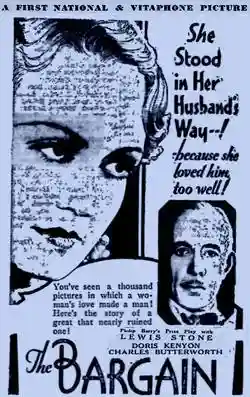
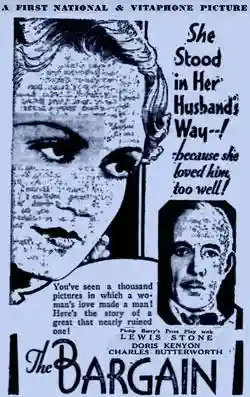
A definitive 5.9/10 rating for a film that redefined the boundaries of cult cinema. The Bargain remains a cornerstone of transgressive art.
Alright, let's talk about The Bargain from way back in 1931. Is it worth tracking down today? Well, if you're a film history buff, or just really curious about how movies sounded and felt right after the silent era, then yeah, absolutely. You'll probably dig it. But if you're looking for slick editing, fast pacing, or naturalistic acting, honestly, you're gonna hate it. It's a specific taste, this one.
The story is pure melodrama. A husband, played by Lewis Stone, is convicted of murder and set to hang. His wife, Ruth (Doris Kenyon), is utterly desperate to save him. This desperation leads her to consider a really awful 'bargain' with a powerful, maybe even corrupt, politician.
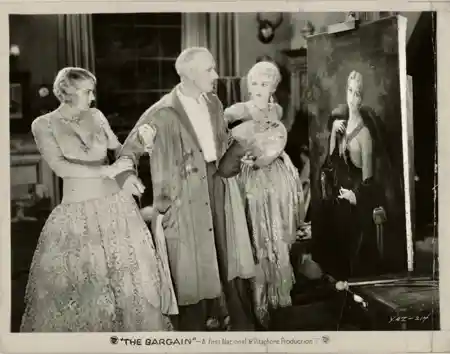
The sound quality, first off. Oh boy. It's that classic early talkie sound, isn't it? Crackly, a bit tinny, and you can practically *see* the actors trying to project without moving too far from the microphones. It gives everything this stiff, almost theatrical feel, which was pretty common back then.
Doris Kenyon, though, she really tries her best to break through that technical barrier. There's a scene where she's pleading, I think it's with Oscar Apfel's character, and her voice just has this raw edge to it. You really feel her character's panic, even through the sometimes clumsy sound mixing.
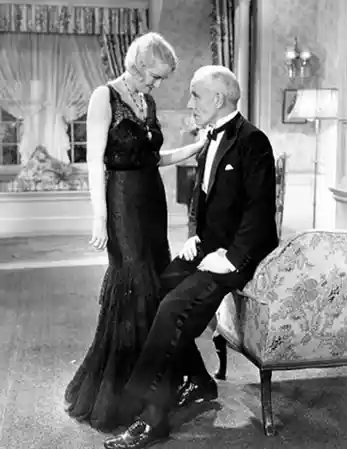
Lewis Stone, as the condemned husband, has that distinguished, stoic look that was his signature. He's very much a man of his time on screen. You get the sense he's trying to convey deep emotion with minimal facial movement, a holdover from silent films.
The pacing, for modern viewers, is going to feel glacial. Some scenes just linger, and linger, and you keep waiting for a cut that doesn't quite come. One reaction shot of a minor character, maybe a juror or someone in the background, just goes on for *ages*. It becomes kind of funny after a bit, honestly.
The 'bargain' itself is, of course, the central tension. It’s handled with a lot of implied suggestion rather than outright explanation. This was 1931, remember, before the Hays Code clamped down fully. So, they could hint at some pretty dark stuff without explicitly showing it, which sometimes makes it more unsettling.
Charles Butterworth shows up here, probably as some sort of comic relief or a wry observer. He usually brought a bit of lightness to these heavier pictures. I remember him making a slightly off-color joke, very subtle, but it stood out against the grimness. He was always good for that.
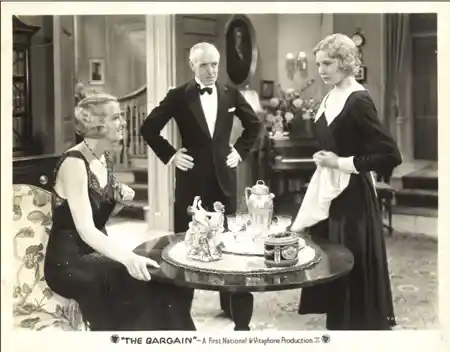
The whole experience feels a bit like watching a stage play that was filmed. The camera is often static, just letting the dialogue and the actors' movements (or lack thereof) carry the scene. It's a fascinating look at cinema trying to figure out its own language with sound.
It’s not perfect. Far from it. Some of the editing is choppy, and the dramatic beats don't always land as intended. But there are these flashes, these little moments where Kenyon's performance, or a particularly tense exchange, really break through. It's a reminder that even in these early, imperfect films, real human drama was still at play.
So, yeah, it's a slow burn, and you gotta meet it on its own terms. But if you do, The Bargain offers a pretty interesting peek into the cinematic past. It's a bit rough around the edges, but genuine in its own way.
IMDb 6.2
1935
Community
Log in to comment.