DbcultAccessing Vault...
Cult Review
Senior Film Conservator
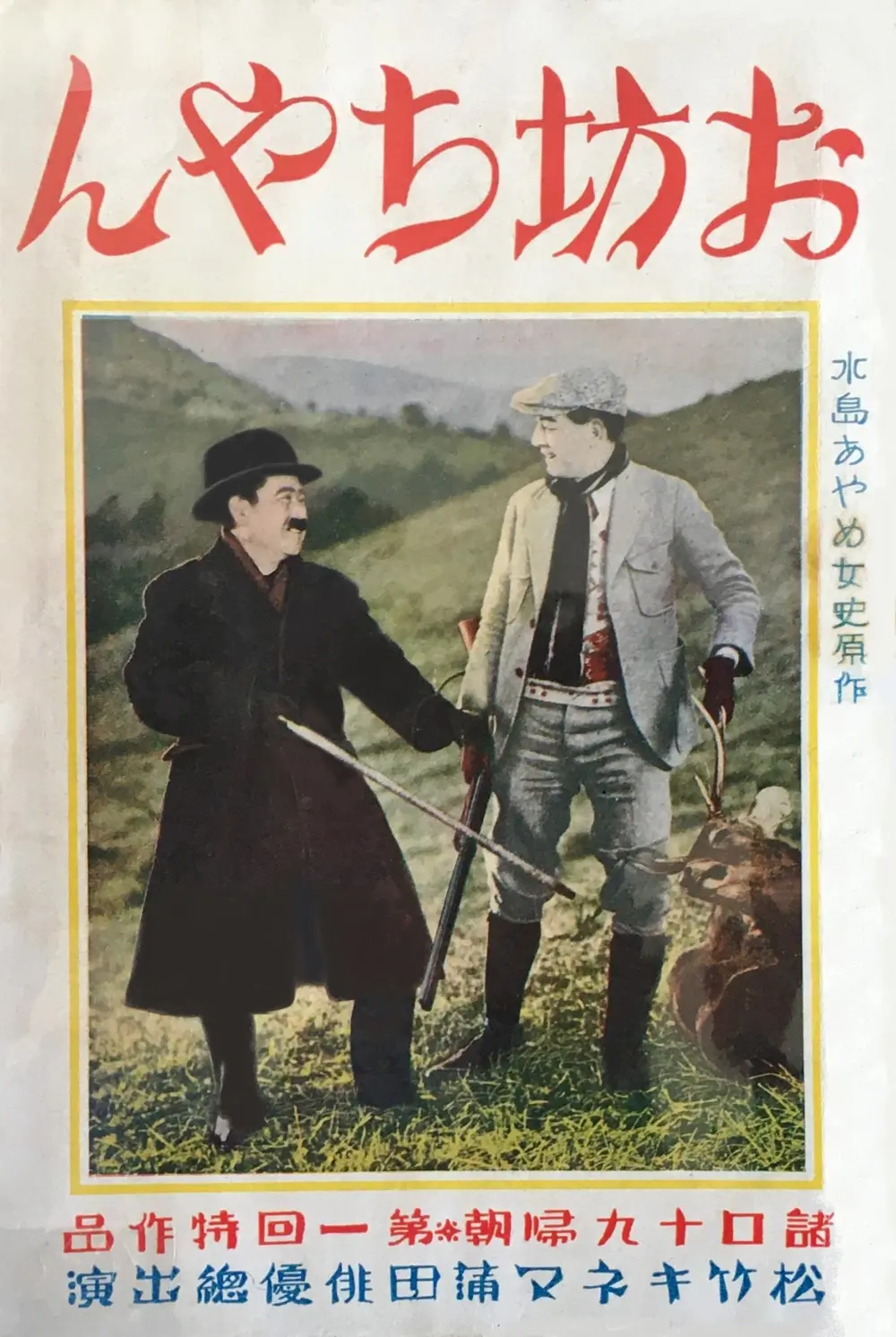
Is Obo-chan worth your time in the modern era? Short answer: Yes, but primarily as a foundational text for those who want to understand the evolution of the Japanese 'shomin-geki' (common people drama).
This film is for the patient cinephile who finds beauty in the architecture of a scene rather than the speed of its plot. It is emphatically not for those seeking the kinetic energy of contemporary blockbusters or even the high-style artifice of early Hollywood silents like The Carpet from Bagdad.
1) This film works because it captures the authentic, unvarnished rhythm of early 20th-century Japanese life through a lens of profound empathy.
2) This film fails because its narrative structure can feel aimless to a modern eye, lacking the clear 'inciting incident' that today's audiences demand.
3) You should watch it if you are a student of cinema history who wants to see the DNA of masters like Ozu and Naruse before they reached their creative zeniths.
Yasujirō Shimazu is often the forgotten man of Japanese cinema. While the world bows to Ozu, Mizoguchi, and Kurosawa, Shimazu was the one laying the groundwork at Shochiku's Kamata studios. Obo-chan is a prime example of his 'Kamata style'—a blend of light humor and poignant realism that feels startlingly modern in its observation of human behavior.
The film doesn't scream its themes. It whispers them. In one specific scene where the family gathers, the camera lingers not on the person speaking, but on the reactions of those listening. This focus on the 'space between' characters is what gives the film its lasting power. It’s a technique that predates the sophisticated minimalism we see in later works like The Third Generation.
The pacing is deliberate. Some might call it slow. I call it honest. Life in 1930 didn't move at the speed of a fiber-optic cable. Shimazu respects the time it takes for a character to process an emotion. It works. But it’s flawed. The technical limitations of the era occasionally bleed through, yet the emotional clarity remains piercing.
The cast of Obo-chan is a 'who's who' of early Japanese cinema. Chôko Iida, who would later become a staple of Ozu’s filmography, delivers a performance here that is a masterclass in subtlety. She doesn't need grand monologues to convey a mother’s anxiety; she does it with the way she adjusts a collar or the specific tone of her sigh.
Kinuyo Tanaka, even in this early stage of her legendary career, radiates a screen presence that is impossible to ignore. Her ability to navigate the line between traditional subservience and modern spark is the film's secret weapon. Contrast her performance here with the more stylized acting found in Western epics like Spartacus, and you see the distinct path Japanese acting was carving for itself.
The ensemble works with a lived-in chemistry. They don't feel like actors playing a family; they feel like a family that happened to be caught on celluloid. This naturalism was revolutionary. It moved away from the kabuki-influenced gestures of early silent films and toward something much more intimate and recognizable.
Obo-chan sits at a fascinating crossroads of cinematic technology. The cinematography by the Shochiku regulars uses natural light to create a sense of place that is both cozy and restrictive. The use of depth in the household scenes—where we see characters moving in the background while a primary conversation happens in the foreground—creates a three-dimensional world.
The sound design, though primitive by today's standards, is used effectively to ground the story in reality. The ambient noise of the street, the clatter of dishes—these are not just background noise; they are characters in their own right. They remind us that the 'young master' is never truly alone; he is always being watched by his community.
The editing is surprisingly sharp. Shimazu knows when to cut to a close-up for maximum emotional impact. He avoids the static, stagey feel that plagued many early talkies. Instead, there is a fluidity to the movement that suggests a filmmaker fully in command of his medium, even as that medium was rapidly changing.
Yes, Obo-chan is worth watching for anyone interested in the roots of social realism in cinema. It provides a rare, unvarnished look at Japanese life during the early Shōwa period. While it may lack the polish of later Golden Age films, its emotional honesty and superb performances make it a rewarding experience for those who appreciate slow-burn storytelling.
Pros:
Cons:
One cannot discuss Obo-chan without discussing the social context of its release. Japan in 1930 was a country of contradictions. It was an empire on the rise, yet the average person was struggling with the remnants of the Great Depression and the transition from agrarian roots to urban industrialization. Shimazu captures this tension perfectly.
The 'Obo-chan' character himself represents a generation caught in the middle. He is pampered, yes, but he is also burdened. He is expected to lead, yet he has no clear path forward. This sense of paralysis is something Shimazu explores with a surprising amount of bite. He isn't afraid to show the 'young master' as foolish or out of touch.
In one particularly telling scene, the protagonist attempts to assert his authority in a way that is both laughable and tragic. It is a moment of brutal honesty. Shimazu is suggesting that the old ways of hierarchy are no longer sufficient for the new world. It is a bold stance for a 1930 film to take, and it’s one of the reasons the film still feels relevant.
When we look at other films of the era, such as The Switching Hour or the more dramatic The Primrose Path, we see a global trend toward exploring the 'everyman.' However, Shimazu’s approach is uniquely Japanese. He doesn't rely on the heavy shadows of German Expressionism or the frantic editing of Soviet Montage.
Instead, he relies on the 'tatami-shot' logic (even before Ozu perfected it). He keeps the camera at a human level. He invites the audience into the room as a guest, not a spectator. This creates a level of intimacy that is rare in 1930s cinema. It’s a film that asks you to sit down and stay a while, rather than one that demands your attention with explosions or stunts.
"Obo-chan is not just a movie; it is a time capsule. It captures the breath of a nation before the storms of the 1940s changed everything forever."
The legacy of Obo-chan is found in every Japanese drama that followed it. You can see its influence in the works of Mikio Naruse, who also specialized in the struggles of the working class. You can see it in the early works of Ozu, who shared Shimazu’s interest in the domestic sphere. Even modern directors like Hirokazu Kore-eda owe a debt to the realism Shimazu pioneered here.
It is a shame that Shimazu’s name isn't as widely recognized as his peers. Obo-chan is proof that he was a visionary in his own right. He understood that the greatest dramas don't happen on battlefields or in palaces; they happen in small kitchens and quiet living rooms. He found the epic in the everyday.
Obo-chan is a quiet triumph. It is a film that demands your full attention and rewards it with a deep, resonant understanding of the human condition. It isn't perfect—the middle act drags slightly, and the ending may feel abrupt to some—but its heart is in exactly the right place. It is a vital piece of cinema history that deserves to be seen by more than just academics. It is human, it is flawed, and it is beautiful.
IMDb 6.1
1917
Community
Log in to comment.