DbcultAccessing Vault...
6.4/10
Senior Film Conservator
A definitive 6.4/10 rating for a film that redefined the boundaries of cult cinema. The Barnyard remains a cornerstone of transgressive art.
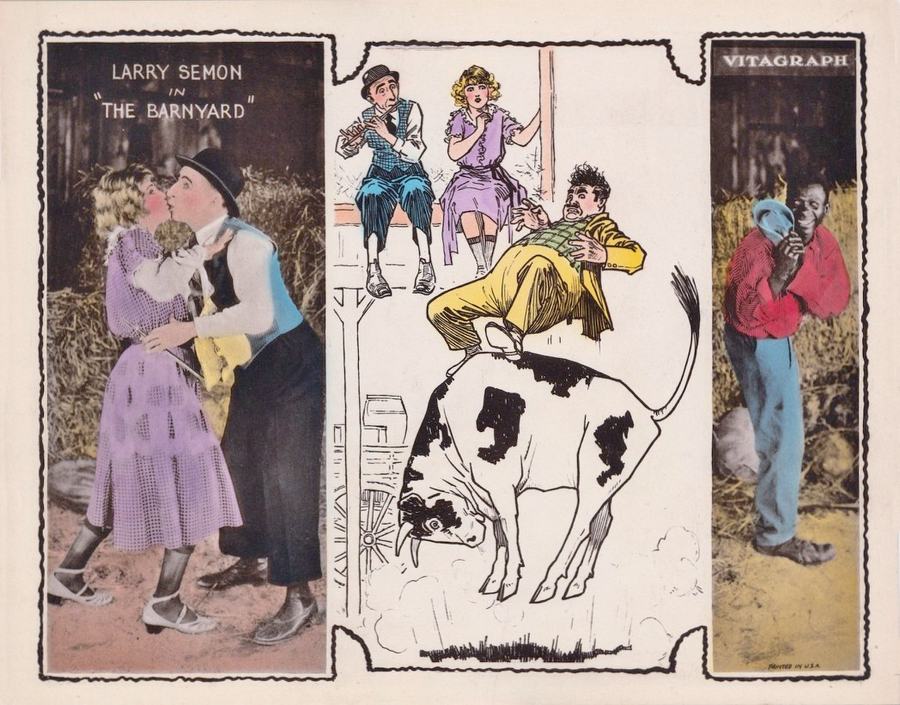
Stepping back into the silent era is always a fascinating journey, a chance to witness the foundational artistry that shaped cinema as we know it. Among the myriad talents of that nascent period, Larry Semon stands out as a prolific comedian, director, and writer whose distinctive brand of physical comedy, often bordering on the absurd, carved a unique niche. His 1923 offering, 'The Barnyard', is a quintessential example of his craft, a rollicking tale that perfectly encapsulates the blend of slapstick, ingenuity, and earnest storytelling characteristic of its time. It’s a film that, despite its age, still resonates with an infectious energy, proving that true comedic timing and engaging narrative transcend the limitations of spoken dialogue.
At its heart, 'The Barnyard' presents a classic struggle: the innocent, salt-of-the-earth farmer pitted against the predatory forces of modern capitalism. The plot, deceptively simple, is a robust framework for Semon's comedic genius. We are introduced to a tranquil farm, a picture of rural idyll, which suddenly becomes the unwitting target of two unscrupulous land sharks, U. Holdim and I. Robim. Their villainous intentions are spurred by a rather lucrative discovery: oil beneath the seemingly humble acreage. This revelation transforms the pastoral setting into a battleground for wealth and survival, an all-too-common theme in early 20th-century narratives, reflecting the rapidly changing economic landscape of America.
Enter Lay Zee, portrayed with impeccable comedic timing by Larry Semon himself. Lay Zee is the farm hand, a character whose name ironically belies his true nature. Initially appearing somewhat lackadaisical, his underlying resourcefulness and courage are ignited by two powerful motivators: loyalty to the farmer and, more charmingly, an undeniable affection for the farmer's daughter, played by the delightful Kathleen Myers. This romantic subplot adds a layer of tender motivation to Lay Zee's increasingly frantic antics, elevating his fight from mere duty to a quest for love and justice. It’s a trope that Semon, as a writer, understood well, and one that consistently endeared his characters to contemporary audiences.
The film then erupts into a series of escalating confrontations, as Lay Zee employs every trick in the book – and invents a few new ones – to outwit the nefarious duo. From elaborate contraptions to cleverly orchestrated chaos, Semon’s character is a whirlwind of inventive solutions and physical comedy. The narrative arc, while predictable in its ultimate resolution, is nonetheless thrilling in its execution, a testament to Semon’s masterful control over comedic pacing and stunt work. The stakes feel genuinely high, despite the inherent humor of the situations, making the audience genuinely root for Lay Zee's success.
The strength of 'The Barnyard' is undoubtedly bolstered by its ensemble cast, a collection of seasoned silent film performers who understood the nuances of non-verbal storytelling. Larry Semon, as Lay Zee, is the undeniable linchpin. His performance is a tour de force of physical comedy, a blend of rubber-limbed agility and expressive facial contortions. Semon’s comedic persona often involved a character who was perpetually in over his head but managed to triumph through sheer, often accidental, brilliance. Here, he masterfully balances the character’s initial clumsiness with his ultimate heroism, making Lay Zee a relatable and lovable figure.
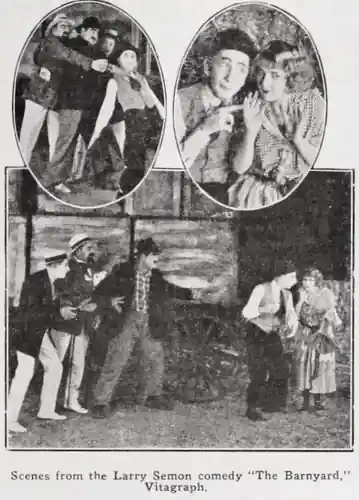
The villains, U. Holdim and I. Robim, are archetypal silent film antagonists, portrayed with theatrical menace and a touch of buffoonery. While specific actors for these roles aren't always explicitly credited in all records, the effectiveness of their portrayal is crucial to the film's comedic dynamic. Their exaggerated expressions of greed and frustration provide the perfect foil for Semon's more nimble and clever hero. The dynamic between the bumbling villains and the quick-witted protagonist is a time-honored comedic formula, and 'The Barnyard' executes it with panache.
A notable inclusion in the cast is a young Oliver Hardy. While not yet the iconic 'Stan and Ollie' Hardy we would come to know, his presence here is a fascinating glimpse into his early career. Hardy often played supporting roles in Semon's comedies, typically as a heavy or a comedic foil, showcasing his burgeoning talent for physical presence and understated reactions. Even in these formative appearances, one can detect the seeds of the persona that would later make him a global phenomenon. His capacity for conveying exasperation and a certain dignified clumsiness was already evident, adding another layer of comedic texture to the film's chaotic proceedings. Other cast members like Frank Hayes, Fred DeSilva, Curtis 'Snowball' McHenry, William Hauber, Al Thompson, and Joe Rock contribute to the rich tapestry of supporting characters, each playing their part in the unfolding comedic drama, from exasperated farmers to bumbling henchmen.
As the sole credited writer, Larry Semon's imprint on 'The Barnyard' is indelible. His approach to comedy was characterized by elaborate gags, often involving complex contraptions and a high degree of physical risk. Unlike the more subtle humor of Chaplin or the stone-faced resilience of Keaton, Semon's style was more overtly chaotic, a whirlwind of explosions, chases, and near-misses. He was a master of the 'build-up' gag, where a seemingly innocuous situation would spiral into an epic catastrophe, only to be resolved by Lay Zee's improbable heroism.
Semon's writing for 'The Barnyard' demonstrates his keen understanding of visual storytelling. Without dialogue, every action, every prop, and every reaction had to convey meaning and humor. The discovery of oil, for instance, isn't just stated; it's shown through dramatic gusher effects and the villains' avaricious glee. Lay Zee's ingenuity is manifested through his inventive solutions, often involving Rube Goldberg-esque mechanisms that add to the visual spectacle. This film, much like his other works such as His Dizzy Day or When You Hit, Hit Hard, showcases Semon's penchant for integrating elaborate set pieces and prop-based comedy into his narratives, making the environment itself a character in the comedic chaos.
His ability to craft a cohesive narrative around such frenetic energy is a testament to his talent. The plot, though serving primarily as a vehicle for gags, never feels entirely secondary. There's a genuine emotional core – Lay Zee's love for the farmer's daughter and his desire to protect the farm – that anchors the more outlandish moments. Semon understood that even the most outrageous comedy needs a relatable human element to truly resonate with an audience.
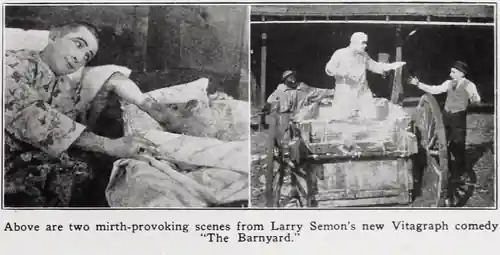
From a technical perspective, 'The Barnyard' is a remarkable example of early cinema's capabilities. The cinematography, while perhaps not groundbreaking by today's standards, is effective in capturing the fast-paced action and the intricate details of Semon's gags. The use of intertitles is judicious, providing just enough context without interrupting the flow of visual comedy. The editing is sharp, maintaining a brisk pace that keeps the audience engaged, a crucial element for silent comedies that relied on sustained visual momentum.
The physical stunts are particularly impressive, often involving falls, chases, and interaction with animals, all performed with a daring that would make modern stunt coordinators blanch. Semon was known for doing many of his own stunts, adding an authentic, albeit dangerous, edge to his performances. The set design, particularly the titular barnyard, is utilized to its full comedic potential, with every nook and cranny, every piece of farm equipment, becoming a potential prop for a gag or a hiding place in a chase. The film skillfully employs deep focus shots to capture multiple layers of action, ensuring that no comedic detail is lost to the viewer.
The film also subtly reflects the cultural anxieties of its time. The discovery of oil and the subsequent scramble for land speak to the rapid industrialization and urbanization that was sweeping across America. The conflict between the traditional, agrarian way of life and the relentless pursuit of profit is a recurring undercurrent, providing a slightly more serious thematic layer beneath the layers of comedic chaos. This subtle social commentary, delivered through the accessible medium of slapstick, allowed audiences to engage with contemporary issues in an entertaining manner.
While Larry Semon’s star may not shine as brightly in contemporary memory as some of his silent film contemporaries, films like 'The Barnyard' serve as vital reminders of his significant contributions to early cinema. His influence on subsequent generations of comedians and filmmakers is undeniable, particularly in the realm of physical comedy and elaborate sight gags. The sheer inventiveness of his scenarios and the relentless energy of his performances set a high bar for comedic storytelling.
Watching 'The Barnyard' today is more than just an academic exercise; it's genuinely entertaining. The film's humor holds up, a testament to the timeless appeal of well-executed slapstick. The underlying themes of fighting for what's right, protecting one's home, and the power of love remain universally relatable. It’s a joyous romp that transports viewers to a bygone era, allowing them to experience the unadulterated pleasure of early cinematic comedy. For anyone interested in the evolution of film, the history of comedy, or simply in need of a good laugh, 'The Barnyard' is an essential viewing experience, a vibrant piece of cinematic heritage that continues to charm and amuse.
It showcases a foundational period where visual storytelling was paramount, where expressions, movements, and meticulously choreographed chaos spoke volumes. The film is a vibrant testament to the ingenuity of its creators and a delightful reminder of the enduring power of laughter. So, grab some popcorn, settle in, and let Larry Semon's 'The Barnyard' transport you to a world where oil discoveries lead to uproarious battles, and the humble farmhand emerges as an unlikely, yet thoroughly charming, hero.
IMDb 6.2
1935
Community
Log in to comment.