DbcultAccessing Vault...
Cult Review
Senior Film Conservator
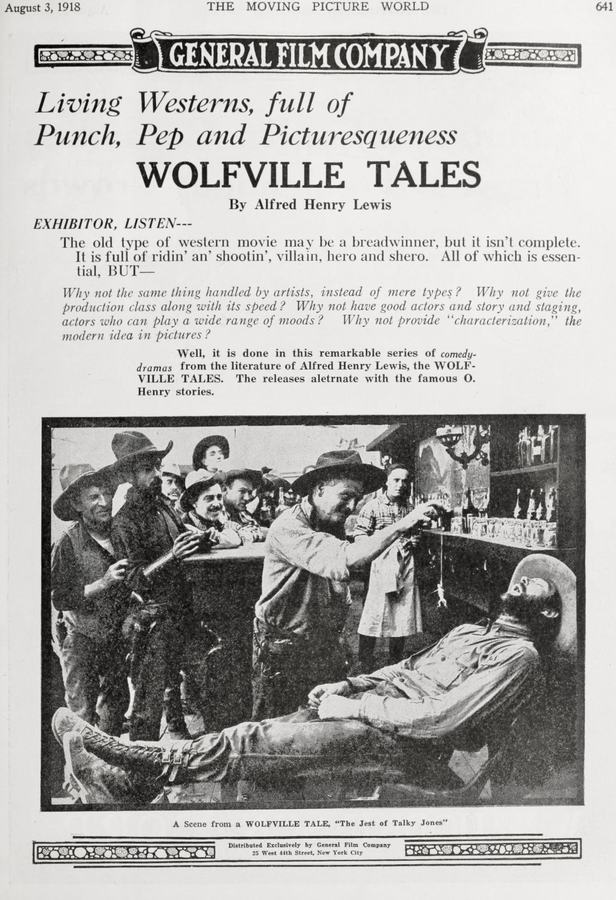
Stepping into the cinematic landscape of "The Jest of Talky Jones" is akin to unearthing a forgotten time capsule, a relic from an era where storytelling was both nascent and profoundly impactful, relying solely on visual poetry and the expressive power of human emotion. Written by the prolific Alfred Henry Lewis, whose literary prowess often delved into the rugged individualism and moral complexities of the American West, this film, though perhaps overshadowed by more widely canonized works, offers a fascinating glimpse into the nascent narrative techniques of early cinema. It’s a compelling exploration of character, consequence, and the often-unforeseen ripples of human interaction, all delivered through the distinctive lens of silent film artistry. The very title suggests a narrative steeped in wit and potential mischief, promising a protagonist whose words, whether for good or ill, drive the unfolding drama.
The film, with its intriguing premise, invites a deeper contemplation of how early filmmakers grappled with complex themes without the benefit of spoken dialogue. Here, the burden of conveying nuance falls heavily upon the actors – Hal Wilson, Hattie Buskirk, William Berke, Carol Holloway, Bob Burns, and Charles Force – whose performances become a masterclass in physical theatre and exaggerated, yet deeply felt, expressions. Their ability to communicate intricate emotional states and plot points through gesture, posture, and facial contortion is nothing short of remarkable. Wilson, as the titular Talky Jones, must embody a character whose verbose nature is central to the plot, yet communicate this very verbosity through his actions, his restless energy, and the reactions of those around him. It’s a delicate balance, requiring an actor to project a quality that, in essence, cannot be directly shown in a silent medium, demanding a performance that is both subtle and overtly dramatic.
One of the immediate fascinations of "The Jest of Talky Jones" lies in its clever deconstruction of the power of language, even when that language is implied rather than heard. The film posits that words, even those intended as mere jests, possess an inherent gravity capable of altering destinies. This thematic core resonates deeply, touching upon universal truths about communication and miscommunication. In a world increasingly reliant on digital interactions, where context is often lost and intent easily misconstrued, the film’s central conflict – born from a playful exaggeration that spirals into serious consequences – feels remarkably prescient. It reminds us that the stories we tell, the narratives we craft, whether truthful or embellished, carry significant weight, shaping perceptions and driving actions in ways we might never anticipate.
Alfred Henry Lewis’s narrative craftsmanship, even in this cinematic adaptation, is evident in the intricate dance of cause and effect. The plot, as it unfolds, reveals a sophisticated understanding of human psychology, particularly the interplay between ambition, naivete, and the ripple effects of a single utterance. Unlike simpler morality tales, "The Jest of Talky Jones" eschews simplistic binaries of good and evil, instead presenting a more nuanced world where even well-intentioned actions can lead to chaos. This complexity is a hallmark of Lewis’s literary work, which often explored the ambiguities of frontier justice and the flawed heroism of its inhabitants. His ability to translate these intricate moral landscapes into a visual medium, even through the interpretive lens of a director, speaks volumes about the strength of his original concept.
The visual storytelling in "The Jest of Talky Jones", while perhaps less grand in scale than some of its contemporary epics, is nonetheless effective. The use of intertitles, a necessity of the silent era, is judicious, providing just enough exposition to guide the audience without overwhelming the visual narrative. The cinematography, though limited by the technology of its time, likely employs a combination of wide shots to establish the setting – the quintessential Western town, dusty and full of characters – and closer shots to emphasize the emotional turmoil etched on the actors’ faces. The pacing, a crucial element in silent film, would have been carefully orchestrated, building tension through slow reveals and quick cuts, culminating in a dramatic resolution that feels both earned and impactful. This careful construction allows the audience to immerse themselves fully in the unfolding drama, piecing together the narrative threads through visual cues and the compelling performances.
Considering the ensemble, Hattie Buskirk, likely playing the object of Talky Jones’s affection or the unwitting catalyst for his predicament, would have brought a certain gravitas or innocence to her role. Her portrayal would need to convey both vulnerability and strength, reacting to Jones’s flamboyant personality and the subsequent chaos with a nuanced blend of alarm and eventual understanding. William Berke, in a role that often demanded a more villainous or antagonistic presence in early Westerns, would likely have personified the greed and opportunism that drives the plot, his expressions and gestures conveying the stark contrast to Jones’s more playful, if misguided, nature. The supporting cast, including Carol Holloway, Bob Burns, and Charles Force, would have contributed to the rich tapestry of the frontier town, each character playing a vital part in the escalating drama, their reactions to the central conflict providing crucial context and emotional resonance.
The film’s thematic exploration of truth versus fabrication echoes in other works of the era, though perhaps with different narrative approaches. One might draw a parallel to The Marriage Lie, where deception, though born from different motives, similarly unravels relationships and exposes underlying truths. While "The Jest of Talky Jones" deals with a more public, community-wide misunderstanding, the personal fallout for its characters, particularly Jones, resonates with the intimate betrayals depicted in films centered on domestic deceptions. The consequence of a spoken (or implied) word, whether a jest or a deliberate falsehood, remains a powerful narrative engine across various genres.
Furthermore, the film’s setting within a frontier community naturally invites comparison to other Westerns of the period, such as Frank Gardiner, the King of the Road, which, despite its Australian setting, shares a common thread of lawlessness and the struggle for order in a developing society. However, "The Jest of Talky Jones" differentiates itself by focusing less on overt banditry and more on the internal dynamics and moral fabric of the community itself. The 'jest' acts as a catalyst for internal conflict rather than an external threat, shifting the focus from physical confrontation to psychological and social drama. This makes the film a more introspective Western, examining the character of the community as much as the characters within it.
The narrative arc, centered around Talky Jones’s journey from a careless wordsmith to a responsible individual grappling with the repercussions of his actions, offers a powerful character study. It’s a journey of self-discovery, forcing him to move beyond mere entertainment to genuine communication and accountability. This transformation is crucial for the film’s emotional impact, turning what could be a lighthearted comedy of errors into a more profound tale of redemption. The resolution, one can surmise, would not merely involve correcting the misunderstanding but also Jones earning back the trust and respect of his community, particularly Elara Vance. This personal growth elevates the film beyond simple plot mechanics, imbuing it with lasting resonance.
The aesthetic choices in "The Jest of Talky Jones", even without explicit details, can be inferred to align with the visual language of early silent films. Costuming would have been vital in defining character, from Jones’s potentially flamboyant attire to the more practical garb of the ranchers and the refined dress of the schoolmarm. Set design, though perhaps minimalist, would have effectively conveyed the ruggedness of the frontier, with wooden buildings, dusty streets, and expansive landscapes serving as a backdrop to the human drama. Lighting, a burgeoning art form in early cinema, would have been used to create mood and emphasize key moments, perhaps casting dramatic shadows during moments of tension or bathing scenes in soft light to convey romance or tranquility. These elements, combined, would have created a rich visual tapestry that compensated for the absence of sound.
In an era where films like Less Than the Dust explored themes of social class and romantic yearning, or The Shadow of Her Past delved into secrets and their lingering effects, "The Jest of Talky Jones" carved out its own niche by blending frontier adventure with a distinctly character-driven moral dilemma. It’s a testament to Lewis’s vision and the filmmakers’ execution that such a nuanced story could be told with such clarity and impact using the limited tools available. The film likely served as both entertainment and a subtle cautionary tale, wrapped in the familiar and beloved genre of the Western, making its message accessible and memorable to audiences of its time.
The film’s enduring relevance, even today, lies in its timeless exploration of human nature. The propensity for exaggeration, the dangers of unverified information, and the societal impact of individual actions are themes that transcend any specific historical period or technological limitation. While we no longer rely on intertitles and exaggerated gestures to convey plot, the core message about responsible communication remains profoundly pertinent. "The Jest of Talky Jones", therefore, isn’t just a historical artifact; it’s a living testament to the foundational principles of storytelling and human interaction, reminding us that words, whether spoken or implied, carry immense power to build or to destroy.
The performances of the cast members, particularly Hal Wilson as Talky Jones, would have been pivotal in anchoring this complex narrative. Wilson would have needed to infuse Jones with a charm that makes his initial jests endearing, even as his later actions cause distress. The audience must empathize with him, understanding that his intentions, though misguided, are not malicious. This requires a delicate balance of comedic timing and dramatic sincerity. Hattie Buskirk's portrayal of Elara Vance would have to convey intelligence and a moral compass, serving as both a romantic interest and a moral touchstone for Jones. Her reactions would guide the audience's understanding of the severity of the situation. William Berke, likely embodying the antagonist, would have needed to project a palpable sense of menace or cunning, providing the necessary dramatic foil to Jones's more affable, if careless, demeanor. The interplay between these central figures would have been the emotional heartbeat of the film, driving its dramatic momentum.
The genius of Alfred Henry Lewis’s writing, even in this adapted form, is his ability to create characters who, despite their archetypal roles, feel authentically human. Talky Jones is not merely a caricature of a verbose individual; he is a man whose defining trait leads him into a moral quagmire. This depth allows the audience to connect with his struggles and root for his eventual redemption. The conflict he faces is not externalized in a straightforward villainous threat, but rather in the very fabric of his being and the consequences of his own personality. This internal conflict, projected outwards onto the community, makes for a far richer and more engaging narrative than a simple good-versus-evil confrontation. It elevates the film from a simple Western yarn to a thoughtful examination of human foibles and societal dynamics.
Furthermore, the depiction of the frontier community itself is crucial. It is not merely a backdrop but an active participant in the drama. The townspeople, influenced by rumor and suspicion, become a collective force that Jones must contend with. This aspect of the narrative could be compared to films like Envy, where community perception and the spread of gossip play a destructive role, albeit in a different social context. In "The Jest of Talky Jones", the community's reaction to the 'jest' underscores the fragility of trust and the speed with which misinformation can take root, transforming a playful tale into a serious threat to social cohesion. The film, therefore, also serves as a subtle critique of mob mentality and the dangers of uncritical acceptance of information, a theme that remains startlingly relevant.
The film’s resolution, while likely providing a satisfying conclusion to the immediate conflict, would ideally leave the audience with a lingering contemplation of the power of words and the importance of integrity. Talky Jones, having learned his lesson, would presumably emerge a wiser, more circumspect individual, his natural charisma now tempered with a newfound sense of responsibility. This arc of transformation is a classic narrative device, but in the hands of Lewis and the silent film medium, it gains a particular poignancy. The visual representation of Jones’s earnest efforts to undo the damage, to clarify the truth through actions rather than more words, would be a powerful cinematic moment, showcasing the triumph of sincerity over superficiality. The final scenes, perhaps a quiet understanding between Jones and Vance, or a communal sigh of relief, would solidify the film’s message: that true connection is built on honesty, not elaborate fictions.
The enduring appeal of films like "The Jest of Talky Jones" lies not just in their historical significance, but in their ability to transcend the limitations of their era and speak to universal human experiences. They remind us of the fundamental elements of storytelling: compelling characters, engaging conflicts, and meaningful resolutions. The film, despite its age and the constraints of silent cinema, offers a rich narrative tapestry, woven with threads of humor, drama, and profound moral insight. It stands as a testament to the power of a well-crafted story and the indelible impact of human expression, even when delivered without a single spoken word. It’s a compelling piece of early American cinema that deserves renewed appreciation for its narrative sophistication and its timeless message.
To truly appreciate "The Jest of Talky Jones", one must approach it not as a quaint relic, but as a vibrant piece of art that laid groundwork for cinematic narrative. It’s an exercise in understanding how meaning is constructed through visual cues, emotional performances, and the strategic deployment of intertitles. The film challenges modern viewers to engage with storytelling in a different way, to actively interpret and connect with the nuances of gesture and expression. In doing so, it offers a unique and rewarding viewing experience, bridging the gap between historical cinema and contemporary appreciation for complex character arcs and resonant thematic explorations. It's a journey into the heart of early Western drama, infused with a unique blend of humor and heartfelt sincerity, a truly remarkable artifact from a pivotal period in film history. The film's legacy, though perhaps understated, is a vital component of understanding the evolution of cinematic narrative and the enduring power of a well-told tale, regardless of its technological medium.
IMDb 4.9
1927
Community
Log in to comment.