DbcultAccessing Vault...
Cult Review
Senior Film Conservator
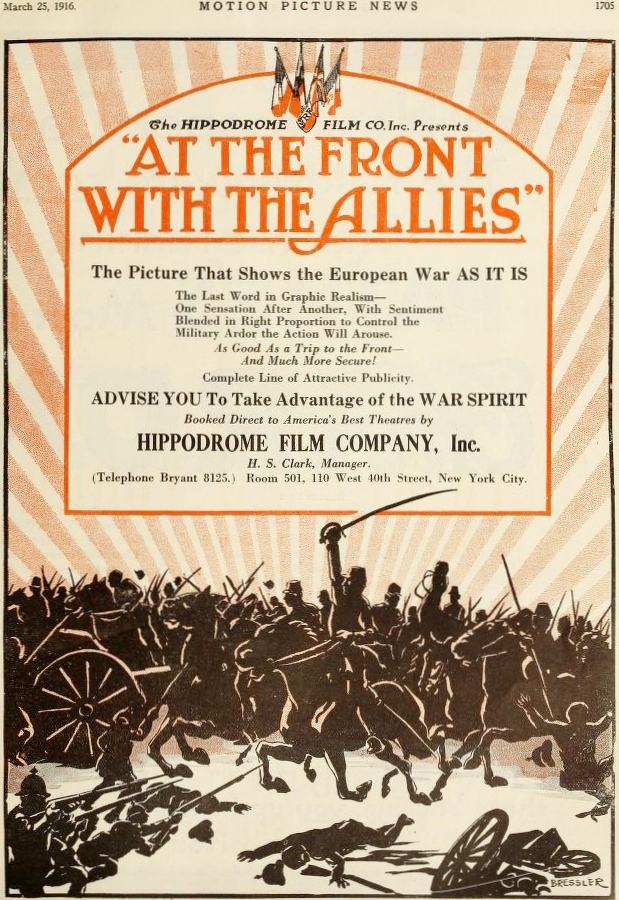
Stepping into the cinematic landscape of early 20th-century filmmaking, one occasionally unearths a gem that transcends its temporal constraints, speaking volumes across generations. At the Front with the Allies stands as one such monumental achievement, a harrowing yet deeply human document forged in the crucible of the Great War. It's not merely a film; it's a visceral expedition into the heart of a conflict that reshaped the world, captured through the intrepid lens of a fictionalized British war correspondent, Alistair Finch. This isn't the romanticized heroism often peddled in later war epics, nor is it a dry historical lecture. Instead, it's a raw, unvarnished mosaic of suffering, resilience, and the fragile bonds forged under unimaginable duress.
The sheer ambition of Edgar Vance and Eleanor Croft, credited as the film's conceptualizers, is evident from the opening frames. They dared to bring the unimaginable home, eschewing the theatrical stages for the very real, very dangerous battlefields of the Western Front. Finch, portrayed with an understated gravitas, serves as our surrogate, his camera a silent witness to both the grand, terrifying sweep of trench warfare and the intimate, often heartbreaking, moments that define individual survival. We are not merely told of the war; we are immersed in its sensory assault, from the perpetual mud and the omnipresent threat of artillery to the fleeting glimpses of solace found in a shared cigarette or a moment of quiet reflection.
What truly distinguishes At the Front with the Allies is its pioneering approach to documentary-style narrative. While other films of the era might have leaned into dramatic reenactments or patriotic propaganda, this picture endeavors to capture authenticity. The faces of the soldiers – British Tommies, French Poilus like the stoic Cpl. Jean-Pierre Dubois, and Canadian volunteers exemplified by the earnest Pvt. Samuel "Sam" Miller – are not actors. They are men living, breathing, and enduring, their expressions telling stories far more profound than any scripted dialogue could convey. The camera lingers on their weary eyes, their dirt-caked uniforms, the way they huddle together for warmth or share a grim joke, revealing the universal human spirit striving to maintain its dignity amidst chaos. This approach, while perhaps not as polished as a modern production, imbues the film with an almost sacred honesty, a direct line to the past that few other works can claim.
The visual storytelling is remarkably sophisticated for its time. Cinematographer Finch (or rather, the uncredited cameramen behind the scenes) employs a keen eye for composition, juxtaposing the vast, desolate landscapes scarred by war with the claustrophobic confines of the trenches. There's a particularly haunting sequence depicting a charge across 'No Man's Land,' not as a glorious act of heroism, but as a desperate, terrifying dash against an invisible enemy, punctuated by plumes of earth and falling figures. The sheer scale of the destruction is conveyed through wide shots of ruined villages and artillery-blasted forests, painting a stark picture of environmental devastation that mirrors the human cost. Conversely, close-ups capture the minute details: the trembling hands of a soldier writing home, the shared glance between comrades, the meticulous work of Dr. Evelyn Reed in a makeshift field hospital, her face a mask of grim determination. These shifts in perspective provide a comprehensive view, allowing the audience to grasp both the enormity of the conflict and its deeply personal impact.
The film’s emotional resonance is palpable, stemming from its unwavering commitment to depicting the full spectrum of wartime experience. It doesn't shy away from the horrific – the grim aftermath of a gas attack, the somber procession of stretcher-bearers, the silent despair of men awaiting orders. Yet, it also illuminates moments of profound humanity: the impromptu singalongs that momentarily lift spirits, the shared meals that become sacred rituals of connection, the quiet acts of kindness between strangers. Sgt. Major Thomas "Mac" MacGregor, a formidable but compassionate figure, embodies the stoic leadership and paternal care that often emerged in such dire circumstances. His interactions with younger soldiers provide a grounding element, a reminder that even in the most dehumanizing environment, leadership and empathy can flourish. The film's genius lies in its ability to evoke profound empathy without resorting to overt sentimentality, allowing the stark reality to speak for itself.
Comparing it to more narrative-driven historical dramas, the distinction is stark. Where a film like Pyotr Velikiy might explore the grand machinations of statecraft and the lives of historical figures, At the Front with the Allies focuses on the anonymous masses, the cogs in the vast war machine. It’s less concerned with individual heroism in the vein of swashbuckling tales like The Three Musketeers or The Pride of Jennico, and more with the collective endurance of ordinary men facing extraordinary circumstances. The heroism here is not in single combat or daring rescues, but in the daily act of waking up, facing the terror, and continuing to function as a unit. This is a subtle, yet far more impactful, form of bravery.
Technically, the film is a marvel of early cinema, especially considering the logistical nightmares of filming in a war zone. The use of natural light, even in the dim confines of dugouts, lends an authenticity that studio sets could never replicate. The editing, while rudimentary by modern standards, effectively builds tension during combat sequences and creates a rhythm that mirrors the ebb and flow of trench life. There’s a particular sequence where rapid cuts between a soldier’s anxious face and the distant flashes of artillery create a powerful sense of impending doom. The film’s raw, unfiltered quality, often attributed to the challenges of its production, paradoxically enhances its artistic merit, making it feel less like a polished production and more like a stolen glimpse into history.
The film also serves as an invaluable historical artifact, capturing aspects of daily life at the front that might otherwise be lost to time. We see the ingenious ways soldiers adapted to their environment, the makeshift shelters, the crude but effective tools, the constant battle against mud and disease. The segments depicting the logistical challenges – the transport of supplies, the care of the wounded, the sheer organizational effort required to sustain millions of men – offer a fascinating glimpse into the less glamorous but equally vital aspects of warfare. It's an immersive experience that transports the viewer not just to a different time, but to a different reality, one that demands contemplation and respect.
While the film lacks a traditional antagonist in the vein of a villain from The Coiners' Game or Mister 44, the true adversary is war itself – its indiscriminate cruelty, its relentless attrition. The film doesn't glorify combat; it lays bare its devastating cost. There are no clear heroes or villains in the conventional sense, only human beings caught in an overwhelming maelstrom. This nuanced perspective, particularly for a film of its era, is remarkably progressive, eschewing jingoism for a more profound, universal message about the futility and tragedy of armed conflict. It resonates with the quiet despair found in some of the more introspective dramas of the period, albeit on a far grander, more terrifying canvas.
The legacy of At the Front with the Allies is multifaceted. It paved the way for future war documentaries, demonstrating the power of authentic, on-location footage. It challenged audiences to confront the grim realities of modern warfare, fostering a deeper understanding of the sacrifices made by an entire generation. It serves as a stark counterpoint to the more romanticized or adventure-driven narratives of its time, similar to how The Chechako might have presented a grittier view of frontier life compared to more idealized westerns. The film’s enduring power lies in its capacity to provoke thought, to stir empathy, and to remind us of the human element at the heart of even the largest historical events. It’s a testament to the courage of those who filmed it and the resilience of those who lived it.
One could even draw parallels between the film's unflinching gaze and the societal critiques subtly embedded in dramas like Camille or Should a Mother Tell, which explored the harsh realities beneath polished surfaces. Here, the polished surface is patriotism, and the reality is the mud, the blood, and the camaraderie born of shared terror. The film's conclusion, a powerful montage of faces and landscapes, does not offer facile answers or triumphant pronouncements. Instead, it leaves the viewer with a lingering sense of the immense cost of conflict, a quiet elegy to the millions whose lives were irrevocably altered. It's a profound cinematic experience that continues to resonate, urging us to remember, to understand, and perhaps, to learn from the echoes of a distant, devastating war. Its significance cannot be overstated, not just as a historical record, but as a powerful piece of cinematic art that dared to confront the truth of its time with unflinching honesty. The sheer audacity of its creation, coupled with its profound impact, firmly cements its place as an essential viewing for anyone seeking to comprehend the human spirit's capacity for both destruction and enduring hope, even when confronted by the most brutal of circumstances. It's a film that doesn't just show you history; it makes you feel it, deep in your bones, long after the final frames have faded to black.
IMDb 5.4
1927
Community
Log in to comment.