DbcultAccessing Vault...
Cult Review
Senior Film Conservator
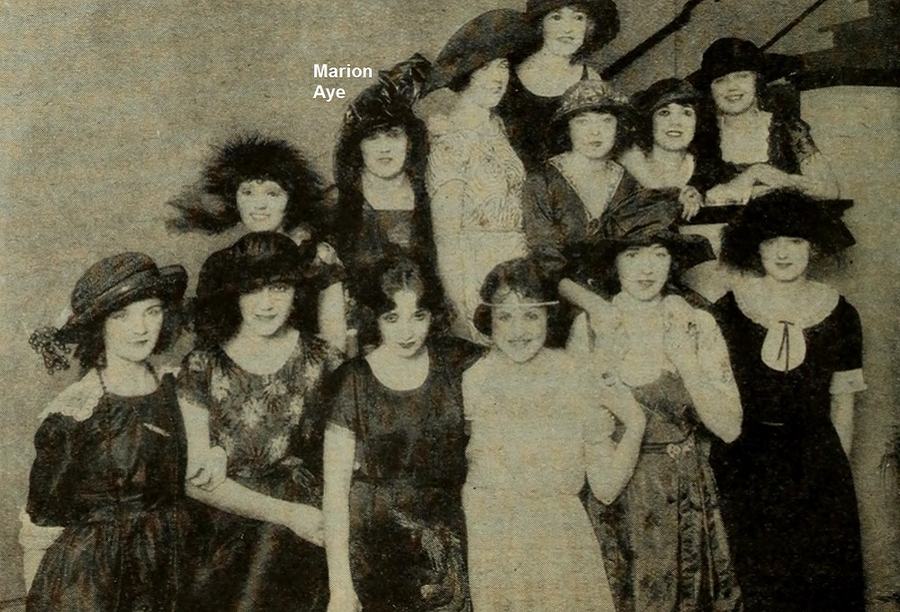
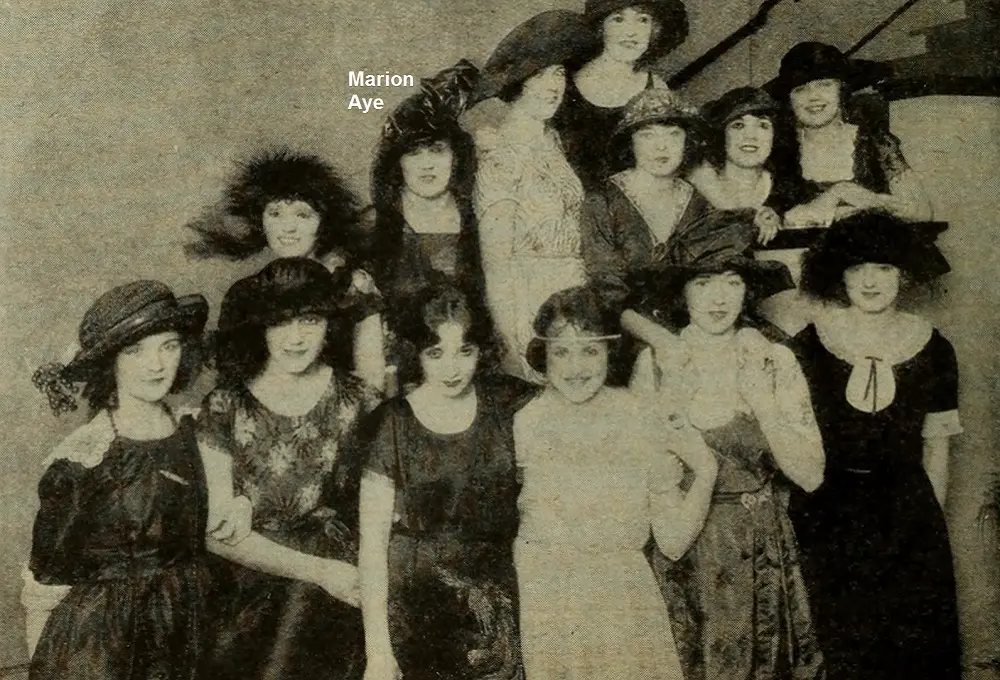
Forget the starlet origin myths peddled by fan-mags; the WAMPAS campaign was a boardroom fever dream cooked up by admen who had sold Liberty Bonds and now needed fresh bodies to personify the screen’s newfound erotic capital. In the winter of 1921, trade-paper editors were handed a velvet-gloved press release promising “thirteen unclaimed diamonds,” a phrase calibrated to make every exhibitor in the boondocks imagine himself a prospector. The ballot, ostensibly democratic, was rigged with the elegance of a Tammany backroom: each candidate’s studio quietly purchased block subscriptions to Motion Picture Magazine to stuff the vote, while gossip columnists were plied with bootleg gin and pre-written adjectives—luminous, gossamer, ineffable—that read like perfume copy.
When the winners were announced on December 15, 1922, the same newsreel crews that once hawked biblical epics now sold audiences the secular spectacle of innocence measured, priced, and gift-wrapped. The victory lunch at the Ambassador Hotel was a catwalk of strategic seating charts: Lois Wilson perched beside the Western Union magnate who controlled theater telegrams, while Colleen Moore’s left flank was guarded by a slapstick director notorious for turning ingénues into custard pies. Every flash powder pop inscribed their profiles onto the collective retina before censorship boards could convene.
Paramount billed her as “the girl whose eyes have seen the world,” a tagline that almost apologized for the fact that she had barely turned seventeen. Yet watch her surviving rushes—The Timber Queen outtakes recently restored by MoMA—and you witness a methodology: she enters frame left already thinking three shots ahead, calculating when to let the tear duct glint so the close-up can be spliced into a different narrative entirely. In person she spoke fluent Brooklyn sarcasm, chain-smoked through a mother-of-pearl holder, and kept a signed photograph of the villain she once pushed off a submarine conning tower. Fame aged her in dog years; by nineteen she was playing mothers to men older than herself, a cruelty the studio camouflaged with feather boas and Vaseline on the lens.
Orphaned and convent-raised, Miller understood that the only rosary worth reciting was the one typed onto a seven-year option. She traded on dimples until they became currency, then leveraged her sudden ubiquity—four films released in one month—to demand script approval. The clause she fought for, paragraph 14-C, became the butterfly wing that would hurricane through later star contracts: a moral turpidity escape hatch allowing the actress to bolt if publicity stunts compromised her “public deity.” When the studio balked, she simply arrived at the set of a red-velvet melodrama wearing her own nun’s habit, forcing the director to choose between ecclesiastical blasphemy and a shutdown that cost ten grand an hour. They caved; she grinned; the habit was bronzed and hung in her Brentwood guest bathroom.
Critics still argue whether Logan’s trademark freeze-frame stare—eyes wide, breath held until the film itself seems to blush—was learned on the London stage or cribbed from the taxidermied predators she once dusted in her uncle’s curiosity shop. Either way, it weaponized the close-up. In Fashion Row, a lost picture that survives only in a 45-second trailer, she stands before a chaîne-knit dress form, the camera trucking in until her iris fills the frame like a solar eclipse. The shot lasts twelve seconds, an eternity in 1922 grammar, and you can practically hear the audience leaning forward, forgetting to breathe. Off set she studied engineering manuals, convinced that if she understood the tensile strength of piano wire she could keep her spine from snapping during aerial stunts. Three years later she would direct White Gold, one of the first woman-helmed westerns, proving that her gaze could not only seduce but command.
While colleagues chased jazz babies and gin rickeys, Wilson carried a slide rule in her purse, calculating how many fan letters translated into exhibitor bookings. Her performances feel calibrated to a moral arithmetic: every smile must earn its redemption arc, every tear must amortize the cost of the print. Studio publicists tried to market her as “America’s Presbyterian Sweetheart,” a tag she loathed; she countered by leaking stories of her father’s abolitionist grandmother, recasting herself as the heir to righteous lineage rather than pulpit prudery. The gambit worked: exhibitors in the Bible Belt booked her films as Sunday-school rewards, inflating her Q-score enough that she could demand profit-sharing on a trust-fund weepie set in a tuberculosis sanatorium. The ledgers survive in the Academy archives—penciled marginalia where she subtracted gowns from her salary and added hymn lyrics she intended to quote in talkie testimonials.
She did not merely bob her hair; she franchised it. Dollhouses, sheet music, a line of signature hosiery—every bobbed curl a filament in an empire of self-commodification. When she appeared at the Ambassador lunch sporting a Dutch-boy cut studded with sequins shaped like film reels, newspaper cartoonists had a month’s worth of material. More revolutionary was her grasp of audience segmentation: she sent autographed photos to sororities in Greek, to Harlem Renaissance salons in sepia tint, to MidwesternRotary clubs with a Bible verse on the verso. Each demographic received a Colleen calibrated to its fantasy, a marketing stratagem that would not reappear until Madonna’s Sex book seven decades later. Watch her in the surviving outtakes of Youthful Folly: every wink is A/B tested, every shrug a data point.
Her speaking voice, captured on a 1926 Vitaphone test, sounds like scotch poured over cracked ice—low, amused, already mourning the joke she’s about to tell. By then she had survived a studio-sponsored kidnapping hoax, a marriage annulled by the same lawyer who drafted her will, and a narcotics arrest that required the studio to invent a twin sister. The public adored her for the same reason they slow down at car wrecks: she offered the catharsis of witnessing consequence without paying the bill. In the only surviving still from The Siren of Seville, she lounges on a chaise upholstered in what looks suspiciously ermine, eyes half-lidded, mouth curved in the languid smirk of a woman who has read tomorrow’s headlines and found them wanting. Months later she would swallow a bottle of mercury bichloride, surviving only because her terrier barked until the landlord broke the door. The press called it “a publicity stunt gone wrong”; the dog went unnamed in every column.
Stunt wires left scars that never tanned; she wore them like medals. In The Temple of Venus she swung thirty feet above a papier-mâché temple, silk tunic fluttering, knees locked around a rope slimed with glycerin sweat. The shot required nineteen takes because the director insisted the arc of her body sketch a perfect catenary curve against the painted sky. Between takes she studied the continuity sheets of a marital farce filming next door, memorizing the timing of pratfalls so she could repurpose them into aerial pirouettes. When the picture wrapped she kept the harness, bronzed and mounted above her mantelpiece, a totem to the moment when flesh negotiated with physics and won—until the talkies arrived and physics demanded its rematch in the form of microphone cables.
Her freckles were not the adorable scatter of Photoplay clichés but a dense constellation, a galaxy that makeup artists tried to veil with rice powder until the klieg lights baked them into cinnamon specks. Audiences, conditioned to porcelain idols, did not know what to do with her until marketers coined the phrase “the girl who looks like you on your best day,” a sleight of hand that turned anomaly into aspiration. She responded by refusing to bleach her skin, leveraging her tan against the studio’s seasonal tanorexia until they relented and rebranded her as “the Outdoor Girl.” The pivot worked: sporting-goods stores paid her to endorse tennis rackets, and a military farce cast her as a tomboy doughgirl, allowing her to sprint across trenches without the usual fainting couch awaiting the heroine. Off set she collected first editions of transition poets, scribbling marginalia that compared studio contracts to trench warfare.
With cheekbones sharp enough to slice option clauses, Windsor was groomed as the next grande dame until focus groups revealed audiences preferred their aristocrats humbled. Overnight her roles shifted from duchesses to department-store clerks who merely looked like duchesses in dim light. She learned to die beautifully—consumption in one picture, drowning in another—her final close-ups lit like Renaissance madonnas to milk the pathos. In the Ambassador lunch footage she sits between two studio lawyers, a strategic placement that ensured any offhand remark could be instantly copyrighted. When her contract lapsed in 1927 she walked away without a murmur, leaving behind a steamer trunk of silk lounging pajamas and a note: “Queens do not negotiate; they abdicate.”
A trained ballerina, she could freeze her torso while her limbs articulated like a Calder mobile, a gift that made her the perfect foil for slapstick sadists. Directors timed pratfalls to her heartbeat, convinced the audience subconsciously synchronized. Off set she studied Newton’s Principia, sketching vectors on cocktail napkins to calculate how far a body could slide on banana peel mash. The joke, she claimed, was not the fall but the pause just before—an infinitesimal moment when equilibrium teetered and the viewer’s spinal cord mirrored the suspense. She called it “the comma between chaos and catharsis,” a phrase that wound up in a Motion Picture Classic profile illustrated with her silhouette balanced on a unicycle atop a revolving turntable.
Standing four-foot-eleven in her custom-made Size 2 Mary Janes, she had to stand on apple crates for two-shots with leading men six-foot-plus. Rather than accept the indignity, she negotiated a clause requiring all male co-stars to perform scenes seated or leaning against doorframes, effectively redistributing vertical power. Audiences adored the inversion: the giant humbled, the sprite elevated. When the Depression hit and studios culled contracts, she pivoted to vaudeville, selling out the Orpheum circuit with a one-woman revue that included ukulele solos and Shakespeare monologues delivered in pig-Latin. Critics compared her to a Polish gender-bending surrealist—a comparison she cherished enough to have it translated and mailed to Warsaw.
Before Lon Chaney ever clamped the mask to her face, Philbin had already perfected the art of suffering in close-up. She could dilate her pupils on cue, a trick she learned by staring into candle flames until the cornea dried. Directors exploited this talent, staging trials by ice, fire, and unrequited longing. In the surviving outtakes of Trifles, she weeps for three uninterrupted minutes while holding a dead canary, tears sliding off her chin in perfect parabolas that land on the bird’s breast like a funeral rite choreographed by Newton. When asked how she accessed such sorrow, she replied, “I imagine tomorrow’s headlines.” The line was too morbid for fan magazines; they substituted “I think of lost kittens.” She kept a scrapbook of the clippings, annotating the lies in red ink that bled through the paper like stigmata.
Within five years, half the Baby Stars were obsolete; within ten, some were dead, some retired, some reinvented as tough-talking character dames. Yet their marketing DNA persists in every Instagram breakout, every TikTok dance that catapults a teenager from anonymity to sponsored-content millionaire. The WAMPAS luncheon was the first influencer summit, the original convention where virality was reverse-engineered by cigar-chomping men who understood that fame was less a meteor than a munition. Scroll today through Gen-Z feeds and you will find the same calculus of exposure, the same Faustian bargains inked in disappearing Stories. The colors have shifted from sepia to CMYK, but the contract remains: give us your surface, we’ll return a reflection you barely recognize.
In a climate-controlled vault beneath the Academy’s Pickford Center lies a leather-bound scrapbook assembled by an anonymous secretary in 1923. Pages brittle as butterfly wings hold cigarette cards, dried gardenias, and a lock of Colleen Moore’s hair that still smells of violet water. The final entry is a telegraph dated 1932: “STOP PRESS BABY STARS REUNION CANCELLED DUE TO DEPRESSION STOP MARION AYE HOSPITALIZED STOP HAIR SLIDE MISSING STOP WHO HAS THE KEY TO THE VAULT STOP” The telegram trails off into ellipsis, as though even punctuation had grown weary of mythology. Researchers who open the book must wear nitrile gloves; the oils of human curiosity are the last solvent left to dissolve the relics. Yet late at night, security guards swear they hear the rustle of taffeta, the click of a test reel spinning in the dark, the faint echo of thirteen voices rehearsing their names in the cadence of a roll call that never quite ends.
IMDb —
1918
Community
Log in to comment.