DbcultAccessing Vault...
Cult Review
Senior Film Conservator
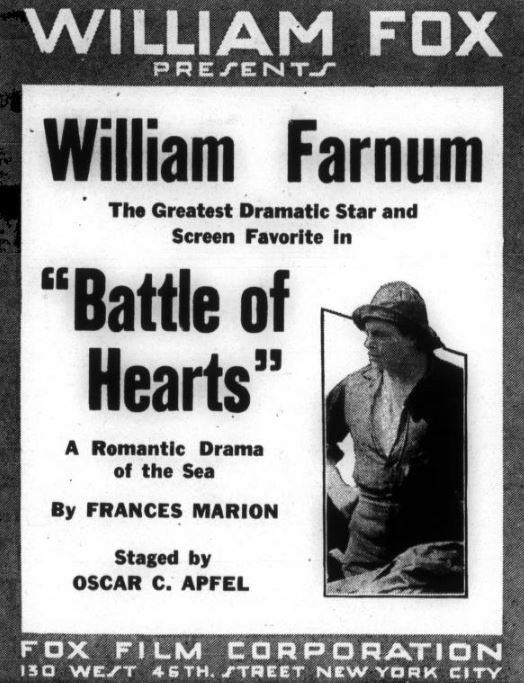
Ah, the silent era! A time when narratives were painted with broad strokes, yet often imbued with a subtlety that spoke volumes beyond spoken dialogue. Among the myriad cinematic offerings of its time, "The Battle of Hearts" emerges as a compelling, if somewhat melodramatic, exploration of human nature's more treacherous currents. Directed by Oscar Apfel and penned by the remarkable Frances Marion, this film, much like a tempestuous sea, lures you in with its surface tranquility only to reveal the perilous depths beneath. It's a testament to the power of visual storytelling, a narrative tapestry woven with threads of ambition, love, and the devastating consequences of concealed identities. In an era where films like "20,000 Leagues Under the Sea" captivated with spectacle, "The Battle of Hearts" chose to delve into the intricate spectacle of the human soul, a brave and often rewarding endeavor.
At its core, "The Battle of Hearts" presents a classic romantic triangle, yet it's the subversive undercurrents that truly distinguish it. We are introduced to Martin Cane, portrayed with a compelling intensity by William Farnum, a man whose wealth, derived from a bustling fishing fleet, grants him a certain swagger and perceived entitlement. His affections are fixed upon Maida Rhodes, brought to life by the luminous Hedda Hopper. Hopper, even in these early roles, possessed a screen presence that hinted at the formidable personality she would later become in Hollywood lore. Maida, however, is not swayed by Cane's fortune or his commanding presence; her heart beats for Jo Sprague, the lighthouse keeper's son, played by the earnest William Burress. This initial setup is deceptively simple, echoing the foundational romantic conflicts seen in countless dramas, but Marion’s screenplay, with Apfel’s direction, quickly steers it into choppier waters.
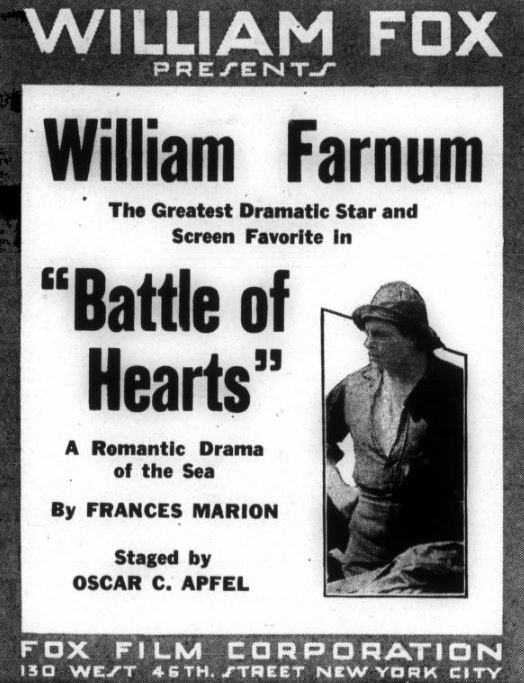
The film masterfully employs dramatic irony, a tool that, when wielded effectively in silent cinema, can be profoundly impactful. Cane's initial loss of Maida's affection is merely the precursor to a far greater fall. His fishing fleet, the very emblem of his prosperity and power, is inexplicably ruined, forcing him to confront a stark reality of starting anew, stripped of his former glory. This narrative arc of a powerful figure brought low by circumstance resonates with timeless themes of hubris and redemption, a kind of poetic justice that often permeates moralistic tales of the era. It's in this crucible of misfortune that Maida, whose emotional journey forms the film's true anchor, begins to question the very foundations of her understanding. The men she believed she knew, the men vying for her heart, are revealed to be far more complex, their true natures concealed beneath layers of pretense. This unveiling, a slow and agonizing process, is where the film truly finds its dramatic pulse.
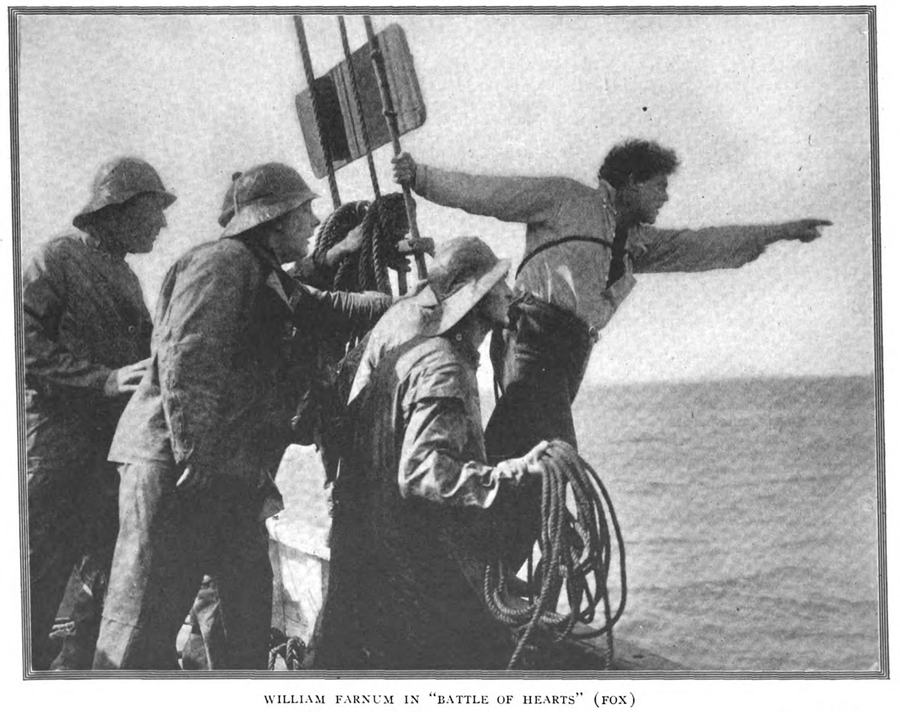
The strength of "The Battle of Hearts" lies not just in its intricate plotting but also in the compelling performances of its ensemble cast. William Farnum, a stalwart of the silent screen, imbues Martin Cane with a fascinating blend of arrogance and vulnerability. His transformation from a man of means to one humbled by fate is portrayed with a nuanced intensity that prevents Cane from becoming a mere caricature of the villain. One can almost feel the weight of his shattered empire, the sting of lost love, and the arduous struggle for resurgence. His is a performance that, while theatrical by modern standards, delivers genuine emotional resonance. It's a stark contrast to the more straightforward villainy often seen in films like "Das Laster", where moral decay is often explicit; here, Cane's complexity is his most intriguing trait.
Hedda Hopper, as Maida Rhodes, navigates the emotional labyrinth of her character with grace and conviction. Her journey from innocent affection to disillusioned revelation is the emotional core of the film. She is not a passive object of desire but an active participant in her own destiny, her growing awareness of the deceit around her providing the narrative's propulsive force. Her expressions, her subtle gestures, communicate a depth of feeling that transcends the lack of spoken dialogue. It's a performance that holds its own against the more overtly dramatic turns of her male co-stars, grounding the film in a relatable human experience. William Burress, as Jo Sprague, the lighthouse keeper's son, provides the necessary counterpoint to Cane. His portrayal of unassuming virtue, later complicated by the revelations, is crucial to the film's moral ambiguity. And let's not forget Willard Louis and Wheeler Oakman, whose contributions, though perhaps less central, add texture and authenticity to the film's world, creating a believable community against which these personal dramas unfold.
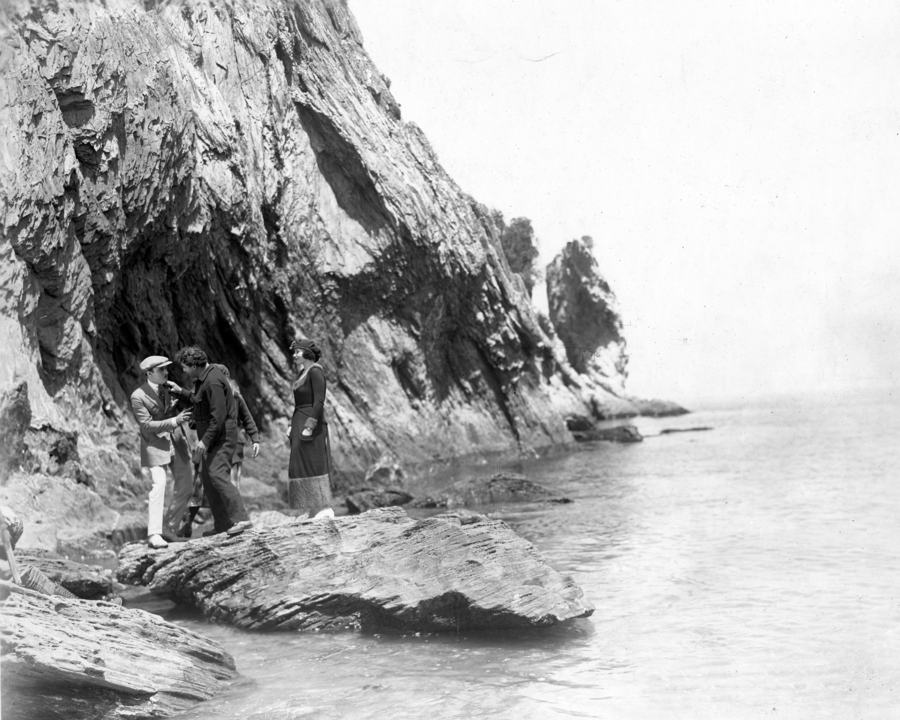
Oscar Apfel, a prolific director of the silent era, demonstrates a keen understanding of visual storytelling in "The Battle of Hearts." His direction, while perhaps not as revolutionary as a Griffith or a DeMille, is consistently effective, utilizing the coastal setting to great atmospheric effect. The vastness of the sea, its unpredictable nature, serves as a powerful metaphor for the human heart and the shifting tides of fortune that define the characters' lives. The destruction of Cane's fleet, for instance, is handled with a gravity that underscores the profound impact on his life, a visual representation of his shattered dreams. Apfel's ability to extract such emotional weight from largely non-verbal performances is a testament to his craft. One could compare the evocative use of setting to films like "The Marconi Operator", where the environment plays an active role in the narrative's tension.
However, much of the film's structural integrity and emotional depth must be attributed to Frances Marion, one of the most significant and prolific screenwriters of the silent and early sound eras. Marion was a master of crafting intricate plots and compelling character arcs. In "The Battle of Hearts," she deftly weaves together themes of class struggle, romantic deception, and the arduous path to self-discovery. Her screenplay ensures that the revelations concerning the true nature of Maida's suitors are not merely plot twists but organic developments that stem from the characters' established personalities and motivations. Her work here, much like in "The Littlest Rebel" or "The Better Woman", showcases her exceptional ability to craft narratives that resonate with universal truths about human experience, transcending the specific historical context of their production.
The true genius of Marion's script, and Apfel's execution, lies in the gradual unveiling of the characters' true identities. Maida's realization that "neither of her suitors is actually what he seems to be" is the dramatic linchpin of the entire film. This revelation isn't a sudden, jarring shock but a slow burn, a dawning awareness that forces her to re-evaluate everything she thought she knew. This kind of nuanced character development, where perception shifts and moral lines blur, is what elevates "The Battle of Hearts" beyond a simple love story. It delves into the inherent human capacity for both deception and redemption, posing questions about the nature of virtue and villainy. Is a man who has lost everything capable of genuine change? Is the seemingly virtuous man truly so, or is his goodness merely a facade? These are the questions that linger long after the final fade-out, reflecting a maturity of storytelling that was often present in the best silent films.
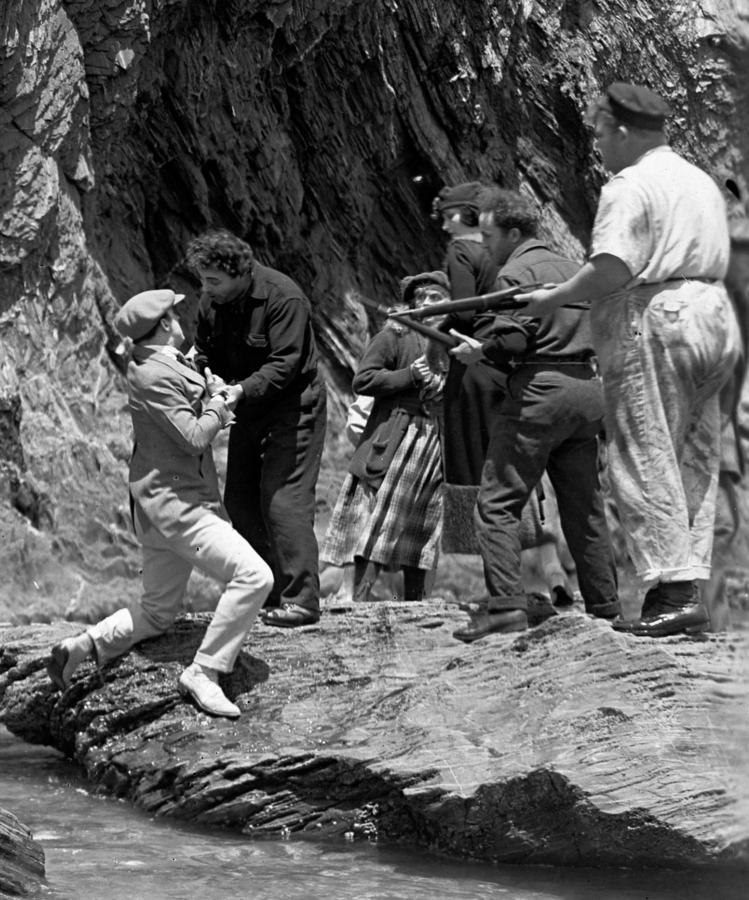
The climax, where these truths are laid bare, is handled with a palpable tension. The audience, having witnessed the character arcs and the subtle hints along the way, is primed for the inevitable confrontation. The resolution, which is "good for one of them and not good for the other," avoids simplistic moralizing, instead offering a conclusion that feels earned, a consequence of the choices made and the characters' inherent natures. It’s a testament to the power of a well-crafted narrative that even without spoken words, the audience can grasp the profound implications of these revelations. This moral complexity, where characters are neither entirely good nor entirely evil, but rather products of their circumstances and choices, aligns with the more sophisticated storytelling ambitions of the era, moving beyond the stark black-and-white morality often found in earlier cinematic works.
Viewing "The Battle of Hearts" today offers a fascinating glimpse into the nascent art of cinema. While some stylistic conventions may appear dated, the core themes remain remarkably resonant. The struggle between wealth and true affection, the corrosive power of deception, and the redemptive potential of honesty are universal human experiences that transcend time and medium. The film’s exploration of these themes, particularly through the lens of Maida's evolving understanding, provides a compelling narrative that continues to engage. It's a reminder that even in an age of technological limitation, the fundamental elements of powerful storytelling – compelling characters, intricate plots, and universal themes – were already firmly in place.
In an era of rapid cinematic innovation, where directors were still experimenting with the language of film, "The Battle of Hearts" stands as a solid example of well-executed melodrama. It might not possess the grand scale of an epic like "The Miracle of Life", nor the avant-garde boldness of some European contemporaries, but its strength lies in its meticulous construction of human drama. The film serves as a valuable artifact, showcasing the talents of its cast and crew, particularly the pioneering work of Frances Marion. For enthusiasts of silent cinema, it's a film that rewards close attention, offering layers of meaning beneath its seemingly straightforward surface. It's a testament to the enduring power of a good story, well told, no matter the era or the technological constraints. The echoes of its emotional battles still resonate, proving that some tales of the heart are truly timeless.
The enduring appeal of films like "The Battle of Hearts" lies in their ability to strip away the noise and focus on raw human emotion. Without dialogue, every gesture, every facial expression, every subtle movement becomes loaded with meaning. The actors of this era were masters of this non-verbal communication, and Hedda Hopper, William Farnum, and William Burress are no exception. Their performances allow us to project our own feelings and interpretations onto their characters, creating a deeply personal viewing experience. This is a film that asks its audience to engage actively, to read between the lines, and to truly feel the 'battle' within each character's heart. Its narrative complexity, particularly the unraveling of identities, feels surprisingly modern, prefiguring later cinematic tropes of psychological drama. It’s not just a historical curiosity; it’s a living, breathing piece of cinematic art that continues to speak to the human condition, making it a worthy addition to any exploration of early filmmaking. The film's resolution, with its clear distinction between the fates of the two suitors, serves as a powerful reminder that truth, however painful, ultimately prevails, offering a moral clarity that, while perhaps idealistic, still holds a certain enduring appeal. The intricate web of relationships, the dramatic turns of fortune, and the ultimate uncovering of hidden truths make "The Battle of Hearts" a compelling study in human nature, a silent symphony of love, loss, and profound revelation.
IMDb —
1927
Community
Log in to comment.