DbcultAccessing Vault...
Cult Review
Senior Film Conservator
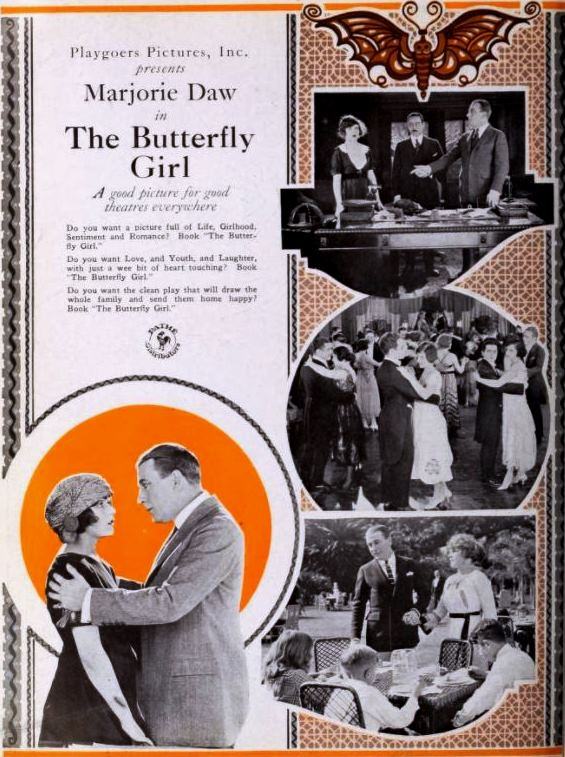
To gaze upon The Butterfly Girl (1921) today is to witness the nascent anxieties of a post-Victorian society grappling with the 'New Woman'—a figure at once liberated and dangerously untethered. John Gorman’s direction doesn't merely capture a plot; it captures a fever dream of social mobility and the corrosive nature of the male gaze. Edith Folsom is not merely a character; she is a symptom of a burgeoning modernity where attention is the only currency that matters. Unlike the psychological depth found in L'invidia, Gorman’s work leans into the histrionic, using Edith's flightiness as a prism through which we view the fragility of 1920s moral structures.
The film’s opening movements are a masterclass in establishing the pastoral versus the metropolitan. Ned Lorimer represents the stagnant, safe, and ultimately boring reality of domesticity. When Edith leaves him, it isn't just a romantic rejection; it is a violent severance from the agrarian past. As she boards the train, the cinematography adopts a more kinetic energy, reflecting her internal agitation. This transition reminds one of the thematic restlessness in The Fear Woman, where the female protagonist must navigate a world that seeks to categorize her as either a saint or a siren.
Fritzi Brunette delivers a performance that is nothing short of transcendent. Her ability to convey Edith’s vacuous ambition through subtle ocular shifts is a testament to the power of silent acting. She avoids the trap of making Edith a mere caricature of vanity. Instead, we see the desperation beneath the flirtation. When she encounters John Blaine, played with a stoic vulnerability by King Baggot, the chemistry is immediate and unsettling. It is a courtship built on a foundation of aesthetic appreciation rather than spiritual connection, much like the superficial bonds explored in Her Great Match.
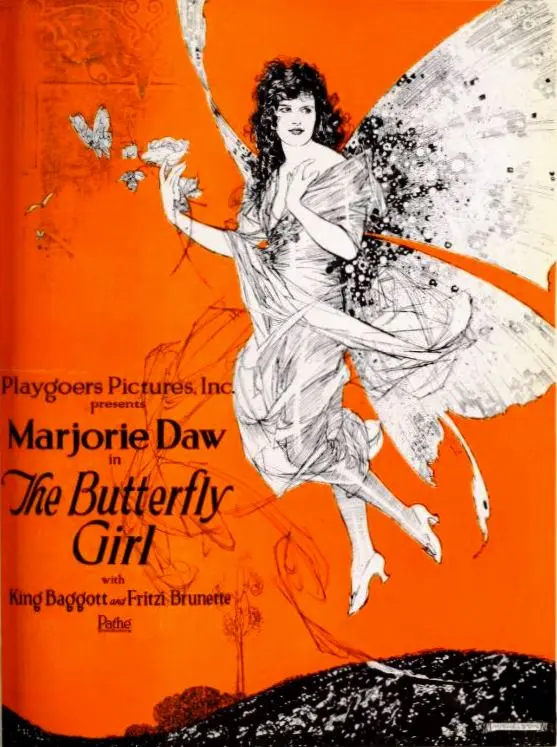
The introduction of Lorna Lear and the subsequent ball sequence provides the film with its most opulent visual cues. The production design here is lavish, bordering on the decadent. The use of shadow and light during the ball highlights Edith’s isolation even as she is surrounded by admirers. It is here that we meet H. H. Van Horn. The elderly banker is a predatory figure, yet Gorman treats him with a certain chilling pragmatism. He is the ultimate destination for a woman who treats her beauty as an asset to be liquidated. This dynamic echoes the darker undercurrents of The Branded Woman, where the sins of the past and the pressures of the present collide.
The narrative pivot occurs when Edith’s social capital evaporates. After being scolded by Lorna—a moment of sharp, class-based friction—Edith flees to a hotel. The depletion of her funds is portrayed with a stark, almost documentary-like coldness. The transition from a social butterfly to a working-class secretary for Van Horn is the film’s most effective irony. She is no longer the center of the room; she is a cog in the machine of the man who once coveted her. This shift in power dynamics is handled with far more nuance than the slapstick energy of The Lucky Dog, proving that Gorman was interested in the psychological toll of downward mobility.
Her marriage to John Blaine, occurring amidst this turmoil, feels like a desperate attempt to regain her footing. However, the shadow of Van Horn looms large. The scene where Van Horn declares his love is a masterpiece of tension. The blocking of the actors—with Van Horn’s wife listening in the periphery—creates a claustrophobic atmosphere that rivals the emotional density of The Grip of Jealousy. It is a moment of reckoning that forces Edith to confront the wreckage of her own stratagems.
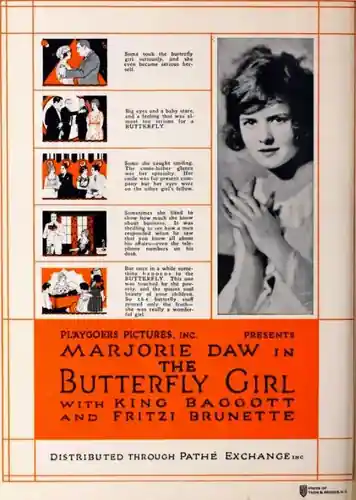
The final act of The Butterfly Girl is perhaps its most controversial element for modern audiences. Edith’s sudden resolution to reform and engage in social work can feel like a concession to the censors of the time. However, if viewed through the lens of character development, it represents a profound psychological shift. She moves from a desire to be served to a desire to serve. This redemptive arc is a common trope in 1920s cinema, also seen in works like Love and Hate, where the protagonist must undergo a trial by fire to emerge cleansed of their former follies.
The film’s conclusion, while moralistic, is visually arresting. The imagery of Edith working alongside Mrs. Van Horn suggests a new kind of sisterhood, one born of shared pain rather than social competition. It’s a far cry from the lighthearted rebellion found in Don't Call Me Little Girl or the youthful defiance of Satan Junior. Instead, it aligns more closely with the somber reflections of The Spotted Lily, where the protagonist's purity is tested by the harsh realities of a judgmental world.
John Gorman’s direction is characterized by an elegant restraint. He allows the scenes to breathe, giving the actors space to inhabit their characters. The pacing is deliberate, building a sense of impending doom that is only dissipated by the final, hopeful frames. The lighting, particularly in the office scenes, uses high contrast to emphasize the moral ambiguity of the situation. This level of technical sophistication is comparable to the visual flair seen in Fireworks, though applied to a much more grounded narrative.
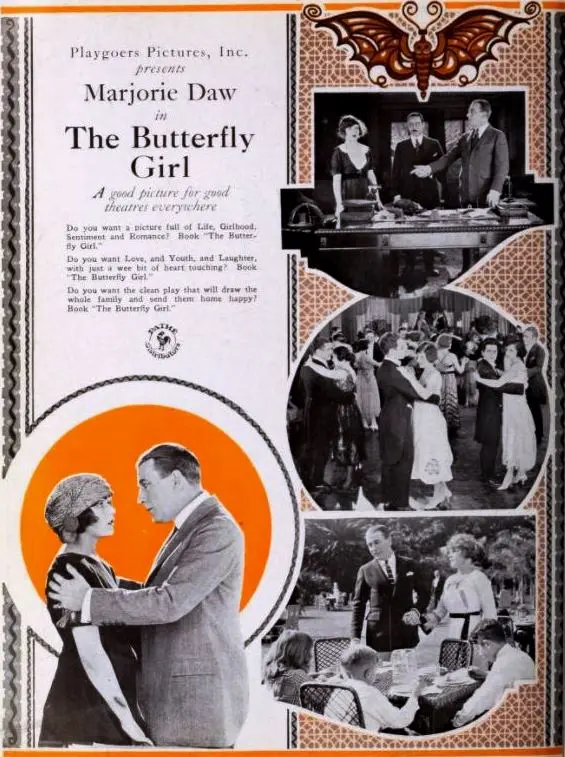
Furthermore, the film’s exploration of the 'screen fan' archetype—even if implicit—is fascinating. Edith is, in many ways, a precursor to the celebrity-obsessed culture we see today. She doesn't just want to be loved; she wants to be watched. This meta-commentary on the nature of fame and visibility is something Gorman would explore in different facets throughout his career, occasionally touching on the themes found in The Screen Fan. The film asks: what remains of a person when the spotlight is turned off?
When placed alongside contemporary releases like Baron Olson or the rugged adventure of The Jackeroo of Coolabong, The Butterfly Girl stands out for its domestic intimacy. It is not an epic of the high seas or a sprawling comedy of errors; it is a surgical examination of one woman's soul. The film shares a certain narrative urgency with Come Through, particularly in its second act where every choice Edith makes feels like a step toward an inevitable precipice.
Ultimately, The Butterfly Girl is a work of significant merit that deserves more than a footnote in film history. It is a bridge between the simplistic morality plays of the 1910s and the complex character studies of the late silent era. Fritzi Brunette’s performance remains a high-water mark for the period, capturing the effervescent and often tragic nature of the social climber. The film’s final message—that true beauty is found in utility and empathy rather than in the reflection of an admirer’s eye—is a timeless sentiment, delivered here with a sophisticated, if somewhat melancholic, grace.
In the grand tapestry of 1921 cinema, this film shines as a vibrant, if occasionally dark, thread. It challenges the viewer to look beyond the silk and the sequins to find the human heart beating underneath. While it may lack the experimental audacity of later avant-garde movements, its emotional honesty and technical proficiency make it a compelling watch for any serious student of the medium. Edith Folsom’s journey from the train tracks to the social worker’s office is a journey we are all, in some way, still taking—a search for meaning in a world that often prefers the superficial glow of the butterfly’s wing to the substance of the soul.
A hauntingly beautiful artifact of the silent era. Gorman and Brunette create a nuanced portrait of vanity and its eventual dissolution. While the moralizing ending is a product of its time, the psychological journey is strikingly modern. A must-see for those who appreciate the intersection of social commentary and cinematic artistry.
IMDb —
1917
Community
Log in to comment.