DbcultAccessing Vault...
7.1/10
Senior Film Conservator
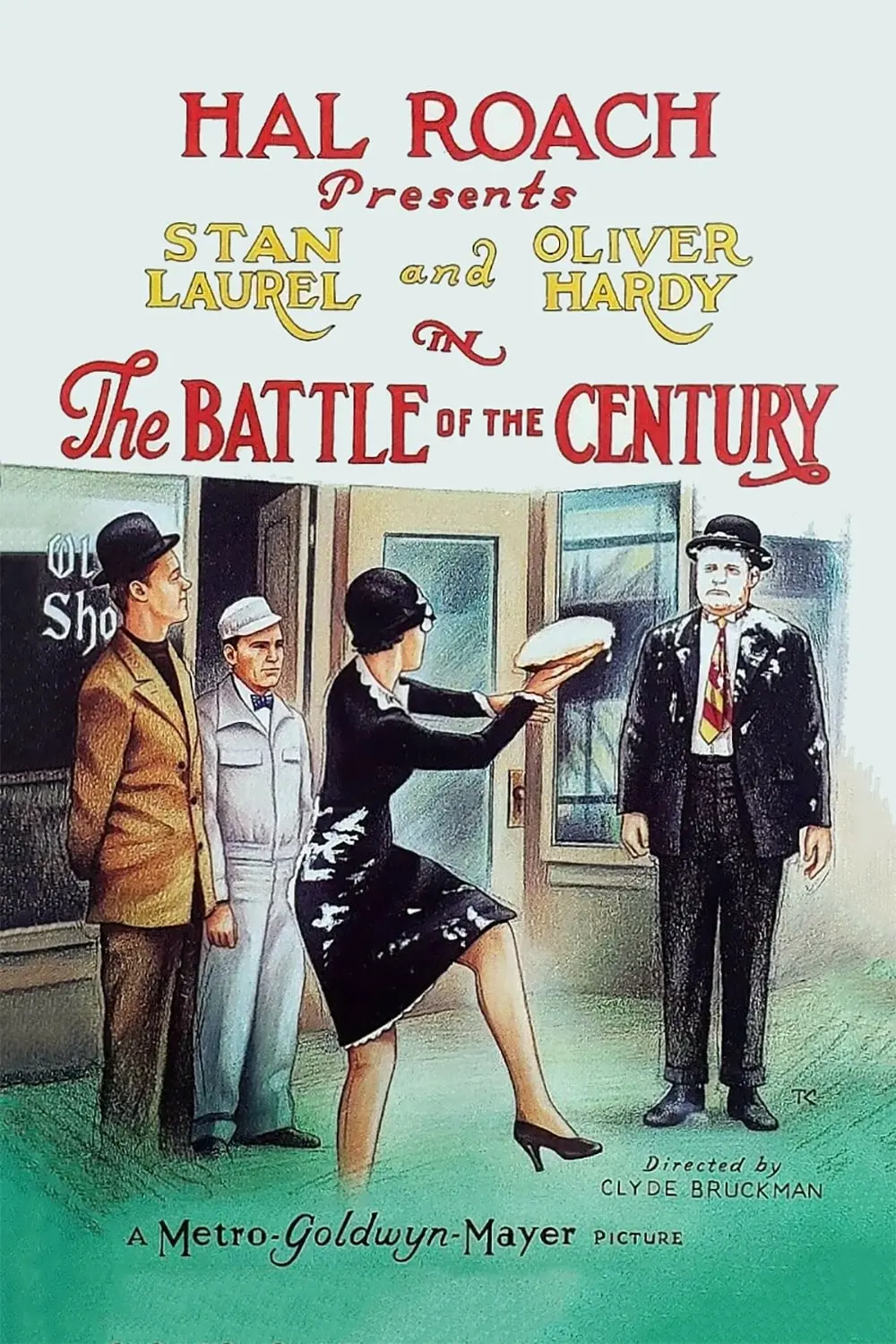
A definitive 7.1/10 rating for a film that redefined the boundaries of cult cinema. The Battle of the Century remains a cornerstone of transgressive art.
Short answer: Yes, but primarily as a historical curiosity rather than a laugh-out-loud riot for modern sensibilities. This film is for silent cinema enthusiasts and students of slapstick choreography; it is not for those who demand narrative complexity or high-stakes character development.
1) This film works because: It masters the art of the 'slow build,' transforming a minor slip on a banana peel into a city-wide riot with impeccable geometric precision.
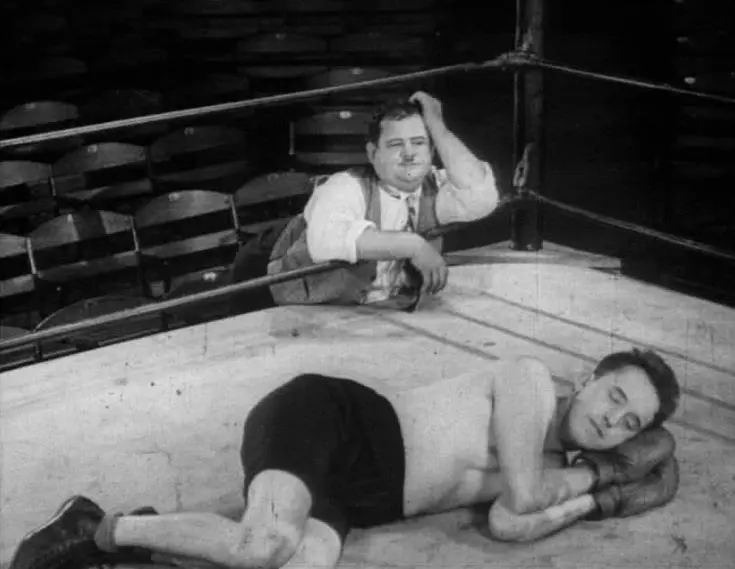
2) This film fails because: The opening boxing sequence feels sluggish and detached from the iconic finale, creating a jarring tonal shift halfway through the short.
3) You should watch it if: You want to witness the exact moment in cinematic history where the pie-in-the-face gag reached its absolute, unrepeatable zenith.
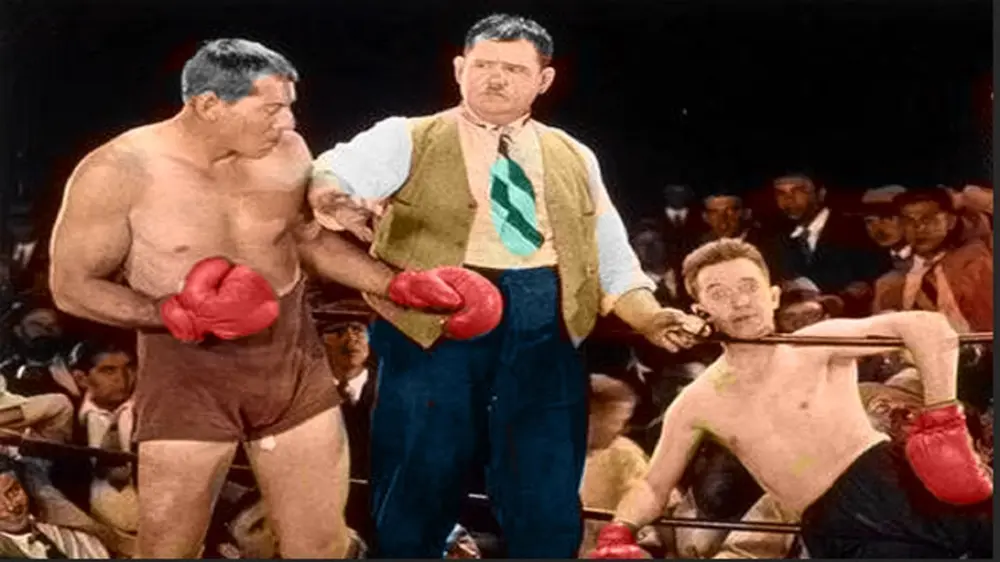
For decades, The Battle of the Century was the 'holy grail' of lost films. Only fragments existed, leading historians to build a mythos around the sheer scale of its slapstick. When the second reel was finally rediscovered in 2015, the reality met the legend, but with caveats. It is a film of two halves: a mediocre boxing parody and a transcendent street war. The boxing match, featuring Stan as 'Canvasback Clump,' is standard fare. It lacks the rhythmic punch of their later work. However, once the film leaves the ring, it finds its soul.
The plot is a cynical slice of Americana. Hardy, playing the quintessential schemer, decides that his fighter is worth more injured than standing. This introduction of insurance fraud as a comedic catalyst is a dark touch. It reflects the era's obsession with quick money, much like the characters in Dodging a Million. But where other films might focus on the morality of the scam, Laurel and Hardy focus on the physics of the failure.
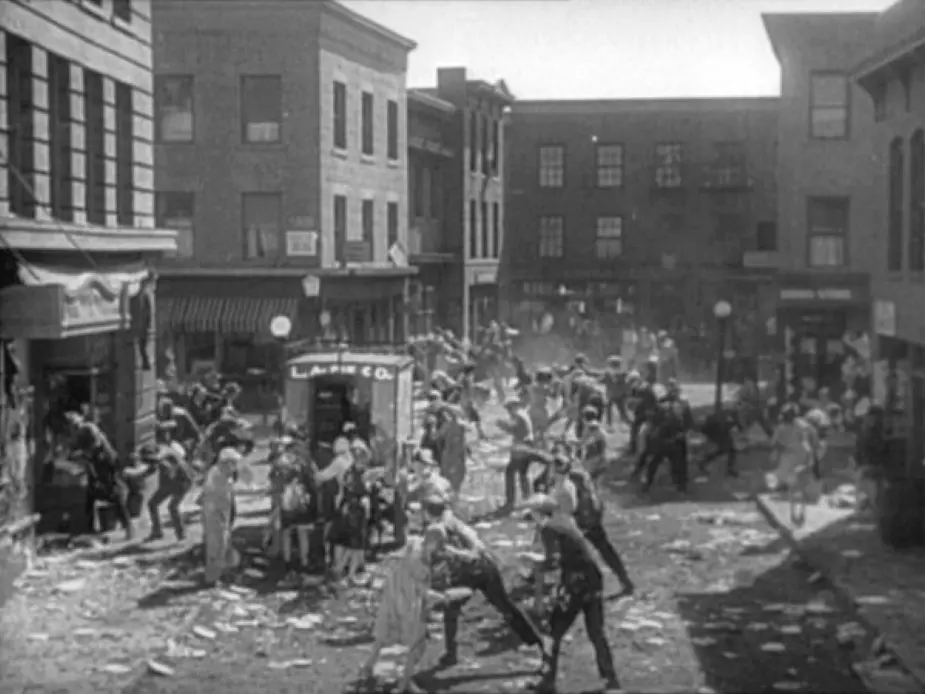
The finale is not just a pie fight; it is a meticulously choreographed ballet of escalation. It begins with a single banana peel and a single victim. Then, the 'tit-for-tat' logic—a staple of the duo—takes over. One person is hit, so they hit back. But they hit the wrong person. The infection of chaos spreads. Unlike the frantic energy of In Society, the pacing here is deliberate. Every pie throw is given its own beat, allowing the audience to savor the anticipation before the impact.
The genius of the scene lies in the dignity of the victims. A mayor, a socialite, and a laborer all succumb to the same sticky fate.
Consider the moment a woman (played by Dorothy Coburn) steps out of her car and is immediately struck. Her reaction is not one of cartoonish shock, but of genuine, seething indignation. This groundedness makes the absurdity work. If the characters didn't take their dignity seriously, the act of losing it wouldn't be funny. The film understands that for comedy to have weight, there must be a social contract to break.
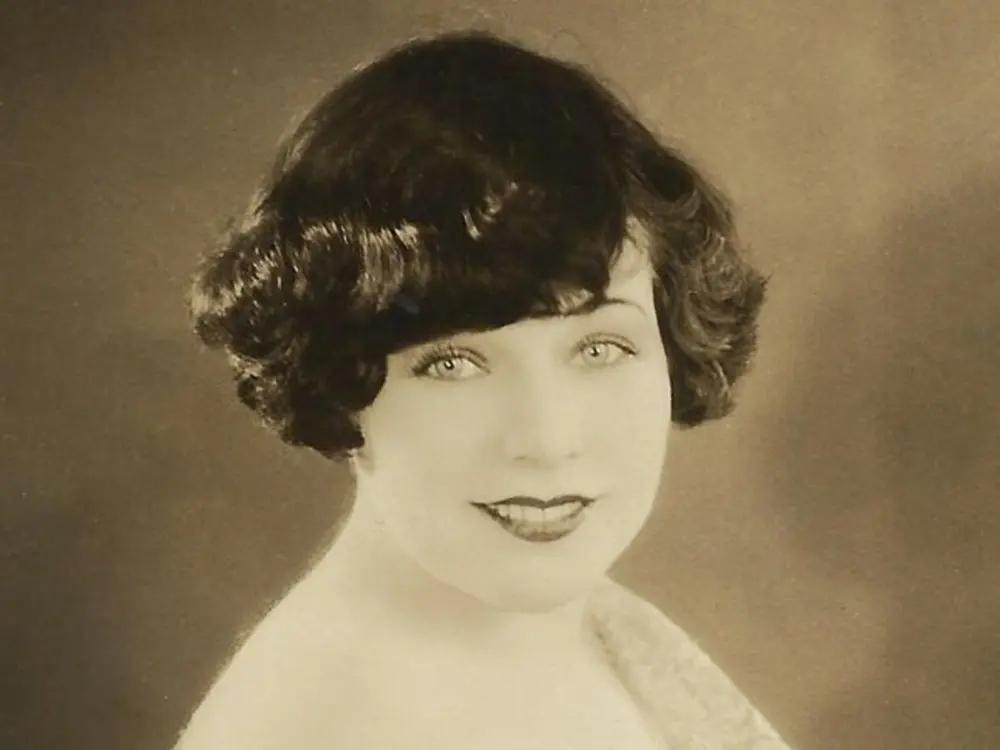
Director James W. Horne and the Hal Roach team used static, wide-angle shots to capture the carnage. This was a necessity of the time, but it serves the comedy perfectly. By keeping the camera still, the frame becomes a stage. We see the pies flying in from off-camera, creating a sense that the entire world is collapsing just outside the lens. This technique is far more effective than the busy, over-edited style found in Her Temporary Husband.
The pacing in the second half is relentless. Once the first pie is thrown, there is no dialogue needed—not even in intertitles. The visual language is universal. You see a man’s face covered in custard, and you understand his soul. It is a primal form of cinema that predates the need for the complex narratives found in Les Misérables, Part 1: Jean Valjean. It is pure, unadulterated movement.
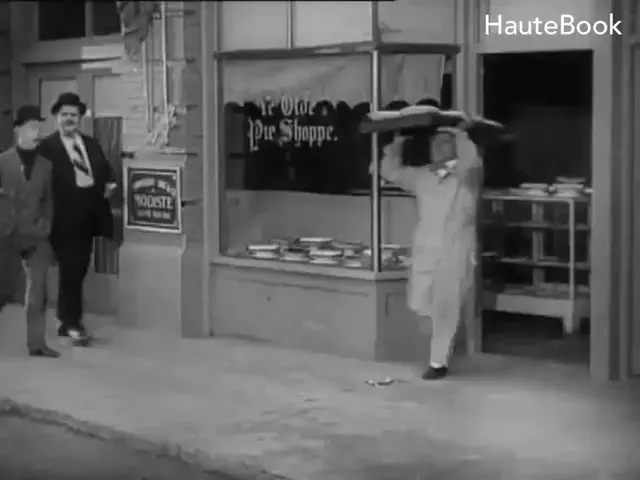
Stan Laurel’s performance is a masterclass in 'nothingness.' While the world explodes around him, his face remains a mask of mild confusion. He is the eye of the storm. In contrast, Oliver Hardy’s performance is all about the 'grand gesture.' His attempts to look innocent while orchestrating a scam are hilarious because they are so transparent. His chemistry with Stan is the only thing that saves the first ten minutes of the film from being entirely forgettable.
The supporting cast, including Anita Garvin and a very young Lou Costello (appearing as an extra), adds to the texture of the crowd. Every extra seems to have been given a specific 'character' for their one moment of pie-induced misery. This attention to detail is what separates a Hal Roach production from the cheaper slapstick of the era, such as Hearts and Flowers. It is a collective performance of a city losing its mind.
Pros:
Cons:
Here is a debatable opinion: The Battle of the Century is actually a horror movie disguised as a comedy. If you look past the whipped cream, it is a story about the complete breakdown of the social order. Within five minutes, a functional society reverts to a state of nature where the only currency is violence. It is an anarchic vision that is far more nihilistic than anything in The Man Above the Law. The pies are just a delivery system for the message that civilization is a thin veneer.
The Battle of the Century is a flawed but essential piece of film history. It isn't their funniest short—that title belongs to others—but it is their most ambitious. The first half is a slog. The second half is a miracle. It works. But it’s flawed. You watch it for the spectacle of the 3,000 pies, but you stay for the subtle, brilliant reactions of two men who just wanted to make a quick buck. It is a messy, beautiful, and sticky testament to the power of silent cinema. If you haven't seen it, you are missing a foundational block of modern comedy architecture.
IMDb —
1913
Community
Log in to comment.