DbcultAccessing Vault...
Cult Review
Senior Film Conservator
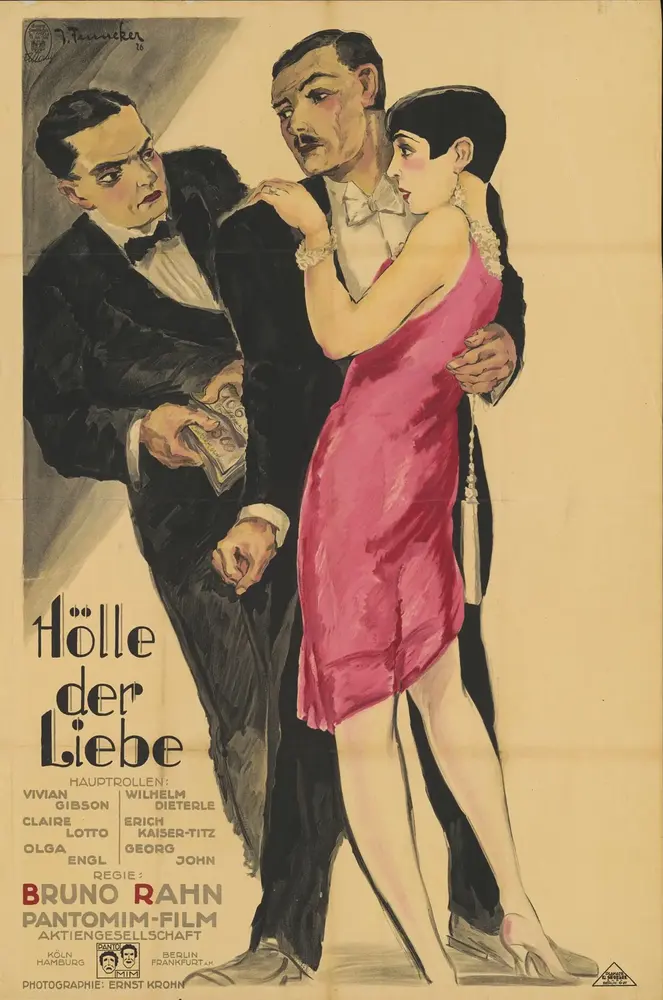
Does Hölle der Liebe - Erlebnisse aus einem Tanzpalast still captivate audiences in the 21st century? The short answer is: yes, but with significant caveats. This silent German melodrama from a bygone era offers a fascinating glimpse into early cinematic storytelling, yet its narrative conventions and pacing might test the patience of modern viewers.
It's a film for cinephiles, historians, and those with a genuine appreciation for the foundation of narrative cinema, but absolutely not for casual viewers seeking contemporary thrills or readily accessible emotional beats.
This film works because of its audacious plot twists and the earnest performances that, despite their theatricality, convey genuine human struggle in a period of grand gestures. This film fails because its narrative structure, while ambitious, can feel disjointed, and some plot resolutions arrive with an abruptness that undercuts their emotional weight. You should watch it if you are prepared to engage with a historical artifact that prioritizes dramatic intensity over subtle character development, and if you have an interest in early German silent cinema's unique aesthetic.
The narrative core of Hölle der Liebe is a potent cocktail of illicit love, familial betrayal, and the crushing weight of false accusation. At its heart is the romance between Werner Ehlermann and Erika Heinicke, a relationship that, through no fault of its own, becomes the catalyst for a much darker machination. The film quickly pivots from a romantic premise to a tale of sinister manipulation, orchestrated by Werner's brother, Fritz.
Fritz's plot to frame Erika's father, the general manager, for embezzlement is both cruel and calculating. This act doesn’t just impact one man; it ripples outwards, affecting Werner’s love for Erika and casting a long shadow over the Heinicke family’s reputation. The film delves into the profound injustice of this setup, showing the general manager's descent into a prison cell for a crime he didn't commit. The initial joy of the dance palace setting, hinted at in the title, quickly gives way to a grim reality of legal entanglement and personal ruin.
When Heinicke is finally released, his singular focus is on clearing his name. This pursuit of vindication forms the dramatic backbone of the latter half of the film. However, the narrative throws a curveball: Fritz, the architect of the frame-up, is dead. This sudden twist, while dramatically effective for the era, leaves the audience with a profound sense of unresolved conflict. How does one seek justice when the primary perpetrator is beyond earthly retribution? This thematic question, though perhaps not fully explored by modern standards, adds a layer of tragic complexity to the melodrama.
The title, Hölle der Liebe - Erlebnisse aus einem Tanzpalast, suggests a 'hell of love' experienced within a dance hall. While the romance is present, the 'hell' truly manifests in the destructive power of envy and betrayal that poisons relationships, turning affection into anguish. It's a stark reminder that even in a setting designed for joy, human frailties can unleash devastating consequences.
While specific directorial credits for this film are elusive in many records, the style prevalent in Hölle der Liebe speaks volumes about early German silent cinema. The film employs a narrative approach that prioritizes clear, if sometimes heavy-handed, visual storytelling. The camera work is largely static, typical of the period, allowing the actors and the meticulously designed sets to convey the unfolding drama. There's a pragmatic elegance to its simplicity, a focus on blocking and composition to guide the viewer's eye.
The depiction of the dance palace, for instance, is less about lavish spectacle and more about atmosphere. It’s a backdrop for human interaction, a place where destinies intersect and secrets are whispered. The contrast between this supposedly carefree environment and the cold, unfeeling world of corporate finance and legal injustice is stark. This juxtaposition is achieved through careful set dressing and lighting that shifts from the bright, if slightly artificial, glow of the dance hall to the oppressive shadows of the prison.
The pacing, while deliberate, is punctuated by moments of intense dramatic action, particularly during the general manager's arrest sequence. Here, the editing, though not rapid-fire by today's standards, effectively builds tension, using intertitles to bridge the emotional gaps and advance the plot. This approach is reminiscent of other European melodramas of the era, such as Tangled Lives, where the narrative relies heavily on character reaction and the sequential unveiling of dramatic events.
One could argue that the film’s visual language, while not overtly Expressionistic like some of its German contemporaries, still leans into a heightened reality to convey emotional states. The dramatic gestures of the actors are framed to maximize their impact, creating a visual shorthand for complex feelings. This early cinematic craft, while limited by technology, showcases an innate understanding of how to tell a story through images, even without the luxury of synchronized sound.
The performances in Hölle der Liebe are a fascinating study in the art of silent acting. Actors like Vivian Gibson, Emmy Wyda, and Siegfried Berisch, alongside William Dieterle (who would later become a renowned director), rely entirely on their physicality and facial expressions to convey character and emotion. This requires a level of theatricality that can seem exaggerated to modern audiences, accustomed to more naturalistic styles.
However, to dismiss it as merely 'over-the-top' would be a disservice. The raw, almost unbridled emotionality of silent era acting, often dismissed as over-the-top today, is in fact a highly sophisticated form of non-verbal communication, demanding immense control and presence. It’s a language learned through extensive stage experience, where every gesture, every flicker of the eye, had to speak volumes in the absence of dialogue.
Consider Werner Ehlermann's internal conflict. His love for Erika is palpable, yet his loyalty to his family, complicated by Fritz’s actions, creates a visible struggle. The actors convey this through a combination of pleading glances, anguished postures, and rapid changes in expression. Erika’s distress, particularly after her father’s arrest, is conveyed with a heartbreaking vulnerability that transcends the limitations of the medium. Her wide, tear-filled eyes and trembling hands are universal symbols of despair.
Fritz, the villain of the piece, is portrayed with a chilling, almost pantomimic menace. His smirk, his furtive movements, and his aggressive posturing leave no doubt as to his nefarious intentions. While such a portrayal might lack the psychological nuance of a modern antagonist, it serves the clear moralistic framework of early melodrama perfectly. These performances are not just acting; they are a form of visual rhetoric, designed to elicit immediate and strong emotional responses from the audience. For those attuned to this unique form of expression, the cast delivers compelling, if stylistically distinct, performances.
The pacing of Hölle der Liebe is characteristic of its era. It's a rhythm that can feel slow to contemporary viewers accustomed to rapid-fire editing and constant narrative propulsion. However, within its own context, the film builds its drama deliberately, allowing scenes to unfold with a certain gravitas. The reliance on intertitles means that exposition and dialogue are delivered in distinct breaks, requiring the audience to engage actively with the text before returning to the visual narrative.
The film’s tone is unashamedly melodramatic. Every emotion is heightened, every conflict is grand. This isn't a flaw; it's a genre convention of the time. The stakes feel immense because the characters react to them with such profound intensity. While some moments might flirt with unintentional comedy for a modern audience, a conscious effort to appreciate the film on its own terms reveals a powerful, if overt, emotional landscape. The anguish of the framed general manager, the despair of his daughter, and the cunning of the betrayer are all painted with broad, bold strokes.
The sequence detailing Heinicke's arrest and imprisonment is a prime example of this deliberate pacing and melodramatic tone. The slow, inexorable march of justice (or injustice, in this case) is given weight through sustained shots and the actors' powerful, silent reactions. The sudden revelation of Fritz's death, while jarring, effectively shifts the narrative's focus from revenge to the more complex pursuit of posthumous justice, adding an unexpected layer to the melodrama.
Despite its dramatic title, the 'hell' in 'Hölle der Liebe' isn't just about passionate anguish; it's the suffocating social hell of false accusation and reputational ruin, a torment perhaps more relatable to the era's audience than romantic heartbreak. This societal pressure, often overlooked in contemporary analyses, is a crucial underpinning of the film's emotional weight.
The film maintains a consistent dramatic tension, even through its slower moments, by constantly reminding the audience of the overarching injustice. It's a testament to the storytelling prowess of the era that such a complex emotional journey can be conveyed without spoken words, relying instead on a carefully constructed sequence of visual and textual cues.
Yes, for specific audiences, Hölle der Liebe - Erlebnisse aus einem Tanzpalast is absolutely worth watching. It is a valuable historical document, showcasing early narrative techniques.
It provides a unique window into German silent cinema. Modern viewers seeking quick gratification might struggle with its pacing. It demands patience and an open mind. Those interested in the evolution of film will find much to appreciate.
It’s a film that requires you to meet it halfway. If you do, it offers a rich, if stylistically different, dramatic experience.
Hölle der Liebe - Erlebnisse aus einem Tanzpalast is a compelling, if imperfect, window into a pivotal era of filmmaking. It works. But it’s flawed. This silent German melodrama, with its intricate plot of love, betrayal, and the relentless pursuit of justice, stands as a testament to the foundational power of narrative cinema.
It’s a film that asks for your engagement, and in return, offers a unique dramatic experience that laid groundwork for generations of storytelling. While it won’t appeal to everyone, those willing to immerse themselves in its historical context and appreciate its distinct artistic language will find a rewarding, thought-provoking journey. It’s a film that speaks to the enduring human desire for truth, even when the path to it is shrouded in the shadows of the past. For silent film aficionados, it's a necessary watch; for others, a curious and occasionally captivating historical artifact.
Community
Log in to comment.