DbcultAccessing Vault...
Cult Review
Senior Film Conservator
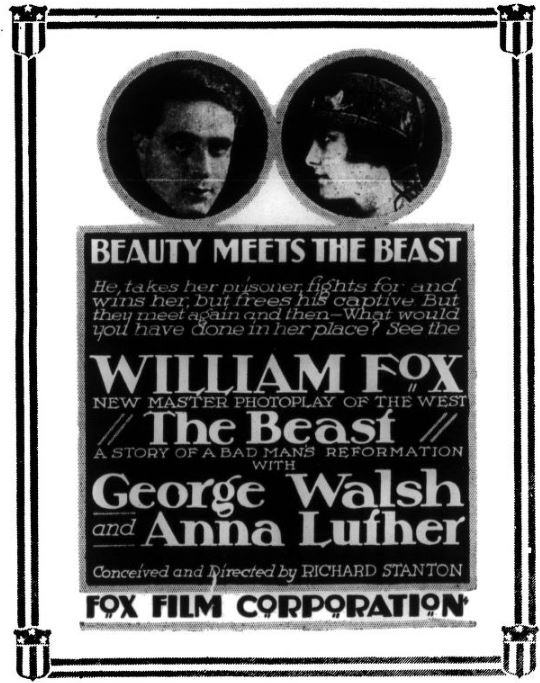
Step back into the nascent days of cinema, to a time when narratives were spun with light and shadow, and emotions were writ large across the silver screen. In 1916, a film emerged from the creative crucible of Richard Stanton, titled simply, yet evocatively, The Beast. It's a title that promises primal fear, untamed wilderness, and a confrontation with the very essence of terror. And in many ways, it delivers. This isn't just a film; it’s a visceral experience, a descent into an elemental struggle that pits man against a force both external and terrifyingly internal. The plot, deceptively simple, casts a young man, full of the confidence of the hunter, into an environment that quickly reminds him of his own fragile place in the food chain. What begins as a weekend pursuit of game rapidly transforms into a desperate, harrowing flight for existence, where the hunter becomes the hunted, and the 'savage hunger beast' he confronts is a multifaceted entity of dread.
Richard Stanton, the architect of this narrative, crafts a tale that, despite the technological limitations of its era, manages to excavate deep-seated human anxieties. Stanton's screenplay for The Beast is a masterclass in building tension through implication rather than explicit gore. He understands that the most potent fears reside in the unknown, in the creeping realization that one's perceived control over nature is merely an illusion. The 'savage hunger beast' is never fully defined, allowing the audience’s imagination to fill in the terrifying blanks. Is it a monstrous animal? A deranged human? Or something more insidious, a psychological breakdown induced by extreme duress? This ambiguity is the film’s greatest strength, elevating it beyond a mere adventure story into something approaching psychological horror. This subtle, yet potent, narrative technique sets it apart from more straightforward survival dramas, hinting at a complexity that would be explored in later decades.
The performances, particularly from Clyde Benson as the increasingly desperate protagonist, are central to the film’s impact. In the silent era, acting was a language of exaggerated gesture, facial contortion, and physical presence. Benson, alongside a formidable supporting cast including Alan Hale, Edward Cecil, Harry De Vere, Gretchen Hartman, Herschel Mayall, George Walsh, and Anna Luther, had to convey terror, resolve, and the slow erosion of hope without uttering a single word. Benson's transformation from an assured outdoorsman to a haunted, primal figure is particularly compelling. His wide, fearful eyes, his hunched posture, and his frantic movements paint a vivid picture of a man pushed to the brink. One can almost feel the cold dread seeping from the screen as he realizes the tables have turned, and he is no longer the apex predator. Anna Luther, too, likely contributes significantly, her expressions and physicality adding layers to the emotional landscape, even if her role is less central to the immediate physical struggle. The ensemble works in concert, their collective efforts creating a palpable sense of escalating peril and isolation.
The film’s thematic undercurrents are surprisingly profound for its time. At its core, The Beast grapples with the fragile boundary between civilization and savagery. The hunting trip, a quintessentially civilized pursuit, quickly strips away the protagonist’s societal conditioning, forcing him to confront his most basic instincts. This primal regression is a recurring motif in literature and film, but Stanton’s early exploration of it is remarkably effective. The 'savage hunger beast' can be interpreted as the raw, unfeeling indifference of nature itself, a force that doesn't distinguish between man and animal. Or, perhaps more chillingly, it represents the latent barbarism within humanity, awakened by fear and the desperate need to survive. This duality makes the film resonate beyond its immediate plot, touching upon universal fears about our own capacity for violence and the thin veneer of order we construct. This exploration of inner demons and external threats finds echoes in later works that delve into the human psyche under duress, even if the cinematic language has evolved dramatically.
Visually, one can imagine The Beast employing stark contrasts and evocative cinematography to convey its message. The dense forests, the shadowy ravines, and the open, unforgiving skies would have been utilized to emphasize the protagonist's isolation and vulnerability. The use of close-ups on Benson’s face would amplify his terror, while wide shots would underscore the vast, indifferent wilderness surrounding him. The pacing, crucial in silent film, would likely alternate between frantic chases and moments of agonizing stillness, building suspense through the rhythm of the edits. The film’s ability to evoke such powerful emotions without dialogue speaks volumes about the early filmmakers' understanding of visual storytelling. They had to rely purely on imagery, performance, and the emotional resonance of their narrative choices, a testament to their craft. The very lack of sound, in a strange way, enhances the sense of isolation and the internal monologue of fear, forcing the audience to project their own anxieties onto the silent screen.
Comparing The Beast to other films of its era reveals its unique position. While films like The Iron Woman might explore themes of resilience against societal or industrial forces, The Beast zeroes in on a more primordial struggle. It’s less about the machinations of human society and more about the raw, untamed forces that lie beneath. Similarly, while a film like The Face in the Moonlight might toy with mystery and illusion, The Beast grounds its mystery in the very real, physical threat of survival, albeit one with psychological dimensions. The 'savage hunger beast' could even be seen as a precursor to the internal conflicts explored in films like Der Andere, where the 'other' is an aspect of the self, a dark doppelgänger lurking within. The protagonist’s battle is not just with an external threat, but potentially with the very 'beast' that resides in his own panicked, desperate heart.
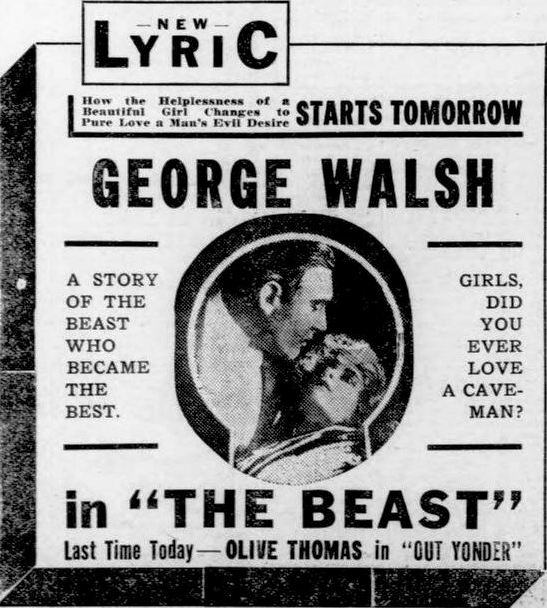
The sheer desperation of the protagonist's quest for survival also brings to mind the consuming nature of destructive urges, much like the themes subtly hinted at in Drugged Waters, where external influences can lead to a loss of self and a desperate struggle for control. Here, the 'hunger' of the beast could metaphorically represent an addiction to survival, an all-consuming drive that overrides all other human concerns. The idea of a consuming, insatiable force also resonates with elements of The Magic Skin, where desires come at a terrible, diminishing cost. In The Beast, the cost of survival is the protagonist’s innocence, his civilized facade, and perhaps even his sanity, as he is forced to shed layers of humanity to meet the primal threat on its own terms. This film, therefore, acts as an early, potent exploration of the psychological toll of extreme situations, a theme that would be revisited countless times throughout cinematic history.
Moreover, the film's title and central conflict, 'a savage hunger Beast,' could be interpreted as a commentary on the darker aspects of human nature or societal pressures, much like the underlying critiques found in films such as Race Suicide, which, despite its problematic title, likely explored societal ills that consume individuals. While The Beast is ostensibly a survival story, the ambiguity of its antagonist allows for a broader reading. Is the 'beast' a symbol of uncontrolled capitalism, unchecked ambition, or even the brutal indifference of a world that forces individuals into desperate acts? The silent era often used allegory to convey complex ideas, and Stanton's work here feels ripe for such interpretation, adding layers to what might otherwise be a straightforward genre piece. The film invites us to question what truly constitutes a 'beast' – the creature in the woods, or the desperation it ignites within us.
The film's impact lies not just in its pioneering use of suspense, but in its ability to tap into universal, timeless fears. The fear of the unknown, the fear of losing control, and the fear of being reduced to our most basic, animalistic selves are all powerfully evoked. Clyde Benson's performance, through sheer physicality and expressive mime, carries the weight of these anxieties, making his journey relatable even across the chasm of a century. The creative choices made by Stanton and the entire production team, from the casting to the likely minimalist set designs and strategic use of natural landscapes, converge to produce a work that transcends its historical context. It reminds us that storytelling, at its most fundamental, seeks to explore the human condition, and few conditions are as raw and compelling as the fight for survival.
In conclusion, The Beast stands as a remarkable artifact from the early days of cinema, a testament to the power of visual narrative to convey profound psychological and existential struggles. It’s a film that, despite its age and the silent medium, continues to haunt and provoke thought. Richard Stanton's script, brought to life by the expressive performances of Clyde Benson, Anna Luther, and the rest of the cast, creates a compelling, almost hypnotic descent into terror. It's not just a story of a man who becomes the hunted; it's a profound meditation on the 'savage hunger beast' that lies both in the wilderness and, more disturbingly, within the human heart. It’s a compelling piece of cinematic history, one that reminds us that the most terrifying monsters are often those we cannot clearly see, or those we find reflected in our own desperate eyes. A truly essential watch for anyone interested in the foundational elements of the thriller genre and the psychological depth achievable in silent film.
IMDb —
1928
Community
Log in to comment.