DbcultAccessing Vault...
Cult Review
Senior Film Conservator
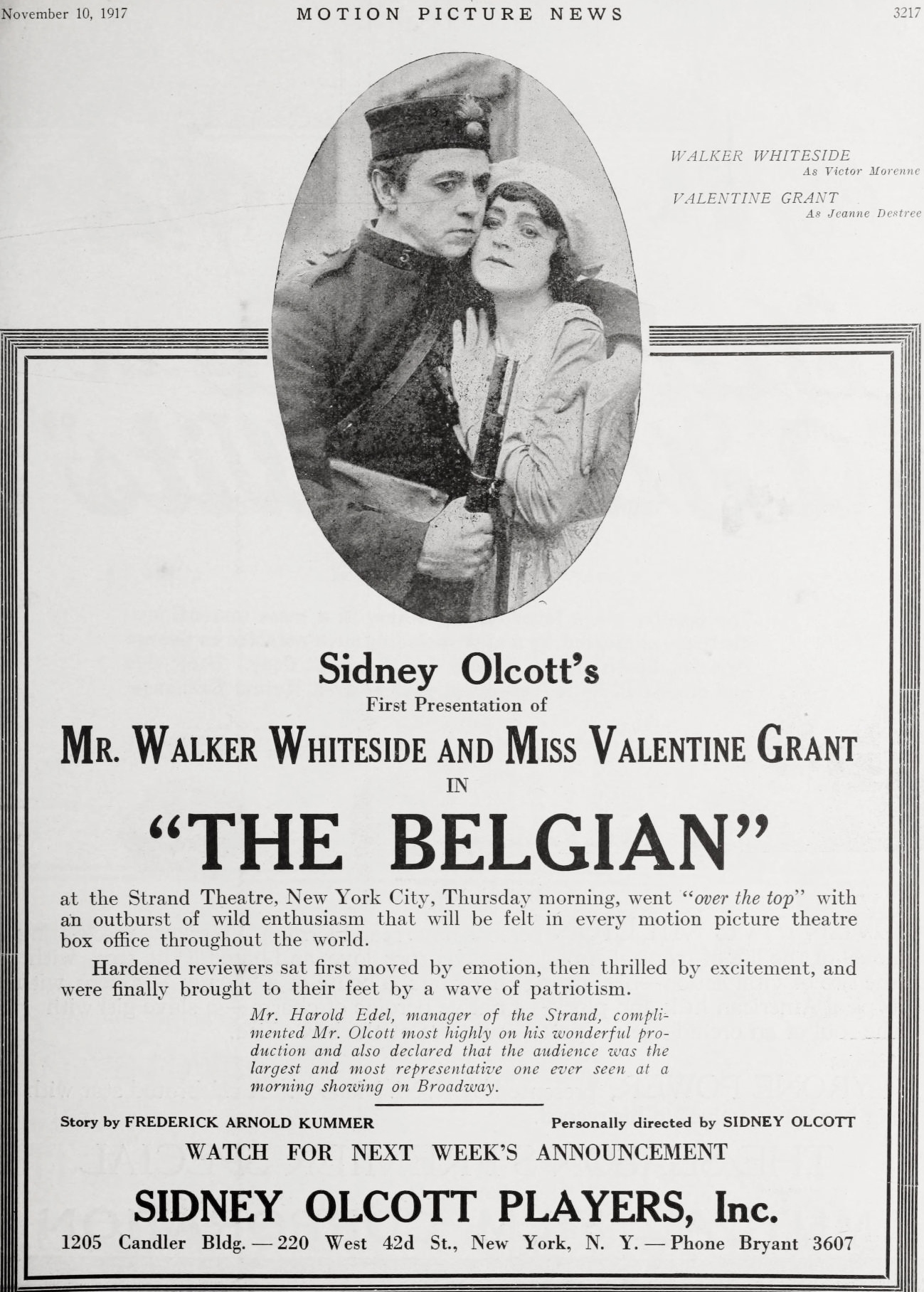
The cinematic tapestry of 'The Belgian' unfurls against a backdrop of global conflict, specifically the tumultuous years of World War II, yet its core narrative transcends mere historical setting to delve into the eternal human dramas of ambition, love, and betrayal. This is not merely a war film; it is a nuanced exploration of how personal destinies become inextricably intertwined with geopolitical machinations, presented through the lens of a young artist's awakening and subsequent entanglement. Director Frederic Arnold Kummer, who also penned the screenplay, crafts a narrative that, while perhaps appearing straightforward on the surface, reveals layers of psychological depth and moral ambiguity upon closer inspection.
Our protagonist, Victor Morenne, portrayed with a compelling blend of youthful naiveté and burgeoning artistic fervor by George Majeroni, emerges from the humble, salt-sprayed environs of a Belgian fishing village. Majeroni imbues Victor with an earnestness that makes his artistic aspirations feel genuinely rooted, rather than a mere plot device. His hands, accustomed to the rough textures of fishing nets and the unforgiving pull of the sea, possess an unexpected delicacy when shaping clay or stone. This duality — the rugged fisherman and the sensitive artist — is a potent initial characterization, immediately establishing a tension between his origins and his destiny. The film hints at the pervasive shadow of war, not through overt combat scenes, but through the subtle anxieties and constrained opportunities that define life in occupied or threatened territories, making Victor's yearning for artistic freedom all the more poignant.
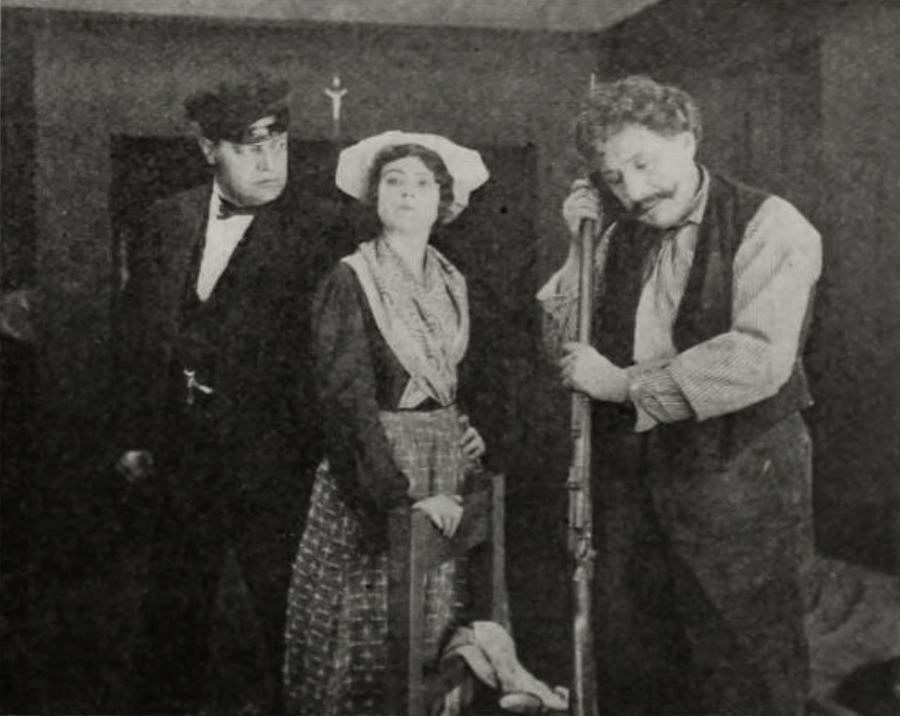
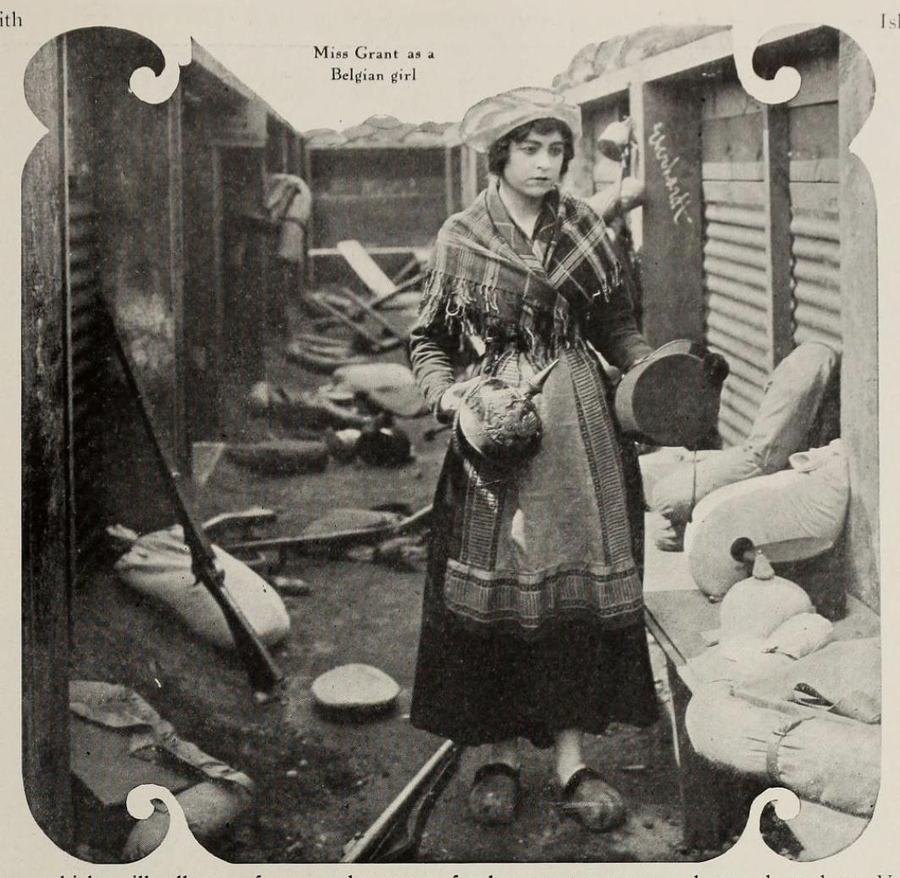
The catalyst for Victor's departure from his familiar world arrives in the form of a French art connoisseur, a figure whose urbanity and discerning eye represent the gateway to a larger, more sophisticated world. This encounter is pivotal, igniting Victor's dormant ambition and providing him with the validation he perhaps unconsciously craved. Before embarking on this transformative journey to Paris, a city synonymous with artistic enlightenment and romantic allure, Victor makes a solemn promise to Jeanne, his sweetheart, played by Valentine Grant. Grant’s portrayal of Jeanne is one of quiet devotion and steadfastness, embodying the anchor that Victor leaves behind. Her character serves as a poignant symbol of the innocent, untainted love that Victor risks forsaking, a stark contrast to the sophisticated dangers awaiting him.
Paris, as depicted in 'The Belgian,' is less a geographical location and more a state of mind, a vibrant crucible where Victor's artistic talents are meant to flourish. The film subtly conveys the intoxicating atmosphere of the city, its cultural richness offering a stark contrast to the provincial life Victor has known. It is within this glittering, yet increasingly perilous, environment that Victor's path intersects with that of the enigmatic Countess de Vries. Portrayed by the captivating Anders Randolf, the Countess is a figure of immense sophistication and allure, a woman whose every gesture and word seems to drip with an almost dangerous charm. Randolf masterfully conveys a sense of veiled intentions, making her character a fascinating enigma. Her elegance and worldly wisdom are a stark contrast to Jeanne's rustic simplicity, immediately placing Victor at a crossroads of romantic and moral choices.

The burgeoning romance between Victor and the Countess is depicted with a gradual intensity, allowing the audience to understand Victor's enchantment. He is, after all, a young man from a sheltered background, suddenly thrust into a world of high society and intrigue. The Countess represents not just romantic love, but also a gateway to a different kind of life, one perhaps perceived as more aligned with his artistic aspirations. The film excels in building this emotional connection, making the subsequent revelation of the Countess's true identity all the more impactful. She is not merely a sophisticated socialite; she is a German spy, a revelation that shatters Victor's idyllic Parisian dream and plunges him into a labyrinth of espionage and betrayal.
This dramatic turn in the narrative elevates 'The Belgian' beyond a simple romantic drama into a more complex thriller. The stakes escalate exponentially, transforming Victor's personal dilemma into one with potentially dire consequences for others. The film cleverly uses the romantic entanglement as a vehicle for exploring themes of deception, loyalty, and the moral compromises necessitated by war. Victor finds himself caught between his love for the Countess and his inherent sense of patriotism and justice, a conflict that forms the emotional core of the latter half of the film. The performances of George Majeroni and Anders Randolf are particularly crucial here, as they navigate the shifting dynamics of their characters' relationship, from tender romance to tense suspicion and eventual confrontation.

Frederic Arnold Kummer’s screenplay for 'The Belgian' is notable for its intricate plotting and character development, particularly for a film of its era. Kummer, known for his ability to weave compelling stories, demonstrates a keen understanding of human psychology, exploring how ambition can blind one to danger, and how love can be both a refuge and a weapon. The narrative arc, from Victor's humble beginnings to his Parisian adventures and eventual confrontation with betrayal, is structured to maintain a consistent level of engagement. The tension builds organically, punctuated by moments of both romantic tenderness and sudden, jarring revelations. The pacing is deliberate, allowing the audience to fully absorb the emotional weight of each plot twist.
The film’s exploration of loyalty versus ambition resonates deeply. Victor's initial decision to leave Jeanne and his village is driven by a noble pursuit of artistic excellence, but it inadvertently opens him up to a world where values are distorted. The Countess represents a seductive alternative to his previous life, not just romantically, but ideologically. Her German allegiance, revealed with calculated precision, forces Victor to confront the moral implications of his choices. This thematic complexity is what elevates 'The Belgian' beyond a simplistic wartime melodrama. It asks difficult questions about where one's true allegiances lie when personal desires clash with national duty, and how easily innocence can be corrupted by sophisticated deceit.
The supporting cast contributes significantly to the film’s rich texture. Walker Whiteside, Blanche Davenport, Sally Crute, Arda La Croix, and Henry Leone, though perhaps with less screen time, each play their parts in fleshing out the world Victor inhabits. Their performances, whether as fellow artists, concerned villagers, or agents of the unfolding drama, add credibility and depth to the narrative. Davenport, for instance, might portray a wise elder, or Crute a gossiping neighbor, each subtly reinforcing the social fabric from which Victor emerges or into which he is thrust. The careful attention to these peripheral characters ensures that the central conflict feels grounded within a believable social context, rather than existing in a vacuum.
While specific details about the cinematography of 'The Belgian' might be scarce from a contemporary vantage point, one can infer from the narrative structure and character development that visual storytelling played a crucial role. The contrast between the stark, perhaps windswept, Belgian coast and the opulent, bustling streets of Paris would have been rendered through deliberate framing and lighting choices. The shift in Victor's demeanor, from the rugged fisherman to the refined artist, would have been visually underscored through costume, posture, and environmental details. The scenes involving the Countess, particularly those hinting at her clandestine activities, would likely have employed dramatic shadows and secretive compositions to enhance the sense of intrigue and danger. The film's ability to convey complex emotional states and plot twists through visual cues, characteristic of early cinema, is a testament to its craftsmanship.
Comparing 'The Belgian' to other films of its era, one might draw parallels to the intricate romantic entanglements and societal deceptions found in works like The Misleading Lady, where mistaken identities and elaborate schemes drive much of the drama. Or perhaps the emotional depth and difficult choices faced by characters in The Return of Mary, which often explored themes of loyalty and the consequences of past actions. The element of espionage and hidden identities could also find a distant cousin in the dramatic reveals of films like Each Pearl a Tear, where personal stakes are heightened by unforeseen circumstances. However, 'The Belgian' distinguishes itself through its unique blend of artistic ambition, wartime backdrop, and the specific psychological journey of its protagonist. It's a film that doesn't just tell a story; it crafts an experience of growth, disillusionment, and eventual confrontation with harsh realities.
The film's enduring impact lies in its capacity to explore universal themes within a very specific historical context. The struggle between personal desire and moral imperative, the allure of the unknown versus the comfort of the familiar, and the devastating consequences of betrayal are all timeless narratives. 'The Belgian' manages to encapsulate these grand ideas within the intimate story of one man's journey from a fishing village to the heart of wartime intrigue. It serves as a powerful reminder that even amidst grand historical events, individual lives are profoundly shaped by their choices, their loves, and the secrets they uncover.
In conclusion, 'The Belgian' is a compelling cinematic artifact that deserves recognition for its sophisticated narrative, strong characterizations, and thematic depth. Frederic Arnold Kummer’s direction and writing, combined with the dedicated performances of George Majeroni, Valentine Grant, and Anders Randolf, create a film that transcends its genre classifications. It’s a poignant tale of a young artist's transformation, a gripping espionage thriller, and a heartbreaking romance, all meticulously woven into a single, cohesive vision. The complexities of Victor Morenne's journey, his artistic dreams colliding with the harsh realities of war and deception, leave an indelible impression, urging viewers to reflect on the intricate dance between destiny and choice.
IMDb 7.5
1927
Community
Log in to comment.