DbcultAccessing Vault...
Cult Review
Senior Film Conservator
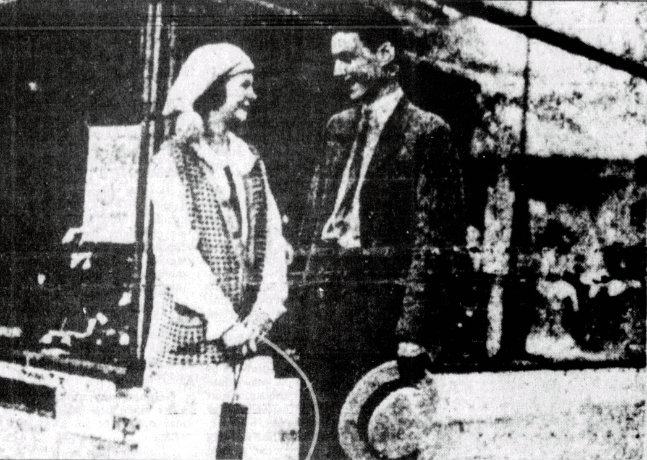
In an era when the silver screen was still finding its voice, a remarkable narrative emerged from the nascent film industry, capturing the very essence of American aspiration and the intricate dance of social mobility. "The Belle of Kenosha" stands as a captivating artifact, a silent film that, through its expressive performances and compelling storyline, speaks volumes about the human condition at the turn of the 20th century. It’s a tapestry woven with threads of burgeoning romance, class conflict, and the relentless pursuit of fortune, all set against the dynamic backdrop of a burgeoning Midwestern city.
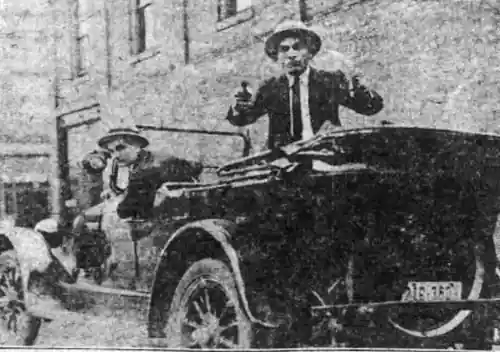
Our protagonist, Jack Hampton, portrayed with an earnest vigor by Harvey Osborn, embodies the archetypal young man lured away from agrarian simplicity by the dazzling promise of urban sophistication. His journey from the farm to the bustling streets of Kenosha is not merely a change of scenery; it's a profound transformation, a leap of faith into the unknown. Osborn’s portrayal of Jack is nuanced, depicting a character brimming with an infectious optimism that, while occasionally naive, is undeniably magnetic. We witness his initial struggles as a door-to-door salesman, peddling everything from weighty tomes to humble brooms, a testament to the sheer grit required to carve out a living in the city. One particularly memorable scene, where a formidable housewife rebuffs his book-selling efforts with a broom, injects a welcome dose of comedic realism into his otherwise earnest endeavors. It’s a moment that resonates, reminding us of the often-thankless nature of early salesmanship, a stark contrast to the slicker, more sophisticated schemes that would later tempt him. This early struggle for legitimacy echoes themes explored in films like The Image Maker, where characters also grapple with constructing a new identity and fortune in a rapidly industrializing society.
Jack's path irrevocably shifts when he encounters Betty Parker, brought to life with captivating grace by Katherine Rugani. Rugani imbues Betty with a spirited independence and an underlying vulnerability that makes her instantly endearing. Their initial meeting, a dramatic rescue from a boorish masher, is a classic cinematic trope, yet it feels fresh due to the palpable chemistry between Osborn and Rugani. This moment of chivalry swiftly blossoms into a tender romance, painting a picture of innocent affection set against the backdrop of Kenosha's vibrant, if sometimes perilous, street life. Their courtship, depicted through a series of charming intertitles and expressive glances, becomes the emotional anchor of the film, providing a much-needed counterpoint to Jack’s sometimes-fraught professional life. It’s a love story that, while sweet, is quickly tested by external pressures, much like the relationships under scrutiny in Family Affairs, where personal desires often clash with societal expectations.
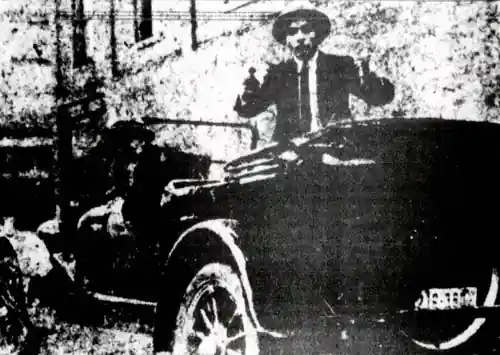
The budding romance between Jack and Betty is swiftly complicated by the formidable presence of Betty's mother, portrayed with an almost theatrical hauteur by M.G. Boerner. Boerner's performance is a masterclass in silent film villainy, her every disapproving glance and rigid posture conveying a profound disdain for Jack’s humble origins. She embodies the rigid social stratification of the era, determined to secure a 'suitable' match for her daughter, preferably the wealthy-but-dull millionaire, played with appropriate blandness by Ernest Olsen. This dynamic highlights a pervasive societal concern of the time: the tension between love and social standing. Betty's tolerant father, Amos Parker (Fred Huntman), offers a refreshing contrast, his quiet support for his daughter’s happiness underscoring a more progressive viewpoint within the family unit. Huntman delivers a subtle yet powerful performance, his paternal warmth a steadying force amidst the matriarch's social climbing machinations. Betty’s clever deflection of the unwanted suitor onto a friend, executed with conspiratorial glee, showcases her agency and intelligence, making her more than just a damsel in distress. This thematic exploration of societal expectations versus individual desire finds resonance in other contemporary works like Which Woman? or Little Miss Optimist, which often depicted women navigating restrictive social landscapes.
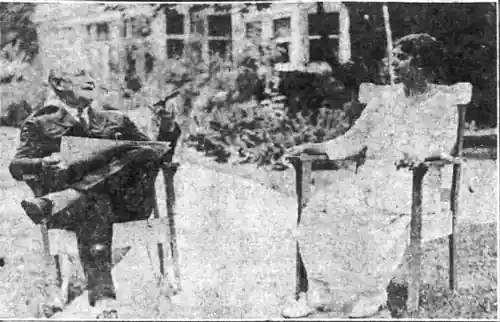
As Jack’s ambition grows, he ventures into the more lucrative, yet ethically murky, world of oil leases. Unbeknownst to him, these ventures are fraudulent, a detail that adds a layer of dramatic irony and moral complexity to his character arc. Osborn conveys Jack’s earnest belief in these investments, making his unwitting involvement in deception all the more poignant. This narrative thread speaks to the darker side of the American dream, where the pursuit of wealth can inadvertently lead one astray, a theme explored with stark realism in films such as The Betrayer. The film skillfully avoids demonizing Jack, instead portraying him as a product of his times, susceptible to the grand promises of prosperity that often masked underlying deceit. This moral ambiguity elevates "The Belle of Kenosha" beyond a simple romance, grounding it in the complex realities of an expanding capitalist society.
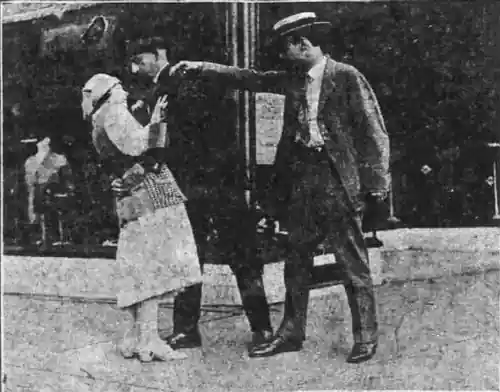
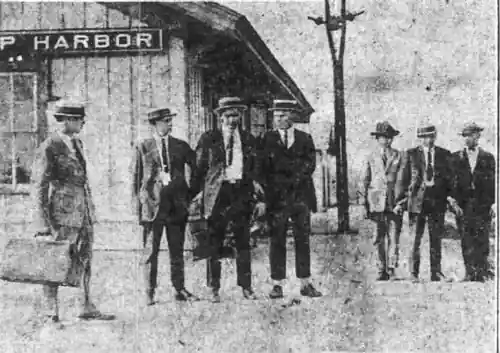
The film takes an unexpected turn into thrilling action with a downtown bank robbery, injecting a jolt of raw excitement into the narrative. This sequence is masterfully directed, showcasing the nascent cinematic techniques of depicting high-stakes pursuit. Jack, ever the man of action, finds himself swept into the chase alongside the police chief and four detectives. The frantic energy of the pursuit, culminating in the gunmen's dramatic escape across state lines by train, is a testament to the film's ability to seamlessly blend genres. It’s a moment that not only provides a thrilling spectacle but also solidifies Jack’s heroic stature, proving his courage extends beyond personal rescues. This episode, with its desperate criminals and intense chase, draws parallels to the gritty realism found in crime dramas of the era, such as The Penalty or Where the North Begins, demonstrating the universal appeal of good versus evil narratives even in a silent medium.
Beyond the compelling performances of Rugani and Osborn, the film benefits immensely from its robust supporting cast. Jean Hanson, George W. Greiner, Wells Roberts, Marjorie Marquissee, Milton Elfman, Gordon Swarthout, Anna Marie Young, Edward Scheckler, Martin Petersen, Carl Max Svendsen, Guerdon Mills, Amelia Hopf, Anne Smolinski, Ann Marie Young, Emil Clausen, Julius Rusecki, and Louis Williamson all contribute to the rich tapestry of Kenosha's citizenry. Their collective presence, though often in smaller roles, adds depth and authenticity to the bustling urban environment. From the exasperated broom-wielding housewife to the determined police chief, each character, no matter how fleeting, helps to paint a vivid picture of the community. The nuanced expressions and gestures, crucial in silent cinema, are handled with aplomb across the board, demonstrating a collective understanding of the medium’s demands. This ensemble work is reminiscent of the detailed world-building seen in films like Pop Tuttle's Grass Widow, where a community's fabric is intricately explored through its diverse inhabitants.
From a technical standpoint, "The Belle of Kenosha" showcases the evolving artistry of early filmmaking. The cinematography, while perhaps lacking the elaborate tracking shots of later eras, effectively captures the dynamic energy of city life and the intimate moments between characters. The use of intertitles is judicious, providing necessary exposition without interrupting the flow of visual storytelling. Lighting, though rudimentary by today's standards, is employed to highlight emotional states and delineate scenes. The pacing is remarkably well-balanced, oscillating between moments of quiet character development and exhilarating action sequences. The film's ability to convey complex emotions and intricate plot points without spoken dialogue is a testament to the skill of its director and editor, and a valuable lesson in visual narrative. This efficiency in storytelling, despite the technological limitations, is a hallmark of many enduring silent films, much like the compelling visual narratives found in Sodoms Ende or The Mother Heart.
"The Belle of Kenosha" is more than just a historical curiosity; it's a timeless exploration of themes that continue to resonate today. The tension between rural innocence and urban ambition, the challenges of social mobility, the enduring power of love to transcend class barriers, and the ever-present allure of quick riches—these are all threads that weave through the fabric of contemporary society. The film’s nuanced portrayal of character motivations, particularly Jack’s unwitting involvement in fraud and Betty’s quiet strength in defying her mother, adds a layer of psychological depth that elevates it beyond simplistic morality tales. It speaks to the universal human desire for belonging, success, and genuine connection. The uncredited writers of this film (as is often the case with early cinema) crafted a narrative that, despite its period setting, feels remarkably modern in its understanding of human nature. Its exploration of personal integrity in the face of temptation, and the resilience required to pursue one's dreams, positions it alongside other character-driven dramas of the period such as Nobody Home or Bubbles, which similarly delved into the intricacies of individual journeys.
In conclusion, "The Belle of Kenosha" is a testament to the enduring power of silent cinema. It's a film that, despite its lack of spoken dialogue, communicates a wealth of emotion, character, and social commentary. Through its compelling performances, dynamic plot, and thoughtful exploration of universal themes, it offers a window into a bygone era while simultaneously reflecting aspects of the human experience that remain constant. For cinephiles and casual viewers alike, it serves as a poignant reminder of the foundational artistry upon which the edifice of modern cinema was built. Its blend of romance, social drama, and unexpected action creates a rich, engaging experience that continues to captivate, proving that some stories, told well, truly are timeless. It’s a delightful discovery, a vibrant piece of cinematic history that deserves to be seen and appreciated for its genuine charm and dramatic integrity.
IMDb —
1918
Community
Log in to comment.