DbcultAccessing Vault...
Cult Review
Senior Film Conservator
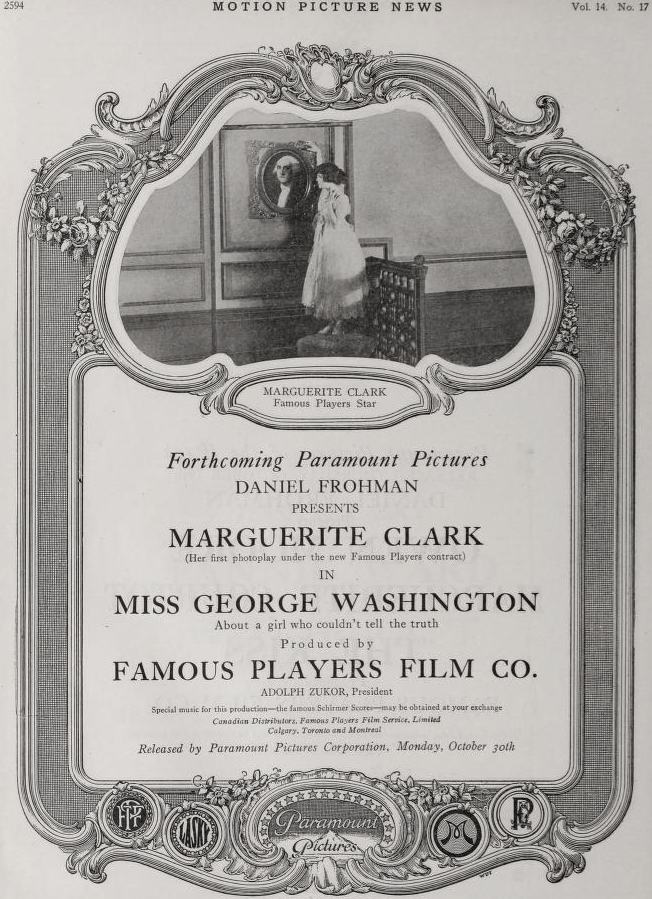
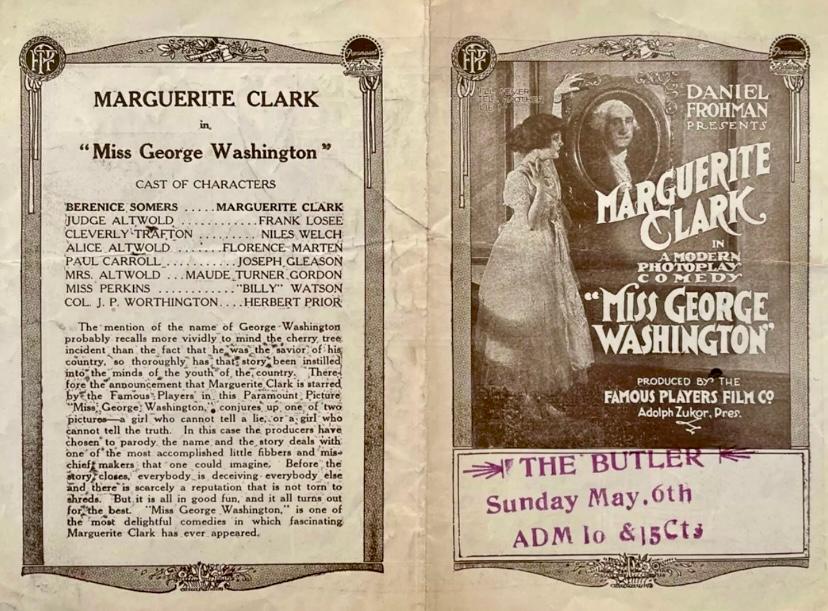
To understand the gravitational pull of Miss George Washington, one must first dismantle the prevailing notion that early silent comedies were merely exercises in slapstick or pantomime. By 1916, the medium had begun to pivot toward a more sophisticated comedy of manners, and this Lew Allen-penned vehicle for the luminous Marguerite Clark is a quintessential specimen of that transition. The film operates on a delightful paradox; it invokes the name of the most honest figure in American mythology to frame a story about a woman who treats veracity as a mere suggestion. This is not the grim moralizing found in The Unwritten Law, but rather a playful deconstruction of social expectations and the performative nature of identity.
Marguerite Clark, often positioned as the primary rival to Mary Pickford, brings a distinct, almost mercurial energy to the role of Berenice Somers. Unlike the often-suffering heroines of the era, Berenice is an agent of chaos. Her lies are not born of malice but of a survivalist instinct common to the youth of any century. When she and Alice skip school, they aren't just seeking entertainment; they are claiming a temporary autonomy from the rigid structures represented by the Altwolds. The Judge, played with a stiff-collared gravitas by Herbert Prior, serves as the personification of the Law—not just the legal code, but the moral code of the early 20th-century bourgeoisie. This thematic weight reminds one of the tensions explored in The Majesty of the Law, though here the consequences are farcical rather than tragic.
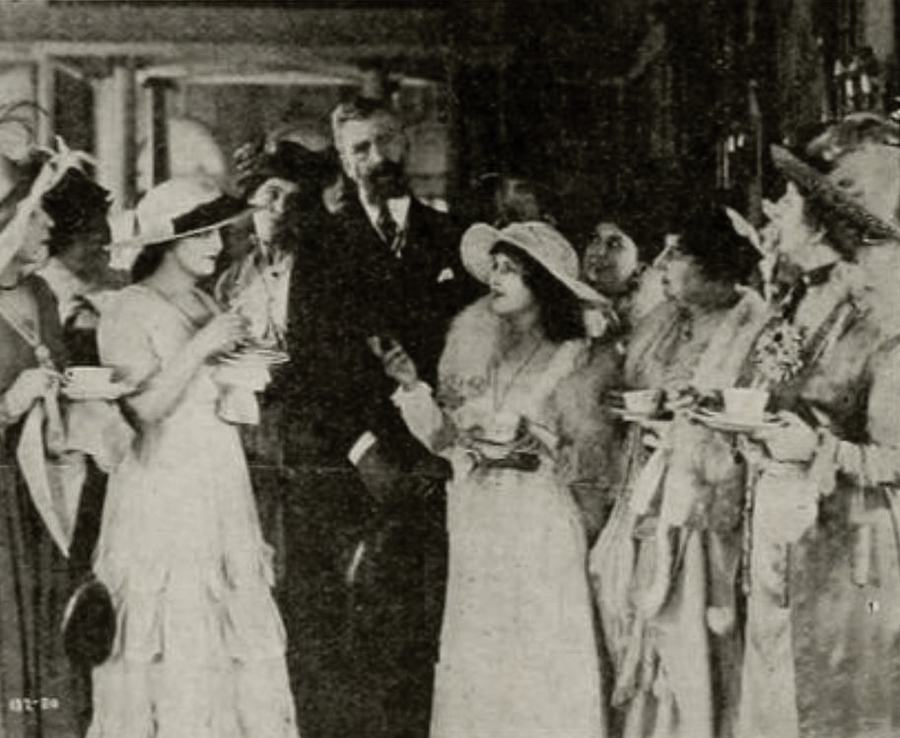
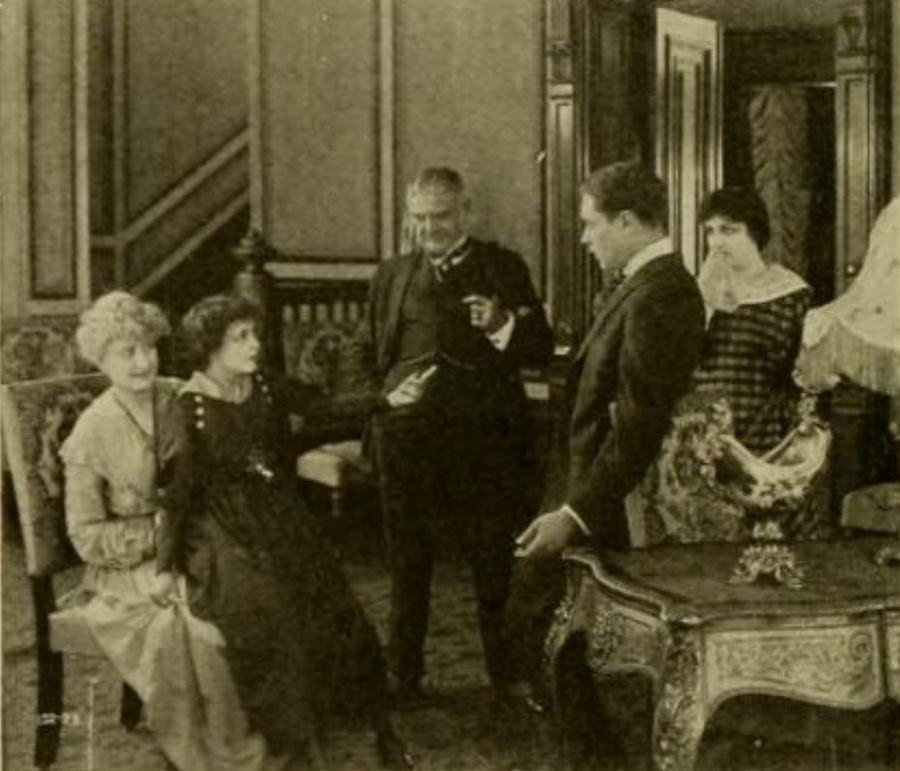
The pivotal sequence within Cleverley Trafton's hotel room is a masterclass in the economy of space. In the silent era, the set was often a character in itself. Here, the room represents a liminal space where the public and private spheres collide with disastrous—and hilarious—results. When the Altwolds burst in, the film shifts from a simple truant adventure into a high-stakes social gamble. The genius of the script lies in Berenice's instantaneous pivot. By claiming to be Trafton's wife, she effectively weaponizes the very morality the Altwolds seek to uphold. If she is married, the scandal evaporates, replaced by the saccharine approval of the elder generation. It is a brilliant subversion of the "fallen woman" trope seen in more somber works like La Belle Russe.
Cleverley Trafton, the diplomat, finds himself in a situation where his professional skills in negotiation are utterly useless. Niles Welch portrays Trafton with a wonderful sense of escalating bewilderment. His inability to argue his way out of the marriage lie highlights the power dynamic shift; in this domestic sphere, Berenice is the one holding the diplomatic immunity. This dynamic offers a fascinating contrast to the more traditional gender roles found in Only a Factory Girl, where the female protagonist is often at the mercy of external economic and social forces.
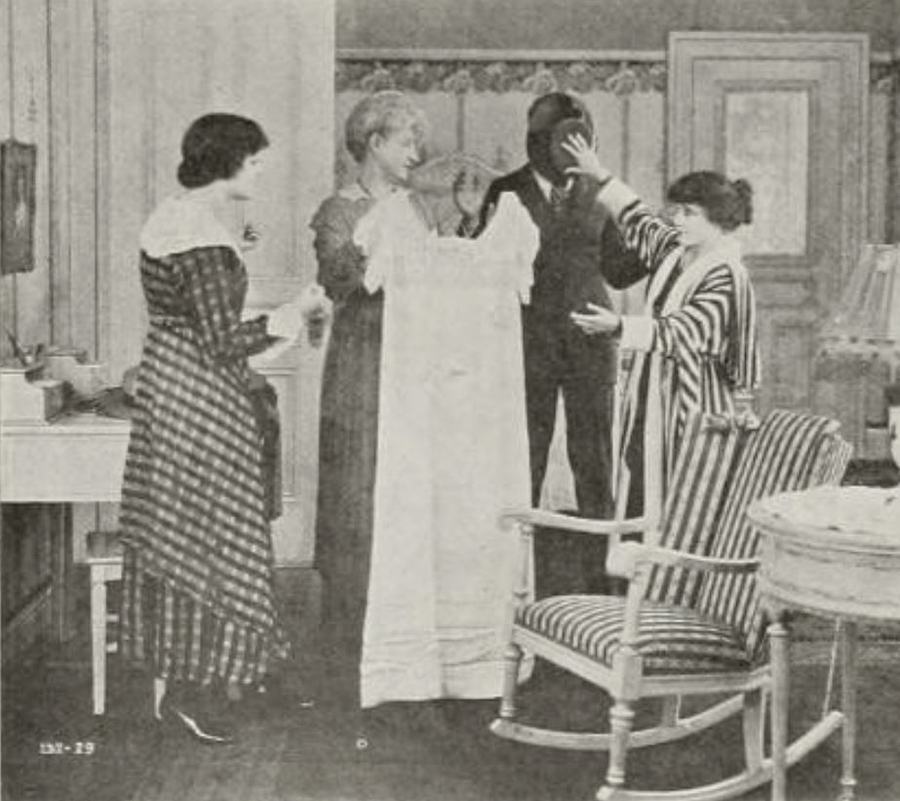
The transition of the Altwolds from judgmental pursuers to overbearing hosts is where the film’s satirical edge is sharpest. Their insistence that the 'newlyweds' stay with them is a form of social entrapment disguised as kindness. This sequence allows the film to explore the physical comedy of proximity. The embarrassment of having to spend the night together, while adhering to the strictures of Victorian-adjacent propriety, provides a tension that is both erotic and absurd. It echoes the themes of hidden lives found in Behind Closed Doors, yet it maintains a lightness that keeps the audience rooted in the romantic comedy genre.
Charlotte Greenwood and Maude Turner Gordon provide stellar supporting work here, grounding the absurdity in a recognizable social reality. The film’s pacing, likely influenced by the vaudevillian backgrounds of its cast, ensures that the lie never quite collapses under its own weight until the emotional core of the characters has caught up to the fiction. This is a common thread in the works of the era, where the artifice of the plot serves as a crucible for the characters' true feelings, much like the transformative journeys in A Dream or Two Ago.
Visually, Miss George Washington utilizes the limited technology of 1916 to emphasize the intimacy of its characters. The use of iris shots and close-ups on Marguerite Clark’s expressive face allows the viewer to see the gears turning behind her mendacity. There is a specific "Clark-ian" look—a mixture of wide-eyed innocence and devious calculation—that carries the film through its slower beats. This visual language is far more advanced than the static staginess of Sixty Years a Queen, demonstrating how rapidly the grammar of cinema was evolving during this decade.
The lighting in the Altwold estate scenes captures a sense of stifling luxury. The shadows are long, and the decor is cluttered, reflecting the psychological state of Berenice and Cleverley as they navigate their forced intimacy. In contrast to the stark, almost haunting atmosphere of The Isle of the Dead, the lighting here is warm, yet it creates a different kind of claustrophobia—the claustrophobia of the white lie. It is a visual representation of the "temptation" to simply give in to the lie, a theme that resonates with the moral conflicts in Temptation.
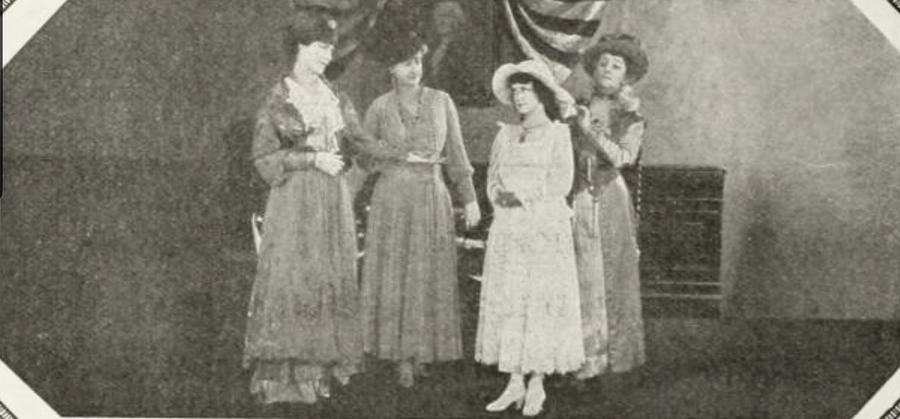
The resolution of the film, where the lie is transmuted into truth, is a fascinating ideological pivot. It suggests that in the world of 1916, the only way to rectify a breach of social conduct (the lie and the school-skipping) is through the ultimate social contract: marriage. However, the film avoids feeling like a forced happy ending because of the genuine chemistry developed between Clark and Welch. Their realization that they have come to like each other is handled with a subtlety that is often missing from contemporary rom-coms. It is a gradual awakening, a thawing of the embarrassment that had previously paralyzed them.
This shift from deception to sincerity is a common trope in early 20th-century storytelling, reflecting a society that was desperately trying to reconcile its Victorian roots with a burgeoning modern sensibility. We see similar thematic echoes in The Dawn of a Tomorrow, where a dark situation is redeemed through a change in perspective. In Miss George Washington, the redemption is found not in the truth coming out, but in the truth catching up to the fiction. It is a delightfully cynical, yet ultimately heartwarming, take on the "fake dating" trope that remains a staple of the genre to this day.
When we compare this film to other works of the period, such as The Salamander, we see a distinct difference in how female agency is portrayed. While the 'Salamander' is a woman who plays with fire without getting burned, Berenice Somers is a woman who starts a fire and then decides she quite likes the warmth. Her agency is found in her ability to manipulate the narrative of her own life, even when that narrative is built on a foundation of schoolgirl truantry. It is a more grounded, albeit farcical, depiction of female resourcefulness.
Furthermore, the film’s exploration of the "jackeroo" spirit—an adventurous, somewhat reckless approach to life—can be tangentially linked to the themes in The Life of a Jackeroo. Both films deal with characters thrust into unfamiliar environments where they must adapt or fail. For Berenice, the 'outback' is the drawing-room of the Altwolds, and her 'survival' depends on her ability to maintain her composure under the scrutiny of the Judge. Even the more obscure titles of the era, like Heimgekehrt, share this preoccupation with the idea of 'home' and the roles we are expected to play within it.
In the broader spectrum of 1916 releases, including the intense Red Powder, Miss George Washington stands out as a breath of fresh air. It does not seek to lecture its audience on the dangers of immorality. Instead, it invites them to laugh at the absurdity of the moral structures themselves. Even the title is a wink to the audience, a recognition that the "I cannot tell a lie" myth is exactly that—a myth. In the real world, and certainly in the cinematic world, a well-timed lie can be the catalyst for a much greater truth.
Ultimately, the film serves as a testament to the enduring appeal of the screwball comedy long before the term was officially coined. It possesses all the hallmarks: the rapid-fire plot developments, the clash of social classes, and the central romance that blossoms under duress. While it may not have the haunting imagery of Children of the Stage; or, When Love Speaks, it has a vitality that makes it remarkably modern. Marguerite Clark’s performance remains a masterclass in silent comedic timing, proving that she was much more than just a "doll-like" figurehead for Famous Players-Lasky.
As we look back at this 1916 gem, we see a film that understood the power of the image to convey what words (or intertitles) could not. The silent sighs, the averted glances, and the frantic attempts to hide in plain sight all contribute to a rich tapestry of human experience. Miss George Washington is not just a film about a girl who told a lie; it is a film about the transformative power of fiction itself. It reminds us that sometimes, we have to pretend to be something we are not in order to find out who we truly want to be. It is a scintillating, effervescent piece of cinematic history that deserves its place in the pantheon of early American comedy.
IMDb —
1919
Community
Log in to comment.