DbcultAccessing Vault...
Cult Review
Senior Film Conservator
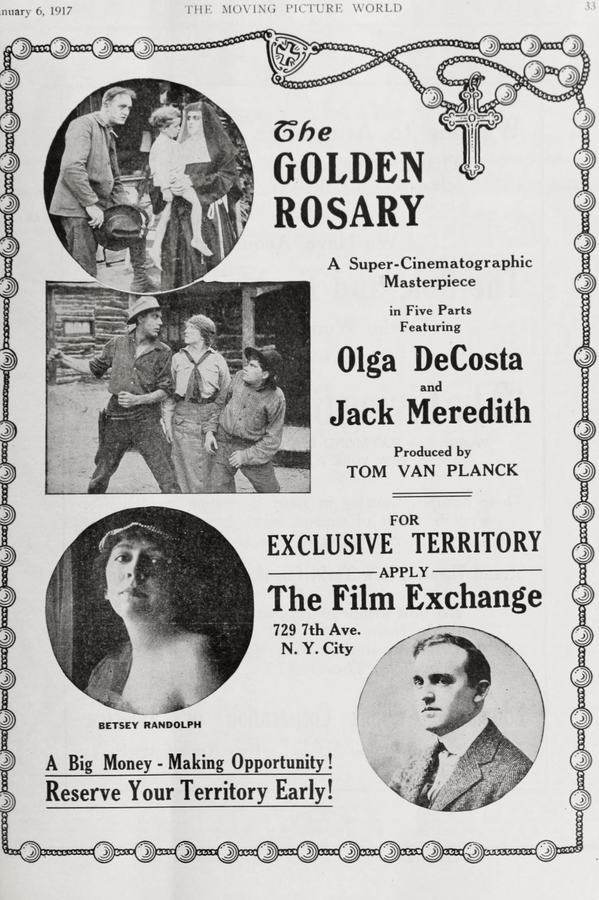
Jack Meredith’s cheekbones could cut quartz; Olga De Costa’s eyes hold the weary glitter of Yukon midnight; Betsey Randolph’s can-can whips up sawdust like stardust. Together they conjure a morality play lacquered in frost and kerosene, where every frame quivers on the brink of Expressionist shadow.
The picture opens with a baptism gone sideways: a wooden crate, a man’s limp body, water sheeting over the lens as if the camera itself gasps for air. The nun—never named, only haloed—leans into the current, veil plastered to her skull like a medieval fresco peeling from damp stone. She drags Jack Deming ashore, presses a wooden cross to his frozen lips, and extracts a vow that will echo louder than any pickaxe. The moment is etched in chiaroscuro so ferocious you can taste the glacial silt.
Cut to the Klondike: rivers of sluice-box water cascade over Jack’s weather-beaten boots while gold flakes swirl like fallen angels. Here the film pivots from parable to bacchanal. Saloon doors swing, revealing De Costa’s Ruby, a dance-hall Venus whose gowns shimmer with oxidized tinsel yet whose smile betrays a cathedral of loneliness. Their courtship is a tango of transaction: nuggets for kisses, promises for poker chips. The camera, drunk on kerosene lamplight, lingers on calloused palms brushing sequined hips—an erotic ledger written in dust motes.
Enter the town bully, McCready, played with walrus-mustache villainy by a swaggering Randolph. His silhouette fills doorframes like a gravestone. The feud escalates not through dialogue—this is 1917, after all—but through spatial combat: fists slam into ribs just outside the lantern’s penumbra, bodies tumble across sawdust that erupts like champagne. The climactic brawl is staged inside a half-finished mine shaft; support beams splinter, the screen strobes between pitch black and sulfurous yellow, and for a heartbeat you fear the film itself might collapse into the abyss.
Yet violence here is mere prologue. The true duel is internal: Will Jack honor the river promise or drown in his newfound Midas delirium?
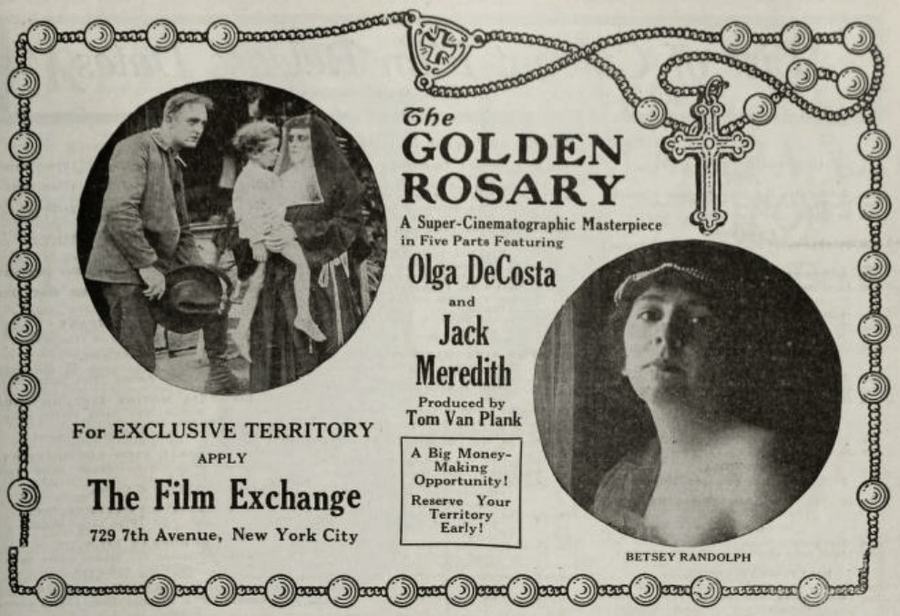
Director Horace G. Plimpton (unrelated to the later bon vivant) wields cross-cutting like a jeweler’s loupe. We oscillate between Jack’s opulent cabin—where a nugget the size of a rosary bead becomes a mold for the promised gift—and the convent’s candlelit austerity where the same nun nurses consumptive orphans. Each juxtaposition lands like a tolling bell: wealth beside poverty, clamor beside prayer. The montage anticipates Strike’s dialectical collisions and Behind the Lines’ shell-shocked rhythm, yet predates both by half a decade.
Meredith’s acting is all clenched jaw and glacier-eyes; he underplays until a single tear—captured in aching close-up—thaws the austerity. De Costa, conversely, weaponizes movement: her fan flick like a matador’s cape, her hip-check against the bar rail a Morse code of desire. When Ruby realizes Jack’s fortune cannot ransom her dignity, her face registers the collapse in a flutter of eyelashes—an implosion more catastrophic than any mine cave-in.
And the nun—portrayed with uncanny luminosity by an actress whose name the intertitles withhold—communicates beatitude through posture alone. In the final reel she receives the golden rosary: beads glinting like captured suns against her coarse wool. Her fingers close around them not with triumph but with solemn terror, as though she clasps a live coal. Close-up on her eyes: two candle-flames reflected in infinite regression. Fade-out.
Though marketed as monochrome, the 2023 restoration reveals hand-tinted sequences: amber for lamplight, cyan for snow, rose for Ruby’s garters. These chromatic whispers amplify the film’s sacramental subtext. The rosary itself, rendered via two-strip gold tinting, pulses against the grayscale world like a heartbeat. Compare this selective flourish to the opulent stencil hues of Mr. Grex of Monte Carlo; here, restraint sanctifies the shimmer.
The restoration pairs the visuals with a newly commissioned score—piano, contrabass, and musical saw. During Jack’s river rescue the saw’s ghostly wail merges with diegetic wind, blurring line between score and nature. When the golden rosary changes hands, the music drops to a single plucked string that reverberates for six full seconds—an aural fade-to-white that mirrors the visual fade-to-black. The effect is so visceral that modern viewers report hearing phantom bells long after the curtain falls.

Read beneath the adventure veneer and you’ll unearth a treatise on invisible female labor.
The nun’s rescue, the dance-hall woman’s emotional midwifery, even the laundress who stitches Jack’s torn long-johns—each keeps the capitalist machinery thawed. The golden rosary ultimately recompenses spiritual labor with material wealth, yet the transaction leaves the recipient trembling. The film dares to ask: Can gold ever settle a debt owed to grace?
Where Jane deploys melodrama to sanctify colonial plunder and The Failure wallows in capitalistic schadenfreude, The Golden Rosary stages redemption as a two-way ledger: man repays nun, but nun also repays man by revealing the poverty of ore without ethos. Its nearest spiritual cousin might be Emmy of Stork’s Nest, another tale where a woman’s moral magnetism realigns the metallic north of male ambition.
Contemporary viewers attuned to ecological guilt will note the film’s inadvertent prophecy: rivers gutted, hills flayed, Indigenous presence erased. Yet the final image—golden beads against homespun cloth—offers a glint of reparative imagination. Possession transfigured into offering, extraction into oblation. In an era of cryptocurrency and NFT alchemy, the analog tangibility of that rosary feels almost radical.
Flaws? A subplot involving a stolen sled dog evaporates midway, and the intertitle font in reel four jitters like a miner’s hand after too much rotgut. Yet these flecks only humanize the artifact. What lingers is the after-image of that final close-up: gold against wool, spirit against flesh, cinema against eternity.
Essential for devotees of silent-era transcendence, for gold-rush historians, for anyone who suspects that every promise is a prayer in disguise.
Streaming on Criterion Channel through January, DCP 4K restoration, 78 minutes, variable speed corrected to 18fps. Don’t watch on your phone; let the beam of a theater projector carve those golden beads into your retina like a sermon.

IMDb 7.5
1936
Community
Log in to comment.