DbcultAccessing Vault...
4.2/10
Senior Film Conservator
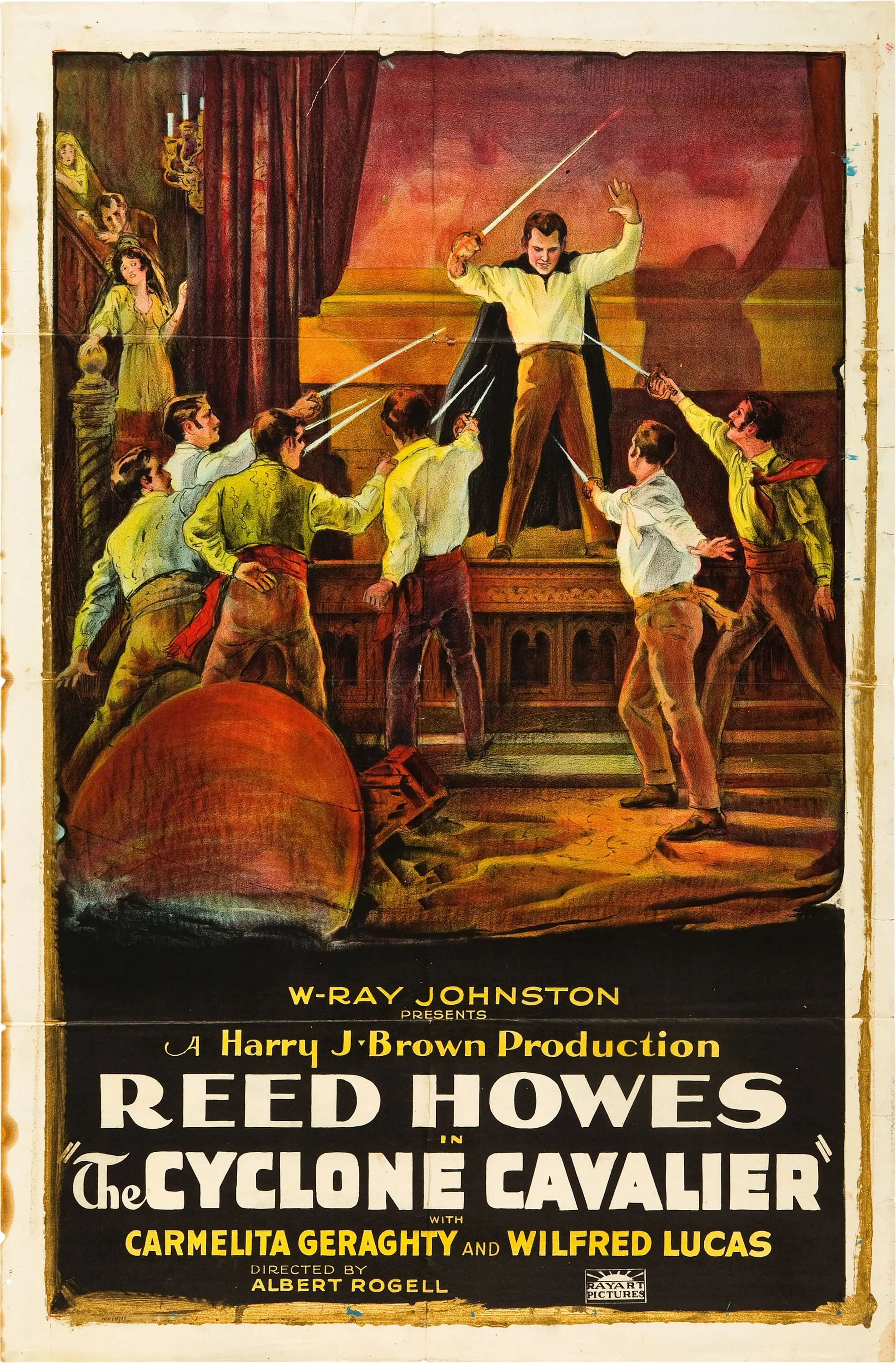
A definitive 4.2/10 rating for a film that redefined the boundaries of cult cinema. Cyclone Cavalier remains a cornerstone of transgressive art.
Is Cyclone Cavalier worth your time in the modern age? Short answer: Yes, but only if you appreciate the raw, unpolished energy of 1920s B-movie adventures. It is a film for those who find charm in historical archetypes and athletic performances, but it is certainly not for those seeking a deep, philosophical narrative or high-budget spectacle.
This film exists as a fascinating artifact of a time when the 'American Go-Getter' was the ultimate cinematic hero. It doesn't ask for your patience; it demands your attention through sheer movement. It works. But it’s flawed.
1) This film works because Reed Howes possesses a kinetic, almost restless energy that bridges the gap between the swashbuckling of Douglas Fairbanks and the grounded grit of later action stars.
2) This film fails because the antagonist force—specifically the military of Costa Blanca—feels more like a collection of bumbling extras than a credible threat to our hero.
3) You should watch it if you want to see the missing link between the silent era's romantic comedies and the high-speed chase films that would eventually define the sound era.
The 1920s were obsessed with speed. From the assembly line to the race track, the decade roared, and Cyclone Cavalier is the cinematic embodiment of that roar. Ted Clayton, played with a permanent smirk by Reed Howes, is not a character of depth, but a character of action. When he arrives in Costa Blanca, he doesn't just walk into the plot; he charges into it. This is a far cry from the more somber, domestic tensions found in The House Built Upon Sand.
The setting of Costa Blanca serves as a playground for Ted’s American sensibilities. In a way that feels uncomfortably colonial today, the film treats the foreign government as a series of hurdles for Ted to jump over. Yet, as a critic, one must admire the choreography of these hurdles. The moment Ted first lays eyes on the President’s daughter (Carmelita Geraghty), the film shifts gears. It stops being a business travelogue and becomes a high-stakes game of 'dodge the chaperone.'
The chaperone herself is a masterclass in silent film characterization. She doesn't need dialogue to convey her disdain for Ted’s 'vulgar' American energy. Every time Ted tries to lean in for a word, she is there—a human wall of lace and tradition. It’s a comedic beat that keeps the film grounded before the third-act military madness takes over. It reminds me of the rigid social structures explored in Die Frau mit dem schlechten Ruf, though handled here with a much lighter, almost slapstick touch.
Reed Howes was marketed as the 'Speed King,' and in this film, you see why. He doesn't just run; he leaps. He doesn't just drive; he hurtles. There is a specific scene involving a balcony escape that feels genuinely dangerous even by today’s standards. Unlike the more staged, theatrical movements in I promessi sposi, Howes brings a modern, athletic sensibility to the screen. He is the prototype for the modern action star.
However, his acting is secondary to his movement. In the quiet moments—the few that exist—Howes struggles to convey the same magnetism. He is a man built for the chase, not the conversation. This creates a strange imbalance in the film. The romance with Geraghty’s character feels thin because Ted is always looking for the next window to jump out of. Their chemistry is based on proximity and the thrill of the forbidden, rather than any genuine emotional connection. It’s a stark contrast to the heavy emotional stakes in Breaking Home Ties.
While the military provides the physical conflict, the chaperone provides the narrative friction. In many ways, she is the true villain of the film. She represents the old world, the 'slow' world, which Ted is trying to dismantle with his 'cyclone' energy. This conflict is more interesting than the actual political uprising that eventually occurs. It’s a battle of tempos.
There is a surprising observation to be made here: the film is actually quite critical of Ted’s arrogance, even if it celebrates his victory. He ignores local customs, flouts the law, and treats a sovereign nation like a personal gym. While we cheer for him, there is a lingering sense that he is a chaos agent. This complexity is often missing from contemporary reviews of silent B-movies, which usually dismiss them as simple morality plays. It has more in common with the cynical undertones of A Man and His Money than one might initially think.
The direction by Albert Rogell (though Sid Rogell is credited in the cast, the Rogell family footprint is all over this) is functional but effective. The pacing is the standout element. Most films of this era, like Jamestown, often suffer from a static camera and theatrical blocking. Cyclone Cavalier, however, feels like it’s in constant motion. The editing is sharp, cutting between Ted’s frantic escapes and the military’s slow, methodical pursuit.
The cinematography doesn't strive for the artistic heights of Die Bettelgräfin, but it understands how to capture a chase. There is a use of depth in the outdoor shots that makes the fictional Costa Blanca feel like a real, three-dimensional space. The way the shadows fall during the nighttime escape in the President's courtyard adds a layer of tension that the script alone doesn't provide.
Short answer: Yes, for fans of silent action. If you are looking for a historical curiosity that showcases the evolution of the action hero, this is a must-see. It is a brisk, entertaining 60 minutes that doesn't overstay its welcome. However, if you require deep character development or a plot that doesn't rely on 'American exceptionalism,' you might find it frustrating.
The film is a perfect example of 'Poverty Row' efficiency. It uses its limited budget to maximize thrills. It doesn't try to be Pasteur; it just tries to be fun. And on that front, it succeeds spectacularly.
When compared to other films of its time, Cyclone Cavalier stands out for its lack of pretension. It doesn't have the social weight of The City of Silent Men, nor does it have the whimsical domesticity of Meatless Days and Sleepless Nights. Instead, it occupies a middle ground—a film that is purely about the thrill of the chase. It is closer in spirit to the Western adventures like '49-'17, where the setting is just a backdrop for a hero to prove his mettle.
Even the more obscure titles like White Meat or Wild Women share this film's DNA: the idea that the world is a place for the bold to explore and conquer. It’s a specific, post-WWI American optimism that is both infectious and, in hindsight, a bit naive.
Cyclone Cavalier is a blast of hot air from 1925 that still manages to knock you off your feet. It isn't high art, but it is high energy. Reed Howes proves that you don't need a voice to be a star; you just need a good pair of legs and a willingness to jump off a roof. It’s a loud, silent movie that deserves a spot on your 'historical curiosity' watchlist. It works. But it’s flawed. And that’s exactly why it’s worth watching.
If you are looking for something more grounded, you might try If Marriage Fails or even Miss Jackie of the Navy. But if you want to see a man outrun an entire army for the sake of a girl he just met, Ted Clayton is your man.
IMDb —
1919
Community
Log in to comment.