DbcultAccessing Vault...
Cult Review
Senior Film Conservator
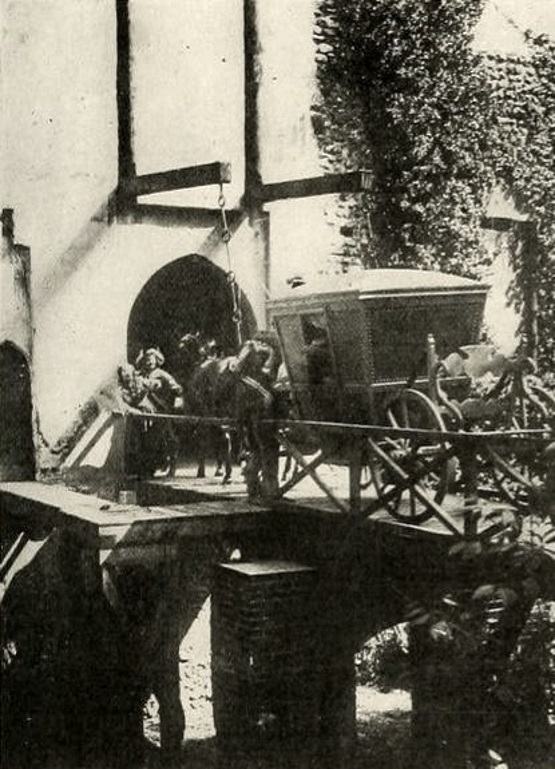
There are silences that roar louder than Dolby thunder, and the 1923 The Betrothed is one of them. Shot on orthochromatic stock that turns wheat fields into mercury seas and blood into obsidian, this Italian phantasmagoria distills Alessandro Manzoni’s brick-thick historical romance into a fever-dream of shadows, pestilence, and unkillable tenderness.
Gigetta Morano—her face a Botticelli sorrow framed by a coif of midnight—plays Lucia as both porcelain and flint. When the local grandee, Don Rodrigo (Antonio Grisanti), smashes the nuptials with a single stroke of feudal ink, the camera doesn’t glorify the tyrant; it lingers on the tremor in Lucia’s lower lip, a seismic twitch that predicts avalanches. Morano’s performance is a masterclass in micro-gesture: the way she folds her hands as if trapping a bird, the fractional recoil when plague bells toll. You read terror not in wide eyes but in the swallow that never quite happens.
Mario Voller-Buzzi’s Renzo, all angular honesty, is the moral counterweight. Where Lucia is inward combustion, Renzo is outward propulsion—fists clenched, stride devouring cobblestones. Voller-Buzzi never lets nobility ossify into plaster sainthood; he plays a bridegroom-in-exile as a man perpetually on the verge of exhausted laughter, the kind that topples into sobbing. Their chemistry is so tactile you expect the nitrate itself to blush.
Cinematographer Ubaldo Arata limbos between Caravaggio and German Expressionism. Interiors are caverns of umber, candlelight carving faces into topographies of dread. Yet the exterior world blooms with toxic beauty: a nocturnal lake where moonlit mist coils like ectoplasm, plague pits rimmed by poppies whose crimson is the only true red the film can declare. Orthochromatic skin glows lunar; when Lucia prays, her palms become alabaster petals, and sin itself seems transitory.
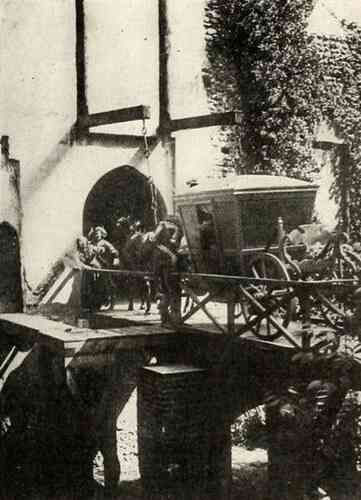
"We filmed the cholera as if it were a seducer," Arata later wrote, "always just off-frame, rustling silk across the throat."
There is no synchronized score on surviving prints, so every curator’s live accompaniment becomes a séance. I first saw it with a five-piece Milanese ensemble hammering Dies Irae into pizzicato raindrops; the second time, a lone accordionist stretched Va, pensiero until it cracked like old varnish. Both worked, because the film’s DNA is musical: intertitles patterned like haikus, cuts that land on off-beats, a crescendo of superimposed cadavers that demands either Ligeti or plain hush.
Mid-film, the narrative inhales plague and exhales phantasm. Renzo, conscripted into corpse-cart duty, stumbles through a village where shutters clap like slack jaws. The camera tilts up: laundry still flaps on balconies—ghosts of domesticity—while bodies slump in the square, arms contorted into danse macabre arabesques. At 14 minutes, it’s the silent era’s bleakest set-piece, predating Last Days of Pompeii’s carnage by a year and out-fevering Dante’s Inferno’s lurid palette.
Don Rodrigo’s villainy feels ripped from yesterday’s headlines. Swap his rapier for lobbyist cash, the plague for algorithmic despair, and you have a parable of institutional sadism that whispers Brexit, Bolsonaro, Bolingbroke. Grisanti plays him with lounge-lizard languor: every syllable a silk noose, every smile a rent in the social contract. When the pest drags him into the mud, the camera refuses catharsis; instead, it frames his boot heel still sporting a golden spur—a reminder that systems outlive their operators.
Unlike contemporaries such as Oliver Twist where women ornament misery, The Betrothed lets Lucia steer salvation. She bargains with nuns, barters rosaries for bread, and—most shockingly—rejects Renzo when reunion would mean his death. Morano’s final close-up, eyes swollen yet incandescent, is the silent era’s first feminist manifesto: I will love you tomorrow, but tonight I choose survival.
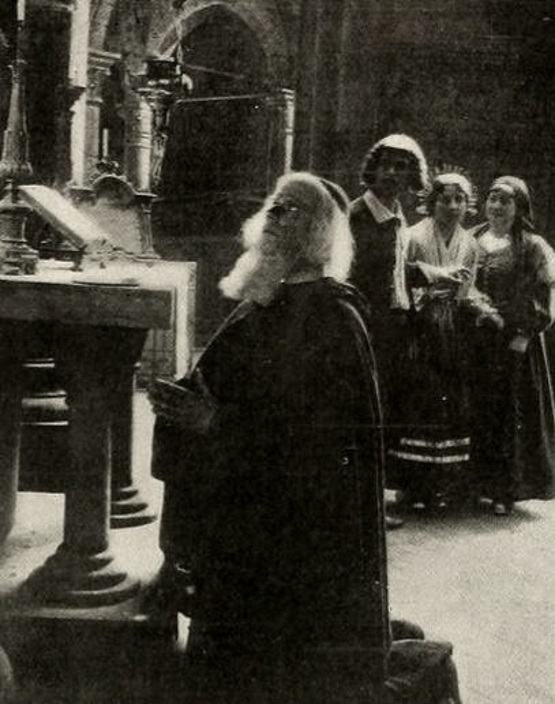
A 4K restoration premiered at Il Cinema Ritrovato in 2022, scanned from the sole surviving 35mm nitrate at Cineteca di Bologna. The tints—amber dawn, cobalt dusk—were rebuilt using original Pantone notes discovered in Arrigo Frusta’s diary. Alas, two reels remain decomposed; the restorers bridged them with stills and explanatory slates, a scar that paradoxically heightens the film’s fragility. You can stream the 1080p version on Classix or snag the region-free Blu from Il Nido di Nobili edition, which appends a 40-page booklet tracing Manzoni’s influence on post-war neorealism.
Mario Voller-Buzzi the actor also ghost-directed several sequences, a not-uncommon practice in the proto-auteur era. His staging of the Addio ai monti scene—Renzo howling at Alpine ridges—borrows from Dingjun Mountain’s vertical compositions, compressing exile into diagonals that slash the frame like guillotines. Meanwhile, Arrigo Frusta’s intertitles flirt with blank verse: "O Lucia, thou moonlit wound within my night!"—risqué literariness that courts ridicule yet lands, somehow, on the bruised side of sublime.
Keep your eyes peeled for the shadow-puppet reenactment of Hamlet glimpsed during a fairground interlude—an inside joke since Grisanti played the Prince in a lost 1908 one-reeler. Also, the church bell that tolls exactly 77 times references Manzono’s 1827 novel page-count; projectionists at the time were instructed to slow the hand-crank to 14 fps for that reel, elongating misery into transcendence.
Great art doesn’t merely depict history; it infects you with it. After 108 minutes, I stepped outside into neon drizzle and felt every passer-by carried invisible fleas of destiny. That is the film’s triumph: it weaponizes empathy. You leave raw, reeling, yet bizarrely elated—because if Renzo and Lucia can stitch vows back together after pestilence, tyranny, and time itself, maybe our own bruised century can, too.
Verdict: 9.7/10 — A cathedral carved in light, still standing though the world around it collapsed.
IMDb —
1918
Community
Log in to comment.