DbcultAccessing Vault...
5.1/10
Senior Film Conservator
A definitive 5.1/10 rating for a film that redefined the boundaries of cult cinema. Desert Rider remains a cornerstone of transgressive art.
The silent era of the American Western was not merely a precursor to the talkies; it was a distinct, visceral language of movement, landscape, and moral clarity. In Desert Rider (1923), we witness this language spoken with a rugged fluency that modern cinema often struggles to replicate. While many contemporary viewers might dismiss these early efforts as simplistic, a closer inspection reveals a complex interplay of light, shadow, and human desperation. Unlike the more whimsical tone found in The Traveling Salesman, this film plunges us into a desiccated world where the stakes are measured in ounces of gold and drops of blood.
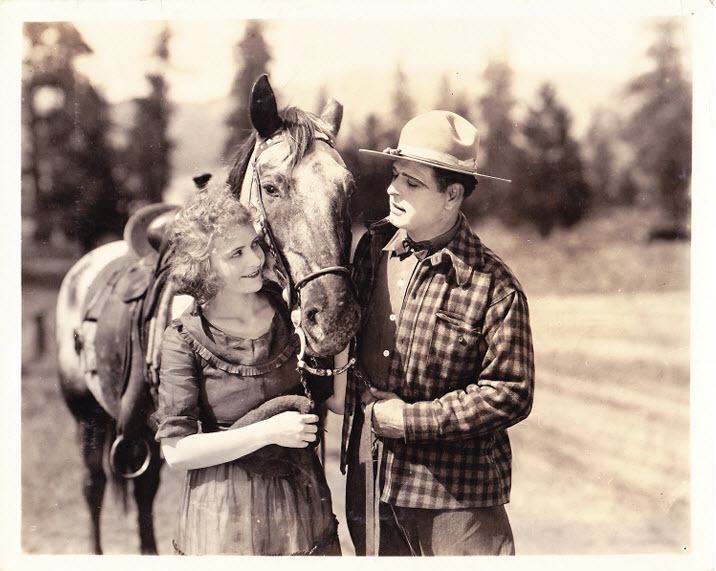
Jack Hoxie, an actor whose background in the rodeo circuit lent him an authenticity that no conservatory could provide, occupies the screen with a gravitational force. As Sutherland, he is the antithesis of the urban protagonist seen in Live Wires. Hoxie’s performance is built on a foundation of stillness and sudden, explosive action. His interactions with Scout the Horse are particularly noteworthy; there is a symbiotic relationship between man and beast that transcends the mere utility of transportation. Scout is not just a prop but a character with agency, mirroring the loyalty and resilience of his rider.
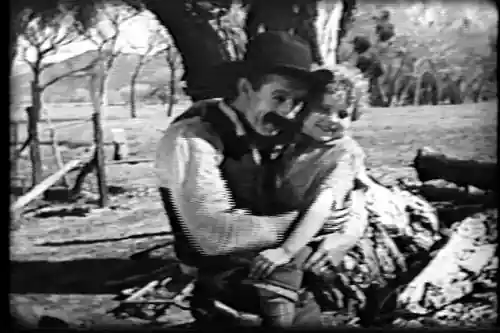
The film’s narrative economy is its greatest strength. By the time we reach the midpoint, the conflict is stripped to its barest essentials. We see a man who has found fortune through a dying wish and a man who seeks to steal that fortune through cold-blooded persistence. This binary struggle recalls the moral weight of The Christian, though transplanted from the pulpit to the prairie. The vastness of the desert serves as a silent witness to this ethical duel, emphasizing the insignificance of human greed in the face of geological time.
Claude Payton’s portrayal of Kincade is a masterclass in silent-era menace. Without the benefit of a snarling monologue, Payton conveys a sense of predatory entitlement through his posture and the sharp, hawkish intensity of his gaze. He represents a specific type of Western antagonist—the man who believes the frontier owes him a living. This sense of dark destiny is far removed from the fairy-tale malice of Rumpelstiltskin, grounding the film in a more grounded, almost nihilistic reality.
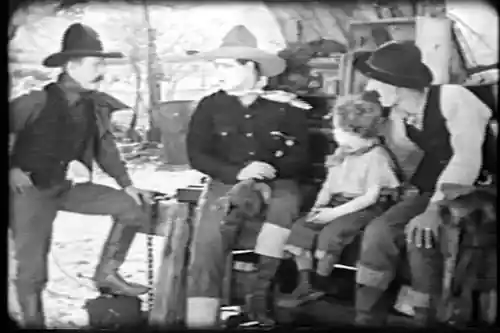
When Kincade shoots Baird, the act is depicted with a jarring lack of sentimentality. It is a transactional violence, a means to an end. The subsequent loss of the map adds a layer of absurdist tragedy to the proceedings. Kincade becomes a man chasing a ghost, eventually forced to pivot his focus toward Sutherland. This shift in motivation—from the abstract (a map) to the concrete (the extracted gold)—mirrors the shift in the film’s tension, moving from a mystery to a high-stakes pursuit that rivals the procedural intrigue of A Scandal in Bohemia.
The cinematography in Desert Rider utilizes the high-contrast lighting of the California desert to create a world of harsh brilliance and deep, impenetrable shadows. The filmmakers understood that the sun is as much a character as any actor. It bleaches the landscape, creating a sense of exhaustion that the audience can almost feel. This atmospheric density is a far cry from the more staged environments of Revelation. Here, the dirt is real, the sweat is palpable, and the danger of the environment is ever-present.
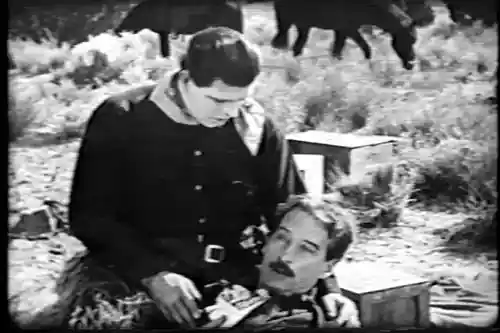
Consider the scene where Sutherland finds the dying Baird. The framing is intimate yet expansive, capturing the fragility of human life against the backdrop of an indifferent wasteland. The exchange of information—the location of the mine—is handled with a solemnity that borders on the religious. It is a passing of the torch, or perhaps a passing of a curse. The gold mine, while a source of potential prosperity, is also a magnet for violence. This thematic exploration of the 'corrupting treasure' is a recurring motif in the genre, but here it feels particularly urgent. It lacks the satirical edge of The Love Auction, opting instead for a more somber, existential meditation on value and cost.
The supporting cast, including Evelyn Nelson and Thomas G. Lingham, provides the necessary human stakes to ground the high-octane chase. Nelson, as the female lead, offers a counterpoint to the masculine aggression that dominates the plot. While her role follows some of the era's conventions, her presence adds a layer of civilization to the untamed wilderness. The community dynamics, though secondary to the central conflict, hint at the burgeoning social structures seen in The Midlanders.
Furthermore, the presence of Frank Rice and Walter Wilkinson ensures that the film never feels like a hollow exercise in action. There is a texture to the world-building; the towns feel lived-in, and the peripheral characters have histories that extend beyond the frame. This attention to detail prevents the film from becoming a mere caricature of the West. It possesses a gravitas that is often missing from more commercial silent fare, such as the lighter-hearted Felix Turns the Tide.
When analyzing Desert Rider alongside its contemporaries, one begins to see the evolution of the Western as a vehicle for moral exploration. It shares the claustrophobic tension of L'autobus della morte, where the journey itself is the source of dread. However, it also embraces the grandiosity of the American landscape. Unlike the social climbing themes of The Climbers, the characters here are climbing literal mountains, driven by a primal need for security and status.
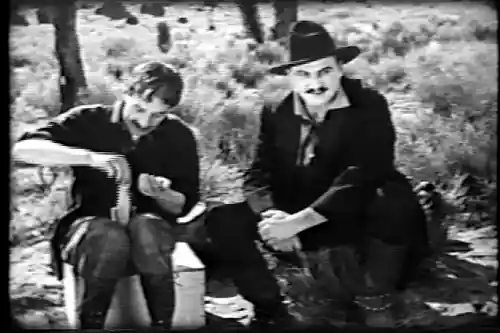
The film also touches upon the concept of the 'outcast' or the 'rogue.' Sutherland is a man operating on the fringes of society, much like the protagonist in Half a Rogue. He is not a lawman, but he possesses a personal code that is more rigid than any statute. This internal moral compass is what ultimately distinguishes him from Kincade. While Kincade is a monster of greed—perhaps not as visually grotesque as The Monster of Frankenstein but certainly as spiritually deformed—Sutherland represents the potential for human goodness to survive in a vacuum of authority.
As the final reel unfolds and the conflict reaches its inevitable crescendo, the audience is left with a profound sense of the era's cinematic power. The lack of dialogue forces a deeper engagement with the visual cues and the actors' expressions. We are required to interpret the silence, to fill in the gaps with our own understanding of human nature. This is the magic of the silent Western; it is a collaborative experience between the filmmaker and the spectator.
Even when compared to the episodic mystery of Beatrice Fairfax Episode 1: The Missing Watchman, Desert Rider feels more cohesive and tonally consistent. It doesn't rely on gimmicks or convoluted plot twists. Instead, it trusts in the strength of its central conflict and the charisma of its lead. It is a film that demands to be seen not as a relic, but as a living piece of art that still has much to say about the human condition. The pursuit of the gold mine is a timeless story, a reflection of the eternal human desire for something more, even when that 'more' comes at a terrible price. In the end, the desert remains, indifferent to the men who fought over its secrets, a silent sentinel over a forgotten era of storytelling.
Ultimately, Desert Rider stands as a testament to the enduring power of the Western mythos. It is a film of grit, gold, and gallantry, captured in the flickering light of a bygone age. For those willing to look past the absence of sound, there is a symphony of emotion to be found in the wind-swept dunes and the steady gaze of Jack Hoxie. It is a journey worth taking, a reminder that some stories are best told in the quiet intensity of a desert sun.
IMDb 6.8
1936
Community
Log in to comment.