DbcultAccessing Vault...
7.9/10
Senior Film Conservator
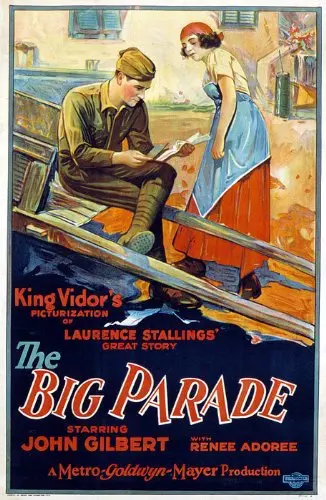
A definitive 7.9/10 rating for a film that redefined the boundaries of cult cinema. The Big Parade remains a cornerstone of transgressive art.
Stepping back into the silent era often feels like entering a different dimension of cinematic storytelling. There's a certain purity, an unfiltered emotional directness that transcends the absence of spoken dialogue, forcing the audience to engage on a deeply visual and empathetic level. King Vidor's The Big Parade, released in 1925, stands as an unassailable titan of this period, a film that doesn't just depict war but viscerally conveys its soul-crushing impact through the eyes of one American everyman. It's a sprawling epic that manages to be both intimately personal and sweepingly universal, a testament to the power of cinema to capture the zeitgeist of an entire generation grappling with unprecedented global trauma.
From its opening frames, Vidor orchestrates a masterclass in character introduction and thematic setup. We meet James Apperson, portrayed with a captivating blend of youthful naivete and burgeoning charisma by John Gilbert. Gilbert, a colossal star of the silent screen, imbues James with an appealing boyish charm, initially detached from the looming conflict, a privileged son of a prosperous family. His decision to enlist isn't born of deep conviction but rather a combination of societal pressure, a romanticized notion of heroism, and perhaps a touch of youthful ennui. This initial detachment makes his subsequent journey all the more impactful, as the film meticulously strips away his illusions, piece by agonizing piece. It’s a subtle yet profound character arc, a silent crescendo of disillusionment that resonates with a haunting authenticity.
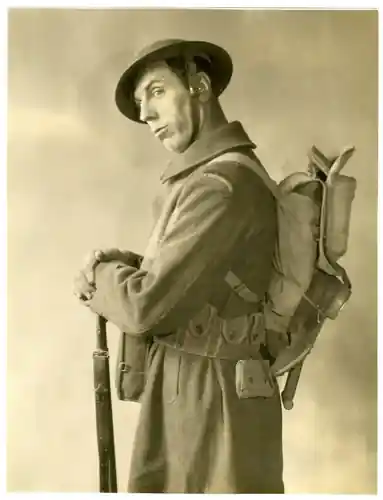
The true heart of The Big Parade lies not just in James's individual transformation, but in the indelible bonds he forms with his fellow soldiers. Tom O'Brien as Bull and Karl Dane (credited as Carl Voss in some instances, but more famously as Karl Dane) as Slim, are not mere supporting players; they are the anchors of James's new reality. Bull, the gruff but loyal working-class man, and Slim, the lanky, amiable farmhand, represent the diverse tapestry of American society thrown together in the crucible of war. Their banter, their shared cigarettes, their collective fear, and their moments of gallows humor are rendered with such genuine warmth and pathos that their camaraderie feels utterly authentic. This trio becomes a microcosm of the larger experience, demonstrating how shared adversity can forge connections stronger than any pre-existing social strata. The famous chewing gum scene, a simple yet brilliant piece of physical comedy, perfectly encapsulates their nascent friendship before the true horrors descend.
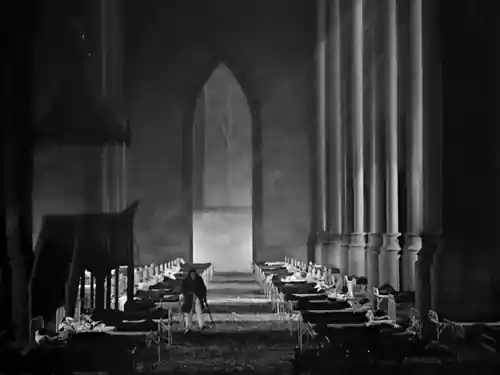
The film masterfully transitions from the initial excitement and camaraderie of basic training to the grim, relentless reality of the front lines. Vidor, along with writers Harry Behn, Joseph Farnham, and Laurence Stallings (who wrote the original story), crafts a narrative that avoids glorifying war. Instead, it lays bare the sheer monotony, the sudden bursts of terror, and the dehumanizing nature of trench warfare. The battle sequences are nothing short of astounding, particularly for their time. Vidor's direction here is revolutionary, utilizing sweeping tracking shots, chaotic close-ups, and a frantic pace that immerses the viewer in the disorienting, deafening (even in silence) cacophony of combat. The sequence where James is trapped in a shell hole with a wounded German soldier is a powerful, almost unbearable depiction of shared humanity amidst the madness, a moment of profound, wordless connection that transcends national divides and propaganda.
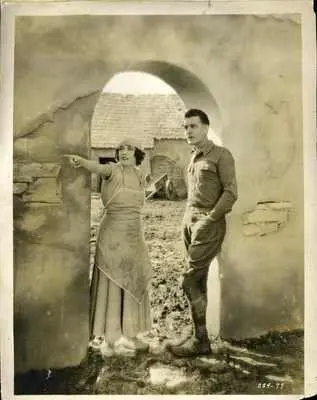
Amidst the desolation, a delicate romance blossoms between James and Melisande, a French farm girl portrayed with stunning grace and vulnerability by Renée Adorée. Their courtship is a study in silent film perfection, a series of gestures, stolen glances, and unspoken desires. Melisande's initial suspicion of the foreign soldier gradually melts into a deep, abiding affection, her expressive eyes conveying a world of emotion. The scenes of their burgeoning love, often set against the rustic beauty of the French countryside, provide a poignant counterpoint to the ugliness of war. It's a love born of proximity and shared vulnerability, a fragile bloom in a scorched landscape. The famous 'cherry tree' scene, where James tries to teach Melisande to chew gum, is a moment of pure cinematic magic, brimming with innocent charm and heartfelt connection. This romance is not merely a subplot; it's essential to the film's emotional core, representing the yearning for normalcy, for beauty, and for human connection in the face of overwhelming destruction.
The supporting cast, including Arthur H. Allen, Claire Adams, Robert Ober, George Beranger, Kathleen Key, Hobart Bosworth, Claire McDowell, Harry Crocker, Dan Mason, Rosita Marstini, Julanne Johnston, and Carl 'Major' Roup, all contribute to the rich tapestry of life and death depicted. Even in their brief appearances, they add layers of authenticity to the world Vidor meticulously constructs. The film’s attention to detail, from the uniforms to the trench designs, speaks volumes of its commitment to historical accuracy and immersive storytelling.
What truly elevates The Big Parade beyond a mere war drama is its unflinching depiction of the aftermath. James’s return home is not the glorious homecoming he might have envisioned. He is a changed man, bearing not just physical wounds but invisible scars that run far deeper. The film powerfully conveys the sense of alienation and disillusionment experienced by many veterans, a theme that would resonate for decades in war cinema. This profound sense of loss and the struggle to reintegrate into a society that cannot comprehend the horrors they endured is handled with immense sensitivity and psychological depth. It’s a stark contrast to more jingoistic war films, positioning The Big Parade as a seminal work in the anti-war genre.
Vidor's directorial prowess is evident in every frame. He understood the visual language of silent film intrinsically, using montage, close-ups, and sweeping panoramas to convey emotion, scale, and narrative progression. The film is a masterclass in visual storytelling, proving that dialogue is often superfluous when images are crafted with such precision and emotional intelligence. The rhythm of the film, from the slow build-up of tension to the explosive chaos of battle, is perfectly modulated, keeping the audience captivated for its considerable runtime.
The sheer scale of the production was monumental for its time. Metro-Goldwyn-Mayer poured significant resources into The Big Parade, a gamble that paid off handsomely, making it one of the highest-grossing silent films of all time. Its commercial success proved that audiences were ready for a more mature, less overtly propagandistic depiction of war. The film's influence on subsequent war films is undeniable. One can draw direct lines from Vidor's work to later masterpieces, both silent and sound, that explored the psychological toll of conflict. While other films like The Battle of the Ancre and the Advance of the Tanks offered documentary-style glimpses of the actual war, The Big Parade delivered the emotional truth of the soldier's experience with a narrative arc.
Comparing it to other films of the era, The Big Parade stands apart from more straightforward genre pieces like the western The Lone Star Ranger or melodramas like The Love Letter. It transcended simple entertainment, aiming for something far more profound and enduring. While other films might have explored specific aspects of human experience, such as the social issues in The Yellow Traffic or the adventures in Miss Crusoe, The Big Parade grappled with the universal themes of war, loss, and the resilience of the human spirit on an epic canvas. It doesn't shy away from the brutality, but it also never loses sight of the humanity caught within it.
The film’s climax, with James’s desperate journey back to Melisande, is a masterstroke of emotional storytelling. It's a reunion that is both triumphant and heartbreaking, a recognition that while love can endure, war leaves scars that can never truly heal. The final shot, a testament to the enduring power of connection amidst devastation, leaves an indelible mark on the viewer. This isn't a happy ending in the traditional sense, but a deeply resonant one, acknowledging the profound sacrifices made and the altered landscapes of the human heart.
In an era where cinema was still finding its voice, The Big Parade spoke volumes. It cemented John Gilbert's status as a leading man, showcasing his range from playful indifference to profound anguish. It established King Vidor as a director of immense vision and sensitivity, capable of handling both intimate drama and large-scale spectacle. Its portrayal of war is neither glorified nor sensationalized; it is simply presented in its raw, devastating truth. The film's influence extends far beyond its immediate impact, shaping the way future generations would depict conflict on screen.
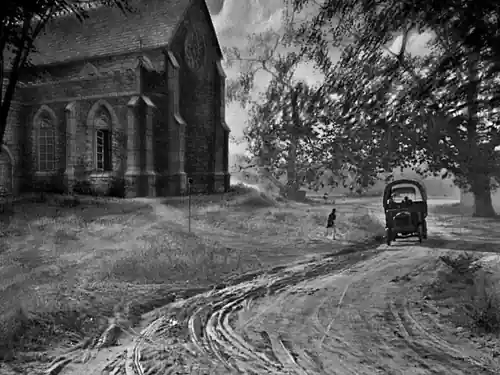
For modern audiences, watching The Big Parade is not just an exercise in historical appreciation; it's a vital experience. It reminds us of the power of silent film to communicate complex emotions and narratives without the crutch of dialogue. It’s a timeless narrative about the loss of innocence, the forging of camaraderie, and the enduring human spirit in the face of unimaginable adversity. Its message of the futility and personal cost of war remains as relevant today as it was nearly a century ago, a powerful cinematic artifact that continues to resonate with profound emotional depth. Films like Lest We Forget, while addressing similar themes, often lacked the epic scope and psychological penetration that Vidor achieved. Even adventure films like Mutiny or character studies like The Inner Voice, though compelling in their own right, operate on a different plane of ambition and execution. The Big Parade is not just a film; it is a monumental historical document, a poignant love story, and a searing indictment of war, all rolled into one unforgettable cinematic experience. Its ability to communicate so much with so little dialogue is a testament to its genius, leaving an emotional echo that reverberates long after the final frame.
Vidor's approach to realism was groundbreaking. He didn't just show the trenches; he made you feel the mud, the cold, the claustrophobia. The scenes of soldiers advancing across no man's land, often captured from a high angle, emphasize their vulnerability, reducing them to mere specks against an indifferent, war-torn landscape. This visual strategy humanizes the statistics of war, making each fallen soldier a palpable loss. The psychological toll is depicted not through exposition, but through Gilbert's increasingly haunted eyes, his slumped shoulders, and the subtle tremors that betray his inner turmoil. This nuanced performance, devoid of spoken words, relies entirely on the actor's ability to convey complex emotions through physicality and facial expression, a skill Gilbert possessed in abundance.
The film's pacing is also noteworthy. It takes its time in the initial acts, allowing the audience to truly connect with James, Bull, and Slim before plunging them into the inferno. This deliberate build-up makes the subsequent chaos all the more impactful. The contrast between the idyllic French countryside and the ravaged battlefields is stark and deliberate, highlighting what is being lost and destroyed. The use of natural light in many scenes, particularly those involving Melisande, lends an almost documentary-like authenticity to the romantic interludes, grounding them in a tangible reality.
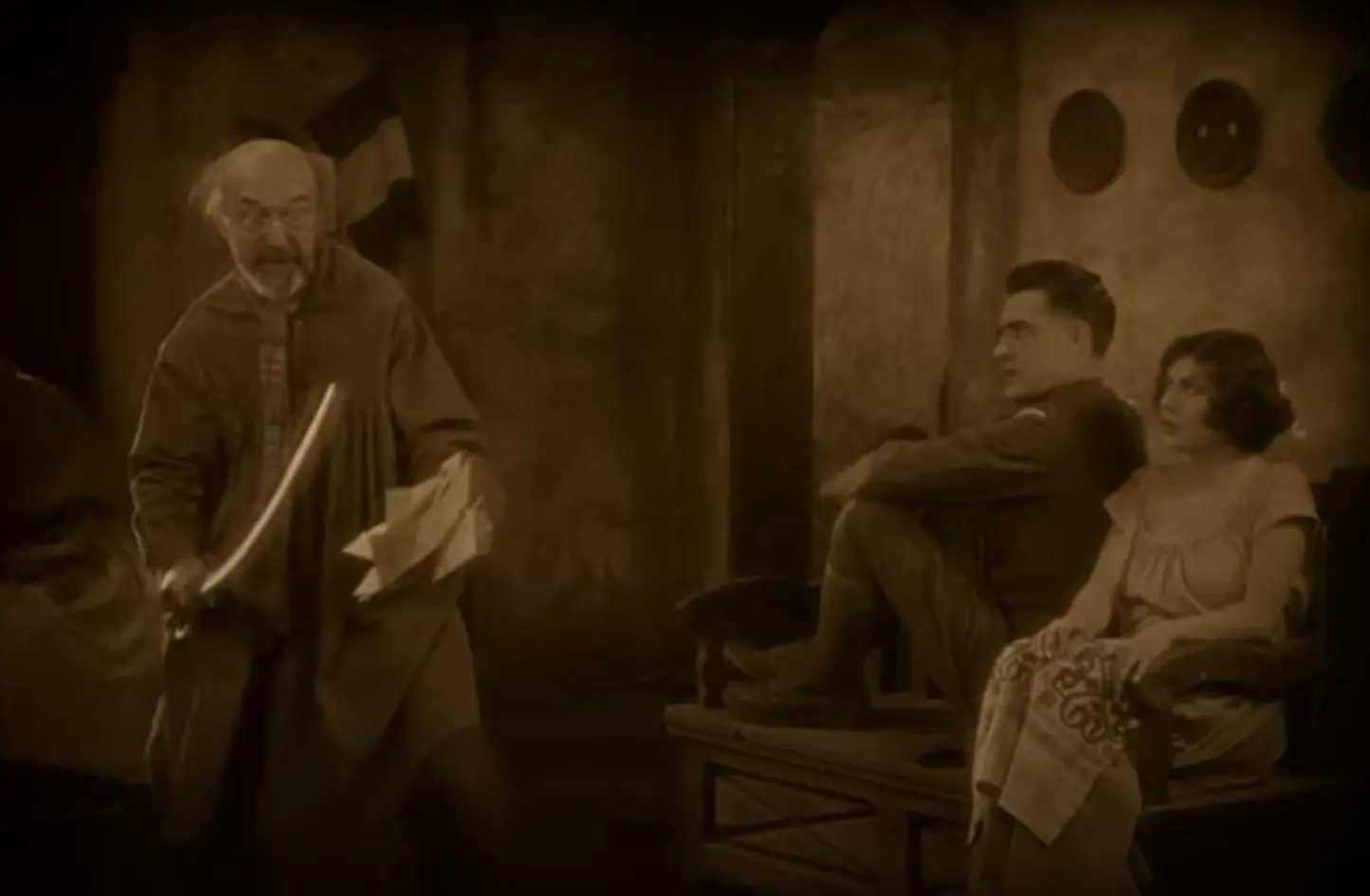
Even in its moments of levity, the specter of war is never far. The initial camaraderie is tinged with the knowledge of what awaits. This delicate balance between humor, romance, and tragedy is a hallmark of Vidor's masterful direction. He understood that even in the darkest times, humanity finds moments of connection and fleeting joy, making the inevitable losses even more heartbreaking. This nuanced perspective is what sets The Big Parade apart from many of its contemporaries, which often leaned heavily into either pure patriotism or simplistic anti-war rhetoric. Vidor offered something far more complex and emotionally true.
The historical context of its release is also crucial. Released just seven years after the armistice, The Big Parade tapped into a collective societal memory that was still raw and very real. It gave voice to the unspoken experiences of millions, validating their trauma and their sacrifices. It was a film that helped a nation process its grief and understand the profound costs of the 'war to end all wars.' Its success demonstrated that audiences were not only willing but eager to confront these difficult truths, especially when presented with such artistry and emotional honesty.
In conclusion, The Big Parade remains an essential piece of cinematic history, a film that continues to speak volumes about the human condition under duress. It's a testament to the enduring power of silent film, the brilliance of King Vidor's direction, and the captivating performance of John Gilbert. Its legacy is not just in its groundbreaking technical achievements or its box office success, but in its profound and timeless message about the cost of war and the resilience of the human spirit. It is a film that demands to be seen, experienced, and remembered, a poignant reminder of a pivotal moment in history and a towering achievement in the art of cinema. Much like how films like Dangerous Days explored contemporary societal anxieties, The Big Parade captured the enduring trauma of a global conflict, ensuring its place not just as a historical artifact, but as a living, breathing work of art.
IMDb 3.8
1922
Community
Log in to comment.